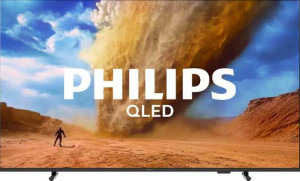
Philips 50PUS7800/12 50"
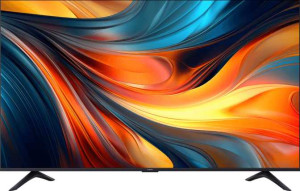
Xiaomi TV A 2026 50"

Philips 50PUS7800/12 50" Xiaomi TV A 2026 50"

Overview

When shopping for a 50-inch 4K smart TV, the Philips 50PUS7800/12 50″ and the Xiaomi TV A 2026 50″ quickly rise to the top of the conversation. Both sets share a solid common foundation, yet they diverge meaningfully in display technology, audio performance, and smart-home ecosystem support. This head-to-head comparison examines every key specification to help you decide which television is the right fit for your home.

Common Features

  • Both TVs have a 4K (UHD) display resolution of 3840 x 2160 px.
  • Both TVs support 1070 million display colors with a 10-bit bit depth.
  • Both TVs have a 60Hz refresh rate.
  • HDR10 support is available on both TVs.
  • Dolby Vision support is not available on either TV.
  • HLG support is available on both TVs.
  • Bluetooth is available on both TVs.
  • Both TVs have 3 HDMI ports with HDMI 2.1 version.
  • Wi-Fi is supported on both TVs, with Wi-Fi 4 (802.11n) and Wi-Fi 5 (802.11ac).
  • Both TVs have 1 RJ45 port.
  • Miracast support is available on both TVs.
  • Both TVs have a 3.5mm audio jack socket.
  • Both TVs deliver 2 x 10W audio output power.
  • Digital Out support is available on both TVs.
  • SRS TheaterSound HD is not available on either TV.
  • Stereo speakers are present on both TVs.
  • Dolby Audio support is available on both TVs.
  • Dolby Virtual support is not available on either TV.
  • A subwoofer is not present on either TV.
  • DTS:X support is available on both TVs.
  • Both TVs are 1111 mm wide and support VESA mounting.
  • Both TVs have a built-in smart TV platform and are compatible with Google Assistant.
  • Apple HomeKit and Siri compatibility is not available on either TV.
  • Remote smartphone control is supported on both TVs.
  • Neither TV has a rechargeable remote control.
  • USB recording is supported on both TVs.
  • Both TVs have a standby power consumption of 0.5W.
  • A search browser is available on both TVs.

Main Differences

  • The Philips 50PUS7800/12 50″ uses a QLED, LED-backlit, LCD display type, while the Xiaomi TV A 2026 50″ uses an LED-backlit, LCD display type.
  • The screen size is 49.5″ on the Philips 50PUS7800/12 50″ and 50″ on the Xiaomi TV A 2026 50″.
  • Pixel density is 89 ppi on the Philips 50PUS7800/12 50″ and 88 ppi on the Xiaomi TV A 2026 50″.
  • HDR10+ support is present on the Philips 50PUS7800/12 50″ but not available on the Xiaomi TV A 2026 50″.
  • Bluetooth version is 5.2 on the Philips 50PUS7800/12 50″ and 5.0 on the Xiaomi TV A 2026 50″.
  • The Philips 50PUS7800/12 50″ has 2 USB ports, while the Xiaomi TV A 2026 50″ has 1 USB port.
  • Dolby Atmos support is present on the Philips 50PUS7800/12 50″ but not available on the Xiaomi TV A 2026 50″.
  • Weight is 8230 g on the Philips 50PUS7800/12 50″ and 7400 g on the Xiaomi TV A 2026 50″.
  • Thickness is 88 mm on the Philips 50PUS7800/12 50″ and 73 mm on the Xiaomi TV A 2026 50″.
  • Height is 649 mm on the Philips 50PUS7800/12 50″ and 643 mm on the Xiaomi TV A 2026 50″.
  • Volume is 63451.432 cm³ on the Philips 50PUS7800/12 50″ and 52149.229 cm³ on the Xiaomi TV A 2026 50″.
  • Maximum operating temperature is 35°C on the Philips 50PUS7800/12 50″ and 40°C on the Xiaomi TV A 2026 50″.
  • Lowest potential operating temperature is 5°C on the Philips 50PUS7800/12 50″ and 0°C on the Xiaomi TV A 2026 50″.
  • AirPlay support is present on the Xiaomi TV A 2026 50″ but not available on the Philips 50PUS7800/12 50″.
  • Alexa compatibility is present on the Philips 50PUS7800/12 50″ but not available on the Xiaomi TV A 2026 50″.
  • Operating power consumption is 52W on the Philips 50PUS7800/12 50″ and 75W on the Xiaomi TV A 2026 50″.
Specs Comparison
Philips 50PUS7800/12 50"

Philips 50PUS7800/12 50"

Xiaomi TV A 2026 50"

Xiaomi TV A 2026 50"

Display:
display resolution 4K (UHD) 4K (UHD)
Display type QLED, LED-backlit, LCD LED-backlit, LCD
screen size 49.5" 50"
resolution 3840 x 2160 px 3840 x 2160 px
pixel density 89 ppi 88 ppi
display colors 1070 million 1070 million
bit depth 10-bit 10-bit
refresh rate 60Hz 60Hz
supports HDR10
supports HDR10+
supports Dolby Vision
supports HLG
has anti-reflection coating
has an ambient light sensor
maximum horizontal viewing angle 178º 178º
maximum vertical viewing angle 178º 178º

At the foundation, both the Philips 50PUS7800/12 and the Xiaomi TV A 2026 50″ share the same core display credentials: a 4K (3840 x 2160) resolution, a 10-bit panel capable of rendering 1.07 billion colors, a 60Hz refresh rate, and identical 178º viewing angles in both directions. Pixel density is virtually the same at 89 ppi vs 88 ppi — a difference that is imperceptible in real-world viewing at normal seating distances. Both also include anti-reflection coating and an ambient light sensor, making them equally practical for mixed-lighting environments.

The most meaningful display distinction lies in panel technology and HDR format support. The Philips uses a QLED panel, which employs quantum dot enhancement over the standard LED-backlit LCD used in the Xiaomi. In practice, QLED typically delivers a wider color gamut, higher peak brightness, and more saturated, accurate colors — advantages that are especially visible in HDR content. Supporting this, the Philips also carries HDR10+ certification, a dynamic metadata format that adjusts tone-mapping on a scene-by-scene basis for more precise highlight and shadow rendering. The Xiaomi supports only HDR10 (static metadata), meaning it cannot adapt the HDR grading in real time the same way. Both lack Dolby Vision, so neither has an advantage there.

Overall, the Philips 50PUS7800/12 has a clear edge in display quality for this comparison. Its QLED technology and HDR10+ support combine to offer a meaningfully richer picture — particularly for HDR-mastered streaming content — compared to the Xiaomi′s standard LCD panel with base HDR10. For users who prioritize display performance and watch a lot of premium HDR content, the Philips is the stronger choice on paper based solely on these specs.
Connectivity:
Has Bluetooth
HDMI version HDMI 2.1 HDMI 2.1
HDMI ports 3 3
supports Wi-Fi
Wi-Fi version Wi-Fi 4 (802.11n), Wi-Fi 5 (802.11ac) Wi-Fi 4 (802.11n), Wi-Fi 5 (802.11ac)
Bluetooth version 5.2 5
USB ports 2 1
RJ45 ports 1 1
supports Miracast
has a socket for a 3.5 mm audio jack
has an external memory slot
has a VGA connector
DVB standards DVB-T, DVB-T2, DVB-C, DVB-S, DVB-S2 DVB-T, DVB-T2, DVB-C, DVB-S, DVB-S2
has a DVI connector

Shared ground is substantial here: both TVs offer 3 HDMI 2.1 ports, a single RJ45 ethernet port, identical Wi-Fi support spanning Wi-Fi 4 and Wi-Fi 5, Miracast screen mirroring, and a 3.5mm audio jack. The matched HDMI 2.1 spec is worth noting — it supports higher bandwidth than HDMI 2.0, which is relevant for passing through high-quality audio formats and future-proofing connections to source devices.

Where the two diverge is in USB availability and Bluetooth revision. The Philips includes 2 USB ports versus just 1 on the Xiaomi — a practical difference for users who want to connect a USB drive and a peripheral (such as a keyboard or hard drive) simultaneously without unplugging anything. On the wireless side, the Philips ships with Bluetooth 5.2 compared to the Xiaomi′s Bluetooth 5.0. While both are capable, 5.2 brings incremental improvements in connection stability and audio synchronization — relevant if you pair wireless headphones or a soundbar directly to the TV.

Neither product has a dramatic connectivity advantage, but the Philips 50PUS7800/12 holds a modest edge in this category. The extra USB port adds day-to-day convenience, and the newer Bluetooth revision offers a small but real improvement for wireless audio users. For most households the difference will be minor, but for users who rely heavily on connected peripherals or Bluetooth audio devices, the Philips is the more accommodating option.

Audio:
audio output power 2 x 10W 2 x 10W
supports Digital Out
has SRS TheaterSound HD
has stereo speakers
has Dolby Atmos
has Dolby Audio
supports Dolby Virtual
has a subwoofer
has DTS:X
HDMI ARC / eARC HDMI ARC, HDMI eARC HDMI ARC, HDMI eARC

The two TVs are nearly identical in their audio hardware: both deliver 2 x 10W of stereo output, include Digital Out, and support both Dolby Audio and DTS:X. Critically, both also feature HDMI ARC and eARC — the latter being particularly useful for users planning to connect a soundbar or AV receiver, as eARC carries high-bandwidth audio formats like lossless Dolby TrueHD and DTS-HD Master Audio without any compression.

The one meaningful differentiator is Dolby Atmos support, which is present on the Philips 50PUS7800/12 but absent on the Xiaomi. Dolby Atmos adds an object-based spatial audio layer to compatible content — when decoded properly, sounds can be placed and moved in three-dimensional space rather than being fixed to standard stereo channels. Through the built-in speakers alone the effect is inherently limited without dedicated height drivers, but the certification still matters: it ensures the TV can pass an Atmos signal through eARC to a capable soundbar or receiver without downmixing it, preserving the full immersive audio experience downstream.

The Philips holds the advantage in this category solely on the strength of its Dolby Atmos support. For users who plan to rely purely on the TV′s built-in speakers, the real-world gap will be subtle. But for anyone pairing the TV with an Atmos-capable soundbar — a very common setup — the Philips ensures the full audio chain remains intact, while the Xiaomi cannot make the same guarantee.

Design:
width 1111 mm 1111 mm
weight 8230 g 7400 g
thickness 88 mm 73 mm
height 649 mm 643 mm
volume 63451.432 cm³ 52149.229 cm³
Supports VESA mount
maximum operating temperature 35 °C 40 °C
lowest potential operating temperature 5 °C 0 °C

Footprint-wise, the two TVs are essentially twins — identical width at 1111 mm and within 6 mm of each other in height. Both support VESA mounting, so wall installation is an option on either. The divergence shows up in depth and weight: the Xiaomi TV A 2026 is noticeably slimmer at 73 mm versus the Philips′s 88 mm, and lighter at 7.4 kg compared to 8.23 kg. That 15mm thickness reduction translates to a cleaner wall-mounted profile and a less bulky presence on a TV stand, while the lower weight makes solo installation or repositioning meaningfully easier.

The operating temperature ranges tell a subtler but practical story. The Xiaomi is rated to function between 0 °C and 40 °C, while the Philips is narrower at 5 °C to 35 °C. For the vast majority of indoor living room installations this distinction is irrelevant, but it does give the Xiaomi a slight edge in less climate-controlled environments — a garage, a summer house, or a room that gets very warm in summer.

On design and form factor, the Xiaomi holds the advantage. Its slimmer chassis and lighter build offer tangible practical benefits during installation and in day-to-day aesthetics, and its broader thermal tolerance adds a degree of flexibility the Philips lacks. Neither TV presents any disadvantage for standard home use, but if physical footprint and ease of handling matter, the Xiaomi is the more accommodating choice here.

Features:
release date February 2025 August 2025
has AirPlay
has built-in smart TV
compatible with Google Assistant
works with Alexa
works with Siri/Apple HomeKit
supports a remote smartphone
has a rechargeable remote control
supports USB recording
operating power consumption 52W 75W
standby power consumption 0.5W 0.5W
has a search browser
has a sleep timer
has a child lock
has voice commands

The smart feature set of both TVs overlaps heavily in the essentials: built-in smart TV platform, Google Assistant, smartphone remote control, USB recording, voice commands, and standard utility features like a sleep timer and child lock are all present on both. For the majority of users, this shared baseline covers everyday needs without compromise.

The ecosystem split is where the two diverge meaningfully. The Philips 50PUS7800/12 adds Amazon Alexa compatibility, making it the stronger fit for households already invested in Amazon′s smart home ecosystem — users can control the TV and trigger broader home automations through a single voice assistant. The Xiaomi TV A 2026, on the other hand, supports AirPlay, which is a significant perk for Apple device users: it allows iPhones, iPads, and Macs to stream content directly to the TV without any additional hardware. Neither TV supports Siri or Apple HomeKit, so the Xiaomi′s Apple integration is limited to AirPlay mirroring and casting rather than deep HomeKit automation. The power consumption gap is also worth flagging — the Philips draws 52W during operation versus the Xiaomi′s 75W, a roughly 44% difference that will add up noticeably on an annual electricity bill for heavy viewers.

This category comes down to ecosystem allegiance and usage priorities. The Philips has the edge for Amazon/Alexa households and holds a clear advantage in energy efficiency. The Xiaomi is the better fit for Apple users who rely on AirPlay for casual content sharing. Neither product dominates outright — the right choice here depends entirely on which ecosystem the buyer is already embedded in.

Comparison Summary & Verdict

After weighing all the evidence, a clear picture emerges for each buyer. The Philips 50PUS7800/12 50″ is the stronger choice for home-cinema enthusiasts: its QLED panel, exclusive HDR10+ and Dolby Atmos support, extra USB port, Alexa compatibility, and notably lower 52W operating power consumption make it a feature-rich, energy-efficient option. The Xiaomi TV A 2026 50″, on the other hand, appeals to Apple ecosystem users and those who value a slimmer, lighter form factor — it is 15 mm thinner and 830 g lighter, supports AirPlay, and tolerates a wider operating temperature range down to 0°C. Neither TV is a compromise; the right pick simply depends on whether your priority is premium picture and audio processing or seamless Apple integration and a more minimalist physical design.

Philips 50PUS7800/12 50
Buy Philips 50PUS7800/12 50" if...

Buy the Philips 50PUS7800/12 50″ if you want a QLED panel with HDR10+ and Dolby Atmos support, prefer Alexa integration, need two USB ports, and want a more energy-efficient TV at 52W operating consumption.

Xiaomi TV A 2026 50
Buy Xiaomi TV A 2026 50" if...

Buy the Xiaomi TV A 2026 50″ if you are deeply invested in the Apple ecosystem and rely on AirPlay, or if you prefer a noticeably thinner and lighter television that can operate in cooler environments down to 0°C.