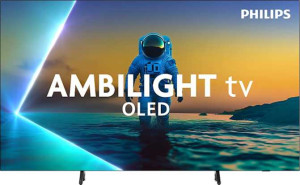
Philips 65OLED810/12 65"
Sony Bravia K-65XR80M2 65"

Philips 65OLED810/12 65" Sony Bravia K-65XR80M2 65"

Common Features

  • Both products have 4K (UHD) resolution.
  • Both products use OLED/AMOLED display type.
  • Both products have a resolution of 3840 x 2160 px.
  • Both products have a pixel density of 68 ppi.
  • Both products display 1070 million colors.
  • Both products have a 10-bit bit depth.
  • Both products support HDR10.
  • Both products support Dolby Vision.
  • Both products have Bluetooth connectivity.
  • Both products have HDMI 2.1 version.
  • Both products have 4 HDMI ports.
  • Both products support Wi-Fi.
  • Both products have 2 USB ports.
  • Both products have 1 RJ45 port.
  • Both products support Miracast.
  • Both products do not have an external memory slot.
  • Both products support Dolby Digital.
  • Both products support Digital Out.
  • Both products have stereo speakers.

Main Differences

  • Philips 65OLED810/12 65″ has a screen size of 65″, while Sony Bravia K-65XR80M2 65″ has a screen size of 64.5″.
  • Philips 65OLED810/12 65″ has a refresh rate of 144Hz, while Sony Bravia K-65XR80M2 65″ has a refresh rate of 120Hz.
  • HDR10+ support is available on Philips 65OLED810/12 65″ but not on Sony Bravia K-65XR80M2 65″.
  • Philips 65OLED810/12 65″ supports Wi-Fi 4 (802.11n) and Wi-Fi 5 (802.11ac), while Sony Bravia K-65XR80M2 65″ supports Wi-Fi 4 (802.11n), Wi-Fi 5 (802.11ac), Wi-Fi 6 (802.11ax), and Wi-Fi 6E (802.11ax).
  • Philips 65OLED810/12 65″ has Bluetooth version 5.2, while Sony Bravia K-65XR80M2 65″ has Bluetooth version 5.3.
  • Philips 65OLED810/12 65″ has a socket for a 3.5 mm audio jack, while Sony Bravia K-65XR80M2 65″ does not.
  • Philips 65OLED810/12 65″ does not support Dolby Digital Plus, while Sony Bravia K-65XR80M2 65″ does.
  • Philips 65OLED810/12 65″ has a width of 1444 mm, while Sony Bravia K-65XR80M2 65″ has a width of 1443 mm.
  • Philips 65OLED810/12 65″ weighs 27620 g, while Sony Bravia K-65XR80M2 65″ weighs 22900 g.
  • Philips 65OLED810/12 65″ has a thickness of 68 mm, while Sony Bravia K-65XR80M2 65″ has a thickness of 34 mm.
  • Philips 65OLED810/12 65″ has a height of 831 mm, while Sony Bravia K-65XR80M2 65″ has a height of 830 mm.
  • Philips 65OLED810/12 65″ has a volume of 81597.552 cm³, while Sony Bravia K-65XR80M2 65″ has a volume of 40721.46 cm³.
  • Philips 65OLED810/12 65″ has a maximum operating temperature of 35 °C, while Sony Bravia K-65XR80M2 65″ has a maximum operating temperature of 40 °C.
  • Philips 65OLED810/12 65″ has a lowest potential operating temperature of 5 °C, while Sony Bravia K-65XR80M2 65″ has a lowest potential operating temperature of 0 °C.
  • Philips 65OLED810/12 65″ does not have a rechargeable remote control, while Sony Bravia K-65XR80M2 65″ has a rechargeable remote control.
  • Philips 65OLED810/12 65″ has an operating power consumption of 102W, while Sony Bravia K-65XR80M2 65″ has an operating power consumption of 397W.
Specs Comparison
Philips 65OLED810/12 65"

Philips 65OLED810/12 65"

Sony Bravia K-65XR80M2 65"

Sony Bravia K-65XR80M2 65"

Display:
display resolution 4K (UHD) 4K (UHD)
Display type OLED/AMOLED OLED/AMOLED
screen size 65" 64.5"
resolution 3840 x 2160 px 3840 x 2160 px
pixel density 68 ppi 68 ppi
display colors 1070 million 1070 million
bit depth 10-bit 10-bit
refresh rate 144Hz 120Hz
supports HDR10
supports HDR10+
supports Dolby Vision
supports HLG
has anti-reflection coating
has an ambient light sensor
maximum horizontal viewing angle 178º 178º
maximum vertical viewing angle 178º 178º

Both the Philips 65OLED810/12 65″ and Sony Bravia K-65XR80M2 65″ feature a 4K (UHD) resolution, offering a sharp display with a resolution of 3840 x 2160 px and a pixel density of 68 ppi. Both use OLED/AMOLED display technology, delivering deep blacks and vibrant colors, and both support HDR10 and Dolby Vision for enhanced color and contrast. The Philips model supports HDR10+ while the Sony does not, which could be a consideration for those who prefer the additional dynamic range offered by HDR10+ content.

In terms of screen size, the Philips has a 65″ display, while the Sony is slightly smaller at 64.5″. Both displays offer a wide 178º horizontal and vertical viewing angle, ensuring consistent image quality even from the side. Both also feature anti-reflection coatings and ambient light sensors, which help improve visibility in various lighting conditions.

When it comes to refresh rate, the Philips model supports a 144Hz refresh rate, providing smoother motion for fast-moving content, while the Sony has a 120Hz refresh rate, which is still very capable but slightly lower. Both displays have a 10-bit color depth, supporting 1070 million colors, providing rich and smooth color gradients.

Connectivity:
Has Bluetooth
HDMI version HDMI 2.1 HDMI 2.1
HDMI ports 4 4
supports Wi-Fi
Wi-Fi version Wi-Fi 4 (802.11n), Wi-Fi 5 (802.11ac) Wi-Fi 4 (802.11n), Wi-Fi 5 (802.11ac), Wi-Fi 6 (802.11ax), Wi-Fi 6E (802.11ax)
Bluetooth version 5.2 5.3
USB ports 2 2
RJ45 ports 1 1
supports Miracast
has a socket for a 3.5 mm audio jack
has an external memory slot
has a VGA connector
has a DVI connector

Both the Philips 65OLED810/12 65″ and Sony Bravia K-65XR80M2 65″ offer solid connectivity options. Both support Bluetooth, with the Philips featuring Bluetooth 5.2 and the Sony offering the slightly newer Bluetooth 5.3. Both models come with 4 HDMI 2.1 ports, ensuring compatibility with high-bandwidth devices and future-proofing for next-generation consoles. Additionally, both have 2 USB ports and 1 RJ45 port for wired internet connections.

For wireless connectivity, both models support Wi-Fi 4 (802.11n) and Wi-Fi 5 (802.11ac). However, the Sony goes a step further by also supporting the newer Wi-Fi 6 (802.11ax) and Wi-Fi 6E, which offer improved speed and efficiency for compatible networks, while the Philips does not. Both products also support Miracast for screen mirroring.

The Philips 65OLED810/12 has a socket for a 3.5 mm audio jack, while the Sony does not. Both products lack an external memory slot, VGA connector, and DVI connector, making them equally limited in terms of legacy ports.

Audio:
supports Dolby Digital
supports Digital Out
supports Dolby Digital Plus
has SRS TheaterSound HD
has stereo speakers
has Dolby Atmos
has Dolby Audio
supports Dolby Virtual
has a subwoofer
has DTS:X
HDMI ARC / eARC HDMI ARC, HDMI eARC HDMI ARC, HDMI eARC

The Philips 65OLED810/12 65″ and Sony Bravia K-65XR80M2 65″ share several common audio features. Both support Dolby Digital, Dolby Audio, and DTS:X, offering immersive sound experiences. Additionally, both models support HDMI ARC and HDMI eARC, allowing easy connection to external audio systems. They are also equipped with stereo speakers and a subwoofer for a fuller sound.

However, the Sony Bravia K-65XR80M2 supports Dolby Digital Plus, while the Philips model does not. Both models lack SRS TheaterSound HD and Dolby Virtual support, so there are no differences in those areas. Both TVs also feature Dolby Atmos for an enhanced surround sound experience.

Overall, while the core audio technologies are similar between the two products, the Sony model has the added benefit of Dolby Digital Plus support, which the Philips does not include.

Design:
width 1444 mm 1443 mm
weight 27620 g 22900 g
thickness 68 mm 34 mm
height 831 mm 830 mm
volume 81597.552 cm³ 40721.46 cm³
Supports VESA mount
maximum operating temperature 35 °C 40 °C
lowest potential operating temperature 5 °C 0 °C

The Philips 65OLED810/12 65″ and Sony Bravia K-65XR80M2 65″ have similar dimensions but with some differences. The Philips is slightly wider at 1444 mm, compared to the Sony's 1443 mm. The height of the Philips model is 831 mm, just slightly taller than the Sony's 830 mm. However, the Sony is noticeably slimmer with a thickness of 34 mm, compared to the Philips' 68 mm. In terms of weight, the Philips is heavier at 27,620 g, while the Sony weighs 22,900 g.

Both models support VESA mounting, offering flexibility for wall installation. The volume of the Philips is larger at 81,597.552 cm³, reflecting its slightly bulkier build, whereas the Sony's volume is 40,721.46 cm³, which is significantly smaller.

Regarding operating temperatures, the Philips can function within a range from 5 °C to 35 °C, while the Sony has a slightly broader range, from 0 °C to 40 °C. This means the Sony may have an advantage in extreme conditions.

Features:
release date April 2025 April 2025
has AirPlay
has built-in smart TV
compatible with Google Assistant
works with Alexa
works with Siri/Apple HomeKit
supports a remote smartphone
has a rechargeable remote control
supports USB recording
operating power consumption 102W 397W
standby power consumption 0.5W 0.5W
has a search browser
has a sleep timer
has a child lock
has voice commands

Both the Philips 65OLED810/12 65″ and Sony Bravia K-65XR80M2 65″ offer similar smart features, such as built-in smart TV functionality, AirPlay support, compatibility with Google Assistant, Alexa, and voice commands. Neither model supports Siri/Apple HomeKit, but both allow remote smartphone control and USB recording. A notable difference is that the Philips does not include a rechargeable remote control, while the Sony does.

In terms of power consumption, the Philips has a significantly lower operating power consumption at 102W compared to the Sony's 397W. Both models have identical standby power consumption of 0.5W. Additionally, both models offer features like a search browser, sleep timer, and child lock.

Overall, the Philips model has lower power consumption and lacks a rechargeable remote, while the Sony has the advantage of a rechargeable remote but higher power usage.

Comparison Summary

This is a specification comparison between Philips 65OLED810/12 65″ and Sony Bravia K-65XR80M2 65″. Both models feature 4K (UHD) resolution, use OLED/AMOLED display type, and support HDR10 and Dolby Vision. However, there are several differences: the Philips model has a 144Hz refresh rate while the Sony has 120Hz, and the Philips also supports HDR10+ which the Sony does not. The Philips has a socket for a 3.5 mm audio jack, while the Sony does not. Additionally, the Philips has a lower operating power consumption of 102W compared to 397W on the Sony.