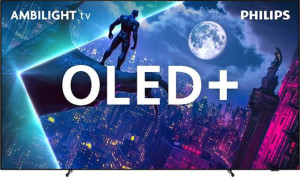
Philips 65OLED950/12 65"
TCL 65C6KS 65"

Philips 65OLED950/12 65" TCL 65C6KS 65"

Overview

Welcome to our in-depth spec comparison between the Philips 65OLED950/12 65″ and the TCL 65C6KS 65″, two compelling 65-inch 4K TVs that take very different technological approaches to picture quality. From the Philips' self-emissive OLED panel to the TCL's Mini-LED QLED backlit LCD display, and from refresh rates to audio capabilities and physical design, there is plenty to weigh up before making your decision.

Common Features

  • Both TVs have a 4K UHD display resolution of 3840 x 2160 px.
  • Both TVs have a pixel density of 68 ppi.
  • Both TVs support 1070 million display colors with a 10-bit bit depth.
  • HDR10 support is available on both products.
  • HDR10+ support is available on both products.
  • Dolby Vision support is available on both products.
  • Bluetooth connectivity is available on both products.
  • Both TVs feature HDMI 2.1 ports, with 4 HDMI ports each.
  • Wi-Fi support is available on both products, with Wi-Fi 4 (802.11n) and Wi-Fi 5 (802.11ac).
  • Both TVs have 2 USB ports and 1 RJ45 port.
  • Miracast support is available on both products.
  • Dolby Digital support is available on both products.
  • Digital Out support is available on both products.
  • Stereo speakers are present on both products.
  • Dolby Atmos and Dolby Audio are available on both products.
  • SRS TheaterSound HD is not available on either product.
  • Dolby Virtual support is not available on either product.
  • Both TVs include a subwoofer.
  • Both TVs support VESA mounting.
  • Both TVs have an operating temperature range of 5 °C to 35 °C.
  • AirPlay is available on both products.
  • Both TVs have a built-in smart TV platform.
  • Google Assistant compatibility is available on both products.
  • Apple HomeKit and Siri compatibility is not available on either product.
  • Remote smartphone control is supported on both products.
  • Neither TV includes a rechargeable remote control.
  • USB recording is supported on both products.
  • Both TVs have a standby power consumption of 0.5W.

Main Differences

  • The display technology is OLED/AMOLED on the Philips 65OLED950/12 65″ and QLED, LED-backlit, LCD, Mini-LED on the TCL 65C6KS 65″.
  • The screen size is 65″ on the Philips 65OLED950/12 65″ and 64.5″ on the TCL 65C6KS 65″.
  • The refresh rate is 144Hz on the Philips 65OLED950/12 65″ and 120Hz on the TCL 65C6KS 65″.
  • The Bluetooth version is 5.2 on the Philips 65OLED950/12 65″ and 5.4 on the TCL 65C6KS 65″.
  • Dolby Digital Plus support is present on the TCL 65C6KS 65″ but not available on the Philips 65OLED950/12 65″.
  • The width is 1444 mm on the Philips 65OLED950/12 65″ and 1447 mm on the TCL 65C6KS 65″.
  • The weight is 24020 g on the Philips 65OLED950/12 65″ and 17200 g on the TCL 65C6KS 65″.
  • The thickness is 65 mm on the Philips 65OLED950/12 65″ and 56 mm on the TCL 65C6KS 65″.
  • The height is 831 mm on the Philips 65OLED950/12 65″ and 832 mm on the TCL 65C6KS 65″.
  • The volume is 77997.66 cm³ on the Philips 65OLED950/12 65″ and 67418.624 cm³ on the TCL 65C6KS 65″.
Specs Comparison
Philips 65OLED950/12 65"

Philips 65OLED950/12 65"

TCL 65C6KS 65"

TCL 65C6KS 65"

Display:
display resolution 4K (UHD) 4K (UHD)
Display type OLED/AMOLED QLED, LED-backlit, LCD, Mini-LED
screen size 65" 64.5"
resolution 3840 x 2160 px 3840 x 2160 px
pixel density 68 ppi 68 ppi
display colors 1070 million 1070 million
bit depth 10-bit 10-bit
refresh rate 144Hz 120Hz
supports HDR10
supports HDR10+
supports Dolby Vision
supports HLG
has anti-reflection coating
has an ambient light sensor
maximum horizontal viewing angle 178º 178º
maximum vertical viewing angle 178º 178º

Both TVs share a strong display foundation: identical 4K (3840×2160) resolution, 68 ppi pixel density, 10-bit color depth, 1.07 billion colors, and full HDR format coverage including HDR10, HDR10+, Dolby Vision, and HLG. Viewing angles are a matched 178° horizontal and vertical, and both include anti-reflection coating and an ambient light sensor. For the majority of display fundamentals, these two screens are evenly matched on paper.

The critical divergence lies in panel technology. The Philips uses an OLED/AMOLED panel, where each pixel generates its own light and can switch off completely — delivering true infinite contrast, perfect blacks, and exceptional shadow detail that no backlit LCD can replicate. The TCL relies on QLED Mini-LED technology, a quantum-dot LCD with a dense array of mini backlights for improved local dimming and higher peak brightness potential. In practice, OLED wins decisively on contrast and off-angle color accuracy, while Mini-LED can push higher sustained brightness in very bright rooms. The second differentiator is refresh rate: the Philips runs at 144Hz versus the TCL's 120Hz, giving the Philips a tangible edge for gaming and fast-motion clarity, particularly relevant as more consoles and PCs target high frame rates.

Overall, the Philips 65OLED950 holds a clear display advantage for dark-room cinematic viewing and high-frame-rate gaming, driven by its OLED panel technology and higher refresh rate. The TCL 65C6KS remains competitive in bright environments where Mini-LED peak brightness can compensate, but on the strength of these specs alone, the Philips edges ahead for display performance.

Connectivity:
Has Bluetooth
HDMI version HDMI 2.1 HDMI 2.1
HDMI ports 4 4
supports Wi-Fi
Wi-Fi version Wi-Fi 4 (802.11n), Wi-Fi 5 (802.11ac) Wi-Fi 4 (802.11n), Wi-Fi 5 (802.11ac)
Bluetooth version 5.2 5.4
USB ports 2 2
RJ45 ports 1 1
supports Miracast
has a socket for a 3.5 mm audio jack
has an external memory slot
has a VGA connector
DVB standards DVB-T, DVB-T2, DVB-C, DVB-S, DVB-S2 DVB-T, DVB-T2, DVB-C, DVB-S, DVB-S2
has a DVI connector

Connectivity is remarkably consistent between these two TVs. Both arrive with 4× HDMI 2.1 ports — enough to run multiple 4K/120Hz sources simultaneously — alongside 2 USB ports, a single RJ45 ethernet jack, a 3.5mm audio output, and identical Wi-Fi support spanning Wi-Fi 4 and Wi-Fi 5. Miracast wireless mirroring is present on both. For the vast majority of home theater setups, either TV will integrate without compromise.

The sole differentiator in this group is Bluetooth version: the TCL carries Bluetooth 5.4 versus the Philips's Bluetooth 5.2. In practical terms, 5.4 brings incremental improvements in connection reliability, slightly lower latency, and better coexistence with other wireless devices compared to 5.2 — meaningful if you heavily use Bluetooth headphones, soundbars, or peripherals, but unlikely to be noticeable in casual use.

On connectivity as a whole, these TVs are essentially tied. The TCL holds a narrow technical edge through its newer Bluetooth version, but the gap is minor enough that it should not be a deciding factor for most users.

Audio:
supports Dolby Digital
supports Digital Out
supports Dolby Digital Plus
has SRS TheaterSound HD
has stereo speakers
has Dolby Atmos
has Dolby Audio
supports Dolby Virtual
has a subwoofer
has DTS:X
HDMI ARC / eARC HDMI ARC, HDMI eARC HDMI eARC, HDMI ARC

Audio capability is largely a wash between these two TVs. Shared across both are stereo speakers, a built-in subwoofer, Dolby Atmos, Dolby Audio, DTS:X, Dolby Digital, Digital Out, and both HDMI ARC and eARC — a comprehensive suite that covers virtually every mainstream audio format and external soundbar connection scenario.

The single point of divergence is Dolby Digital Plus, which the TCL 65C6KS supports and the Philips 65OLED950 does not. Dolby Digital Plus is an enhanced codec that carries higher bitrate audio over HDMI and streaming services, and serves as the transport layer for Dolby Atmos on many platforms including Netflix and Disney+. Its absence on the Philips means that in certain streaming contexts, Atmos content may be downmixed or delivered via a less efficient pathway — a subtle but real limitation.

The TCL takes a narrow edge in this group purely on the strength of Dolby Digital Plus support. For users who primarily watch Atmos content through streaming apps rather than physical media or external processors, this distinction is worth noting — though in most living room setups, the practical difference will be modest.

Design:
width 1444 mm 1447 mm
weight 24020 g 17200 g
thickness 65 mm 56 mm
height 831 mm 832 mm
volume 77997.66 cm³ 67418.624 cm³
Supports VESA mount
maximum operating temperature 35 °C 35 °C
lowest potential operating temperature 5 °C 5 °C

Footprint-wise, these two 65-inch TVs are virtually identical — within 3mm of each other in both width and height — so wall space and furniture clearance will not differ meaningfully between them. Both support VESA mounting and share the same operating temperature range, making installation considerations essentially equal.

Where they diverge noticeably is weight and depth. The Philips 65OLED950 weighs 24,020 g compared to the TCL 65C6KS at 17,200 g — a difference of nearly 6.8 kg. That gap is significant during installation, especially for wall-mounting, where a heavier panel demands more robust brackets and ideally a second pair of hands. The Philips is also thicker at 65 mm versus the TCL's 56 mm, contributing to a notably larger overall volume. The extra mass and depth in the Philips is consistent with OLED panel construction and its associated heatsink requirements.

For design and handling, the TCL 65C6KS holds a clear practical advantage — it is substantially lighter and slimmer, making transport, wall installation, and placement more manageable. Users prioritizing ease of installation or a lower-profile wall-mounted look will find the TCL the more accommodating option in this category.

Features:
release date June 2025 March 2025
has AirPlay
has built-in smart TV
compatible with Google Assistant
works with Siri/Apple HomeKit
supports a remote smartphone
has a rechargeable remote control
supports USB recording
standby power consumption 0.5W 0.5W
has a search browser
has a sleep timer
has a child lock
has voice commands

Across every feature tracked in this category, the Philips 65OLED950 and TCL 65C6KS are an exact match. Both ship with a full smart TV platform, AirPlay, Google Assistant voice control, smartphone remote support, USB recording, a search browser, sleep timer, and child lock — a well-rounded feature set that covers the practical needs of most households.

A few points worth highlighting in context: neither TV supports Apple HomeKit or Siri, which matters to users deeply embedded in the Apple ecosystem who want native home automation integration. Both also share an identical 0.5W standby power consumption, and neither includes a rechargeable remote — minor but consistent parity across the board.

This group is a complete tie. There is not a single feature differentiator between these two TVs as reflected in the provided specs, so this category should carry no weight in a purchase decision between them.

Comparison Summary & Verdict

After examining all the key specifications, both TVs deliver a strong 4K HDR experience with shared support for HDR10, HDR10+, and Dolby Vision, making them well-matched on paper. However, their differences reveal distinct audiences. The Philips 65OLED950/12 65″ stands out with its OLED/AMOLED panel and higher 144Hz refresh rate, making it the stronger pick for cinephiles and gamers who demand superior contrast and ultra-smooth motion. Meanwhile, the TCL 65C6KS 65″ wins on practicality: it is significantly lighter at 17,200 g versus 24,020 g, slimmer at 56 mm, and adds Dolby Digital Plus and newer Bluetooth 5.4, offering excellent value and easier installation for everyday home entertainment setups.

Philips 65OLED950/12 65
Buy Philips 65OLED950/12 65" if...

Buy the Philips 65OLED950/12 65″ if you want the best possible picture quality from an OLED panel and a higher 144Hz refresh rate for smoother gaming and cinematic viewing.

TCL 65C6KS 65
Buy TCL 65C6KS 65" if...

Buy the TCL 65C6KS 65″ if you prefer a lighter, slimmer TV with Dolby Digital Plus support and newer Bluetooth 5.4, making it easier to install and better suited for versatile home entertainment use.