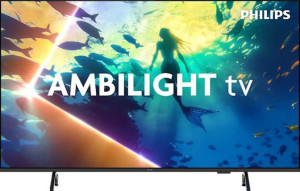
Philips 65PUS8000/12 65"
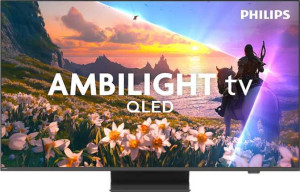
Philips 65PUS8600/12 65"

Philips 65PUS8000/12 65" Philips 65PUS8600/12 65"

Overview

When comparing the Philips 65PUS8000/12 65″ and the Philips 65PUS8600/12 65″, you are looking at two 65-inch 4K smart TVs that share a remarkably similar foundation yet diverge in meaningful ways. This head-to-head puts their display panel technology, physical design dimensions, weight, and energy efficiency under the microscope, giving you everything you need to determine which model is the right fit for your home.

Common Features

  • Both products have a 4K (UHD) display resolution.
  • Both products have a screen size of 64.5″.
  • Both products have a resolution of 3840 x 2160 px.
  • Both products have a pixel density of 68 ppi.
  • Both products support 1070 million display colors.
  • Both products have a 10-bit bit depth.
  • Both products have a refresh rate of 60Hz.
  • HDR10 support is available on both products.
  • Bluetooth is available on both products.
  • Both products use HDMI 2.1 and have 3 HDMI ports.
  • Wi-Fi is supported on both products, with Wi-Fi 4 (802.11n) and Wi-Fi 5 (802.11ac).
  • Both products have a Bluetooth version of 5.2.
  • Both products have 2 USB ports and 1 RJ45 port.
  • Both products have an audio output power of 2 x 10W.
  • Digital Out support is available on both products.
  • SRS TheaterSound HD is not available on either product.
  • Stereo speakers are present on both products.
  • Dolby Atmos support is available on both products.
  • Dolby Audio support is available on both products.
  • Dolby Virtual support is not available on either product.
  • Neither product has a subwoofer.
  • Both products support VESA mounting.
  • Both products have a maximum operating temperature of 35 °C and a minimum of 5 °C.
  • Both products have a built-in smart TV.
  • Google Assistant compatibility is available on both products.
  • Alexa compatibility is available on both products.
  • Siri and Apple HomeKit support is not available on either product.
  • Remote smartphone support is available on both products.
  • Neither product has a rechargeable remote control.
  • USB recording support is available on both products.
  • Both products have a standby power consumption of 0.5W.

Main Differences

  • The display type is LED-backlit LCD on Philips 65PUS8000/12 65″ and QLED LED-backlit LCD on Philips 65PUS8600/12 65″.
  • The width is 1446 mm on Philips 65PUS8000/12 65″ and 1451 mm on Philips 65PUS8600/12 65″.
  • The weight is 15800 g on Philips 65PUS8000/12 65″ and 24240 g on Philips 65PUS8600/12 65″.
  • The thickness is 90 mm on Philips 65PUS8000/12 65″ and 85 mm on Philips 65PUS8600/12 65″.
  • The height is 838 mm on Philips 65PUS8000/12 65″ and 847 mm on Philips 65PUS8600/12 65″.
  • The volume is 109057.32 cm³ on Philips 65PUS8000/12 65″ and 104464.745 cm³ on Philips 65PUS8600/12 65″.
  • The operating power consumption is 78W on Philips 65PUS8000/12 65″ and 101W on Philips 65PUS8600/12 65″.
  • The EU energy label is E on Philips 65PUS8000/12 65″ and F on Philips 65PUS8600/12 65″.
Specs Comparison
Philips 65PUS8000/12 65"

Philips 65PUS8000/12 65"

Philips 65PUS8600/12 65"

Philips 65PUS8600/12 65"

Display:
display resolution 4K (UHD) 4K (UHD)
Display type LED-backlit, LCD QLED, LED-backlit, LCD
screen size 64.5" 64.5"
resolution 3840 x 2160 px 3840 x 2160 px
pixel density 68 ppi 68 ppi
display colors 1070 million 1070 million
bit depth 10-bit 10-bit
refresh rate 60Hz 60Hz
supports HDR10
supports HDR10+
supports HLG
has anti-reflection coating
has an ambient light sensor
maximum horizontal viewing angle 178º 178º
maximum vertical viewing angle 178º 178º

Both the Philips 65PUS8000/12 and the Philips 65PUS8600/12 share an identical display foundation: a 64.5″ 4K UHD panel at 3840 x 2160 px, 68 ppi pixel density, a 10-bit color pipeline capable of rendering over a billion colors, and a 60Hz refresh rate. HDR support is equally matched, with both covering HDR10, HDR10+, and HLG. Viewing angles, anti-reflection coating, and ambient light sensor are also identical across the two models.

The single but meaningful display differentiator lies in panel technology. The 65PUS8000/12 uses a standard LED-backlit LCD panel, while the 65PUS8600/12 adds QLED (Quantum Light Emitting Diode) to the same LED-backlit LCD base. QLED uses a quantum dot filter to convert backlight wavelengths into purer, more saturated colors — in practice this translates to a wider color gamut, higher peak brightness potential, and more vivid, accurate color reproduction, particularly in well-lit rooms where standard LED-LCD panels can look comparatively washed out.

Edge: 65PUS8600/12. With every other display spec being equal, the QLED panel technology gives the 65PUS8600/12 a tangible advantage in color volume and brightness performance. For viewers who prioritize picture quality — especially in bright environments or for HDR content where color saturation matters — the quantum dot layer of the 65PUS8600/12 makes it the stronger choice within this spec group.

Connectivity:
Has Bluetooth
HDMI version HDMI 2.1 HDMI 2.1
HDMI ports 3 3
supports Wi-Fi
Wi-Fi version Wi-Fi 4 (802.11n), Wi-Fi 5 (802.11ac) Wi-Fi 4 (802.11n), Wi-Fi 5 (802.11ac)
Bluetooth version 5.2 5.2
USB ports 2 2
RJ45 ports 1 1
supports Miracast
has a socket for a 3.5 mm audio jack
has an external memory slot
has a VGA connector
DVB standards DVB-T, DVB-T2, DVB-C, DVB-S, DVB-S2 DVB-T, DVB-T2, DVB-C, DVB-S, DVB-S2
has a DVI connector

Across every connectivity spec provided, the Philips 65PUS8000/12 and the Philips 65PUS8600/12 are a perfect match. Both carry 3 HDMI 2.1 ports — a meaningful spec for modern home theater setups, as HDMI 2.1 supports 4K at high frame rates and features like eARC for premium audio passthrough. Wireless connectivity covers Wi-Fi 5 (802.11ac) and Bluetooth 5.2 on both models, offering solid range, stable streaming, and efficient pairing with peripherals like soundbars or headphones.

Wired and legacy options are equally shared: a single RJ45 Ethernet port for a reliable wired network connection, 2 USB ports for media playback or device charging, a 3.5mm audio jack, and full DVB tuner coverage including DVB-T2, DVB-C, DVB-S2 — meaning both handle terrestrial, cable, and satellite broadcast without needing an external tuner. Neither model offers an external memory slot, VGA, or DVI, which is entirely expected at this tier.

Verdict: Dead even. The connectivity specs are identical down to every port count and protocol version. No advantage can be awarded to either model based on this group alone — a buyer's decision here will rest entirely on other specification categories.

Audio:
audio output power 2 x 10W 2 x 10W
supports Digital Out
has SRS TheaterSound HD
has stereo speakers
has Dolby Atmos
has Dolby Audio
supports Dolby Virtual
has a subwoofer
has DTS:X
HDMI ARC / eARC HDMI ARC, HDMI eARC HDMI ARC, HDMI eARC

On the audio front, the Philips 65PUS8000/12 and Philips 65PUS8600/12 are once again spec-for-spec identical. Both deliver 2 x 10W of stereo output — a modest but typical power figure for built-in TV speakers at this screen size, sufficient for everyday viewing in average-sized rooms but unlikely to satisfy anyone seeking a cinematic experience without an external sound system.

Where both models do punch above their weight is in format support. Dolby Atmos, Dolby Audio, and DTS:X are all present, meaning the TVs can decode and process the most widely used premium audio formats found on streaming platforms and Blu-ray content. Critically, both also feature HDMI eARC alongside standard ARC — eARC is the more capable standard, supporting lossless Dolby Atmos and DTS:X passthrough to a compatible soundbar or AV receiver over a single HDMI cable, which makes future-proofing an audio upgrade straightforward on either model.

Verdict: Tied. Every audio specification — from output wattage and speaker configuration to format decoding and ARC support — is completely identical between the two. Neither model holds any audio advantage over the other based on the provided data.

Design:
width 1446 mm 1451 mm
weight 15800 g 24240 g
thickness 90 mm 85 mm
height 838 mm 847 mm
volume 109057.32 cm³ 104464.745 cm³
Supports VESA mount
maximum operating temperature 35 °C 35 °C
lowest potential operating temperature 5 °C 5 °C

The most striking difference in this group is weight. The Philips 65PUS8000/12 comes in at 15,800g, while the Philips 65PUS8600/12 weighs a substantially heavier 24,240g — a difference of over 8kg. For a wall-mount installation, that gap is practically significant: heavier TVs demand sturdier wall brackets, more careful stud alignment, and generally make the mounting process a two-person job with less margin for error. For stand placement, the added mass also means more caution when repositioning the set.

Dimensionally, the two are close but not identical. The 65PUS8600/12 is marginally taller and wider by a few millimeters, while the 65PUS8000/12 is slightly thicker at 90mm versus 85mm. The net result is that the 65PUS8000/12 actually occupies a slightly larger total volume despite being the lighter of the two — a likely reflection of differing internal panel and chassis construction tied to the QLED technology in the 65PUS8600/12. Both support VESA mounting and share identical operating temperature ranges, so neither holds an edge on installation flexibility or environmental tolerance.

Edge: 65PUS8000/12 on design practicality. Its significantly lower weight makes handling, installation, and repositioning considerably easier, which is a real-world advantage that should not be underestimated — particularly for wall-mount setups where every kilogram counts.

Features:
release date February 2025 February 2025
has built-in smart TV
compatible with Google Assistant
works with Alexa
works with Siri/Apple HomeKit
supports a remote smartphone
has a rechargeable remote control
supports USB recording
operating power consumption 78W 101W
standby power consumption 0.5W 0.5W
has a search browser
has a sleep timer
has a child lock
has voice commands
EU energy label E F

Feature-for-feature, the smart platform on both the Philips 65PUS8000/12 and Philips 65PUS8600/12 is identical: built-in smart TV, Google Assistant and Alexa voice control, smartphone remote support, USB recording, and standard convenience features like sleep timer and child lock are all present on both. Neither supports Apple HomeKit or Siri, which is worth noting for households deeply embedded in the Apple ecosystem.

The meaningful divergence in this group comes down to power consumption. The 65PUS8000/12 draws 78W during operation and carries an EU energy label of E, while the 65PUS8600/12 consumes a noticeably higher 101W and is rated EU label F — one step lower on the efficiency scale. That 23W gap may sound modest, but for a TV used several hours daily, it compounds into a measurable difference in electricity costs over a year. The higher draw of the 65PUS8600/12 is consistent with the power demands of its QLED panel technology identified in the display group.

Edge: 65PUS8000/12 on efficiency. With lower operating wattage and a better EU energy rating, it is the more economical choice to run long-term. Since smart features are entirely equal across both models, energy consumption is the only differentiator here — and it favors the 65PUS8000/12.

Comparison Summary & Verdict

Both the Philips 65PUS8000/12 65″ and the Philips 65PUS8600/12 65″ deliver a strong shared package: 4K UHD resolution, Dolby Atmos audio, HDMI 2.1 connectivity, Bluetooth 5.2, and full smart TV functionality with Google Assistant and Alexa. The differences, however, are worth careful consideration. The 65PUS8600/12 upgrades to a QLED panel for potentially richer color performance, but this comes with a substantially heavier build (24240 g vs 15800 g) and a higher operating power consumption of 101W versus 78W, reflected in its less favorable EU energy label of F. The 65PUS8000/12, rated E, is the stronger choice for those who value energy efficiency and easier wall-mounting or repositioning. The 65PUS8600/12 is better suited to viewers who place premium display technology at the top of their priority list and are less concerned with power draw or weight.

Philips 65PUS8000/12 65
Buy Philips 65PUS8000/12 65" if...

Buy the Philips 65PUS8000/12 65″ if you prioritize energy efficiency and a lighter, easier-to-handle set, as it draws less power and carries a better EU energy label.

Philips 65PUS8600/12 65
Buy Philips 65PUS8600/12 65" if...

Buy the Philips 65PUS8600/12 65″ if a premium QLED display panel is your top priority and you are comfortable with higher power consumption and a heavier chassis.