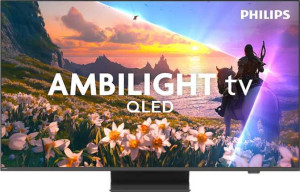
Philips 65PUS8600/12 65"
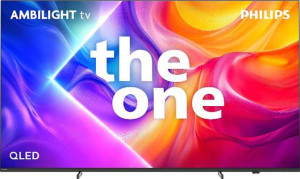
Philips 65PUS9000/12 65"

Philips 65PUS8600/12 65" Philips 65PUS9000/12 65"

Overview

When choosing between the Philips 65PUS8600/12 65″ and the Philips 65PUS9000/12 65″, you are looking at two 65-inch 4K QLED televisions that share a solid common foundation yet diverge on some genuinely impactful specifications. This head-to-head comparison examines their key battlegrounds: refresh rate capability, audio output power, connectivity depth, and energy efficiency. Read on to discover which model is truly the right fit for your living room.

Common Features

  • Both TVs have a 4K (UHD) QLED, LED-backlit, LCD display.
  • Both TVs have a screen size of 64.5″ with a resolution of 3840 x 2160 px.
  • Both TVs have a pixel density of 68 ppi.
  • Both TVs support 1070 million display colors at 10-bit depth.
  • HDR10 support is available on both products.
  • Both TVs have Bluetooth 5.2 connectivity.
  • Both TVs support Wi-Fi.
  • Both TVs use HDMI 2.1 ports.
  • Both TVs have 2 USB ports and 1 RJ45 port.
  • Miracast support is available on both products.
  • A 3.5 mm audio jack socket is present on both products.
  • Both TVs support Digital Out audio.
  • SRS TheaterSound HD is not available on either product.
  • Both TVs have stereo speakers with Dolby Atmos, Dolby Audio, and DTS:X support.
  • Dolby Virtual support is not available on either product.
  • Neither TV has a subwoofer.
  • Both TVs share the same width of 1451 mm and support VESA mounting.
  • Both TVs operate within a temperature range of 5 °C to 35 °C.
  • Both TVs have a built-in smart TV system compatible with Google Assistant and Alexa.
  • Both TVs support USB recording and include a search browser, but neither has a rechargeable remote control or Apple HomeKit compatibility.

Main Differences

  • The refresh rate is 60Hz on Philips 65PUS8600/12 65″ and 144Hz on Philips 65PUS9000/12 65″.
  • The number of HDMI ports is 3 on Philips 65PUS8600/12 65″ and 4 on Philips 65PUS9000/12 65″.
  • Wi-Fi support includes Wi-Fi 4 and Wi-Fi 5 on both, but Philips 65PUS8600/12 65″ lists Wi-Fi 4 first while Philips 65PUS9000/12 65″ lists Wi-Fi 5 first.
  • Audio output power is 2 x 10W on Philips 65PUS8600/12 65″ and 4 x 10W on Philips 65PUS9000/12 65″.
  • Weight is 24240 g on Philips 65PUS8600/12 65″ and 26090 g on Philips 65PUS9000/12 65″.
  • Thickness is 85 mm on Philips 65PUS8600/12 65″ and 84 mm on Philips 65PUS9000/12 65″.
  • Height is 847 mm on Philips 65PUS8600/12 65″ and 844 mm on Philips 65PUS9000/12 65″.
  • Volume is 104464.745 cm³ on Philips 65PUS8600/12 65″ and 102870.096 cm³ on Philips 65PUS9000/12 65″.
  • Operating power consumption is 101W on Philips 65PUS8600/12 65″ and 82W on Philips 65PUS9000/12 65″.
  • Standby power consumption is 0.5W on Philips 65PUS8600/12 65″ and 0.3W on Philips 65PUS9000/12 65″.
  • The EU energy label is F on Philips 65PUS8600/12 65″ and E on Philips 65PUS9000/12 65″.
Specs Comparison
Philips 65PUS8600/12 65"

Philips 65PUS8600/12 65"

Philips 65PUS9000/12 65"

Philips 65PUS9000/12 65"

Display:
display resolution 4K (UHD) 4K (UHD)
Display type QLED, LED-backlit, LCD QLED, LED-backlit, LCD
screen size 64.5" 64.5"
resolution 3840 x 2160 px 3840 x 2160 px
pixel density 68 ppi 68 ppi
display colors 1070 million 1070 million
bit depth 10-bit 10-bit
refresh rate 60Hz 144Hz
supports HDR10
supports HDR10+
supports HLG
has anti-reflection coating
has an ambient light sensor
maximum horizontal viewing angle 178º 178º
maximum vertical viewing angle 178º 178º

In terms of display fundamentals, the Philips 65PUS8600/12 and the Philips 65PUS9000/12 are virtually identical: both share the same QLED, LED-backlit LCD panel at 64.5″, with a 3840 x 2160 resolution, 68 ppi pixel density, 10-bit color depth rendering 1.07 billion colors, and full support for HDR10, HDR10+, and HLG. Both also feature an anti-reflection coating and an ambient light sensor, and offer wide 178º viewing angles in both axes — meaning neither has an edge in picture quality fundamentals or HDR versatility.

The one specification that separates them is the refresh rate: the 8600 runs at 60Hz, while the 9000 steps up to 144Hz. In practice, a higher refresh rate means motion is rendered with significantly less blur and judder — a difference that is most noticeable during fast-paced sports, action films, and gaming. For console or PC gamers in particular, 144Hz allows for much smoother frame delivery and a more responsive feel, provided the source can output a matching frame rate.

The 65PUS9000/12 has a clear edge in this group purely on the strength of its 144Hz refresh rate. For viewers whose content is primarily standard broadcast or streaming at 24–60fps, the real-world difference will be subtle. But for anyone who games or prioritizes motion clarity, the 9000 is the meaningfully superior choice based on these specs alone.

Connectivity:
Has Bluetooth
HDMI version HDMI 2.1 HDMI 2.1
HDMI ports 3 4
supports Wi-Fi
Wi-Fi version Wi-Fi 4 (802.11n), Wi-Fi 5 (802.11ac) Wi-Fi 5 (802.11ac), Wi-Fi 4 (802.11n)
Bluetooth version 5.2 5.2
USB ports 2 2
RJ45 ports 1 1
supports Miracast
has a socket for a 3.5 mm audio jack
has an external memory slot
has a VGA connector
DVB standards DVB-T, DVB-T2, DVB-C, DVB-S, DVB-S2 DVB-T, DVB-T2, DVB-C, DVB-S, DVB-S2
has a DVI connector

Across most of the connectivity spectrum, these two televisions are essentially identical: both offer HDMI 2.1, Bluetooth 5.2, dual-band Wi-Fi up to Wi-Fi 5 (802.11ac), two USB ports, an RJ45 ethernet port, Miracast, and a 3.5mm audio jack. HDMI 2.1 is worth noting as a shared strength — it supports the bandwidth needed for 4K at high frame rates, making both sets well-suited for current-generation consoles and PC graphics cards.

The sole differentiator here is the HDMI port count: the 65PUS8600/12 provides 3 HDMI ports, while the 65PUS9000/12 offers 4. That extra port may seem minor, but in a fully loaded living room setup — say, a games console, a soundbar with ARC, a streaming stick, and a Blu-ray player all connected simultaneously — the difference between three and four ports can determine whether you need an external HDMI switch or not.

The 65PUS9000/12 holds a narrow but practical edge in connectivity, entirely due to its additional HDMI port. For users with simpler setups, both TVs are evenly matched. But for those who run multiple HDMI devices at once, the 9000 offers a more convenient out-of-the-box experience.

Audio:
audio output power 2 x 10W 4 x 10W
supports Digital Out
has SRS TheaterSound HD
has stereo speakers
has Dolby Atmos
has Dolby Audio
supports Dolby Virtual
has a subwoofer
has DTS:X
HDMI ARC / eARC HDMI ARC, HDMI eARC HDMI ARC, HDMI eARC

Both televisions share a strong and identical audio feature set: Dolby Atmos, Dolby Audio, DTS:X, stereo speakers, Digital Out, and full HDMI ARC and eARC support. The presence of eARC in particular is a meaningful shared strength, as it allows high-bandwidth audio formats — including lossless Dolby TrueHD and DTS-HD Master Audio — to be passed through to a compatible soundbar or AV receiver over a single HDMI cable.

Where they part ways is raw amplification: the 65PUS8600/12 delivers 2 x 10W, while the 65PUS9000/12 steps up to 4 x 10W — double the total output power at 40W. More amplifier channels typically means greater ability to fill a large room, better stereo separation, and more headroom before distortion sets in at higher volumes. For a 65-inch screen intended for a spacious living room, that extra power can make a tangible difference in perceived loudness and spatial presence without an external speaker system.

The 65PUS9000/12 has a clear audio edge, driven entirely by its doubled output power. Users who rely on an external soundbar or AV receiver will find both sets equally capable via eARC. But for those watching primarily through the TV's built-in speakers, the 9000 is likely to deliver a fuller, more room-filling sound.

Design:
width 1451 mm 1451 mm
weight 24240 g 26090 g
thickness 85 mm 84 mm
height 847 mm 844 mm
volume 104464.745 cm³ 102870.096 cm³
Supports VESA mount
maximum operating temperature 35 °C 35 °C
lowest potential operating temperature 5 °C 5 °C

Physically, these two 65-inch sets are near-twins. Width and operating temperature range are identical, and the difference in height — 847 mm vs. 844 mm — and thickness — 85 mm vs. 84 mm — is so marginal as to be irrelevant in any real installation scenario. Both support VESA mounting, so wall-mount compatibility is equally straightforward for either model.

The more meaningful difference is weight. The 65PUS8600/12 comes in at 24,240 g, while the 65PUS9000/12 weighs noticeably more at 26,090 g — a gap of roughly 1.85 kg. That difference matters most during installation: a heavier set demands more care when mounting on a wall, may require a sturdier wall bracket, and is simply harder to maneuver into position with fewer people.

On design and physical footprint, the 65PUS8600/12 has a modest practical edge due to its lower weight, which makes handling and installation slightly easier. Neither set offers a meaningful size advantage over the other, so for most users the weight difference is the only design factor worth factoring into a purchase decision.

Features:
release date February 2025 January 2025
has built-in smart TV
compatible with Google Assistant
works with Alexa
works with Siri/Apple HomeKit
supports a remote smartphone
has a rechargeable remote control
supports USB recording
operating power consumption 101W 82W
standby power consumption 0.5W 0.3W
has a search browser
has a sleep timer
has a child lock
has voice commands
EU energy label F E

From a smart features standpoint, the two sets are functionally identical: both run a full smart TV platform with Google Assistant, Alexa, voice commands, smartphone remote support, USB recording, and a built-in browser. Neither supports Apple HomeKit or Siri, and neither ships with a rechargeable remote — so the experience out of the box is effectively the same regardless of which model you choose.

Where they diverge is energy efficiency. The 65PUS8600/12 draws 101W in operation and 0.5W on standby, while the 65PUS9000/12 is notably more efficient at 82W operating and 0.3W standby. That 19W difference in active consumption adds up over time — assuming five hours of daily use, the 9000 would consume roughly 35 kWh less per year, which translates to a measurable reduction in electricity costs over the TV's lifespan. The EU energy labels reflect this directly: the 8600 is rated F, while the 9000 achieves the higher E rating.

The 65PUS9000/12 has a clear edge in this group. With identical smart feature sets, the 9000's lower power draw and better EU energy label make it the more efficient choice — a practical advantage for anyone mindful of running costs or environmental impact.

Comparison Summary & Verdict

Both the Philips 65PUS8600/12 65″ and the Philips 65PUS9000/12 65″ offer a 4K QLED panel, HDR10, Dolby Atmos, DTS:X, and a full smart TV platform with Google Assistant and Alexa — a strong shared baseline. The differences, however, point clearly to different audiences. The Philips 65PUS9000/12 65″ pulls ahead with a 144Hz refresh rate, a more powerful 4 x 10W quad-speaker setup, an extra HDMI 2.1 port, and superior energy efficiency reflected in its EU E label and lower 82W operating consumption. The Philips 65PUS8600/12 65″, meanwhile, is the lighter unit at 24240 g and draws slightly less attention to running costs in upfront pricing contexts. Choose the Philips 65PUS9000/12 65″ for gaming, sports, or immersive audio; choose the Philips 65PUS8600/12 65″ if a lighter chassis and simpler feature set meet your needs.

Philips 65PUS8600/12 65
Buy Philips 65PUS8600/12 65" if...

Buy the Philips 65PUS8600/12 65″ if you want a lighter 65-inch 4K QLED TV and a standard 60Hz experience is sufficient for your everyday viewing needs.

Philips 65PUS9000/12 65
Buy Philips 65PUS9000/12 65" if...

Buy the Philips 65PUS9000/12 65″ if you prioritize a 144Hz refresh rate for gaming or sports, a more powerful 4 x 10W audio system, four HDMI 2.1 ports, and better energy efficiency.