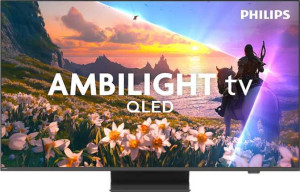
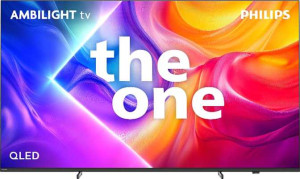
Both the Philips 65PUS8600 and the 85PUS9000 share the same panel technology — QLED, LED-backlit LCD — and identical color fundamentals: 3840 x 2160 resolution, 10-bit color depth, and 1.07 billion displayable colors. They also match on HDR support (HDR10, HDR10+, and HLG), anti-reflection coating, an ambient light sensor, and a wide 178° viewing angle in both axes. In other words, the core image quality foundation is the same between them.
The meaningful differences come down to two specs: pixel density and refresh rate. The 65PUS8600's 64.5″ screen yields a 68 ppi pixel density, noticeably sharper than the 85PUS9000's 52 ppi on its 85″ panel. In practice, this means the 65″ will look crisper at closer viewing distances, while the 85″ requires you to sit farther back before individual pixels become imperceptible. On the flip side, the 85PUS9000 delivers a 144Hz refresh rate versus the 65PUS8600's 60Hz — a substantial gap that translates to dramatically smoother motion in fast-paced content, gaming, and sports, and also enables compatibility with high frame-rate sources.
Overall, neither product is strictly superior — the advantage depends on the use case. The 65PUS8600 has the edge in pixel sharpness, making it the better choice for smaller rooms or closer seating. The 85PUS9000 wins on refresh rate and screen real estate, making it more compelling for large living rooms, gaming, and motion-heavy viewing. If refresh rate and immersive size are priorities, the 85″ has a clear display-category advantage; if pixel crispness and viewing distance flexibility matter more, the 65″ holds its own.