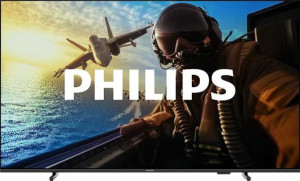
Philips 75PUS7000/12 75"
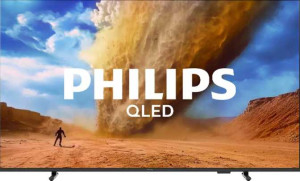
Philips 75PUS7800/12 75"

Philips 75PUS7000/12 75" Philips 75PUS7800/12 75"

Overview

Welcome to our in-depth spec comparison between the Philips 75PUS7000/12 75″ and the Philips 75PUS7800/12 75″. Both are large-screen 4K TVs from Philips sharing the same screen size and core connectivity, yet they differ in meaningful ways. The key battlegrounds in this comparison are display technology, energy efficiency, and physical footprint — areas where each model takes a noticeably different approach. Read on to discover which one suits your needs best.

Common Features

  • Both products have a 4K (UHD) display resolution.
  • Both products have a screen size of 74.5″.
  • Both products have a resolution of 3840 x 2160 px.
  • Both products have a pixel density of 59 ppi.
  • Both products support 1070 million display colors.
  • Both products have a 10-bit color depth.
  • Both products have a refresh rate of 60Hz.
  • HDR10 support is available on both products.
  • Bluetooth is available on both products.
  • Both products use HDMI 2.1.
  • Both products have 3 HDMI ports.
  • Wi-Fi is supported on both products, with Wi-Fi 4 (802.11n) and Wi-Fi 5 (802.11ac).
  • Both products have a Bluetooth version of 5.2.
  • Both products have 2 USB ports and 1 RJ45 port.
  • Dolby Digital support is available on both products.
  • Both products have an audio output power of 2 x 10W.
  • Digital Out support is available on both products.
  • Dolby Atmos and Dolby Audio are supported on both products.
  • SRS TheaterSound HD is not available on either product.
  • Dolby Virtual support is not available on either product.
  • Both products support VESA mounting.
  • Both products operate within a temperature range of 5 °C to 35 °C.
  • AirPlay is not available on either product.
  • A built-in smart TV system is present on both products.
  • Google Assistant compatibility is available on both products.
  • Alexa compatibility is available on both products.
  • Siri and Apple HomeKit support is not available on either product.
  • Remote smartphone control is supported on both products.
  • Neither product has a rechargeable remote control.
  • USB recording is supported on both products.

Main Differences

  • The display type is LED-backlit LCD on Philips 75PUS7000/12 75″ and QLED LED-backlit LCD on Philips 75PUS7800/12 75″.
  • The width is 1226 mm on Philips 75PUS7000/12 75″ and 1669 mm on Philips 75PUS7800/12 75″.
  • The thickness is 88 mm on Philips 75PUS7000/12 75″ and 93 mm on Philips 75PUS7800/12 75″.
  • The height is 715 mm on Philips 75PUS7000/12 75″ and 968 mm on Philips 75PUS7800/12 75″.
  • The volume is 77139.92 cm³ on Philips 75PUS7000/12 75″ and 150250.056 cm³ on Philips 75PUS7800/12 75″.
  • The operating power consumption is 105W on Philips 75PUS7000/12 75″ and 80W on Philips 75PUS7800/12 75″.
  • The EU energy label is E on Philips 75PUS7000/12 75″ and D on Philips 75PUS7800/12 75″.
Specs Comparison
Philips 75PUS7000/12 75"

Philips 75PUS7000/12 75"

Philips 75PUS7800/12 75"

Philips 75PUS7800/12 75"

Display:
display resolution 4K (UHD) 4K (UHD)
Display type LED-backlit, LCD QLED, LED-backlit, LCD
screen size 74.5" 74.5"
resolution 3840 x 2160 px 3840 x 2160 px
pixel density 59 ppi 59 ppi
display colors 1070 million 1070 million
bit depth 10-bit 10-bit
refresh rate 60Hz 60Hz
supports HDR10
supports HDR10+
supports Dolby Vision
supports HLG
has anti-reflection coating
has an ambient light sensor
maximum horizontal viewing angle 178º 178º
maximum vertical viewing angle 178º 178º

Both the Philips 75PUS7000/12 and the Philips 75PUS7800/12 share an identical display foundation: a 74.5″ 4K (3840 x 2160) panel at 59 ppi, with a 10-bit color pipeline rendering 1.07 billion colors, a 60Hz refresh rate, and wide 178° viewing angles in both directions. HDR support is also a perfect match — both handle HDR10, HDR10+, and HLG, while neither supports Dolby Vision. Anti-reflection coating and an ambient light sensor are present on both as well.

The sole but meaningful distinction lies in the panel technology: the 75PUS7800/12 uses a QLED layer on top of its LED-backlit LCD base, whereas the 75PUS7000/12 is a conventional LED-backlit LCD. In practice, QLED's quantum dot filter widens the color gamut and boosts peak brightness and color volume, which translates to more vivid, saturated images — particularly noticeable in HDR content where specular highlights and rich colors benefit most from the expanded luminance range.

The 75PUS7800/12 holds a clear edge in this group. While every other display parameter is identical, the QLED technology gives it a tangible advantage in color saturation and brightness potential over the standard LED-LCD of the 75PUS7000/12 — a difference that matters most for HDR viewing in well-lit rooms.

Connectivity:
Has Bluetooth
HDMI version HDMI 2.1 HDMI 2.1
HDMI ports 3 3
supports Wi-Fi
Wi-Fi version Wi-Fi 4 (802.11n), Wi-Fi 5 (802.11ac) Wi-Fi 4 (802.11n), Wi-Fi 5 (802.11ac)
Bluetooth version 5.2 5.2
USB ports 2 2
RJ45 ports 1 1
supports Miracast
has a socket for a 3.5 mm audio jack
has an external memory slot
has a VGA connector
DVB standards DVB-T, DVB-T2, DVB-C, DVB-S, DVB-S2 DVB-T, DVB-T2, DVB-C, DVB-S, DVB-S2
has a DVI connector

Connectivity is a complete tie between these two models — every single spec in this group is identical. Both televisions offer 3 HDMI 2.1 ports, which is genuinely useful for gaming and high-bandwidth video sources, supporting up to 4K at 120Hz throughput even if the panels themselves are capped at 60Hz natively. Wireless connectivity covers Wi-Fi 5 (802.11ac) and Bluetooth 5.2, the latter providing stable, low-latency pairing for soundbars, headphones, and peripherals.

The wired side includes a dedicated RJ45 Ethernet port — preferable to Wi-Fi for reliable streaming — alongside 2 USB ports for media playback or device charging. Broadcast reception spans the full DVB-T/T2, DVB-C, DVB-S/S2 standard set, covering terrestrial, cable, and satellite sources without needing an external tuner box. Miracast support rounds out the wireless sharing options for screen mirroring from compatible devices.

Since the specs are a perfect mirror image, neither model has an advantage here. Buyers can make their decision entirely on other differentiating factors — connectivity will deliver the same experience regardless of which unit they choose.

Audio:
supports Dolby Digital
audio output power 2 x 10W 2 x 10W
supports Digital Out
has SRS TheaterSound HD
has stereo speakers
has Dolby Atmos
has Dolby Audio
supports Dolby Virtual
has a subwoofer
has DTS:X
HDMI ARC / eARC HDMI ARC, HDMI eARC HDMI ARC, HDMI eARC

Audio hardware and format support are identical across both models. Each delivers 2 x 10W of stereo output — modest but typical for a flat-panel TV of this size, where the slim chassis limits speaker depth and bass response. Neither unit includes a subwoofer, so low-frequency performance will be constrained by physics regardless of the format decoding on offer.

On the formats side, both televisions decode Dolby Atmos, Dolby Audio, Dolby Digital, and DTS:X — a comprehensive set that covers the vast majority of streaming and disc-based spatial audio content. Crucially, both also include HDMI ARC and eARC, meaning they can pass high-bitrate audio formats to an external soundbar or AV receiver without any adapters or optical cables. eARC in particular is the preferred route for lossless Atmos and DTS:X passthrough, which matters if an external sound system is in the plan.

With zero differences across every audio spec, this group is an exact tie. Neither model offers any audio advantage over the other, and both make a reasonable case for pairing with an external soundbar given the inherent limits of 20W total built-in output on a 75-inch screen.

Design:
width 1226 mm 1669 mm
thickness 88 mm 93 mm
height 715 mm 968 mm
volume 77139.92 cm³ 150250.056 cm³
Supports VESA mount
maximum operating temperature 35 °C 35 °C
lowest potential operating temperature 5 °C 5 °C

The most striking finding in this group is the substantial difference in physical footprint. The 75PUS7800/12 measures 1669 mm wide and 968 mm tall, compared to 1226 mm wide and 715 mm tall for the 75PUS7000/12 — and its total volume of 150,250 cm³ is nearly double the 7000's 77,140 cm³. Given that both share an identical 74.5″ panel, this difference almost certainly reflects the inclusion of stand legs in the 7800's measurements, resulting in a significantly larger placement envelope to account for.

The thickness gap is comparatively minor — 93 mm versus 88 mm — a 5 mm difference that will be imperceptible in practice and unlikely to affect wall-clearance decisions for most installations. Both models support VESA mounting, so either can be taken off its stand and wall-mounted, at which point the footprint difference becomes irrelevant. Operating temperature range is identical on both: 5 °C to 35 °C, covering standard indoor environments.

For placement planning, the 75PUS7000/12 has a clear advantage in terms of stand-based footprint, requiring significantly less surface area and depth. Buyers working with a smaller console or media unit should take careful note of the 7800's larger physical envelope before purchasing. Those planning a wall mount will find the two models essentially equivalent in this regard.

Features:
release date February 2025 February 2025
has AirPlay
has built-in smart TV
compatible with Google Assistant
works with Alexa
works with Siri/Apple HomeKit
supports a remote smartphone
has a rechargeable remote control
supports USB recording
operating power consumption 105W 80W
standby power consumption 0.5W 0.5W
has a search browser
has a sleep timer
has a child lock
has voice commands
EU energy label E D

Smart platform features are a perfect match: both televisions run a built-in smart TV system with Google Assistant and Alexa voice control, smartphone remote support, USB recording, and standard convenience features like a sleep timer and child lock. Neither supports AirPlay or Apple HomeKit, so households deep in the Apple ecosystem will need a workaround regardless of which model they choose.

The one area where the two diverge is power efficiency. The 75PUS7000/12 draws 105W during operation versus 80W for the 75PUS7800/12 — a 25W difference that adds up over time. At average TV usage rates, that gap translates to a meaningful difference in annual energy costs. This is reflected in the EU energy labels: the 7000 carries an E rating while the 7800 achieves a D rating, one band more efficient. Standby consumption is identical at 0.5W on both.

The 75PUS7800/12 has a clear edge here, consuming noticeably less power for the same screen size and feature set. For buyers conscious of running costs or energy ratings — particularly relevant given the EU labelling system — the 7800 is the more efficient choice, and it costs less to run despite offering the same smart feature parity as the 7000.

Comparison Summary & Verdict

After examining the full specification breakdown, both TVs deliver a solid 4K UHD experience at 60Hz with 10-bit color depth, HDR10 support, identical connectivity, and the same audio output — making them evenly matched on paper in many areas. However, the differences are telling. The Philips 75PUS7800/12 75″ steps ahead with its QLED display technology, a more efficient 80W power consumption, and a better EU energy label of D, making it the stronger choice for viewers who prioritize picture quality and long-term running costs. Meanwhile, the Philips 75PUS7000/12 75″ is notably more compact in its physical dimensions, which may appeal to those working within tighter installation constraints. In short, the 7800 offers more for the picture-quality-conscious buyer, while the 7000 serves those who need a less imposing physical presence.

Philips 75PUS7000/12 75
Buy Philips 75PUS7000/12 75" if...

Buy the Philips 75PUS7000/12 75″ if you need a more compact physical footprint and have limited space for installation, and are comfortable prioritizing size over display technology.

Philips 75PUS7800/12 75
Buy Philips 75PUS7800/12 75" if...

Buy the Philips 75PUS7800/12 75″ if you want superior QLED display technology and better energy efficiency, with a lower 80W power consumption and an improved EU energy label of D.