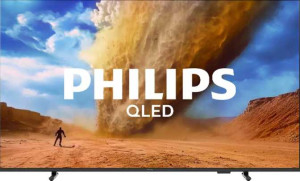
Philips 75PUS7800/12 75"
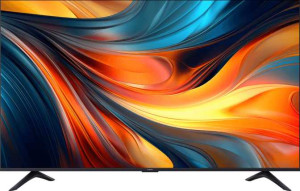
Xiaomi TV A 2026 65"

Philips 75PUS7800/12 75" Xiaomi TV A 2026 65"

Overview

Welcome to our in-depth spec comparison between the Philips 75PUS7800/12 75″ and the Xiaomi TV A 2026 65″. Both televisions share a strong 4K UHD foundation with HDR10, HLG, Dolby Audio, and HDMI 2.1 support, yet they diverge in meaningful ways across display technology, audio capabilities, smart home compatibility, and physical footprint. Read on to discover which TV best suits your living room and lifestyle.

Common Features

  • Both TVs offer 4K UHD resolution at 3840 x 2160 px.
  • Both TVs have a 10-bit panel capable of displaying 1070 million colors.
  • Both TVs have a 60Hz refresh rate.
  • HDR10 support is available on both products.
  • HLG support is available on both products.
  • Dolby Vision support is not available on either product.
  • Both TVs include Bluetooth connectivity.
  • Both TVs use HDMI 2.1 and feature 3 HDMI ports.
  • Both TVs support Wi-Fi, including Wi-Fi 4 (802.11n) and Wi-Fi 5 (802.11ac).
  • Both TVs have 1 RJ45 ethernet port.
  • Miracast support is available on both products.
  • Both TVs have a 3.5mm audio jack socket.
  • Both TVs deliver 2 x 10W audio output power.
  • Both TVs support Digital Out audio.
  • Both TVs feature stereo speakers and include Dolby Audio support.
  • DTS:X support is available on both products.
  • Dolby Atmos Virtual support is not available on either product.
  • SRS TheaterSound HD is not available on either product.
  • Neither TV includes a subwoofer.
  • Both TVs support VESA mounting.
  • Both TVs have a built-in smart TV platform and are compatible with Google Assistant.
  • Apple HomeKit and Siri compatibility is not available on either product.
  • Both TVs support remote smartphone control and USB recording.
  • Both TVs have a built-in search browser.
  • Neither TV features a rechargeable remote control.
  • Both TVs have a standby power consumption of 0.5W.

Main Differences

  • The display type is QLED, LED-backlit, LCD on Philips 75PUS7800/12 75″ and LED-backlit, LCD on Xiaomi TV A 2026 65″.
  • Screen size is 74.5″ on Philips 75PUS7800/12 75″ and 65″ on Xiaomi TV A 2026 65″.
  • Pixel density is 59 ppi on Philips 75PUS7800/12 75″ and 68 ppi on Xiaomi TV A 2026 65″.
  • HDR10+ support is available on Philips 75PUS7800/12 75″ but not on Xiaomi TV A 2026 65″.
  • Bluetooth version is 5.2 on Philips 75PUS7800/12 75″ and 5.0 on Xiaomi TV A 2026 65″.
  • USB ports number 2 on Philips 75PUS7800/12 75″ and 1 on Xiaomi TV A 2026 65″.
  • Dolby Atmos support is present on Philips 75PUS7800/12 75″ but not available on Xiaomi TV A 2026 65″.
  • Width is 1669 mm on Philips 75PUS7800/12 75″ and 1445 mm on Xiaomi TV A 2026 65″.
  • Height is 968 mm on Philips 75PUS7800/12 75″ and 833 mm on Xiaomi TV A 2026 65″.
  • Thickness is 93 mm on Philips 75PUS7800/12 75″ and 75 mm on Xiaomi TV A 2026 65″.
  • Weight is 23070 g on Philips 75PUS7800/12 75″ and 13000 g on Xiaomi TV A 2026 65″.
  • Volume is 150250.056 cm³ on Philips 75PUS7800/12 75″ and 90276.375 cm³ on Xiaomi TV A 2026 65″.
  • Maximum operating temperature is 35°C on Philips 75PUS7800/12 75″ and 40°C on Xiaomi TV A 2026 65″.
  • Lowest operating temperature is 5°C on Philips 75PUS7800/12 75″ and 0°C on Xiaomi TV A 2026 65″.
  • AirPlay support is available on Xiaomi TV A 2026 65″ but not on Philips 75PUS7800/12 75″.
  • Alexa compatibility is present on Philips 75PUS7800/12 75″ but not available on Xiaomi TV A 2026 65″.
  • Operating power consumption is 80W on Philips 75PUS7800/12 75″ and 150W on Xiaomi TV A 2026 65″.
Specs Comparison
Philips 75PUS7800/12 75"

Philips 75PUS7800/12 75"

Xiaomi TV A 2026 65"

Xiaomi TV A 2026 65"

Display:
display resolution 4K (UHD) 4K (UHD)
Display type QLED, LED-backlit, LCD LED-backlit, LCD
screen size 74.5" 65"
resolution 3840 x 2160 px 3840 x 2160 px
pixel density 59 ppi 68 ppi
display colors 1070 million 1070 million
bit depth 10-bit 10-bit
refresh rate 60Hz 60Hz
supports HDR10
supports HDR10+
supports Dolby Vision
supports HLG
has anti-reflection coating
has an ambient light sensor
maximum horizontal viewing angle 178º 178º
maximum vertical viewing angle 178º 178º

Both the Philips 75PUS7800/12 and the Xiaomi TV A 2026 65″ share the same fundamental display foundation: 4K UHD resolution (3840 x 2160 px), a 10-bit panel capable of rendering 1.07 billion colors, a 60Hz refresh rate, and identical 178° viewing angles in both directions. They also both include anti-reflection coating and an ambient light sensor, meaning neither has a practical edge in everyday usability features.

The most meaningful differentiator is panel technology. The Philips uses a QLED layer on top of its LED-backlit LCD, which typically delivers wider color volume and higher peak brightness compared to a standard LCD — a real-world advantage in vivid, well-lit scenes. The Xiaomi relies on a conventional LED-backlit LCD without quantum dot enhancement. On top of that, the Philips supports HDR10+ — a dynamic metadata HDR format that adjusts tone-mapping scene by scene — whereas the Xiaomi is limited to HDR10 (static metadata) and HLG. In HDR content that has been mastered with HDR10+ metadata, the Philips will reproduce highlights and shadows more accurately. Neither TV supports Dolby Vision.

The Xiaomi's 65″ screen yields a slightly higher pixel density of 68 ppi versus the Philips's 59 ppi on its larger 74.5″ panel, which means text and fine detail may appear marginally sharper up close on the Xiaomi. However, at typical living-room viewing distances, this difference is largely imperceptible. Overall, the Philips 75PUS7800/12 holds a clear display advantage thanks to its QLED technology and HDR10+ support — both of which translate to better picture quality in compatible content — while also offering a significantly larger screen.

Connectivity:
Has Bluetooth
HDMI version HDMI 2.1 HDMI 2.1
HDMI ports 3 3
supports Wi-Fi
Wi-Fi version Wi-Fi 4 (802.11n), Wi-Fi 5 (802.11ac) Wi-Fi 4 (802.11n), Wi-Fi 5 (802.11ac)
Bluetooth version 5.2 5
USB ports 2 1
RJ45 ports 1 1
supports Miracast
has a socket for a 3.5 mm audio jack
has an external memory slot
has a VGA connector
DVB standards DVB-T, DVB-T2, DVB-C, DVB-S, DVB-S2 DVB-T, DVB-T2, DVB-C, DVB-S, DVB-S2
has a DVI connector

Connectivity is largely a tie between these two TVs, with both offering an identical wireless and wired backbone: HDMI 2.1 on all three ports, a shared Wi-Fi 4/5 dual-standard implementation, a wired RJ45 port for stable network connections, Miracast screen mirroring, and a 3.5mm audio jack. The full HDMI 2.1 specification on all ports is a genuine plus for both, as it supports high-bandwidth signals relevant for modern gaming consoles and source devices.

Two small but practical gaps separate them. First, the Philips 75PUS7800/12 includes 2 USB ports versus just 1 on the Xiaomi — a tangible day-to-day convenience when connecting a USB drive and a keyboard, or two storage devices, simultaneously without needing a hub. Second, the Philips runs Bluetooth 5.2 against the Xiaomi's Bluetooth 5.0. While both versions offer solid range and stability, 5.2 introduces improvements in audio stream handling and connection efficiency that can benefit wireless headphones and speakers in real use.

Neither difference is a dealbreaker on its own, but taken together they give the Philips a modest connectivity edge. The extra USB port is the more immediately practical advantage for most users, while the newer Bluetooth version is a quieter but forward-looking improvement. If connectivity parity is your priority, both sets cover the essentials well; if flexibility matters, the Philips edges ahead.

Audio:
audio output power 2 x 10W 2 x 10W
supports Digital Out
has SRS TheaterSound HD
has stereo speakers
has Dolby Atmos
has Dolby Audio
supports Dolby Virtual
has a subwoofer
has DTS:X
HDMI ARC / eARC HDMI ARC, HDMI eARC HDMI ARC, HDMI eARC

On paper, these two TVs are nearly identical in audio hardware: both deliver 2 x 10W stereo output, include Digital Out, and share support for Dolby Audio, DTS:X, and both HDMI ARC and eARC. The presence of eARC on both is worth highlighting — it allows lossless, high-bandwidth audio formats to pass through to a compatible soundbar or AV receiver, which makes either TV a solid foundation for an external audio setup.

The single differentiator in this group is Dolby Atmos support, which the Philips 75PUS7800/12 carries and the Xiaomi TV A 2026 does not. Dolby Atmos adds object-based, three-dimensional audio metadata to compatible content — meaning on the Philips, a streaming service or Blu-ray that carries an Atmos track can deliver that spatial audio experience either through the built-in speakers or, more meaningfully, passed via eARC to an Atmos-capable soundbar. The Xiaomi, lacking Atmos decoding, would fall back to a standard audio track in those scenarios.

For users relying purely on the TV's built-in speakers at 20W total, the real-world gap between the two will be modest — neither set includes a subwoofer, and 10W per channel is adequate but not immersive at that output level. Where the difference becomes tangible is in a home theater context with an Atmos soundbar or receiver: the Philips holds a clear audio advantage here, as its Dolby Atmos passthrough capability unlocks a layer of spatial audio that the Xiaomi simply cannot deliver.

Design:
width 1669 mm 1445 mm
weight 23070 g 13000 g
thickness 93 mm 75 mm
height 968 mm 833 mm
volume 150250.056 cm³ 90276.375 cm³
Supports VESA mount
maximum operating temperature 35 °C 40 °C
lowest potential operating temperature 5 °C 0 °C

The size difference between these two TVs is substantial and intentional — the Philips 75PUS7800/12 is a 75-inch set and the Xiaomi TV A 2026 is a 65-inch model, so a larger physical footprint on the Philips is expected. What stands out, however, is just how pronounced the weight gap is: the Philips weighs 23,070 g versus the Xiaomi's 13,000 g. That is nearly double the mass for a screen that is only 10 inches larger diagonally, suggesting a meaningfully denser build. For installation, this difference matters — wall-mounting or repositioning the Philips is a more demanding two-person job, and ensuring the wall bracket is rated for that load becomes more critical.

Profile depth tells a similar story. At 93 mm thick, the Philips is noticeably chunkier than the Xiaomi's 75 mm. Neither is an ultra-slim design, but the Xiaomi will sit closer to the wall and present a cleaner profile in tighter spaces. Both sets support VESA mounting, so neither has an advantage in mounting flexibility itself.

One area where the Xiaomi holds a quiet but practical edge is operating temperature range: it functions from 0 °C to 40 °C, while the Philips is rated for 5 °C to 35 °C. This wider thermal tolerance makes the Xiaomi more suitable for installations in garages, conservatories, or rooms subject to greater temperature swings. Overall, the Xiaomi has the design advantage — it is lighter, slimmer, and more thermally flexible — though the Philips's larger size is the primary driver of its bulk rather than an inherent design inefficiency.

Features:
release date February 2025 August 2025
has AirPlay
has built-in smart TV
compatible with Google Assistant
works with Alexa
works with Siri/Apple HomeKit
supports a remote smartphone
has a rechargeable remote control
supports USB recording
operating power consumption 80W 150W
standby power consumption 0.5W 0.5W
has a search browser
has a sleep timer
has a child lock
has voice commands

Smart platform features are largely matched here — both TVs offer built-in smart TV functionality, Google Assistant, voice commands, smartphone remote support, USB recording, sleep timer, and child lock. The shared Google Assistant integration means day-to-day voice control works similarly on both sets. Where the ecosystems diverge is in their secondary smart home alignments: the Philips 75PUS7800/12 adds Amazon Alexa compatibility, making it a natural fit for households already invested in Amazon's ecosystem, while the Xiaomi TV A 2026 counters with AirPlay support, which allows direct wireless streaming from iPhones, iPads, and Macs without any additional hardware. Neither supports Apple HomeKit or Siri.

The most striking functional difference in this group, however, is power consumption. The Philips draws 80W during operation compared to the Xiaomi's 150W — nearly twice as much. Given that the Philips is a larger screen, this gap is even more notable. Over a typical usage pattern of several hours a day, that difference accumulates meaningfully on an electricity bill over the course of a year. Standby consumption is identical at 0.5W for both.

The verdict here depends on the user's ecosystem. For Amazon smart home users, the Philips's Alexa integration is a clear draw; for Apple device owners who regularly cast content, the Xiaomi's AirPlay is genuinely useful. Factoring in the significant power efficiency advantage of the Philips, though, it edges ahead overall in this group — delivering broader voice assistant reach and substantially lower running costs at the same time.
Comparison Summary & Verdict

After examining every specification, these two TVs serve clearly different audiences. The Philips 75PUS7800/12 75″ stands out with its QLED panel, HDR10+ support, Dolby Atmos audio, Alexa compatibility, and a more efficient 80W operating power consumption — making it the stronger choice for home cinema enthusiasts who want richer picture quality and a broader smart assistant ecosystem. The Xiaomi TV A 2026 65″, on the other hand, offers a higher pixel density of 68 ppi, AirPlay support, a wider operating temperature range, and a significantly lighter 13 kg build, appealing to Apple device users and those with tighter space or weight constraints. Both deliver solid 4K performance at 60Hz with identical audio output power, but your priorities around screen size, HDR range, and smart home platform will ultimately determine the better fit.

Philips 75PUS7800/12 75
Buy Philips 75PUS7800/12 75" if...

Buy the Philips 75PUS7800/12 75″ if you want a larger QLED screen with HDR10+ and Dolby Atmos support, and prefer Alexa integration with lower power consumption.

Xiaomi TV A 2026 65
Buy Xiaomi TV A 2026 65" if...

Buy the Xiaomi TV A 2026 65″ if you are an Apple ecosystem user who needs AirPlay support, prefer a lighter and slimmer TV, or require a wider operating temperature range.