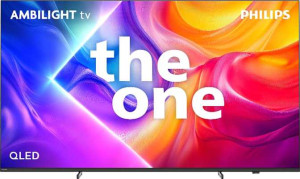
The most fundamental difference between these two TVs lies in their panel technology. The Philips 75PUS9000/12 uses a QLED LED-backlit LCD panel, while the Philips 77OLED760/12 uses an OLED panel. In practice, OLED produces perfect blacks and superior contrast because each pixel generates its own light and can switch off entirely, whereas QLED relies on a backlight that can cause blooming around bright objects on dark scenes. Both share the same 4K (3840 x 2160) resolution, near-identical pixel density (~59 vs 57 ppi given their respective sizes), 10-bit color depth, and 1070 million displayable colors, so on paper their color volume is comparable — though OLED's per-pixel control typically translates to more nuanced shadow detail.
Where the 75PUS9000/12 pushes ahead is refresh rate: its 144Hz panel outpaces the OLED760/12's 120Hz, a meaningful advantage for fast-motion content and gaming, where the extra headroom reduces motion blur and judder. Both support the full suite of HDR formats — HDR10, HDR10+, Dolby Vision, and HLG — so neither has an edge on format compatibility. On adaptive sync, the OLED760/12 adds Nvidia G-Sync support on top of AMD FreeSync Premium, giving PC gamers with Nvidia GPUs a notable bonus that the 75PUS9000/12 cannot match.
Overall, the two TVs target different priorities. The 75PUS9000/12 has a clear edge for motion and gaming fluidity thanks to its higher refresh rate, while the 77OLED760/12 holds the advantage in contrast, black levels, and Nvidia G-Sync compatibility — qualities that benefit cinematic viewing and a broader range of gaming setups. Shared specs like viewing angles (178° on both axes), anti-reflection coating, and ambient light sensors mean neither leads on ergonomic display features.