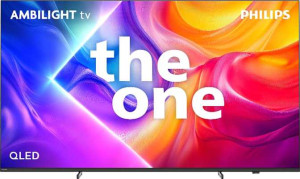
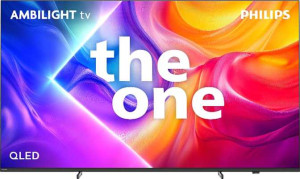
Both the Philips 75PUS9000/12 and the Philips 85PUS9000/12 share the same display technology — QLED, LED-backlit LCD — and an identical feature set: 3840 x 2160 px (4K UHD) resolution, 10-bit color depth rendering 1.07 billion colors, a 144Hz refresh rate, 9ms response time, and full HDR support across all major formats (HDR10, HDR10+, Dolby Vision, and HLG). AMD FreeSync Premium adaptive sync is present on both, making either a capable gaming display. In practice, this means the two models are functionally identical in terms of picture quality headroom and motion handling.
The only meaningful display differences stem from physical size. The 85″ model has a larger 85″ panel versus the 74.5″ panel on the 75″ model, but both drive the same pixel count. This results in a notably lower pixel density of 52 ppi on the 85″ versus 59 ppi on the 75″. In real-world terms, that gap becomes visible if you sit close to the screen — at typical living-room distances of 2.5 meters or more, both panels will appear sharp to the human eye, but the 75″ offers a marginally tighter, more refined image at closer seating positions.
The 75PUS9000/12 holds a slight edge on pixel density, making it the better choice for smaller rooms or closer viewing distances. However, if screen real estate and immersion are the priority and viewing distance is adequate, the 85PUS9000/12 delivers a more cinematic presence without sacrificing any feature or performance specification. The decision here is purely about room size and seating distance, not capability.