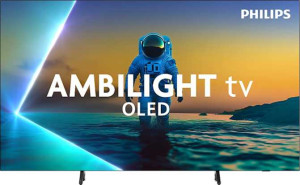
Philips 77OLED810/12 77"
Sony Bravia K-65XR80M2 65"

Philips 77OLED810/12 77" Sony Bravia K-65XR80M2 65"

Common Features

  • Both products have 4K (UHD) resolution.
  • Both products use OLED/AMOLED display type.
  • Both products have a resolution of 3840 x 2160 px.
  • Both products support 1070 million display colors.
  • Both products have a 10-bit bit depth.
  • Both products support HDR10.
  • Both products support Dolby Vision.
  • Both products support HLG.
  • Both products have Bluetooth.
  • Both products have HDMI 2.1.
  • Both products have 4 HDMI ports.
  • Both products support Wi-Fi.
  • Both products have 2 USB ports.
  • Both products have 1 RJ45 port.
  • Both products support Miracast.
  • Both products do not have an external memory slot.
  • Both products support Dolby Digital.
  • Both products have stereo speakers.
  • Both products have Dolby Atmos.
  • Both products have a subwoofer.

Main Differences

  • Philips 77OLED810/12 77″ has a screen size of 77″, while Sony Bravia K-65XR80M2 65″ has a screen size of 64.5″.
  • Pixel density is 57 ppi on Philips 77OLED810/12 77″ and 68 ppi on Sony Bravia K-65XR80M2 65″.
  • Philips 77OLED810/12 77″ has a refresh rate of 144Hz, while Sony Bravia K-65XR80M2 65″ has a refresh rate of 120Hz.
  • HDR10+ support is available on Philips 77OLED810/12 77″ but not on Sony Bravia K-65XR80M2 65″.
  • Philips 77OLED810/12 77″ supports Wi-Fi 4 (802.11n) and Wi-Fi 5 (802.11ac), while Sony Bravia K-65XR80M2 65″ supports Wi-Fi 4 (802.11n), Wi-Fi 5 (802.11ac), Wi-Fi 6 (802.11ax), and Wi-Fi 6E (802.11ax).
  • Bluetooth version is 5.2 on Philips 77OLED810/12 77″ and 5.3 on Sony Bravia K-65XR80M2 65″.
  • Philips 77OLED810/12 77″ has a socket for a 3.5 mm audio jack, while Sony Bravia K-65XR80M2 65″ does not.
  • Philips 77OLED810/12 77″ does not support Dolby Digital Plus, while Sony Bravia K-65XR80M2 65″ does.
  • Philips 77OLED810/12 77″ has a width of 1723 mm, while Sony Bravia K-65XR80M2 65″ has a width of 1443 mm.
  • Philips 77OLED810/12 77″ weighs 36000 g, while Sony Bravia K-65XR80M2 65″ weighs 22900 g.
  • Philips 77OLED810/12 77″ has a thickness of 79 mm, while Sony Bravia K-65XR80M2 65″ has a thickness of 34 mm.
  • Philips 77OLED810/12 77″ has a height of 991 mm, while Sony Bravia K-65XR80M2 65″ has a height of 830 mm.
  • Philips 77OLED810/12 77″ has a volume of 134891.947 cm³, while Sony Bravia K-65XR80M2 65″ has a volume of 40721.46 cm³.
  • Philips 77OLED810/12 77″ has a maximum operating temperature of 35 °C, while Sony Bravia K-65XR80M2 65″ has a maximum operating temperature of 40 °C.
  • Philips 77OLED810/12 77″ has a lowest potential operating temperature of 5 °C, while Sony Bravia K-65XR80M2 65″ has a lowest potential operating temperature of 0 °C.
  • Philips 77OLED810/12 77″ does not have a rechargeable remote control, while Sony Bravia K-65XR80M2 65″ does.
  • Philips 77OLED810/12 77″ has an operating power consumption of 134W, while Sony Bravia K-65XR80M2 65″ has an operating power consumption of 397W.
Specs Comparison
Philips 77OLED810/12 77"

Philips 77OLED810/12 77"

Sony Bravia K-65XR80M2 65"

Sony Bravia K-65XR80M2 65"

Display:
display resolution 4K (UHD) 4K (UHD)
Display type OLED/AMOLED OLED/AMOLED
screen size 77" 64.5"
resolution 3840 x 2160 px 3840 x 2160 px
pixel density 57 ppi 68 ppi
display colors 1070 million 1070 million
bit depth 10-bit 10-bit
refresh rate 144Hz 120Hz
supports HDR10
supports HDR10+
supports Dolby Vision
supports HLG
has anti-reflection coating
has an ambient light sensor
maximum horizontal viewing angle 178º 178º
maximum vertical viewing angle 178º 178º

The Philips 77OLED810/12 77″ and the Sony Bravia K-65XR80M2 65″ both offer a 4K (UHD) resolution of 3840 x 2160 px. However, the Philips has a larger 77″ screen, compared to the Sony's 64.5″ display. As for pixel density, the Sony has a higher figure at 68 ppi, while the Philips offers 57 ppi. Both displays use OLED/AMOLED technology and feature a 10-bit color depth with 1070 million display colors, ensuring vibrant visuals.

When it comes to refresh rate, the Philips supports a higher 144Hz, whereas the Sony has a 120Hz refresh rate. Both products support HDR10, Dolby Vision, and HLG, but the Philips has an added advantage with HDR10+ support, which the Sony does not offer. Both products also feature anti-reflection coatings and ambient light sensors to enhance viewing in different lighting conditions.

Viewing angles are identical for both products, with a maximum horizontal and vertical viewing angle of 178º. Overall, while both displays share several key features, the Philips model stands out in terms of size, refresh rate, and HDR10+ support.

Connectivity:
Has Bluetooth
HDMI version HDMI 2.1 HDMI 2.1
HDMI ports 4 4
supports Wi-Fi
Wi-Fi version Wi-Fi 4 (802.11n), Wi-Fi 5 (802.11ac) Wi-Fi 4 (802.11n), Wi-Fi 5 (802.11ac), Wi-Fi 6 (802.11ax), Wi-Fi 6E (802.11ax)
Bluetooth version 5.2 5.3
USB ports 2 2
RJ45 ports 1 1
supports Miracast
has a socket for a 3.5 mm audio jack
has an external memory slot
has a VGA connector
has a DVI connector

Both the Philips 77OLED810/12 77″ and the Sony Bravia K-65XR80M2 65″ offer Bluetooth connectivity, but with slight differences in version. The Philips uses Bluetooth 5.2, while the Sony features the more recent Bluetooth 5.3. Both models support HDMI 2.1 and provide 4 HDMI ports, ensuring excellent connectivity for external devices.

Regarding Wi-Fi, both products support Wi-Fi 4 (802.11n) and Wi-Fi 5 (802.11ac), but the Sony adds support for Wi-Fi 6 (802.11ax) and Wi-Fi 6E (802.11ax), offering more advanced wireless networking options. Both products feature 2 USB ports and 1 RJ45 port for wired network connectivity. Additionally, both models support Miracast, enabling wireless streaming to other compatible devices.

In terms of audio, the Philips includes a socket for a 3.5 mm audio jack, while the Sony does not. Neither model includes an external memory slot, VGA connector, or DVI connector. Overall, while both TVs offer similar core connectivity options, the Sony has the advantage in terms of more advanced Wi-Fi capabilities and a slightly newer Bluetooth version.

Audio:
supports Dolby Digital
supports Digital Out
supports Dolby Digital Plus
has SRS TheaterSound HD
has stereo speakers
has Dolby Atmos
has Dolby Audio
supports Dolby Virtual
has a subwoofer
has DTS:X
HDMI ARC / eARC HDMI ARC, HDMI eARC HDMI ARC, HDMI eARC

Both the Philips 77OLED810/12 77″ and the Sony Bravia K-65XR80M2 65″ feature similar audio capabilities. Both support Dolby Digital, Digital Out, Dolby Atmos, and Dolby Audio, ensuring rich and immersive sound experiences. They also both come with stereo speakers and a subwoofer, which should provide solid audio performance.

The main difference comes with the support for Dolby Digital Plus, which the Sony supports, while the Philips does not. Additionally, both models include DTS:X for advanced surround sound, and neither supports Dolby Virtual. In terms of HDMI audio connectivity, both TVs offer HDMI ARC and eARC, providing flexibility for connecting audio devices.

Overall, the audio specifications are quite similar between the two models, with the main distinction being that the Sony includes Dolby Digital Plus, while the Philips does not.

Design:
width 1723 mm 1443 mm
weight 36000 g 22900 g
thickness 79 mm 34 mm
height 991 mm 830 mm
volume 134891.947 cm³ 40721.46 cm³
Supports VESA mount
maximum operating temperature 35 °C 40 °C
lowest potential operating temperature 5 °C 0 °C

The Philips 77OLED810/12 77″ and the Sony Bravia K-65XR80M2 65″ differ significantly in size and weight. The Philips is wider at 1723 mm and heavier at 36000 g, compared to the Sony, which is 1443 mm wide and weighs 22900 g. The thickness of the Philips is 79 mm, while the Sony is much slimmer at 34 mm. As for height, the Philips stands at 991 mm, while the Sony is shorter at 830 mm. The volume of the Philips is substantially larger, at 134891.947 cm³, compared to the Sony's 40721.46 cm³.

Both models support VESA mounting, offering flexibility for wall installation. In terms of temperature tolerance, the Philips has a maximum operating temperature of 35 °C, whereas the Sony can handle slightly higher temperatures, up to 40 °C. The Philips can operate in temperatures as low as 5 °C, while the Sony can function in colder environments down to 0 °C.

Overall, the Philips model is significantly larger and heavier than the Sony, though both are suitable for VESA mounting and have similar temperature tolerance ranges with the Philips having slightly lower minimum temperature capabilities.

Features:
release date April 2025 April 2025
has AirPlay
has built-in smart TV
compatible with Google Assistant
works with Alexa
works with Siri/Apple HomeKit
supports a remote smartphone
has a rechargeable remote control
supports USB recording
operating power consumption 134W 397W
standby power consumption 0.5W 0.5W
has a search browser
has a sleep timer
has a child lock
has voice commands

The Philips 77OLED810/12 77″ and the Sony Bravia K-65XR80M2 65″ both come with built-in smart TV functionality, support for AirPlay, Google Assistant, and Alexa, and compatibility with remote smartphones. However, the Philips lacks compatibility with Siri/Apple HomeKit, while the Sony shares this limitation. The Philips also does not feature a rechargeable remote control, whereas the Sony includes this feature.

Both models support USB recording, have a sleep timer, child lock, and voice commands, and include a search browser. In terms of power consumption, the Philips operates at a lower 134W when in use, while the Sony uses 397W. Both products have the same standby power consumption of 0.5W.

Overall, the two models are similar in terms of features, with the main differences being the presence of a rechargeable remote control in the Sony and a higher operating power consumption in the Sony compared to the Philips.

Comparison Summary

This is a specification comparison between Philips 77OLED810/12 77″ and Sony Bravia K-65XR80M2 65″. Both products have 4K (UHD) resolution, OLED/AMOLED display type, and support Dolby Vision and HDR10. However, the Philips model has a larger screen size of 77″ compared to the Sony's 64.5″. The Philips model also offers a higher refresh rate of 144Hz, while the Sony's is 120Hz. In terms of connectivity, the Philips model lacks support for Wi-Fi 6E, which is available on the Sony. Additionally, the Philips model has a socket for a 3.5 mm audio jack, while the Sony does not.