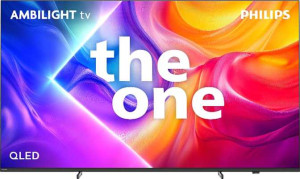
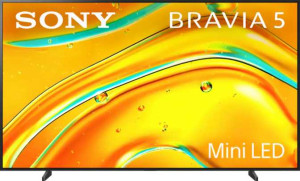
Both the Philips 85PUS9000/12 and the Sony Bravia K-98XR50 share the same 4K (3840 x 2160) resolution and 10-bit color depth, delivering identical raw pixel counts and a identical color palette of 1070 million colors. Where they diverge meaningfully is in panel technology and screen size. The Philips uses QLED backlighting, which leverages quantum dots to extend the color gamut and brightness potential of an LCD panel, while the Sony relies on Mini-LED, a technology that uses thousands of smaller LEDs to enable more precise local dimming zones — generally translating to better contrast control and deeper blacks in demanding HDR scenes. Neither approach is universally superior; QLED typically wins on peak color saturation, while Mini-LED tends to win on contrast granularity.
The size gap is substantial: the Sony's 97.5″ panel versus the Philips's 85″ means a noticeably larger viewing canvas, but the trade-off shows up in pixel density. The Philips delivers 52 ppi against the Sony's 45 ppi, meaning individual pixels are more tightly packed on the smaller screen — an advantage that becomes perceptible when sitting closer or viewing fine detail. The Philips also holds an edge in motion handling, offering a 144Hz refresh rate versus the Sony's 120Hz, which matters for fast-action content, high-frame-rate gaming, and motion interpolation headroom. On HDR format support, the Philips covers HDR10+ in addition to HDR10, Dolby Vision, and HLG, while the Sony skips HDR10+ — a relevant gap for users with HDR10+-mastered content, though Dolby Vision covers most premium streaming scenarios for both.
Overall, the Philips 85PUS9000/12 has a clear technical edge in this spec group: higher pixel density, a faster refresh rate, and broader HDR format coverage. The Sony counters primarily with its larger screen size and Mini-LED contrast advantages, making it the better pick for viewers who prioritize sheer screen real estate and contrast depth over sharpness and motion clarity. The right choice depends on viewing distance and use case — but on pure display specs, the Philips is the more well-rounded performer.