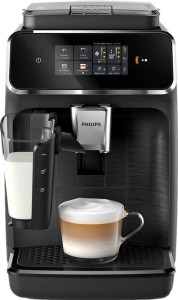
Philips Series 2300 EP2330
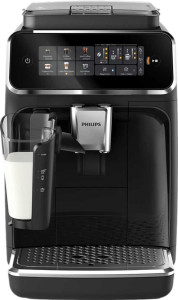
Philips Series 3300 EP3341/50

Philips Series 2300 EP2330 Philips Series 3300 EP3341/50

Overview

Choosing between the Philips Series 2300 EP2330 and the Philips Series 3300 EP3341/50 means weighing two capable automatic bean-to-cup machines that share a strong common foundation. While both offer an integrated grinder, 12 grind settings, and pre-infusion, the real debate comes down to smart connectivity versus drink variety and a handful of features that set each model apart for different types of home baristas.

Common Features

  • Both products are automatic coffee machines.
  • Both products support ground coffee and beans.
  • Both products have an operating power consumption of 1500W.
  • Neither product uses proprietary capsules.
  • Both products come with a 2-year warranty.
  • Neither product has a pressure gauge.
  • Neither product has a 58mm portafilter.
  • Neither product has a steam wand.
  • Both products have an integrated grinder.
  • Neither product uses an E61 group head.
  • Both products have a display.
  • Neither product has a cup warmer.
  • Both products have a removable water tank.
  • The water tank is transparent on both products.
  • Both products have an integrated water filter.
  • Neither product supports direct water connection.
  • Neither product can dispense hot water.
  • Both products have a water tank capacity of 1.7 litres.
  • Both products have a sleep mode.
  • Both products have a cleaning alert.
  • Both products indicate when the drip tray is full.
  • Both products prevent overheating.
  • Neither product performs automatic coffee circuit rinse.
  • Neither product performs automatic milk circuit cleaning.
  • Both products have a pre-infusion function.
  • Both products offer 12 grind settings.

Main Differences

  • Volume is 39518.178 cm³ on Philips Series 2300 EP2330 and 39160.8 cm³ on Philips Series 3300 EP3341/50.
  • Weight is 7500 g on Philips Series 2300 EP2330 and 7996 g on Philips Series 3300 EP3341/50.
  • Thickness is 246 mm on Philips Series 2300 EP2330 and 245 mm on Philips Series 3300 EP3341/50.
  • Height is 371 mm on Philips Series 2300 EP2330 and 370 mm on Philips Series 3300 EP3341/50.
  • Width is 433 mm on Philips Series 2300 EP2330 and 432 mm on Philips Series 3300 EP3341/50.
  • Simultaneous brewing and steaming is supported on Philips Series 3300 EP3341/50 but not available on Philips Series 2300 EP2330.
  • A shot timer is present on Philips Series 2300 EP2330 but not available on Philips Series 3300 EP3341/50.
  • The number of available drinks is 4 on Philips Series 2300 EP2330 and 6 on Philips Series 3300 EP3341/50.
  • Wi-Fi connectivity is supported on Philips Series 2300 EP2330 but not available on Philips Series 3300 EP3341/50.
  • Remote smartphone control is supported on Philips Series 2300 EP2330 but not available on Philips Series 3300 EP3341/50.
Specs Comparison
Philips Series 2300 EP2330

Philips Series 2300 EP2330

Philips Series 3300 EP3341/50

Philips Series 3300 EP3341/50

General info:
Type Automatic Automatic
coffee type Ground, Beans Ground, Beans
volume 39518.178 cm³ 39160.8 cm³
operating power consumption 1500W 1500W
Doesn’t use proprietary capsules
weight 7500 g 7996 g
warranty period 2 years 2 years
release date May 2025 June 2025
thickness 246 mm 245 mm
height 371 mm 370 mm
width 433 mm 432 mm

At a foundational level, the Philips Series 2300 EP2330 and the Philips Series 3300 EP3341/50 are built on a near-identical platform. Both are fully automatic machines that accept ground coffee and whole beans, draw 1500W of operating power, and carry a 2-year warranty. Critically, neither relies on proprietary capsules, which means long-term running costs are not locked to a specific pod ecosystem — a meaningful practical advantage shared equally by both.

Where the two diverge slightly is in physical footprint and weight. Their dimensions are almost indistinguishable — differing by just 1 mm across height, width, and thickness — so placement on a countertop will feel essentially the same for both. The more notable gap is weight: the EP3341/50 comes in at 7996 g versus the EP2330's 7500 g, a difference of roughly 500 g. While neither machine is designed to be moved frequently, that extra half-kilogram in the EP3341/50 hints at additional internal components or a more substantial build, and could matter slightly if you reposition your machine regularly.

Overall, on general specs alone, these two machines are essentially tied. The shared power draw, compatibility, warranty, and near-identical size mean neither holds a meaningful edge here. The EP2330's marginally lower weight is the only distinguishing factor in this group, giving it a very slight practical advantage for users who value ease of handling, though the real differentiation between these two models will come from feature-specific specs rather than general characteristics.
Components:
Has a pressure gauge
Has a 58mm portafilter
Has a steam wand
Has a commercial steam wand
Has an integrated grinder
Uses E61 group head
Has a display
Has cup warmer
Has a rotary vane pump
Has burr grinder
group heads 1 1
has a touch screen
Cup clearance is adjustable
Has integrated milk frother

From a components standpoint, the EP2330 and EP3341/50 are mirror images of each other — every single spec in this group is shared between them. Both machines are built around an integrated burr grinder, which is a significant practical win over blade grinders: burr grinding produces a consistent particle size, directly translating to more even extraction and better-tasting coffee without requiring a separate grinder on the counter.

Both also feature a touchscreen display, adjustable cup clearance, and an integrated milk frother — a combination that positions these firmly as all-in-one convenience machines capable of handling milk-based drinks without any external accessories. The absence of a steam wand, pressure gauge, or E61 group head confirms these are not prosumer or semi-professional machines; they are purpose-built superautomatics designed for ease of use over manual control. That trade-off is a deliberate design choice, not a flaw, and suits the target audience well.

Since the component sets are completely identical, this group offers no basis for differentiation between the two models. Any decision between the EP2330 and EP3341/50 will need to rest on other specification groups — this one is a clear and unequivocal tie.

Water source:
Has PID controller
Has a removable water tank
Water tank is transparent
Has integrated filter
Has direct water connection
can dispense hot water
water tank capacity 1.7 l 1.7 l

The water system on both machines is built around a 1.7-liter removable, transparent tank with an integrated filter. The transparent design is a small but genuinely useful daily convenience — you can check water levels at a glance without removing the tank or guessing. At 1.7 liters, the capacity is solidly mid-range for a home superautomatic, comfortably supporting several drinks before a refill is needed.

The integrated filter is worth noting: it helps reduce limescale buildup and can soften water hardness, both of which protect internal components over time and can subtly improve taste. Neither machine offers a direct plumbing connection, so both require manual refilling — a minor but real consideration for very high-volume households. The absence of a PID controller on both means precise temperature regulation is not a feature of either model's water heating system.

Much like the components group, this category yields a complete tie — every water-related spec is identical across the EP2330 and EP3341/50. Neither machine holds any advantage here, and this group should not factor into a purchasing decision between the two.

Maintenance:
Has sleep mode
Has cleaning alert
Indicates when drip tray is full
Prevents overheating
Automatic coffee circuit rinse
Automatic milk circuit cleaning

Maintenance-wise, both machines offer a sensible set of protective and alerting features. Sleep mode, overheat protection, a cleaning alert, and a full drip tray indicator are all present on both — a combination that handles the most common pain points of daily machine upkeep passively, nudging the user to act rather than requiring them to track maintenance manually. For most home users, these are the features that meaningfully extend machine lifespan and prevent avoidable damage.

The more telling detail, however, is what neither machine includes: both lack automatic coffee circuit rinsing and automatic milk circuit cleaning. Given that both models have an integrated milk frother, the absence of automatic milk circuit cleaning is a noteworthy gap — milk residue is one of the faster routes to bacterial buildup and off-flavors, meaning users will need to handle that cleaning step manually and consistently. This is a shared limitation rather than a differentiator, but it is worth factoring into the overall ownership experience.

Once again, the specs are identical across both models, making this a straight tie. The EP2330 and EP3341/50 carry the same maintenance strengths and the same gaps — neither has an edge in this category.

Features:
Has a pre-infusion function
Can brew and steam simultaneously
Has a shot timer
number of grind settings 12 12
number of drinks 4 6
supports Wi-Fi
supports a remote smartphone

This is the first specification group where the two machines genuinely diverge, and the differences reveal two distinct philosophies. The EP3341/50 pulls ahead on in-cup versatility: it supports 6 drink options versus the EP2330's 4, and crucially, it can brew and steam simultaneously — a meaningful workflow advantage when preparing milk-based drinks like lattes or cappuccinos, as it cuts preparation time rather than sequencing the two steps. For households that regularly make multiple milk drinks in a row, this is a tangible daily convenience.

The EP2330 counters with a different kind of appeal — connectivity. Wi-Fi support and smartphone remote control are exclusive to the EP2330, enabling the machine to be operated or scheduled remotely, which suits users who want their coffee ready the moment they walk into the kitchen. It also includes a shot timer, a small but appreciated feature for users who want to monitor extraction consistency over time. Neither machine trades blows on grind precision — both offer an identical 12 grind settings and pre-infusion, so the coffee quality baseline is the same.

The verdict here depends entirely on use case. The EP3341/50 has the edge for households prioritizing drink variety and faster milk-drink preparation, while the EP2330 suits users who value remote control and connectivity. There is no universal winner — these are genuine trade-offs that cater to different daily routines rather than one machine being objectively more capable than the other.

Comparison Summary & Verdict

Both machines deliver a near-identical core experience: same power, same tank capacity, same grinder flexibility, and the same compact footprint. However, their differences reveal two distinct personalities. The Philips Series 2300 EP2330 stands out with Wi-Fi connectivity and remote smartphone control, plus a built-in shot timer, making it the smarter choice for tech-savvy users who want to monitor and fine-tune their brewing habits remotely. The Philips Series 3300 EP3341/50, on the other hand, counters with a wider menu of six drinks and the ability to brew and steam simultaneously, which is a meaningful advantage for households that regularly serve multiple coffee styles. If smart home integration matters to you, the EP2330 wins. If versatility and speed of service at the cup are your priorities, the EP3341/50 is the more practical daily companion.

Philips Series 2300 EP2330
Buy Philips Series 2300 EP2330 if...

Buy the Philips Series 2300 EP2330 if you want Wi-Fi connectivity and remote smartphone control over your coffee machine, and appreciate having a shot timer to fine-tune your brews.

Philips Series 3300 EP3341/50
Buy Philips Series 3300 EP3341/50 if...

Buy the Philips Series 3300 EP3341/50 if you want access to a wider selection of six drinks and the convenience of brewing and steaming at the same time.