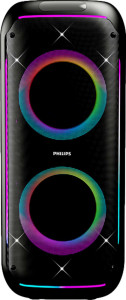
Philips TAX4910
Xiaomi Portable Bluetooth Speaker

Philips TAX4910 Xiaomi Portable Bluetooth Speaker

Common Features

  • Both products have two drivers.
  • Both products have a control panel placed on the device.
  • Both products have a rechargeable battery.
  • Both products have a battery level indicator.
  • Both products can be used wirelessly.
  • Both products support remote smartphone control.
  • Both products have voice prompts.
  • Both products support pairing for stereo sound.
  • Both products do not have a 3.5 mm audio jack socket.
  • Both products do not have aptX support.
  • Both products do not have a removable battery.
  • Both products do not have a touch screen.
  • Both products do not have a neckband design.
  • Both products do not support fast pairing.
  • Both products do not have a mute function.
  • Both products do not work as a power bank.
  • Both products do not have a radio.
  • Both products do not have a microphone input.

Main Differences

  • The volume is 46466.16 cm³ on Philips TAX4910 and 219.0496 cm³ on Xiaomi Portable Bluetooth Speaker.
  • Philips TAX4910 has no water resistance, while Xiaomi Portable Bluetooth Speaker is water resistant.
  • Philips TAX4910 features RGB lighting, but Xiaomi Portable Bluetooth Speaker does not.
  • Philips TAX4910 includes a remote control, while Xiaomi Portable Bluetooth Speaker does not.
  • Philips TAX4910 weighs 6400 g, whereas Xiaomi Portable Bluetooth Speaker weighs 249 g.
  • Philips TAX4910 has a height of 624 mm, while Xiaomi Portable Bluetooth Speaker has a height of 56 mm.
  • Philips TAX4910 has a width of 265 mm, whereas Xiaomi Portable Bluetooth Speaker has a width of 154 mm.
  • Philips TAX4910 has a thickness of 281 mm, while Xiaomi Portable Bluetooth Speaker has a thickness of 25.4 mm.
  • Xiaomi Portable Bluetooth Speaker has a passive radiator, but Philips TAX4910 does not.
  • Philips TAX4910 has no microphones, while Xiaomi Portable Bluetooth Speaker has one microphone.
  • Battery power is 6000 mAh on Philips TAX4910 and 1980 mAh on Xiaomi Portable Bluetooth Speaker.
  • Philips TAX4910 has a removable battery, while Xiaomi Portable Bluetooth Speaker does not.
  • Bluetooth version is 5.3 on Philips TAX4910 and 5.4 on Xiaomi Portable Bluetooth Speaker.
  • Philips TAX4910 does not support Bluetooth pairing using NFC, but Xiaomi Portable Bluetooth Speaker does.
  • Philips TAX4910 has an AUX input, whereas Xiaomi Portable Bluetooth Speaker does not.
  • Philips TAX4910 lacks USB Type-C, but Xiaomi Portable Bluetooth Speaker includes it.
  • Philips TAX4910 has an external memory slot, while Xiaomi Portable Bluetooth Speaker does not.
  • Philips TAX4910 has a microphone input, but Xiaomi Portable Bluetooth Speaker does not.
  • Philips TAX4910 does not support fast pairing, while Xiaomi Portable Bluetooth Speaker also does not.
  • Philips TAX4910 does not have a mute function, whereas Xiaomi Portable Bluetooth Speaker also lacks a mute function.
  • Philips TAX4910 does not work as a power bank, while Xiaomi Portable Bluetooth Speaker also does not.
Specs Comparison
Philips TAX4910

Philips TAX4910

Xiaomi Portable Bluetooth Speaker

Xiaomi Portable Bluetooth Speaker

Design:
volume 46466.16 cm³ 219.0496 cm³
drivers count 2 2
has a neodymium magnet
control panel placed on a device
water resistance None Water resistant
travel bag is included
has a touch screen
has RGB lighting
is a neckband speaker
has a remote control
weight 6400 g 249 g
height 624 mm 56 mm
width 265 mm 154 mm
thickness 281 mm 25.4 mm

The Philips TAX4910 has a significantly larger volume of 46466.16 cm³ compared to the Xiaomi Portable Bluetooth Speaker's 219.0496 cm³, making it much bulkier. Both speakers have 2 drivers, but the Philips model is notably heavier at 6400 g, while the Xiaomi speaker is much lighter at 249 g. The height, width, and thickness also differ substantially: the Philips TAX4910 measures 624 mm in height, 265 mm in width, and 281 mm in thickness, while the Xiaomi Portable Bluetooth Speaker is much smaller at 56 mm in height, 154 mm in width, and 25.4 mm in thickness.

When it comes to additional features, the Philips TAX4910 includes RGB lighting, while the Xiaomi speaker lacks this feature. The Philips model also includes a remote control, unlike the Xiaomi speaker, which does not. Neither product includes a travel bag. Both devices have control panels placed on the device itself. Additionally, the Xiaomi speaker is water-resistant, which the Philips model lacks.

Neither speaker uses a neodymium magnet, and both have the same number of drivers. The Philips TAX4910 is not a neckband speaker, and neither is the Xiaomi model. Finally, while the Philips TAX4910 has a height of 624 mm, the Xiaomi speaker is much more compact, standing at just 56 mm high.

Sound quality:
has stereo speakers
has a subwoofer
Has a passive radiator
number of microphones 0 1
has a noise-canceling microphone
has a magnetic shielding

Both the Philips TAX4910 and the Xiaomi Portable Bluetooth Speaker lack stereo speakers and subwoofers, so sound reproduction from both will be more basic, without the depth or separation that those features typically provide. The Xiaomi speaker stands out, however, by including a passive radiator, which is not present in the Philips model. This could help enhance bass performance in the Xiaomi speaker, although it’s not guaranteed to match the sound quality of a subwoofer.

When it comes to microphones, the Xiaomi Portable Bluetooth Speaker has one microphone, whereas the Philips TAX4910 has no microphones at all. Neither product features a noise-canceling microphone, meaning neither speaker is specifically designed to reduce background noise during calls or recordings.

Finally, neither product includes magnetic shielding, so both are likely to be susceptible to potential interference from nearby electronic devices.

Power:
battery power 6000 mAh 1980 mAh
Battery life 10 hours 10 hours
has a battery level indicator
has a rechargeable battery
has a removable battery
has wireless charging

The Philips TAX4910 is equipped with a larger 6000 mAh battery compared to the Xiaomi Portable Bluetooth Speaker's 1980 mAh battery. Despite this difference in capacity, both speakers offer the same 10 hours of battery life. This suggests that the Philips model may have a higher power consumption, but the longer battery life compensates for that. Both speakers feature a battery level indicator and a rechargeable battery, ensuring users can monitor and easily recharge the devices when necessary.

The key difference between the two products in terms of power is that the Philips TAX4910 has a removable battery, while the Xiaomi Portable Bluetooth Speaker does not. This may provide more flexibility for users of the Philips model, as they can swap out the battery when needed. Neither speaker supports wireless charging.

Overall, both devices offer similar battery life, but the Philips model's larger battery and removable design could be beneficial in certain situations.

Connectivity:
Bluetooth version 5.3 5.4
supports Bluetooth pairing using NFC
has a socket for a 3.5 mm audio jack
has an AUX input
has aptX Lossless
has LDAC
has aptX Adaptive
has aptX HD
has aptX
has aptX Low Latency
has AAC
has AirPlay
has Chromecast built-in
has Auracast
has Bluetooth LE Audio
maximum Bluetooth range 10 m 10 m
supports Wi-Fi
USB ports 1 1
Has USB Type-C
has a 3.5mm male connector
has an external memory slot
is DLNA-certified
supports Ethernet
has a microphone input

The Philips TAX4910 uses Bluetooth version 5.3, while the Xiaomi Portable Bluetooth Speaker features the slightly newer Bluetooth version 5.4. Both devices offer a maximum Bluetooth range of 10 meters, so their connectivity range is identical. The Xiaomi speaker supports Bluetooth pairing via NFC, which the Philips model does not have. Neither product provides a socket for a 3.5 mm audio jack, but the Philips model includes an AUX input, while the Xiaomi speaker does not.

Both speakers have USB ports, with the Philips TAX4910 lacking USB Type-C and the Xiaomi speaker supporting it. The Philips device also has an external memory slot, which is absent in the Xiaomi model. The Philips model is the only one to include a microphone input, while the Xiaomi speaker does not offer this feature. Neither speaker supports Wi-Fi, Ethernet, or has AirPlay, Chromecast, Auracast, Bluetooth LE Audio, or LDAC.

In terms of audio codec support, neither product includes aptX Lossless, aptX Adaptive, aptX HD, aptX, or aptX Low Latency, and both lack AAC support. Neither speaker is DLNA-certified either.

Features:
release date September 2025 September 2025
Can be used wirelessly
supports a remote smartphone
has fast pairing
has voice commands
Has a radio
Has voice prompts
has a mute function
works as a power bank

Both the Philips TAX4910 and the Xiaomi Portable Bluetooth Speaker can be used wirelessly and support remote smartphone control. Neither speaker features fast pairing, voice commands, or a mute function. Additionally, neither has a radio or works as a power bank. Both devices include voice prompts to assist users with operation.

In summary, the two models are quite similar in terms of features, with both offering wireless use, smartphone control, and voice prompts. However, there are no standout differences between them in this category.

Miscellaneous:
supports pairing for stereo sound

Both the Philips TAX4910 and the Xiaomi Portable Bluetooth Speaker support pairing for stereo sound, allowing users to connect multiple devices for enhanced audio experience.

There are no differences between the two products in this category as both offer the same capability for stereo pairing.

In summary, both speakers provide the same stereo pairing feature, ensuring they can be used in a multi-speaker setup if needed.

Comparison Summary

This is a specification comparison between the Philips TAX4910 and Xiaomi Portable Bluetooth Speaker. Both devices feature two drivers, a rechargeable battery, and voice prompts. However, the Philips TAX4910 is much larger and heavier, with a volume of 46466.16 cm³ and a weight of 6400 g, compared to the Xiaomi's 219.0496 cm³ and 249 g. The Philips TAX4910 includes RGB lighting and a remote control, while the Xiaomi Portable Bluetooth Speaker lacks both. Additionally, the Xiaomi model offers water resistance and supports Bluetooth pairing via NFC, features not present in the Philips TAX4910.