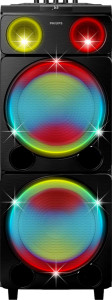
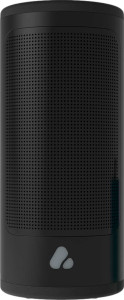
The most striking physical contrast between these two speakers is their weight-to-volume relationship. The Philips TAX5509 is dramatically heavier at 1900 g despite occupying a much smaller footprint (152.49 cm³), suggesting a dense internal build — likely driven by substantial passive components or a heavy enclosure material. The Poca Audio Pine Beat, by contrast, is significantly lighter at 670 g while being physically much larger (1139.2 cm³, with dimensions of 178 × 80 × 80 mm), pointing to a more portable-minded construction. For users who need to move or reposition the speaker frequently, the Pine Beat's lighter chassis gives it a clear everyday handling advantage.
On environmental resilience, the two products diverge sharply: the Pine Beat carries a waterproof rating, making it suitable for outdoor, poolside, or kitchen use, while the TAX5509 offers no water resistance whatsoever. This is a decisive factor for anyone considering outdoor or rugged-environment use. The TAX5509 does counter with two design features the Pine Beat lacks — RGB lighting and a remote control — which position it more as a stationary, lifestyle-oriented speaker where ambiance and convenience from a distance matter more than portability or durability.
Both speakers share a control panel on the device and a detachable cable, so neither has an edge on those fronts. Overall, the Pine Beat holds a meaningful design advantage for users prioritizing portability and outdoor capability, while the TAX5509 is better suited as a fixed-placement unit where its RGB aesthetics and remote usability can shine without the risk of moisture exposure.