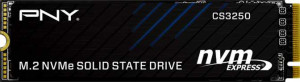
At a foundational level, both drives share the same M.2 NVMe form factor, PCIe 5.0 interface, TLC NAND, and an 8-channel controller — meaning they are architected on comparable platforms. The key divergence lies in caching strategy: the WD Black SN8100 uses a dedicated DRAM cache, which provides a fast, consistent buffer for frequently accessed data, while the PNY CS3250 relies on HMB (Host Memory Buffer), borrowing a slice of system RAM instead. In practice, DRAM cache tends to deliver more predictable low-latency performance under sustained mixed workloads, giving the SN8100 a subtle but real consistency advantage in those scenarios.
Endurance tells a starkly different story. The CS3250 2TB is rated for 1400 TBW compared to just 600 TBW on the SN8100 1TB — more than double. Even accounting for the capacity difference (2TB vs 1TB), the CS3250ʼs endurance scales well above what a proportional comparison would suggest, making it a far more durable long-term choice for write-heavy environments like NAS, video editing scratch disks, or frequent large backups.
Both drives carry a 5-year warranty and neither includes a heatsink, so installation requirements are identical. Overall, the PNY CS3250 holds the broader advantage in this category thanks to its commanding endurance lead, though users prioritizing consistent latency in mixed-use workloads may find the SN8100ʼs DRAM cache architecture appealing despite the lower TBW rating.