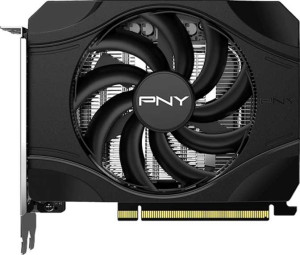
PNY GeForce RTX 5050 Single Fan
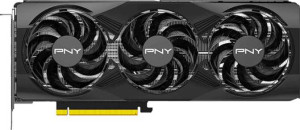
PNY GeForce RTX 5070 Triple Fan

PNY GeForce RTX 5050 Single Fan PNY GeForce RTX 5070 Triple Fan

Overview

Welcome to this in-depth specification comparison between the PNY GeForce RTX 5050 Single Fan and the PNY GeForce RTX 5070 Triple Fan, two Blackwell-architecture GPUs that share a common platform yet diverge sharply in raw power and physical scale. Both cards support ray tracing, DLSS, and DirectX 12 Ultimate, but key battlegrounds such as floating-point performance, VRAM capacity, and memory bandwidth tell very different stories about who each card is built for.

Common Features

  • Both products support Double Precision Floating Point (DPFP).
  • Both products support ECC memory.
  • Both products use the DirectX 12 Ultimate API.
  • Both products support OpenGL version 4.6.
  • Both products support OpenCL version 3.
  • Both products support multi-display technology.
  • Both products support ray tracing.
  • Both products support 3D.
  • Both products support DLSS.
  • XeSS (XMX) support is not available on either product.
  • Both products have an HDMI output with 1 HDMI port using HDMI version 2.1b.
  • Both products have 3 DisplayPort outputs.
  • Neither product has USB-C ports, DVI outputs, or mini DisplayPort outputs.
  • Both products are built on the Blackwell GPU architecture.
  • Both products use PCI Express version 5.
  • Both products come with a 3-year warranty.
  • Neither product features air-water cooling.

Main Differences

  • GPU clock speed is 2317 MHz on PNY GeForce RTX 5050 Single Fan and 2160 MHz on PNY GeForce RTX 5070 Triple Fan.
  • GPU turbo speed is 2572 MHz on PNY GeForce RTX 5050 Single Fan and 2510 MHz on PNY GeForce RTX 5070 Triple Fan.
  • Pixel rate is 82.3 GPixel/s on PNY GeForce RTX 5050 Single Fan and 200.8 GPixel/s on PNY GeForce RTX 5070 Triple Fan.
  • Floating-point performance is 13.17 TFLOPS on PNY GeForce RTX 5050 Single Fan and 30.84 TFLOPS on PNY GeForce RTX 5070 Triple Fan.
  • Texture rate is 205.8 GTexels/s on PNY GeForce RTX 5050 Single Fan and 481.9 GTexels/s on PNY GeForce RTX 5070 Triple Fan.
  • GPU memory speed is 2500 MHz on PNY GeForce RTX 5050 Single Fan and 2209 MHz on PNY GeForce RTX 5070 Triple Fan.
  • Shading units total 2560 on PNY GeForce RTX 5050 Single Fan and 6144 on PNY GeForce RTX 5070 Triple Fan.
  • Texture mapping units (TMUs) number 80 on PNY GeForce RTX 5050 Single Fan and 192 on PNY GeForce RTX 5070 Triple Fan.
  • Render output units (ROPs) number 32 on PNY GeForce RTX 5050 Single Fan and 80 on PNY GeForce RTX 5070 Triple Fan.
  • Effective memory speed is 20000 MHz on PNY GeForce RTX 5050 Single Fan and 28000 MHz on PNY GeForce RTX 5070 Triple Fan.
  • Maximum memory bandwidth is 320 GB/s on PNY GeForce RTX 5050 Single Fan and 672 GB/s on PNY GeForce RTX 5070 Triple Fan.
  • VRAM is 8GB on PNY GeForce RTX 5050 Single Fan and 12GB on PNY GeForce RTX 5070 Triple Fan.
  • The GDDR version is GDDR6 on PNY GeForce RTX 5050 Single Fan and GDDR7 on PNY GeForce RTX 5070 Triple Fan.
  • Memory bus width is 128-bit on PNY GeForce RTX 5050 Single Fan and 192-bit on PNY GeForce RTX 5070 Triple Fan.
  • Thermal Design Power (TDP) is 130W on PNY GeForce RTX 5050 Single Fan and 250W on PNY GeForce RTX 5070 Triple Fan.
  • Semiconductor size is 5 nm on PNY GeForce RTX 5050 Single Fan and 4 nm on PNY GeForce RTX 5070 Triple Fan.
  • Number of transistors is 16900 million on PNY GeForce RTX 5050 Single Fan and 31100 million on PNY GeForce RTX 5070 Triple Fan.
  • Width is 147 mm on PNY GeForce RTX 5050 Single Fan and 299.5 mm on PNY GeForce RTX 5070 Triple Fan.
  • Height is 125 mm on PNY GeForce RTX 5050 Single Fan and 120 mm on PNY GeForce RTX 5070 Triple Fan.
Specs Comparison
PNY GeForce RTX 5050 Single Fan

PNY GeForce RTX 5050 Single Fan

PNY GeForce RTX 5070 Triple Fan

PNY GeForce RTX 5070 Triple Fan

Performance:
GPU clock speed 2317 MHz 2160 MHz
GPU turbo 2572 MHz 2510 MHz
pixel rate 82.3 GPixel/s 200.8 GPixel/s
floating-point performance 13.17 TFLOPS 30.84 TFLOPS
texture rate 205.8 GTexels/s 481.9 GTexels/s
GPU memory speed 2500 MHz 2209 MHz
shading units 2560 6144
texture mapping units (TMUs) 80 192
render output units (ROPs) 32 80
Has Double Precision Floating Point (DPFP)

The most telling divide between the RTX 5050 Single Fan and the RTX 5070 Triple Fan lies in their shader and compute architecture. The RTX 5070 houses 6144 shading units versus just 2560 on the RTX 5050 — a 2.4× advantage that cascades directly into every throughput metric. Its floating-point performance reaches 30.84 TFLOPS compared to 13.17 TFLOPS, meaning the RTX 5070 can process nearly 2.5× more parallel compute work per second. In practical terms, this translates to noticeably higher frame rates at demanding resolutions, smoother performance in GPU-accelerated workloads, and greater headroom for ray tracing and AI-based features.

Interestingly, the RTX 5050 counters with a higher base clock of 2317 MHz (vs. 2160 MHz) and a faster GPU memory speed of 2500 MHz (vs. 2209 MHz). These advantages do allow each individual shader on the RTX 5050 to operate at a quicker pace and feed data with less latency, but with less than half the number of execution units, the net throughput still falls far short. The RTX 5070′s pixel rate of 200.8 GPixel/s and texture rate of 481.9 GTexels/s dwarf the RTX 5050′s 82.3 GPixel/s and 205.8 GTexels/s respectively, confirming that clock speed alone cannot bridge a gap of this magnitude in core count.

Both cards support Double Precision Floating Point (DPFP), making them viable for professional compute tasks, but the RTX 5070′s substantially larger compute engine gives it a decisive edge there as well. Overall, the RTX 5070 Triple Fan holds a clear and commanding performance advantage in this group across virtually every metric that matters for gaming and GPU compute. The RTX 5050 is a more compact, higher-clocked option, but buyers prioritizing raw throughput should look no further than the RTX 5070.

Memory:
effective memory speed 20000 MHz 28000 MHz
maximum memory bandwidth 320 GB/s 672 GB/s
VRAM 8GB 12GB
GDDR version GDDR6 GDDR7
memory bus width 128-bit 192-bit
Supports ECC memory

The memory specifications of the PNY GeForce RTX 5050 Single Fan and PNY GeForce RTX 5070 Triple Fan show some significant differences. The RTX 5050 has an effective memory speed of 20000 MHz, while the RTX 5070 boasts a faster 28000 MHz. This reflects a notable gap in memory speed between the two products.

In terms of maximum memory bandwidth, the RTX 5050 provides 320 GB/s, which is much lower than the RTX 5070's 672 GB/s. This difference suggests the RTX 5070 can handle more data throughput. The VRAM on the RTX 5050 is 8GB, whereas the RTX 5070 is equipped with 12GB of VRAM, offering a higher capacity for larger workloads or more demanding applications.

The RTX 5050 uses GDDR6 memory, while the RTX 5070 is equipped with the newer GDDR7 memory. Additionally, the RTX 5050 has a 128-bit memory bus width, which is narrower compared to the RTX 5070’s 192-bit memory bus width. Both products support ECC memory (Error-Correcting Code), ensuring data integrity during operation.

Features:
DirectX version DirectX 12 Ultimate DirectX 12 Ultimate
OpenGL version 4.6 4.6
OpenCL version 3 3
Supports multi-display technology
supports ray tracing
Supports 3D
supports DLSS
has XeSS (XMX)
AMD SAM / Intel Resizable BAR Intel Resizable BAR Intel Resizable BAR
has LHR
has RGB lighting
supported displays 4 4

The PNY GeForce RTX 5050 Single Fan and PNY GeForce RTX 5070 Triple Fan have identical feature sets. Both products support DirectX 12 Ultimate, OpenGL 4.6, and OpenCL 3, ensuring compatibility with the latest graphical technologies. They also both support multi-display technology, ray tracing, 3D, and DLSS, providing a high level of visual fidelity and performance enhancements in supported applications.

Neither product includes XeSS (XMX) support, as both lack this feature. Additionally, both cards support Intel Resizable BAR (AMD SAM is not supported). Neither has LHR (Lite Hash Rate) capabilities, meaning both are equally unrestricted for cryptocurrency mining tasks.

In terms of aesthetics, both the RTX 5050 and RTX 5070 are devoid of RGB lighting. As for display capabilities, both cards support up to 4 displays, offering ample connectivity for multi-monitor setups.

Ports:
has an HDMI output
HDMI ports 1 1
HDMI version HDMI 2.1b HDMI 2.1b
DisplayPort outputs 3 3
USB-C ports 0 0
DVI outputs 0 0
mini DisplayPort outputs 0 0

The port configurations for the PNY GeForce RTX 5050 Single Fan and PNY GeForce RTX 5070 Triple Fan are identical. Both cards feature one HDMI output with HDMI 2.1b support, allowing for high-quality video output. They each offer three DisplayPort outputs, providing ample options for multi-monitor setups. Additionally, neither product includes USB-C ports, DVI outputs, or mini DisplayPort outputs.

With both products supporting the same number and type of ports, users can expect equivalent display connectivity from either the RTX 5050 or RTX 5070, making them equally suitable for similar display setups and use cases.

General info:
GPU architecture Blackwell Blackwell
release date June 2025 January 2025
Thermal Design Power (TDP) 130W 250W
PCI Express (PCIe) version 5 5
semiconductor size 5 nm 4 nm
number of transistors 16900 million 31100 million
warranty period 3 years 3 years
Has air-water cooling
width 147 mm 299.5 mm
height 125 mm 120 mm

The PNY GeForce RTX 5050 Single Fan and PNY GeForce RTX 5070 Triple Fan share the same GPU architecture, which is Blackwell. However, there are significant differences in other aspects. The RTX 5050 has a Thermal Design Power (TDP) of 130W, whereas the RTX 5070 has a much higher TDP of 250W, indicating that the RTX 5070 may require more power for operation.

Both products support PCI Express version 5, ensuring high-speed data transfer. The semiconductor size of the RTX 5050 is 5 nm, while the RTX 5070 uses a slightly smaller 4 nm process, which could have an impact on performance and efficiency. The number of transistors in the RTX 5050 is 16,900 million, while the RTX 5070 has 31,100 million transistors, indicating a more complex chip design in the latter.

Both cards come with a 3-year warranty period, offering similar levels of customer support. Neither product features air-water cooling, and in terms of physical dimensions, the RTX 5050 has a width of 147 mm and a height of 125 mm, while the RTX 5070 is significantly larger with a width of 299.5 mm and a height of 120 mm.

Comparison Summary & Verdict

After examining every specification, a clear picture emerges for each card. The PNY GeForce RTX 5050 Single Fan is the more compact and power-efficient option, drawing just 130W with a slim 147 mm width, making it an excellent fit for small-form-factor builds where physical space and energy consumption are genuine constraints. The PNY GeForce RTX 5070 Triple Fan, on the other hand, dominates in every performance metric that matters: its 30.84 TFLOPS of floating-point performance, 672 GB/s memory bandwidth, 12 GB of GDDR7 VRAM on a 192-bit bus, and 6144 shading units make it a far more capable card for demanding workloads, high-resolution gaming, and content creation. If budget and case size are your primary concerns, the RTX 5050 Single Fan delivers solid Blackwell-generation features in a restrained package. If maximum throughput and future-proofing are the priority, the RTX 5070 Triple Fan is the clear choice.

PNY GeForce RTX 5050 Single Fan
Buy PNY GeForce RTX 5050 Single Fan if...

Buy the PNY GeForce RTX 5050 Single Fan if you need a compact, power-efficient GPU with a 130W TDP and a 147 mm width that fits comfortably in a small-form-factor build without sacrificing Blackwell-generation features.

PNY GeForce RTX 5070 Triple Fan
Buy PNY GeForce RTX 5070 Triple Fan if...

Buy the PNY GeForce RTX 5070 Triple Fan if you demand top-tier performance, with 30.84 TFLOPS, 12 GB of GDDR7 VRAM, and 672 GB/s of memory bandwidth for high-resolution gaming or demanding creative workloads.