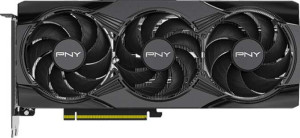
PNY GeForce RTX 5060 ARGB Epic-X OC Triple Fan
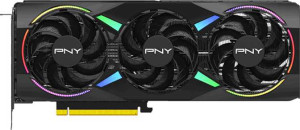
PNY GeForce RTX 5070 ARGB Epic-X OC Triple Fan

PNY GeForce RTX 5060 ARGB Epic-X OC Triple Fan PNY GeForce RTX 5070 ARGB Epic-X OC Triple Fan

Common Features

  • Both GPUs have a memory speed of 1750 MHz.
  • Both support Double Precision Floating Point (DPFP).
  • Both have an effective memory speed of 28000 MHz.
  • Both use GDDR7 memory.
  • Both support ECC memory.
  • Both support DirectX 12 Ultimate.
  • Both support OpenGL version 4.6.
  • Both support OpenCL version 3.
  • Both support multi-display technology.
  • Both support ray tracing.
  • Both support 3D.
  • Both support DLSS.
  • XeSS (XMX) support is not available on either GPU.
  • Both have an HDMI output with 1 HDMI port.
  • Both have 3 DisplayPort outputs.
  • Neither GPU has USB-C, DVI, or mini DisplayPort outputs.
  • Both are built on the Blackwell GPU architecture.
  • Both use PCIe version 5.
  • Both come with a 3-year warranty.
  • Neither GPU uses air-water cooling.

Main Differences

  • GPU base clock speed is 2280 MHz on PNY GeForce RTX 5060 ARGB Epic-X OC Triple Fan and 2325 MHz on PNY GeForce RTX 5070 ARGB Epic-X OC Triple Fan.
  • GPU turbo clock speed is 2580 MHz on PNY GeForce RTX 5060 ARGB Epic-X OC Triple Fan and 2685 MHz on PNY GeForce RTX 5070 ARGB Epic-X OC Triple Fan.
  • Pixel rate is 123.8 GPixel/s on PNY GeForce RTX 5060 ARGB Epic-X OC Triple Fan and 214.8 GPixel/s on PNY GeForce RTX 5070 ARGB Epic-X OC Triple Fan.
  • Floating-point performance is 19.81 TFLOPS on PNY GeForce RTX 5060 ARGB Epic-X OC Triple Fan and 32.99 TFLOPS on PNY GeForce RTX 5070 ARGB Epic-X OC Triple Fan.
  • Texture rate is 309.6 GTexels/s on PNY GeForce RTX 5060 ARGB Epic-X OC Triple Fan and 515.5 GTexels/s on PNY GeForce RTX 5070 ARGB Epic-X OC Triple Fan.
  • Shading units count is 3840 on PNY GeForce RTX 5060 ARGB Epic-X OC Triple Fan and 6144 on PNY GeForce RTX 5070 ARGB Epic-X OC Triple Fan.
  • Texture mapping units (TMUs) count is 120 on PNY GeForce RTX 5060 ARGB Epic-X OC Triple Fan and 192 on PNY GeForce RTX 5070 ARGB Epic-X OC Triple Fan.
  • Render output units (ROPs) count is 48 on PNY GeForce RTX 5060 ARGB Epic-X OC Triple Fan and 80 on PNY GeForce RTX 5070 ARGB Epic-X OC Triple Fan.
  • Maximum memory bandwidth is 448 GB/s on PNY GeForce RTX 5060 ARGB Epic-X OC Triple Fan and 672 GB/s on PNY GeForce RTX 5070 ARGB Epic-X OC Triple Fan.
  • VRAM is 8GB on PNY GeForce RTX 5060 ARGB Epic-X OC Triple Fan and 12GB on PNY GeForce RTX 5070 ARGB Epic-X OC Triple Fan.
  • Memory bus width is 128-bit on PNY GeForce RTX 5060 ARGB Epic-X OC Triple Fan and 192-bit on PNY GeForce RTX 5070 ARGB Epic-X OC Triple Fan.
  • TDP is 145W on PNY GeForce RTX 5060 ARGB Epic-X OC Triple Fan and 250W on PNY GeForce RTX 5070 ARGB Epic-X OC Triple Fan.
  • Semiconductor size is 5 nm on PNY GeForce RTX 5060 ARGB Epic-X OC Triple Fan and 4 nm on PNY GeForce RTX 5070 ARGB Epic-X OC Triple Fan.
  • Width is 280 mm on PNY GeForce RTX 5060 ARGB Epic-X OC Triple Fan and 299.7 mm on PNY GeForce RTX 5070 ARGB Epic-X OC Triple Fan.
  • Height is 120 mm on PNY GeForce RTX 5060 ARGB Epic-X OC Triple Fan and 120.1 mm on PNY GeForce RTX 5070 ARGB Epic-X OC Triple Fan.
Specs Comparison
PNY GeForce RTX 5060 ARGB Epic-X OC Triple Fan

PNY GeForce RTX 5060 ARGB Epic-X OC Triple Fan

PNY GeForce RTX 5070 ARGB Epic-X OC Triple Fan

PNY GeForce RTX 5070 ARGB Epic-X OC Triple Fan

Performance:
GPU clock speed 2280 MHz 2325 MHz
GPU turbo 2580 MHz 2685 MHz
pixel rate 123.8 GPixel/s 214.8 GPixel/s
floating-point performance 19.81 TFLOPS 32.99 TFLOPS
texture rate 309.6 GTexels/s 515.5 GTexels/s
GPU memory speed 1750 MHz 1750 MHz
shading units 3840 6144
texture mapping units (TMUs) 120 192
render output units (ROPs) 48 80
Has Double Precision Floating Point (DPFP)

The most telling performance gap between the RTX 5060 and the RTX 5070 lies not in clock speeds — where the two cards are remarkably close — but in their raw computational muscle. The 5070 packs 6,144 shading units versus the 5060's 3,840, a roughly 60% increase that cascades through every other throughput metric. This translates directly into the 5070's 32.99 TFLOPS of floating-point performance dwarfing the 5060's 19.81 TFLOPS — meaning the 5070 can process significantly more shader work per frame, which matters enormously in compute-heavy workloads like ray tracing, AI-driven upscaling, and high-resolution rendering.

The texture and rasterization pipeline tells the same story. With 192 TMUs and a texture rate of 515.5 GTexels/s, the 5070 can fill surfaces with texture data at well over 1.6× the rate of the 5060's 309.6 GTexels/s. Similarly, the 5070's 80 ROPs versus the 5060's 48 give it a commanding pixel rate of 214.8 GPixel/s compared to 123.8 GPixel/s — a difference that becomes especially noticeable at higher resolutions like 1440p and 4K, where the rendering pipeline is under the most pressure. GPU memory speed is identical at 1750 MHz on both cards, so bandwidth is not a differentiator here; the gap is purely about on-die processing capacity.

The RTX 5070 holds a clear and substantial performance advantage in this group. The near-identical clock speeds confirm that the 5060 is not being held back by frequency — it simply has far fewer execution resources. For users targeting high-refresh 1440p or any 4K workload, the 5070's wider compute and raster pipeline makes a meaningful real-world difference. The 5060 remains a capable card, but buyers who need headroom for demanding titles or creative workloads will find the 5070's computational lead hard to overlook.

Memory:
effective memory speed 28000 MHz 28000 MHz
maximum memory bandwidth 448 GB/s 672 GB/s
VRAM 8GB 12GB
GDDR version GDDR7 GDDR7
memory bus width 128-bit 192-bit
Supports ECC memory

The PNY GeForce RTX 5060 ARGB Epic-X OC Triple Fan and the PNY GeForce RTX 5070 ARGB Epic-X OC Triple Fan share several similarities in their memory specifications, but there are key differences. Both cards feature the same effective memory speed of 28000 MHz and use the same GDDR7 memory version. However, the RTX 5070 has a larger VRAM capacity, offering 12GB compared to the RTX 5060's 8GB.

In terms of maximum memory bandwidth, the RTX 5070 again outperforms the RTX 5060 with a bandwidth of 672 GB/s, while the RTX 5060 is limited to 448 GB/s. This means the RTX 5070 can handle more data per second, which can be beneficial for memory-intensive tasks like high-resolution gaming or professional applications.

The memory bus width also differs between the two products, with the RTX 5070 sporting a 192-bit memory bus width, while the RTX 5060 uses a 128-bit bus width. This wider bus width on the RTX 5070 contributes to its higher memory bandwidth. Both cards support ECC memory, ensuring error correction for more reliable performance.

Features:
DirectX version DirectX 12 Ultimate DirectX 12 Ultimate
OpenGL version 4.6 4.6
OpenCL version 3 3
Supports multi-display technology
supports ray tracing
Supports 3D
supports DLSS
has XeSS (XMX)
AMD SAM / Intel Resizable BAR Intel Resizable BAR Intel Resizable BAR
has LHR
has RGB lighting
supported displays 4 4

The PNY GeForce RTX 5060 ARGB Epic-X OC Triple Fan and the PNY GeForce RTX 5070 ARGB Epic-X OC Triple Fan share a highly similar set of features, with no differences in their DirectX version, OpenGL version, OpenCL version, support for multi-display technology, ray tracing, 3D support, DLSS support, XeSS (XMX) support, LHR status, or RGB lighting. Both cards support DirectX 12 Ultimate, OpenGL 4.6, and OpenCL 3, while also providing multi-display support, ray tracing, and 3D capabilities. Additionally, both support DLSS and have RGB lighting, which can enhance visual aesthetics.

Both products also support Intel Resizable BAR, with the RTX 5060 specifically mentioning this support for Intel systems, while the RTX 5070 has the same feature with no additional details provided for AMD systems. Notably, neither card supports XeSS (XMX), and both lack a Light Hash Rate (LHR) designation.

The one point where these two cards have the same value is in the number of supported displays, which stands at 4 for both models. This allows for a solid multi-monitor setup, useful for productivity or immersive gaming setups.

Ports:
has an HDMI output
HDMI ports 1 1
DisplayPort outputs 3 3
USB-C ports 0 0
DVI outputs 0 0
mini DisplayPort outputs 0 0

The PNY GeForce RTX 5060 ARGB Epic-X OC Triple Fan and the PNY GeForce RTX 5070 ARGB Epic-X OC Triple Fan offer identical port configurations. Both cards feature 1 HDMI output and 3 DisplayPort outputs. Neither card has USB-C, DVI, or mini DisplayPort outputs, making their port layouts almost identical. This ensures that users of either product will have the same options for connecting to displays, with no differences in available ports or output types.

Both products also include HDMI outputs, so they support compatibility with a wide range of monitors and TVs. However, as no extra USB-C or other video outputs are provided on either model, users seeking those specific ports will not find them here.

In summary, both the RTX 5060 and the RTX 5070 share the same ports, offering an HDMI output, three DisplayPort outputs, and no USB-C or DVI options.

General info:
GPU architecture Blackwell Blackwell
release date May 2025 January 2025
Thermal Design Power (TDP) 145W 250W
PCI Express (PCIe) version 5 5
semiconductor size 5 nm 4 nm
warranty period 3 years 3 years
Has air-water cooling
width 280 mm 299.7 mm
height 120 mm 120.1 mm

The PNY GeForce RTX 5060 ARGB Epic-X OC Triple Fan and the PNY GeForce RTX 5070 ARGB Epic-X OC Triple Fan share the same GPU architecture, which is Blackwell. However, there are differences in several key specifications. The RTX 5070 has a significantly higher thermal design power (TDP) of 250W, compared to the RTX 5060's 145W. This indicates that the RTX 5070 will likely generate more heat and require more power for operation.

Both cards use PCI Express (PCIe) version 5 and feature advanced semiconductor technology, with the RTX 5060 utilizing a 5 nm process and the RTX 5070 using a 4 nm process. This difference in semiconductor size may contribute to variations in performance and efficiency, though both cards are built on similar advanced architectures.

In terms of physical dimensions, the RTX 5070 is slightly larger, with a width of 299.7 mm and a height of 120.1 mm, compared to the RTX 5060's 280 mm width and 120 mm height. Both cards have a 3-year warranty period and do not include air-water cooling systems.

Comparison Summary & Verdict

This is a specification comparison between PNY GeForce RTX 5060 ARGB Epic-X OC Triple Fan and PNY GeForce RTX 5070 ARGB Epic-X OC Triple Fan. Both cards have a GPU memory speed of 1750 MHz, support Double Precision Floating Point, use GDDR7 memory at 28000 MHz, and offer DirectX 12 Ultimate support. The RTX 5070 has higher GPU clock speed at 2325 MHz versus 2280 MHz, a higher GPU turbo of 2685 MHz versus 2580 MHz, more VRAM at 12GB compared to 8GB, greater maximum memory bandwidth of 672 GB/s versus 448 GB/s, and more shading units at 6144 versus 3840. Additionally, the RTX 5070 has a TDP of 250W compared to 145W and a slightly larger versus 280 mm.