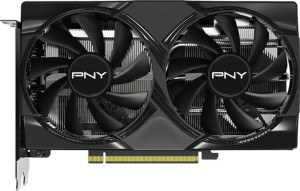
PNY GeForce RTX 5060 Dual Fan
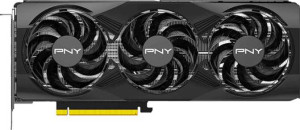
PNY GeForce RTX 5070 Triple Fan

PNY GeForce RTX 5060 Dual Fan PNY GeForce RTX 5070 Triple Fan

Overview

Welcome to our in-depth spec comparison between the PNY GeForce RTX 5060 Dual Fan and the PNY GeForce RTX 5070 Triple Fan — two Blackwell-architecture GPUs sharing the same platform but targeting different levels of ambition. Both cards bring GDDR7 memory, full DirectX 12 Ultimate support, and ray tracing to the table, yet they diverge sharply when it comes to raw compute power, VRAM capacity, and physical footprint. Read on to see exactly where each card stands.

Common Features

  • Both products support Double Precision Floating Point (DPFP).
  • Both products have an effective memory speed of 28000 MHz.
  • Both products use GDDR7 memory.
  • ECC memory is supported on both products.
  • Both products support DirectX 12 Ultimate.
  • Both products support OpenGL version 4.6.
  • Both products support OpenCL version 3.
  • Multi-display technology is supported on both products.
  • Ray tracing is supported on both products.
  • 3D is supported on both products.
  • DLSS is supported on both products.
  • XeSS (XMX) is not available on either product.
  • Both products have an HDMI output with 1 HDMI port at version HDMI 2.1b.
  • Both products have 3 DisplayPort outputs.
  • Neither product has USB-C ports, DVI outputs, or mini DisplayPort outputs.
  • Both products are built on the Blackwell GPU architecture.
  • Both products use PCI Express (PCIe) version 5.
  • Both products come with a 3-year warranty.
  • Neither product has air-water cooling.
  • Both products have a height of 120 mm.

Main Differences

  • GPU clock speed is 2280 MHz on PNY GeForce RTX 5060 Dual Fan and 2160 MHz on PNY GeForce RTX 5070 Triple Fan.
  • GPU turbo speed is 2497 MHz on PNY GeForce RTX 5060 Dual Fan and 2510 MHz on PNY GeForce RTX 5070 Triple Fan.
  • Pixel rate is 119.9 GPixel/s on PNY GeForce RTX 5060 Dual Fan and 200.8 GPixel/s on PNY GeForce RTX 5070 Triple Fan.
  • Floating-point performance is 19.18 TFLOPS on PNY GeForce RTX 5060 Dual Fan and 30.84 TFLOPS on PNY GeForce RTX 5070 Triple Fan.
  • Texture rate is 299.6 GTexels/s on PNY GeForce RTX 5060 Dual Fan and 481.9 GTexels/s on PNY GeForce RTX 5070 Triple Fan.
  • GPU memory speed is 1750 MHz on PNY GeForce RTX 5060 Dual Fan and 2209 MHz on PNY GeForce RTX 5070 Triple Fan.
  • Shading units number 3840 on PNY GeForce RTX 5060 Dual Fan and 6144 on PNY GeForce RTX 5070 Triple Fan.
  • Texture mapping units (TMUs) total 120 on PNY GeForce RTX 5060 Dual Fan and 192 on PNY GeForce RTX 5070 Triple Fan.
  • Render output units (ROPs) total 48 on PNY GeForce RTX 5060 Dual Fan and 80 on PNY GeForce RTX 5070 Triple Fan.
  • Maximum memory bandwidth is 448 GB/s on PNY GeForce RTX 5060 Dual Fan and 672 GB/s on PNY GeForce RTX 5070 Triple Fan.
  • VRAM is 8GB on PNY GeForce RTX 5060 Dual Fan and 12GB on PNY GeForce RTX 5070 Triple Fan.
  • Memory bus width is 128-bit on PNY GeForce RTX 5060 Dual Fan and 192-bit on PNY GeForce RTX 5070 Triple Fan.
  • Thermal Design Power (TDP) is 145W on PNY GeForce RTX 5060 Dual Fan and 250W on PNY GeForce RTX 5070 Triple Fan.
  • Semiconductor size is 5 nm on PNY GeForce RTX 5060 Dual Fan and 4 nm on PNY GeForce RTX 5070 Triple Fan.
  • Number of transistors is 21900 million on PNY GeForce RTX 5060 Dual Fan and 31100 million on PNY GeForce RTX 5070 Triple Fan.
  • Width is 200 mm on PNY GeForce RTX 5060 Dual Fan and 299.5 mm on PNY GeForce RTX 5070 Triple Fan.
Specs Comparison
PNY GeForce RTX 5060 Dual Fan

PNY GeForce RTX 5060 Dual Fan

PNY GeForce RTX 5070 Triple Fan

PNY GeForce RTX 5070 Triple Fan

Performance:
GPU clock speed 2280 MHz 2160 MHz
GPU turbo 2497 MHz 2510 MHz
pixel rate 119.9 GPixel/s 200.8 GPixel/s
floating-point performance 19.18 TFLOPS 30.84 TFLOPS
texture rate 299.6 GTexels/s 481.9 GTexels/s
GPU memory speed 1750 MHz 2209 MHz
shading units 3840 6144
texture mapping units (TMUs) 120 192
render output units (ROPs) 48 80
Has Double Precision Floating Point (DPFP)

At first glance, the base clock story is slightly counterintuitive: the RTX 5060 actually runs a higher base GPU clock at 2280 MHz versus the RTX 5070's 2160 MHz, while their turbo clocks nearly converge at 2497 MHz and 2510 MHz respectively. In practice, this near-identical turbo ceiling means that clock speed alone is not the differentiator here — the real performance gap lives in the sheer scale of the hardware underneath those clocks.

That scale difference is substantial. The RTX 5070 packs 6144 shading units against the RTX 5060's 3840 — a roughly 60% increase — and this multiplies directly into every throughput metric. Floating-point compute jumps from 19.18 TFLOPS to 30.84 TFLOPS, the texture rate rises from 299.6 GTexels/s to 481.9 GTexels/s, and the pixel fill rate grows from 119.9 GPixel/s to 200.8 GPixel/s. In real-world terms, this translates to faster frame rendering at high resolutions, smoother handling of complex geometry and shader-heavy scenes, and more headroom for demanding rasterization workloads. The RTX 5070 also pairs this with faster memory at 2209 MHz versus 1750 MHz, reducing potential bottlenecks when the GPU needs to feed its larger execution units.

Both cards support Double Precision Floating Point (DPFP), which matters for compute and professional workloads beyond gaming. However, on every raw performance metric that drives gaming and creative throughput, the RTX 5070 Triple Fan holds a clear and consistent advantage — not due to higher clocks, but because it simply has far more execution resources working in parallel. The RTX 5060 Dual Fan is not a slow card, but buyers who prioritize peak performance headroom should note the RTX 5070's ~60% lead across compute, texturing, and pixel output is meaningful at higher resolutions and quality settings.

Memory:
effective memory speed 28000 MHz 28000 MHz
maximum memory bandwidth 448 GB/s 672 GB/s
VRAM 8GB 12GB
GDDR version GDDR7 GDDR7
memory bus width 128-bit 192-bit
Supports ECC memory

Both the PNY GeForce RTX 5060 Dual Fan and the PNY GeForce RTX 5070 Triple Fan use GDDR7 memory, with an effective memory speed of 28000 MHz. However, the two cards differ significantly in other memory-related specifications. The RTX 5060 features 8GB of VRAM, while the RTX 5070 offers a larger 12GB of VRAM, providing more memory for demanding applications and workloads. The maximum memory bandwidth is another area of difference: the RTX 5060 has a maximum bandwidth of 448 GB/s, while the RTX 5070 provides a much higher 672 GB/s, allowing the RTX 5070 to handle larger amounts of data more efficiently.

In terms of memory bus width, the RTX 5060 has a 128-bit bus, while the RTX 5070 utilizes a wider 192-bit bus, which contributes to the higher bandwidth on the RTX 5070. Both cards support ECC (Error-Correcting Code) memory, ensuring greater reliability by detecting and correcting memory errors, which is the same for both models.

Overall, the RTX 5070 stands out with its larger VRAM, higher bandwidth, and wider memory bus, which may provide better performance in memory-intensive tasks compared to the RTX 5060.

Features:
DirectX version DirectX 12 Ultimate DirectX 12 Ultimate
OpenGL version 4.6 4.6
OpenCL version 3 3
Supports multi-display technology
supports ray tracing
Supports 3D
supports DLSS
has XeSS (XMX)
AMD SAM / Intel Resizable BAR Intel Resizable BAR Intel Resizable BAR
has LHR
has RGB lighting
supported displays 4 4

The PNY GeForce RTX 5060 Dual Fan and the PNY GeForce RTX 5070 Triple Fan share identical specifications in several key features. Both cards support DirectX 12 Ultimate, OpenGL 4.6, and OpenCL 3, ensuring compatibility with the latest software and games. They also both support multi-display technology, ray tracing, 3D, and DLSS, making them suitable for a variety of advanced gaming and graphical tasks. Additionally, both products are equipped with Intel Resizable BAR, which enhances communication between the CPU and GPU for improved performance in certain games.

There are no differences in terms of support for XeSS (XMX), as neither card includes this feature. Neither product features RGB lighting, and neither has LHR (Lite Hash Rate), meaning both are equally capable for cryptocurrency mining. Both cards can support up to 4 displays, ensuring ample display options for multi-monitor setups.

Overall, the PNY GeForce RTX 5060 and RTX 5070 offer the same set of features, with no notable differences between them in this category.

Ports:
has an HDMI output
HDMI ports 1 1
HDMI version HDMI 2.1b HDMI 2.1b
DisplayPort outputs 3 3
USB-C ports 0 0
DVI outputs 0 0
mini DisplayPort outputs 0 0

Both the PNY GeForce RTX 5060 Dual Fan and the PNY GeForce RTX 5070 Triple Fan have identical port configurations. Each card has one HDMI output with HDMI version 2.1b, supporting high-definition video and audio output. Both models also feature three DisplayPort outputs, allowing for additional display connections. Neither card includes USB-C ports, DVI outputs, or mini DisplayPort outputs, so the connectivity options are primarily HDMI and DisplayPort.

Overall, the port setup for the two products is identical, offering the same number and type of outputs without any distinction between the two models.

General info:
GPU architecture Blackwell Blackwell
release date May 2025 January 2025
Thermal Design Power (TDP) 145W 250W
PCI Express (PCIe) version 5 5
semiconductor size 5 nm 4 nm
number of transistors 21900 million 31100 million
warranty period 3 years 3 years
Has air-water cooling
width 200 mm 299.5 mm
height 120 mm 120 mm

Both the PNY GeForce RTX 5060 Dual Fan and the PNY GeForce RTX 5070 Triple Fan share the same GPU architecture, which is Blackwell. However, they differ in several other general specs. The RTX 5060 has a Thermal Design Power (TDP) of 145W, while the RTX 5070 has a higher TDP of 250W, indicating that the RTX 5070 requires more power to operate. Both cards use PCI Express version 5, ensuring high-speed data transfer. The semiconductor size differs slightly, with the RTX 5060 using a 5 nm process, and the RTX 5070 using a more advanced 4 nm process.

Regarding the number of transistors, the RTX 5060 has 21,900 million transistors, while the RTX 5070 features 31,100 million transistors, reflecting a more complex and capable chip. Both cards come with a 3-year warranty period, offering the same length of coverage. Neither card features air-water cooling, so they rely solely on air cooling for thermal management.

Finally, in terms of physical dimensions, the RTX 5060 is 200 mm in width and 120 mm in height, while the RTX 5070 is significantly larger, with a width of 299.5 mm and the same height of 120 mm.

Comparison Summary & Verdict

After reviewing the full specification breakdown, a clear picture emerges for each card. The PNY GeForce RTX 5060 Dual Fan is the smarter choice for budget-conscious builders who want a compact, energy-efficient card — its 145W TDP and 200 mm width make it ideal for smaller cases, while its 8 GB of GDDR7 memory and 19.18 TFLOPS of floating-point performance are more than capable for mainstream gaming. The PNY GeForce RTX 5070 Triple Fan, on the other hand, is built for users who demand more: with 12 GB of VRAM, a 192-bit memory bus, 30.84 TFLOPS of compute power, and a significantly higher texture and pixel rate, it is the right tool for high-resolution gaming, demanding creative workloads, and future-proofing. Choose the RTX 5060 for efficiency and value; choose the RTX 5070 when maximum performance headroom is the priority.

PNY GeForce RTX 5060 Dual Fan
Buy PNY GeForce RTX 5060 Dual Fan if...

Buy the PNY GeForce RTX 5060 Dual Fan if you want an energy-efficient, compact GPU with a 145W TDP and a smaller 200 mm footprint that fits easily into tighter builds without sacrificing GDDR7 memory technology.

PNY GeForce RTX 5070 Triple Fan
Buy PNY GeForce RTX 5070 Triple Fan if...

Buy the PNY GeForce RTX 5070 Triple Fan if you need significantly more raw performance, with 12 GB of VRAM, a 192-bit memory bus, 30.84 TFLOPS of floating-point performance, and higher texture and pixel rates for demanding, high-resolution workloads.