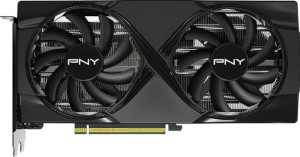
PNY GeForce RTX 5060 Ti Dual Fan 16GB
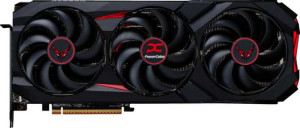
PowerColor Red Devil Radeon RX 9070 XT

PNY GeForce RTX 5060 Ti Dual Fan 16GB PowerColor Red Devil Radeon RX 9070 XT

Overview

Welcome to our in-depth specification comparison between the PNY GeForce RTX 5060 Ti Dual Fan 16GB and the PowerColor Red Devil Radeon RX 9070 XT. These two GPUs come from rival architectures — Blackwell and RDNA 4.0 — and take strikingly different approaches to raw throughput, power consumption, and memory design. Whether you care about efficiency, sheer compute performance, or feature sets like DLSS support, this comparison will walk you through every key battleground.

Common Features

  • Both products support Double Precision Floating Point (DPFP).
  • Both cards come with 16GB of VRAM.
  • ECC memory support is available on both products.
  • Both cards support OpenGL version 4.6.
  • Multi-display technology is supported on both products.
  • Ray tracing support is available on both products.
  • 3D support is available on both products.
  • XeSS (XMX) support is not available on either product.
  • LHR is not present on either product.
  • RGB lighting is not featured on either product.
  • Both cards support up to 4 displays.
  • Both products include 1 HDMI port.
  • Both cards feature HDMI version 2.1b.
  • Both cards include 3 DisplayPort outputs.
  • Neither card has USB-C ports.
  • Neither card has DVI outputs.
  • Neither card has mini DisplayPort outputs.
  • Both products use PCI Express version 5.
  • Neither product uses air-water cooling.

Main Differences

  • GPU base clock speed is 2407 MHz on PNY GeForce RTX 5060 Ti Dual Fan 16GB and 1660 MHz on PowerColor Red Devil Radeon RX 9070 XT.
  • GPU turbo clock speed is 2572 MHz on PNY GeForce RTX 5060 Ti Dual Fan 16GB and 3060 MHz on PowerColor Red Devil Radeon RX 9070 XT.
  • Pixel rate is 123.5 GPixel/s on PNY GeForce RTX 5060 Ti Dual Fan 16GB and 391.7 GPixel/s on PowerColor Red Devil Radeon RX 9070 XT.
  • Floating-point performance is 23.7 TFLOPS on PNY GeForce RTX 5060 Ti Dual Fan 16GB and 50.14 TFLOPS on PowerColor Red Devil Radeon RX 9070 XT.
  • Texture rate is 370.4 GTexels/s on PNY GeForce RTX 5060 Ti Dual Fan 16GB and 783.4 GTexels/s on PowerColor Red Devil Radeon RX 9070 XT.
  • GPU memory speed is 1750 MHz on PNY GeForce RTX 5060 Ti Dual Fan 16GB and 2518 MHz on PowerColor Red Devil Radeon RX 9070 XT.
  • Shading units number 4608 on PNY GeForce RTX 5060 Ti Dual Fan 16GB and 4096 on PowerColor Red Devil Radeon RX 9070 XT.
  • Texture mapping units (TMUs) total 144 on PNY GeForce RTX 5060 Ti Dual Fan 16GB and 256 on PowerColor Red Devil Radeon RX 9070 XT.
  • Render output units (ROPs) total 48 on PNY GeForce RTX 5060 Ti Dual Fan 16GB and 128 on PowerColor Red Devil Radeon RX 9070 XT.
  • Effective memory speed is 28000 MHz on PNY GeForce RTX 5060 Ti Dual Fan 16GB and 20000 MHz on PowerColor Red Devil Radeon RX 9070 XT.
  • Maximum memory bandwidth is 448 GB/s on PNY GeForce RTX 5060 Ti Dual Fan 16GB and 644.6 GB/s on PowerColor Red Devil Radeon RX 9070 XT.
  • PNY GeForce RTX 5060 Ti Dual Fan 16GB uses GDDR7 memory, while PowerColor Red Devil Radeon RX 9070 XT uses GDDR6.
  • Memory bus width is 128-bit on PNY GeForce RTX 5060 Ti Dual Fan 16GB and 256-bit on PowerColor Red Devil Radeon RX 9070 XT.
  • DirectX version is DirectX 12 Ultimate on PNY GeForce RTX 5060 Ti Dual Fan 16GB and DirectX 12 on PowerColor Red Devil Radeon RX 9070 XT.
  • OpenCL version is 3 on PNY GeForce RTX 5060 Ti Dual Fan 16GB and 2.2 on PowerColor Red Devil Radeon RX 9070 XT.
  • DLSS support is present on PNY GeForce RTX 5060 Ti Dual Fan 16GB but not available on PowerColor Red Devil Radeon RX 9070 XT.
  • PNY GeForce RTX 5060 Ti Dual Fan 16GB uses Intel Resizable BAR, while PowerColor Red Devil Radeon RX 9070 XT uses AMD SAM.
  • GPU architecture is Blackwell on PNY GeForce RTX 5060 Ti Dual Fan 16GB and RDNA 4.0 on PowerColor Red Devil Radeon RX 9070 XT.
  • Thermal Design Power (TDP) is 180W on PNY GeForce RTX 5060 Ti Dual Fan 16GB and 304W on PowerColor Red Devil Radeon RX 9070 XT.
  • Semiconductor size is 5 nm on PNY GeForce RTX 5060 Ti Dual Fan 16GB and 4 nm on PowerColor Red Devil Radeon RX 9070 XT.
  • Transistor count is 21900 million on PNY GeForce RTX 5060 Ti Dual Fan 16GB and 53900 million on PowerColor Red Devil Radeon RX 9070 XT.
  • Card width is 245 mm on PNY GeForce RTX 5060 Ti Dual Fan 16GB and 352 mm on PowerColor Red Devil Radeon RX 9070 XT.
  • Card height is 120 mm on PNY GeForce RTX 5060 Ti Dual Fan 16GB and 149 mm on PowerColor Red Devil Radeon RX 9070 XT.
Specs Comparison
PNY GeForce RTX 5060 Ti Dual Fan 16GB

PNY GeForce RTX 5060 Ti Dual Fan 16GB

PowerColor Red Devil Radeon RX 9070 XT

PowerColor Red Devil Radeon RX 9070 XT

Performance:
GPU clock speed 2407 MHz 1660 MHz
GPU turbo 2572 MHz 3060 MHz
pixel rate 123.5 GPixel/s 391.7 GPixel/s
floating-point performance 23.7 TFLOPS 50.14 TFLOPS
texture rate 370.4 GTexels/s 783.4 GTexels/s
GPU memory speed 1750 MHz 2518 MHz
shading units 4608 4096
texture mapping units (TMUs) 144 256
render output units (ROPs) 48 128
Has Double Precision Floating Point (DPFP)

At first glance, the PNY RTX 5060 Ti appears to have a clock speed advantage with a higher base of 2407 MHz versus the Red Devil's 1660 MHz. However, this comparison is misleading — the PowerColor RX 9070 XT surges to a much higher turbo of 3060 MHz, and more importantly, raw clock speed means very little without knowing how many execution units are doing work at that frequency. When you factor in the full pipeline, the picture changes drastically in AMD's favor.

The throughput numbers tell the real story. The RX 9070 XT delivers 50.14 TFLOPS of floating-point performance versus the RTX 5060 Ti's 23.7 TFLOPS — more than double. This gap is reinforced across every throughput metric: the AMD card offers a texture rate of 783.4 GTexels/s (against 370.4) and a pixel rate of 391.7 GPixel/s (against 123.5). These aren't marginal differences — they reflect a fundamentally wider rendering pipeline, thanks to the RX 9070 XT's substantially higher 128 ROPs and 256 TMUs compared to the RTX 5060 Ti's 48 and 144, respectively. More ROPs means more pixels resolved per clock — critical for high-resolution, high-framerate gaming — while more TMUs accelerate texture processing in complex scenes. The RTX 5060 Ti does edge ahead in raw shading unit count (4608 vs 4096), but this advantage is negated by the AMD card's wider output and memory subsystem, including a significantly faster GPU memory speed of 2518 MHz versus 1750 MHz.

The PowerColor RX 9070 XT holds a clear and decisive performance advantage in this group across nearly every meaningful throughput metric. Users prioritizing raw rendering horsepower — particularly at higher resolutions where pixel fill rate and memory bandwidth are bottlenecks — will find the RX 9070 XT to be the stronger card by a wide margin based on these specs alone.

Memory:
effective memory speed 28000 MHz 20000 MHz
maximum memory bandwidth 448 GB/s 644.6 GB/s
VRAM 16GB 16GB
GDDR version GDDR7 GDDR6
memory bus width 128-bit 256-bit
Supports ECC memory

Both cards arrive with an identical 16GB of VRAM and ECC memory support, so capacity is a non-issue here. The more interesting story lies in how each card delivers that memory's performance — and the two manufacturers have taken fundamentally opposite approaches. The RTX 5060 Ti pairs a narrow 128-bit bus with cutting-edge GDDR7, achieving a high effective speed of 28000 MHz. The RX 9070 XT, by contrast, uses GDDR6 — a generation older — but compensates with a much wider 256-bit bus.

The outcome of these architectural choices is where it gets decisive. Despite the RTX 5060 Ti's newer memory technology, its constrained bus width caps maximum memory bandwidth at 448 GB/s. The RX 9070 XT's wider bus more than overcomes its slower per-pin speed, delivering 644.6 GB/s — roughly 44% more bandwidth. In GPU workloads, bandwidth is the critical pipeline for feeding the shader cores with texture data, framebuffer reads/writes, and geometry information. A bandwidth bottleneck at high resolutions or with large textures will throttle even fast compute units, which means the AMD card's memory subsystem is better equipped to keep its rendering pipeline fully fed under demanding conditions.

The RX 9070 XT holds a meaningful edge in this group. The RTX 5060 Ti's GDDR7 is technically more advanced, but the architectural decision to use a 128-bit bus significantly limits the practical benefit of that newer memory standard. For users running memory-intensive workloads — think 4K gaming, high-resolution texture packs, or compute tasks — the RX 9070 XT's substantially higher bandwidth gives it a real-world advantage that the raw VRAM capacity numbers alone would never reveal.

Features:
DirectX version DirectX 12 Ultimate DirectX 12
OpenGL version 4.6 4.6
OpenCL version 3 2.2
Supports multi-display technology
supports ray tracing
Supports 3D
supports DLSS
has XeSS (XMX)
AMD SAM / Intel Resizable BAR Intel Resizable BAR AMD SAM
has LHR
has RGB lighting
supported displays 4 4

Much of this feature set is shared common ground — both cards support ray tracing, multi-display setups up to 4 displays, DirectX 12, OpenGL 4.6, and neither carries LHR restrictions or RGB lighting. The meaningful divergences sit in a handful of specific areas that can significantly influence a buyer's day-to-day experience depending on their ecosystem and workflow.

The most impactful differentiator is upscaling support. The RTX 5060 Ti supports DLSS, NVIDIA's AI-driven upscaling technology that uses dedicated tensor cores to reconstruct higher-resolution frames from lower-resolution inputs — delivering substantial performance gains in supported titles with minimal visual quality loss. The RX 9070 XT does not support DLSS, and while AMD's FSR is a common alternative, it is not listed in these specs and therefore cannot be factored in. On the API side, the RTX 5060 Ti also carries DirectX 12 Ultimate versus the RX 9070 XT's DirectX 12 — the ″Ultimate″ tier adds support for hardware-accelerated ray tracing, mesh shaders, and variable rate shading at a specification level, though both cards do support ray tracing regardless. The RTX 5060 Ti additionally supports OpenCL 3 versus the AMD card's OpenCL 2.2, which can matter for GPU compute applications that leverage the latest OpenCL features.

Based strictly on these specs, the RTX 5060 Ti has a functional edge in features. DLSS support alone is a significant practical advantage for gamers — it directly translates to higher framerates in a large and growing library of supported titles. The newer DirectX and OpenCL versions further reinforce this edge for users invested in cutting-edge rendering or compute workloads.

Ports:
has an HDMI output
HDMI ports 1 1
HDMI version HDMI 2.1b HDMI 2.1b
DisplayPort outputs 3 3
USB-C ports 0 0
DVI outputs 0 0
mini DisplayPort outputs 0 0

This is a rare case of a complete dead heat. The PNY RTX 5060 Ti and the PowerColor RX 9070 XT share an identical port configuration: one HDMI 2.1b output and three DisplayPort outputs, with no USB-C, DVI, or mini DisplayPort connections on either card.

The practical implication is that both cards can drive up to four displays simultaneously — consistent with what was established in the Features group — and both support the same modern display standards. HDMI 2.1b is capable of handling 4K at high refresh rates and even 8K output, while DisplayPort similarly accommodates high-bandwidth, high-resolution connections to monitors and other display devices. Neither card offers USB-C video output, which could be a minor consideration for users with USB-C monitors, but this absence is equal across both products.

This group is a complete tie. There is no port-based reason to favor one card over the other — buyers can make their decision entirely on the other spec groups without connectivity being a factor.

General info:
GPU architecture Blackwell RDNA 4.0
release date April 2025 March 2025
Thermal Design Power (TDP) 180W 304W
PCI Express (PCIe) version 5 5
semiconductor size 5 nm 4 nm
number of transistors 21900 million 53900 million
Has air-water cooling
width 245 mm 352 mm
height 120 mm 149 mm

Underneath their respective architectures — NVIDIA's Blackwell and AMD's RDNA 4.0 — these two cards represent very different engineering philosophies. The RX 9070 XT is built on a 4 nm process with a massive 53,900 million transistors, nearly 2.5 times the 21,900 million found in the RTX 5060 Ti's 5 nm die. That transistor count is the silicon foundation for all the throughput advantages seen in the Performance and Memory groups — AMD has simply packed far more computational logic onto its chip. The trade-off, however, is substantial: the RX 9070 XT carries a TDP of 304W, versus a notably leaner 180W for the RTX 5060 Ti. That 124W gap is not trivial — it means higher electricity consumption over time, greater heat output requiring more robust case airflow, and likely a more demanding power supply requirement.

Physical size reinforces this divide. The RX 9070 XT measures 352 mm × 149 mm, making it a large card that may not fit comfortably in compact or mid-tower cases with limited GPU clearance. The RTX 5060 Ti, at 245 mm × 120 mm, is considerably more compact — a meaningful practical advantage for users building in smaller form factors or working within tight chassis constraints. Both cards share PCIe 5.0 compatibility, keeping them on equal footing for current and future motherboard platforms.

This group has no single winner — it presents a genuine trade-off. The RX 9070 XT brings a denser, more powerful silicon package that underpins its performance lead, but it demands more power and physical space to do so. The RTX 5060 Ti is the more power-efficient and physically manageable card by a significant margin, making it the stronger choice for users with constrained builds or electricity-conscious setups.
Comparison Summary & Verdict

After examining all the evidence, both cards share a solid foundation: 16GB of VRAM, PCIe 5.0, ray tracing support, and identical port configurations. However, their strengths diverge sharply. The PowerColor Red Devil Radeon RX 9070 XT dominates in raw compute throughput with 50.14 TFLOPS, a superior 256-bit memory bus, and significantly higher pixel and texture rates, making it the stronger choice for users who demand maximum rendering performance. The PNY GeForce RTX 5060 Ti Dual Fan 16GB, on the other hand, stands out for its low 180W TDP, more compact dimensions, and exclusive access to DLSS support and DirectX 12 Ultimate, making it ideal for power-conscious builds or those invested in Nvidia’s feature ecosystem.

PNY GeForce RTX 5060 Ti Dual Fan 16GB
Buy PNY GeForce RTX 5060 Ti Dual Fan 16GB if...

Buy the PNY GeForce RTX 5060 Ti Dual Fan 16GB if you want a compact, energy-efficient GPU with a low 180W TDP, DLSS support, and DirectX 12 Ultimate in a smaller form factor.

PowerColor Red Devil Radeon RX 9070 XT
Buy PowerColor Red Devil Radeon RX 9070 XT if...

Buy the PowerColor Red Devil Radeon RX 9070 XT if you prioritize maximum raw compute performance, with over double the pixel rate, a wider 256-bit memory bus, and 50.14 TFLOPS of floating-point power.