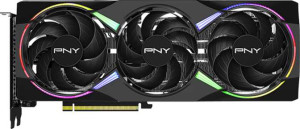
PNY GeForce RTX 5060 Ti Epic-X RGB OC Triple Fan 16GB
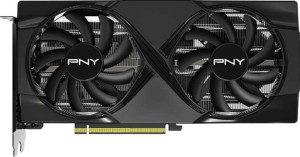
PNY GeForce RTX 5060 Ti OC Dual Fan 16GB

PNY GeForce RTX 5060 Ti Epic-X RGB OC Triple Fan 16GB PNY GeForce RTX 5060 Ti OC Dual Fan 16GB

Overview

Welcome to our detailed spec comparison between the PNY GeForce RTX 5060 Ti Epic-X RGB OC Triple Fan 16GB and the PNY GeForce RTX 5060 Ti OC Dual Fan 16GB. Both cards are built on the same Blackwell foundation and share identical core performance figures, yet they diverge in a few meaningful ways. In this head-to-head, we examine their physical dimensions, cooling configurations, and feature sets to help you decide which one belongs in your next build.

Common Features

  • Both cards share a GPU clock speed of 2407 MHz.
  • Both cards share a GPU turbo speed of 2692 MHz.
  • Both cards deliver a pixel rate of 129.2 GPixel/s.
  • Both cards provide 24.81 TFLOPS of floating-point performance.
  • Both cards offer a texture rate of 387.6 GTexels/s.
  • Both cards feature a GPU memory speed of 1750 MHz.
  • Both cards include 4608 shading units.
  • Both cards include 144 texture mapping units (TMUs).
  • Both cards come with 16GB of VRAM.
  • Both cards use GDDR7 memory.
  • Both cards have an effective memory speed of 28000 MHz.
  • Both cards provide a maximum memory bandwidth of 448 GB/s.
  • Both cards use a 128-bit memory bus width.
  • ECC memory support is available on both cards.
  • Multi-display technology support is available on both cards.
  • Ray tracing support is available on both cards.
  • 3D support is available on both cards.
  • DLSS support is available on both cards.
  • XeSS (XMX) support is not available on either card.
  • Both cards support Intel Resizable BAR.
  • Both cards have an OpenGL version of 4.6.
  • Both cards have an OpenCL version of 3.
  • Both cards include one HDMI 2.1b output.
  • Both cards include three DisplayPort outputs.
  • Neither card has USB-C ports, DVI outputs, or mini DisplayPort outputs.
  • Both cards are based on the Blackwell GPU architecture.
  • Both cards have a Thermal Design Power (TDP) of 180W.
  • Both cards use PCIe version 5.
  • Both cards are manufactured on a 5 nm semiconductor process.
  • Both cards contain 21900 million transistors.
  • Both cards come with a 3-year warranty.
  • Air-water cooling is not available on either card.

Main Differences

  • RGB lighting is present on the PNY GeForce RTX 5060 Ti Epic-X RGB OC Triple Fan 16GB but not available on the PNY GeForce RTX 5060 Ti OC Dual Fan 16GB.
  • Width is 298.9 mm on the PNY GeForce RTX 5060 Ti Epic-X RGB OC Triple Fan 16GB and 245 mm on the PNY GeForce RTX 5060 Ti OC Dual Fan 16GB.
  • Height is 119.9 mm on the PNY GeForce RTX 5060 Ti Epic-X RGB OC Triple Fan 16GB and 120 mm on the PNY GeForce RTX 5060 Ti OC Dual Fan 16GB.
Specs Comparison
PNY GeForce RTX 5060 Ti Epic-X RGB OC Triple Fan 16GB

PNY GeForce RTX 5060 Ti Epic-X RGB OC Triple Fan 16GB

PNY GeForce RTX 5060 Ti OC Dual Fan 16GB

PNY GeForce RTX 5060 Ti OC Dual Fan 16GB

Performance:
GPU clock speed 2407 MHz 2407 MHz
GPU turbo 2692 MHz 2692 MHz
pixel rate 129.2 GPixel/s 129.2 GPixel/s
floating-point performance 24.81 TFLOPS 24.81 TFLOPS
texture rate 387.6 GTexels/s 387.6 GTexels/s
GPU memory speed 1750 MHz 1750 MHz
shading units 4608 4608
texture mapping units (TMUs) 144 144
render output units (ROPs) 48 48
Has Double Precision Floating Point (DPFP)

In the Performance category, the PNY GeForce RTX 5060 Ti Epic-X RGB OC Triple Fan 16GB and the PNY GeForce RTX 5060 Ti OC Dual Fan 16GB are, in every measurable way, identical. Both cards share the same 2407 MHz base clock and 2692 MHz boost clock, the same 4608 shading units, 144 TMUs, and 48 ROPs, and deliver matching throughput figures of 24.81 TFLOPS of floating-point performance, 387.6 GTexels/s texture rate, and 129.2 GPixel/s pixel rate. Memory speed is likewise locked at 1750 MHz on both models.

What this means in practice is that both cards are drawing from the exact same GPU silicon, configured at the exact same factory overclock. The Triple Fan and Dual Fan suffixes refer purely to the cooler design, not to any binning or clock-speed differentiation. You will not gain a single extra frame per second, nor any advantage in compute workloads, by choosing one over the other on the basis of raw GPU performance alone. Both also support Double Precision Floating Point (DPFP), which matters for certain scientific and professional compute tasks, though at the same level of capability.

The verdict for this group is an absolute tie. Neither card holds any performance edge over the other. The decision between the two should therefore rest entirely on factors outside this group — cooling capacity, acoustics, physical dimensions, or price — since the GPU engine underneath is, spec for spec, the same.

Memory:
effective memory speed 28000 MHz 28000 MHz
maximum memory bandwidth 448 GB/s 448 GB/s
VRAM 16GB 16GB
GDDR version GDDR7 GDDR7
memory bus width 128-bit 128-bit
Supports ECC memory

The memory configuration on both the Epic-X RGB Triple Fan and the OC Dual Fan variants is completely identical, and it is a strong one for this tier. Both cards carry 16GB of GDDR7 VRAM operating over a 128-bit bus, reaching an effective memory speed of 28000 MHz and delivering a peak bandwidth of 448 GB/s. GDDR7 is the key generational leap here — compared to the GDDR6X found on previous-generation cards at this price point, it achieves significantly higher bandwidth per pin, which translates to smoother performance in high-resolution texturing, large asset streaming, and memory-intensive workloads like AI inference.

The 16GB frame buffer is particularly noteworthy for a mid-range card. It provides meaningful headroom for gaming at 1440p and 4K with high-resolution texture packs, and it future-proofs the card against the creeping VRAM demands of modern titles. The ECC memory support on both cards is a subtle but useful addition, reducing the risk of data corruption in professional or compute workloads — a feature not always present at this segment.

As with the Performance group, this is a clean tie. Every memory specification — capacity, speed, bandwidth, bus width, and ECC support — is shared between the two models without exception. Memory configuration plays no role in differentiating these two cards.

Features:
OpenGL version 4.6 4.6
OpenCL version 3 3
Supports multi-display technology
supports ray tracing
Supports 3D
supports DLSS
has XeSS (XMX)
AMD SAM / Intel Resizable BAR Intel Resizable BAR Intel Resizable BAR
has LHR
has RGB lighting
supported displays 4 4

Across the functional feature set, these two cards are virtually identical — but one spec breaks the tie. Both support ray tracing, DLSS, multi-display output across up to 4 displays, and Intel Resizable BAR, which allows the CPU to access the full VRAM pool simultaneously and can yield measurable frame rate gains in supported titles. Neither card carries a hardware limiter (no LHR), and both run on OpenGL 4.6 and OpenCL 3, ensuring broad compatibility with creative and compute applications.

The sole differentiator in this group is RGB lighting. The Epic-X RGB Triple Fan includes it; the OC Dual Fan does not. For users building inside windowed cases where aesthetics are part of the experience, this is a genuine distinction — RGB lighting allows the card to integrate with system-wide lighting ecosystems. For users in closed cases or those indifferent to aesthetics, it carries no functional value.

The Epic-X RGB Triple Fan holds a narrow edge here solely due to its RGB lighting support. Every other feature in this group is shared equally between the two models, so the relevance of that edge depends entirely on whether visual customization matters to the buyer.

Ports:
has an HDMI output
HDMI ports 1 1
HDMI version HDMI 2.1b HDMI 2.1b
DisplayPort outputs 3 3
USB-C ports 0 0
DVI outputs 0 0
mini DisplayPort outputs 0 0

Port selection is identical on both cards: one HDMI 2.1b output and three DisplayPort outputs, totaling four display connections — which aligns with the maximum supported display count noted in the Features group. The absence of USB-C, DVI, and mini DisplayPort outputs is consistent with modern GPU design, where those legacy and niche connectors have been phased out in favor of the two dominant standards.

The quality of those connections matters as much as the count. HDMI 2.1b is the latest revision of the standard, supporting up to 10K resolution and high frame rates at 4K, which is relevant for users connecting to high-end gaming monitors or modern TVs. The three DisplayPort outputs, while their specific version is not listed in the provided data, give multi-monitor users plenty of flexibility for productivity or immersive gaming setups.

This group is a complete tie. The port layout is a mirror image across both models, so connectivity offers no basis for choosing one card over the other.

General info:
GPU architecture Blackwell Blackwell
release date April 2025 April 2025
Thermal Design Power (TDP) 180W 180W
PCI Express (PCIe) version 5 5
semiconductor size 5 nm 5 nm
number of transistors 21900 million 21900 million
warranty period 3 years 3 years
Has air-water cooling
width 298.9 mm 245 mm
height 119.9 mm 120 mm

Both cards are built on the same Blackwell architecture using a 5nm process node with 21.9 billion transistors, share a 180W TDP, and connect via PCIe 5.0 — so the silicon foundation, power envelope, and platform compatibility are identical. The 3-year warranty is also matched. For buyers, this means neither card requires a different power supply, motherboard slot, or thermal budget consideration.

Physical dimensions are where the two diverge. The Epic-X RGB Triple Fan measures 298.9mm in length, while the OC Dual Fan comes in notably shorter at 245mm — a difference of nearly 54mm. That gap is significant in practice: smaller and mini-ITX cases that cannot accommodate a 300mm card may only fit the Dual Fan variant. Conversely, the Triple Fan's larger footprint houses a bigger cooler, which typically means it has more surface area to dissipate the same 180W of heat, potentially resulting in lower operating temperatures or quieter fan curves — though thermal performance data is outside the scope of this group.

For case compatibility, the OC Dual Fan holds a clear advantage with its more compact 245mm length, making it the only viable option for space-constrained builds. In systems with ample clearance, the choice on physical size alone comes down to whether the smaller footprint is a necessity or simply a preference.

Comparison Summary & Verdict

After a thorough look at the specs, both cards deliver identical GPU performance, with the same 2692 MHz turbo clock, 24.81 TFLOPS of floating-point output, 16GB of GDDR7 memory, and a 448 GB/s memory bandwidth. The real decision comes down to form factor and aesthetics. The PNY GeForce RTX 5060 Ti Epic-X RGB OC Triple Fan 16GB is notably wider at 298.9 mm, accommodating a triple-fan cooler and RGB lighting, making it a strong pick for builders who value visual flair and potentially enhanced thermal headroom. The PNY GeForce RTX 5060 Ti OC Dual Fan 16GB, at a more compact 245 mm width and without RGB, suits those working with tighter cases or who simply prefer a cleaner, no-frills aesthetic. Neither card sacrifices raw performance for the other.

PNY GeForce RTX 5060 Ti Epic-X RGB OC Triple Fan 16GB
Buy PNY GeForce RTX 5060 Ti Epic-X RGB OC Triple Fan 16GB if...

Buy the PNY GeForce RTX 5060 Ti Epic-X RGB OC Triple Fan 16GB if you want RGB lighting in your build and have a case with enough room to accommodate its wider 298.9 mm footprint.

PNY GeForce RTX 5060 Ti OC Dual Fan 16GB
Buy PNY GeForce RTX 5060 Ti OC Dual Fan 16GB if...

Buy the PNY GeForce RTX 5060 Ti OC Dual Fan 16GB if you prefer a more compact card at 245 mm width and have no need for RGB lighting, while still getting identical performance.