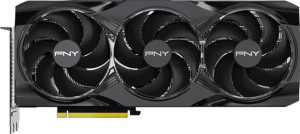
PNY GeForce RTX 5080 Triple Fan
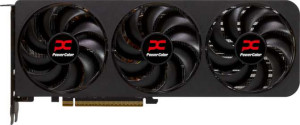
PowerColor Reaper Radeon RX 9070 XT

PNY GeForce RTX 5080 Triple Fan PowerColor Reaper Radeon RX 9070 XT

Overview

Welcome to our in-depth specification comparison between the PNY GeForce RTX 5080 Triple Fan and the PowerColor Reaper Radeon RX 9070 XT. These two high-performance graphics cards come from rival architectures — Nvidia's Blackwell and AMD's RDNA 4.0 — and each takes a notably different approach to memory technology, compute throughput, and power efficiency. Read on as we break down every key specification to help you decide which card best suits your needs.

Common Features

  • Both products support Double Precision Floating Point (DPFP).
  • Both cards come with 16GB of VRAM.
  • Both feature a 256-bit memory bus width.
  • ECC memory is supported on both products.
  • Both support OpenGL version 4.6.
  • Multi-display technology is supported on both products.
  • Ray tracing is supported on both products.
  • 3D support is available on both products.
  • XeSS (XMX) support is not available on either product.
  • Neither product has LHR (Lite Hash Rate) limiting.
  • RGB lighting is not present on either product.
  • Both cards support up to 4 displays simultaneously.
  • Both products include 1 HDMI port.
  • Both products use HDMI version 2.1b.
  • Both cards offer 3 DisplayPort outputs.
  • Neither product includes USB-C or DVI outputs.
  • Both cards use PCI Express version 5.
  • Neither product features air-water cooling.

Main Differences

  • GPU base clock speed is 2295 MHz on PNY GeForce RTX 5080 Triple Fan and 1660 MHz on PowerColor Reaper Radeon RX 9070 XT.
  • GPU turbo clock speed is 2617 MHz on PNY GeForce RTX 5080 Triple Fan and 2970 MHz on PowerColor Reaper Radeon RX 9070 XT.
  • Pixel rate is 293.1 GPixel/s on PNY GeForce RTX 5080 Triple Fan and 380.2 GPixel/s on PowerColor Reaper Radeon RX 9070 XT.
  • Floating-point performance is 56.28 TFLOPS on PNY GeForce RTX 5080 Triple Fan and 48.66 TFLOPS on PowerColor Reaper Radeon RX 9070 XT.
  • Texture rate is 879.3 GTexels/s on PNY GeForce RTX 5080 Triple Fan and 760.3 GTexels/s on PowerColor Reaper Radeon RX 9070 XT.
  • GPU memory speed is 1875 MHz on PNY GeForce RTX 5080 Triple Fan and 2518 MHz on PowerColor Reaper Radeon RX 9070 XT.
  • Shading units count is 10752 on PNY GeForce RTX 5080 Triple Fan and 4096 on PowerColor Reaper Radeon RX 9070 XT.
  • Texture mapping units (TMUs) number 336 on PNY GeForce RTX 5080 Triple Fan and 256 on PowerColor Reaper Radeon RX 9070 XT.
  • Render output units (ROPs) total 112 on PNY GeForce RTX 5080 Triple Fan and 128 on PowerColor Reaper Radeon RX 9070 XT.
  • Effective memory speed is 30000 MHz on PNY GeForce RTX 5080 Triple Fan and 20000 MHz on PowerColor Reaper Radeon RX 9070 XT.
  • Maximum memory bandwidth is 960 GB/s on PNY GeForce RTX 5080 Triple Fan and 644.6 GB/s on PowerColor Reaper Radeon RX 9070 XT.
  • Memory type is GDDR7 on PNY GeForce RTX 5080 Triple Fan and GDDR6 on PowerColor Reaper Radeon RX 9070 XT.
  • DirectX version is DirectX 12 Ultimate on PNY GeForce RTX 5080 Triple Fan and DirectX 12 on PowerColor Reaper Radeon RX 9070 XT.
  • OpenCL version is 3 on PNY GeForce RTX 5080 Triple Fan and 2.2 on PowerColor Reaper Radeon RX 9070 XT.
  • DLSS support is present on PNY GeForce RTX 5080 Triple Fan but not available on PowerColor Reaper Radeon RX 9070 XT.
  • Resizable BAR technology is Intel Resizable BAR on PNY GeForce RTX 5080 Triple Fan and AMD SAM on PowerColor Reaper Radeon RX 9070 XT.
  • GPU architecture is Blackwell on PNY GeForce RTX 5080 Triple Fan and RDNA 4.0 on PowerColor Reaper Radeon RX 9070 XT.
  • Thermal Design Power (TDP) is 360W on PNY GeForce RTX 5080 Triple Fan and 304W on PowerColor Reaper Radeon RX 9070 XT.
  • Semiconductor size is 5 nm on PNY GeForce RTX 5080 Triple Fan and 4 nm on PowerColor Reaper Radeon RX 9070 XT.
  • Transistor count is 45600 million on PNY GeForce RTX 5080 Triple Fan and 53900 million on PowerColor Reaper Radeon RX 9070 XT.
  • Card width is 328.7 mm on PNY GeForce RTX 5080 Triple Fan and 304 mm on PowerColor Reaper Radeon RX 9070 XT.
  • Card height is 137.7 mm on PNY GeForce RTX 5080 Triple Fan and 127 mm on PowerColor Reaper Radeon RX 9070 XT.
Specs Comparison
PNY GeForce RTX 5080 Triple Fan

PNY GeForce RTX 5080 Triple Fan

PowerColor Reaper Radeon RX 9070 XT

PowerColor Reaper Radeon RX 9070 XT

Performance:
GPU clock speed 2295 MHz 1660 MHz
GPU turbo 2617 MHz 2970 MHz
pixel rate 293.1 GPixel/s 380.2 GPixel/s
floating-point performance 56.28 TFLOPS 48.66 TFLOPS
texture rate 879.3 GTexels/s 760.3 GTexels/s
GPU memory speed 1875 MHz 2518 MHz
shading units 10752 4096
texture mapping units (TMUs) 336 256
render output units (ROPs) 112 128
Has Double Precision Floating Point (DPFP)

At first glance, the clock speed story here is counterintuitive. The PNY RTX 5080 starts higher at a base of 2295 MHz, but the PowerColor RX 9070 XT surges past it under load, reaching a turbo of 2970 MHz versus the 5080's 2617 MHz. However, raw clock speed alone is an unreliable cross-architecture comparator — what matters more is how efficiently those clocks translate into work done per cycle.

On that front, the RTX 5080 pulls decisively ahead in shader-heavy workloads. Its 10,752 shading units and 56.28 TFLOPS of floating-point performance dwarf the RX 9070 XT's 4,096 shaders and 48.66 TFLOPS — a gap that directly impacts gaming at ultra settings and GPU compute tasks. Its texture throughput of 879.3 GTexels/s also leads by a wide margin, meaning richer, more detailed scene rendering. The RX 9070 XT counters with a higher pixel fill rate of 380.2 GPixel/s (vs. 293.1) and faster memory bus speed at 2518 MHz (vs. 1875 MHz), giving it an edge in pushing raw pixel output and feeding its framebuffer more quickly — advantages that can surface in high-resolution, bandwidth-sensitive scenarios.

Overall, the RTX 5080 holds a clear performance edge in compute throughput and texturing capacity, which are the dominant factors in modern rendering pipelines. The RX 9070 XT's higher pixel rate and memory speed are real strengths, but they do not offset the 5080's substantial lead in shader count and TFLOPS. Both cards support Double Precision Floating Point, keeping them viable for compute workloads. The edge belongs to the RTX 5080 for raw performance headroom.
Memory:
effective memory speed 30000 MHz 20000 MHz
maximum memory bandwidth 960 GB/s 644.6 GB/s
VRAM 16GB 16GB
GDDR version GDDR7 GDDR6
memory bus width 256-bit 256-bit
Supports ECC memory

The PNY GeForce RTX 5080 Triple Fan and the PowerColor Reaper Radeon RX 9070 XT have matching VRAM configurations, both equipped with 16GB of memory. However, they differ significantly in other memory-related specifications. The RTX 5080 uses GDDR7 memory, while the RX 9070 XT uses the older GDDR6 version.

The effective memory speed is another point of difference: the RTX 5080 has a notably higher effective memory speed of 30000 MHz, compared to the RX 9070 XT’s 20000 MHz. In terms of memory bandwidth, the RTX 5080 again leads with a maximum bandwidth of 960 GB/s, while the RX 9070 XT provides a lower 644.6 GB/s.

Both products feature a memory bus width of 256-bit and support ECC memory, indicating that they both have error-correcting capabilities to improve memory reliability.

Features:
DirectX version DirectX 12 Ultimate DirectX 12
OpenGL version 4.6 4.6
OpenCL version 3 2.2
Supports multi-display technology
supports ray tracing
Supports 3D
supports DLSS
has XeSS (XMX)
AMD SAM / Intel Resizable BAR Intel Resizable BAR AMD SAM
has LHR
has RGB lighting
supported displays 4 4

The PNY GeForce RTX 5080 Triple Fan and the PowerColor Reaper Radeon RX 9070 XT share several common features, such as support for DirectX, OpenGL, OpenCL, multi-display technology, ray tracing, and 3D. Both cards also have the same number of supported displays at four, and neither supports RGB lighting. However, there are some key differences between them in terms of specific features.

The RTX 5080 supports DirectX 12 Ultimate, while the RX 9070 XT only supports DirectX 12. Additionally, the RTX 5080 has OpenCL version 3, whereas the RX 9070 XT supports OpenCL version 2.2. The RTX 5080 also supports DLSS (Deep Learning Super Sampling), while the RX 9070 XT does not.

Another distinction is in the technology related to memory access: the RTX 5080 supports Intel’s Resizable BAR, while the RX 9070 XT supports AMD’s SAM (Smart Access Memory). Both cards lack XeSS (XMX) support. Neither model has LHR (Lite Hash Rate) restrictions.

Ports:
has an HDMI output
HDMI ports 1 1
HDMI version HDMI 2.1b HDMI 2.1b
DisplayPort outputs 3 3
USB-C ports 0 0
DVI outputs 0 0
mini DisplayPort outputs 0 0

The PNY GeForce RTX 5080 Triple Fan and the PowerColor Reaper Radeon RX 9070 XT share identical port configurations. Both cards feature a single HDMI output with HDMI 2.1b support, and both are equipped with three DisplayPort outputs. Neither card includes USB-C ports, DVI outputs, or mini DisplayPort outputs.

Thus, in terms of connectivity, the two products offer the same specifications across all listed ports, ensuring similar compatibility with monitors and other display devices.

General info:
GPU architecture Blackwell RDNA 4.0
release date January 2025 March 2025
Thermal Design Power (TDP) 360W 304W
PCI Express (PCIe) version 5 5
semiconductor size 5 nm 4 nm
number of transistors 45600 million 53900 million
Has air-water cooling
width 328.7 mm 304 mm
height 137.7 mm 127 mm

The PNY GeForce RTX 5080 Triple Fan and the PowerColor Reaper Radeon RX 9070 XT differ in several key general specifications. The RTX 5080 uses the Blackwell GPU architecture, while the RX 9070 XT is built on the RDNA 4.0 architecture. In terms of power consumption, the RTX 5080 has a higher Thermal Design Power (TDP) of 360W, compared to the 304W of the RX 9070 XT.

Both cards use the PCI Express version 5 and lack air-water cooling systems. The RTX 5080 is built with a 5 nm semiconductor size and has 45600 million transistors, while the RX 9070 XT uses a 4 nm semiconductor and has a slightly higher transistor count of 53900 million.

Physically, the RTX 5080 is larger, with a width of 328.7 mm and a height of 137.7 mm, while the RX 9070 XT is smaller at 304 mm wide and 127 mm high.

Comparison Summary & Verdict

After a thorough review of all specifications, both cards clearly target enthusiast-level users but with distinct strengths. The PNY GeForce RTX 5080 Triple Fan dominates in raw compute muscle, boasting superior floating-point performance at 56.28 TFLOPS, a significantly higher shading unit count of 10752, faster effective memory speed of 30000 MHz with GDDR7, and greater memory bandwidth at 960 GB/s — making it the stronger choice for heavily threaded workloads and memory-intensive tasks. It also benefits from DLSS support and DirectX 12 Ultimate. The PowerColor Reaper Radeon RX 9070 XT, on the other hand, achieves a higher pixel rate of 380.2 GPixel/s, a faster turbo clock of 2970 MHz, a more efficient 4 nm process, and a lower TDP of 304W, making it compelling for users who prioritize power efficiency and strong rasterization output in a more compact and frugal package.

PNY GeForce RTX 5080 Triple Fan
Buy PNY GeForce RTX 5080 Triple Fan if...

Buy the PNY GeForce RTX 5080 Triple Fan if you want maximum floating-point performance, higher memory bandwidth with GDDR7, and access to DLSS and DirectX 12 Ultimate for demanding workloads and gaming.

PowerColor Reaper Radeon RX 9070 XT
Buy PowerColor Reaper Radeon RX 9070 XT if...

Buy the PowerColor Reaper Radeon RX 9070 XT if you prioritize a higher pixel rate, a faster turbo clock, lower power consumption at 304W, and a more compact form factor built on an efficient 4 nm process.