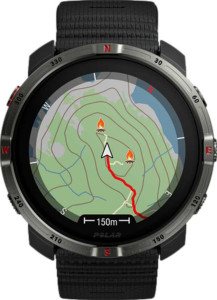
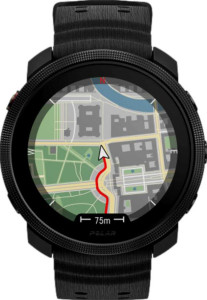
Both the Polar Grit X2 and the Polar Vantage M3 share the same physical footprint — identical 44.7 × 44.7 mm dimensions, a 1.28″ OLED/AMOLED panel, the same 416 × 416 px resolution, and matching operating temperature ranges. They are also both waterproof, feature always-on displays, touchscreens, and replaceable bands. On paper, these two watches look nearly identical at a glance, which makes the differences between them all the more meaningful to dig into.
The most consequential design divergence lies in glass protection and weight. The Grit X2 uses sapphire glass — one of the hardest materials used in watchmaking, highly resistant to scratching from everyday abrasion — while the Vantage M3 foregoes sapphire in favor of branded damage-resistant glass, which typically prioritizes shatter resistance over scratch hardness. For athletes in rugged outdoor environments, sapphire is the more durable long-term choice; for those prone to drops, the Vantage M3′s glass may absorb impact better. The Grit X2 also carries a notably higher stated pixel density at 462 ppi versus 282 ppi on the Vantage M3, which — if accurate — would translate to a noticeably sharper display. In exchange, the Vantage M3 is meaningfully lighter at 53 g compared to the Grit X2′s 62 g, a 9-gram difference that becomes perceptible during long training sessions or extended wear, and it is marginally slimmer at 12.2 mm versus 12.5 mm.
Overall, the Grit X2 holds the design edge for users prioritizing display sharpness and premium scratch protection via sapphire glass — traits that align with its outdoor-rugged positioning. The Vantage M3 counters with a lighter, slightly slimmer profile that will appeal to those who value comfort during all-day or race-day wear. Neither watch is objectively superior in design; the right choice depends on whether scratch resistance and pixel quality or wrist comfort and a lighter build matter more to the individual user.