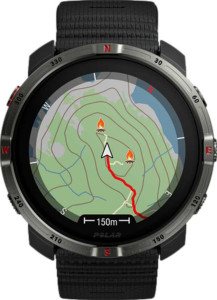
Polar Grit X2
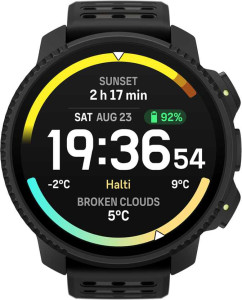
Suunto Vertical 2 Stainless Steel

Polar Grit X2 Suunto Vertical 2 Stainless Steel

Overview

When choosing between the Polar Grit X2 and the Suunto Vertical 2 Stainless Steel, athletes and outdoor adventurers face a compelling decision. Both watches share a premium OLED display with sapphire glass, comprehensive health sensors, and robust activity tracking — but they diverge significantly when it comes to battery life, physical size, and specialized capabilities. This head-to-head comparison breaks down exactly where each watch excels and where trade-offs emerge.

Common Features

  • Both watches feature an OLED/AMOLED display type.
  • Both watches are waterproof.
  • Neither watch has branded damage-resistant glass.
  • The watch band is replaceable on both watches.
  • Both watches have a touch screen.
  • Both watches have a sapphire glass display.
  • Both watches support an Always-On Display.
  • The lowest potential operating temperature is -20 °C on both watches.
  • Both watches have GPS.
  • Both watches have a heart rate monitor.
  • Both watches monitor blood oxygenation levels.
  • Both watches have a barometer.
  • Both watches have an accelerometer.
  • Both watches have a compass.
  • A cadence sensor is not available on either watch.
  • Both watches have a gyroscope.
  • Both watches have a route tracker.
  • Both watches track distance and measure pace.
  • Trackback mode is available on both watches.
  • Both watches track sleep.
  • Both watches support multi-sport mode.
  • Both watches detect activities automatically.
  • Both watches track elevation.
  • Both watches are compatible with iOS and Android.
  • Wi-Fi support is not available on either watch.
  • Neither watch has a cellular module.
  • ANT+ support is not available on either watch.
  • NFC is not available on either watch.
  • Both watches support wireless charging.
  • Neither watch has a solar power battery.
  • Both watches have a rechargeable battery.
  • The battery is not removable on either watch.
  • Both watches have HRV tracking.
  • Both watches measure VO2 max.
  • Both watches measure resting heart rate.
  • Both watches show a readiness level.
  • Both watches support map uploads.
  • Both watches have vibrating alerts.
  • Both watches have a stopwatch.
  • Both watches have a silent alarm.
  • Both watches provide activity reports.
  • Inactivity alerts are available on both watches.
  • Both watches count calories burned.
  • Both watches support goal setting.
  • Both watches have achievements.
  • The companion app is free on both watches.
  • Both watches have an exercise diary.
  • The companion app is ad-free on both watches.
  • Both watches have a battery level indicator.
  • Both watches have auto pause.
  • Both watches are compatible with external heart rate monitors.
  • Neither watch has an external memory slot.
  • Neither watch has a 3.5 mm audio jack socket.

Main Differences

  • Screen size is 1.28″ on Polar Grit X2 and 1.5″ on Suunto Vertical 2 Stainless Steel.
  • Resolution is 416 x 416 px on Polar Grit X2 and 466 x 466 px on Suunto Vertical 2 Stainless Steel.
  • Weight is 62 g on Polar Grit X2 and 87 g on Suunto Vertical 2 Stainless Steel.
  • Waterproof depth rating is 50 m on Polar Grit X2 and 100 m on Suunto Vertical 2 Stainless Steel.
  • Thickness is 12.5 mm on Polar Grit X2 and 13.6 mm on Suunto Vertical 2 Stainless Steel.
  • Height is 44.7 mm on Polar Grit X2 and 49 mm on Suunto Vertical 2 Stainless Steel.
  • Pixel density is 462 ppi on Polar Grit X2 and 439 ppi on Suunto Vertical 2 Stainless Steel.
  • Maximum operating temperature is 50 °C on Polar Grit X2 and 55 °C on Suunto Vertical 2 Stainless Steel.
  • Width is 44.7 mm on Polar Grit X2 and 49 mm on Suunto Vertical 2 Stainless Steel.
  • Volume is 24.976125 cm³ on Polar Grit X2 and 32.6536 cm³ on Suunto Vertical 2 Stainless Steel.
  • A temperature sensor is present on Polar Grit X2 but not available on Suunto Vertical 2 Stainless Steel.
  • Dive mode is supported on Suunto Vertical 2 Stainless Steel but not available on Polar Grit X2.
  • Battery power is 310 mAh on Polar Grit X2 and 800 mAh on Suunto Vertical 2 Stainless Steel.
  • Battery life is 7 days on Polar Grit X2 and 30 days on Suunto Vertical 2 Stainless Steel.
  • Battery life in training mode is 30 hours on Polar Grit X2 and 90 hours on Suunto Vertical 2 Stainless Steel.
  • Fast/slow heart rate notifications are present on Polar Grit X2 but not available on Suunto Vertical 2 Stainless Steel.
  • Phone locating is supported on Suunto Vertical 2 Stainless Steel but not available on Polar Grit X2.
  • Call control is available on Suunto Vertical 2 Stainless Steel but not available on Polar Grit X2.
  • Windows compatibility is present on Suunto Vertical 2 Stainless Steel but not available on Polar Grit X2.
  • Mac OS X compatibility is present on Suunto Vertical 2 Stainless Steel but not available on Polar Grit X2.
Specs Comparison
Polar Grit X2

Polar Grit X2

Suunto Vertical 2 Stainless Steel

Suunto Vertical 2 Stainless Steel

Design:
screen size 1.28" 1.5"
Display type OLED/AMOLED OLED/AMOLED
water resistance Waterproof Waterproof
has branded damage-resistant glass
resolution 416 x 416 px 466 x 466 px
Watch band is replaceable
has a touch screen
weight 62 g 87 g
waterproof depth rating 50 m 100 m
Has sapphire glass display
thickness 12.5 mm 13.6 mm
Always-On Display
height 44.7 mm 49 mm
pixel density 462 ppi 439 ppi
maximum operating temperature 50 °C 55 °C
lowest potential operating temperature -20 °C -20 °C
Has a display
width 44.7 mm 49 mm
width of band 22 mm 22 mm
volume 24.976125 cm³ 32.6536 cm³

The most immediate physical distinction between these two watches is size and weight. The Polar Grit X2 measures 44.7 mm in diameter and weighs just 62 g, while the Suunto Vertical 2 Stainless Steel stretches to 49 mm and tips the scales at 87 g — a 40% weight penalty. For long-duration activities like ultramarathons or multi-day expeditions, that extra 25 g on the wrist compounds over hours and can cause noticeable fatigue or discomfort. The Polar's slimmer 12.5 mm profile versus the Suunto's 13.6 mm also makes it less likely to snag under a jacket cuff. Users with smaller wrists will almost certainly find the Grit X2 a more comfortable daily wear.

On display quality, both watches use OLED/AMOLED panels with sapphire glass and always-on capability — a strong shared foundation. The Suunto's larger 1.5″ screen at 466 × 466 px delivers more map and data real estate, but its pixel density is 439 ppi. The Polar counters with a 462 ppi density on its smaller 1.28″ panel, meaning individual pixels are tighter and text or icons may appear marginally crisper up close. In practice, both are sharp enough that the difference is subtle; the Suunto's advantage is visibility of complex navigation data at a glance, while the Polar edges it on sheer sharpness per inch.

Where the Suunto earns a clear, functional edge is water resistance: 100 m depth rating versus the Polar's 50 m, doubling the certified dive depth and providing a wider safety margin for open-water swimmers and divers. Its slightly higher maximum operating temperature (55 °C vs 50 °C) is a minor bonus in extreme heat environments. Overall, the Polar Grit X2 holds the design advantage for wearers who prioritize comfort, discretion, and wrist feel, while the Suunto Vertical 2 Stainless Steel suits those who want a larger display and deeper waterproofing and are willing to accept the added bulk.

Sensors:
has GPS
Has a heart rate monitor
Monitors blood oxygenation levels
Has a barometer
has an accelerometer
has a compass
Has a temperature sensor
Has a cadence sensor
has a gyroscope
Monitors perspiration

Across the core sensor suite, these two watches are remarkably well-matched. Both carry GPS, an optical heart rate monitor, blood oxygenation (SpO2) tracking, a barometer, accelerometer, compass, and gyroscope — a comprehensive lineup that covers the demands of trail running, hiking, mountaineering, and multisport training without compromise on either side.

The single differentiator in this category is the temperature sensor, present on the Polar Grit X2 but absent from the Suunto Vertical 2 Stainless Steel. In practice, wrist-based temperature readings are influenced by body heat and are most useful as relative indicators — tracking environmental shifts during a climb or overnight bivouac — rather than as precision thermometers. Still, for alpinists, ski tourers, or anyone moving through rapidly changing conditions, having ambient temperature data on-watch without consulting a separate device is a genuine convenience advantage.

Neither watch includes a cadence sensor or perspiration monitor, so there is no gap to note on those fronts. Overall, the sensor comparison is nearly a dead heat, but the Polar Grit X2 earns a narrow edge solely by virtue of its temperature sensor — a meaningful bonus for cold-weather and high-altitude users that the Suunto simply does not offer.

Activity tracking:
Has a route tracker
Tracks distance
Measures pace
Has trackback mode
Tracks your sleep
Has multi-sport mode
Detects activities automatically
Tracks elevation
Tracks steps taken
Provides sleep reports
Has exercise tagging
Has a stroke counter for swimming
Tracks calorie intake
Designed for diving
Designed for golf

For the vast majority of athletes, this category will look like a perfect tie. Both watches cover the full spectrum of endurance and multisport tracking — route tracking, trackback mode, elevation, pace, steps, automatic activity detection, swim stroke counting, sleep reporting, and calorie intake logging are all present on each device. That breadth signals that both are purpose-built for serious outdoor and multisport use, not general-purpose fitness watches with a few trail features bolted on.

The sole differentiator here is that the Suunto Vertical 2 Stainless Steel is explicitly designed for diving, while the Polar Grit X2 is not. This aligns directly with the deeper 100 m water resistance noted in the design specs, and it means the Suunto is built to log dive profiles, track depth, and serve as a functional dive computer — a distinct use case that goes well beyond swim tracking. For a triathlete or open-water swimmer, this distinction is irrelevant. For anyone who dives, it is a decisive capability gap.

Neither watch is designed for golf, so that spec cancels out entirely. In summary, if your activities stay on land and water surfaces, the two watches are functionally identical in this category. The Suunto Vertical 2 Stainless Steel claims a clear, targeted edge only for users whose activity mix includes diving.

Connectivity:
Is compatible with iOS
Is compatible with Android
supports Wi-Fi
has a cellular module
supports ANT+
has NFC

Connectivity is the one category where neither watch distinguishes itself — and notably, where both reveal a shared limitation. The Polar Grit X2 and the Suunto Vertical 2 Stainless Steel are both compatible with iOS and Android, which covers the practical needs of virtually every user for syncing data and receiving notifications via a paired phone.

Beyond that baseline, however, the feature set thins out identically for both. Neither supports Wi-Fi, ANT+, NFC, or a cellular module. The absence of ANT+ is worth flagging for athletes who rely on third-party accessories — chest-strap heart rate monitors, cycling power meters, or foot pods — as ANT+ is the dominant wireless protocol for that hardware ecosystem. Likewise, no NFC means neither watch supports contactless payments, a convenience feature increasingly common at this price tier. And without cellular, both are fully dependent on a paired smartphone for any connected functionality away from home.

Since every specified connectivity attribute is identical across both products, this category is an unambiguous tie. The choice between these two watches should rest entirely on the differentiators found in other spec groups.

Battery:
battery power 310 mAh 800 mAh
battery life 7 days 30 days
battery life in training mode 30 hours 90 hours
has wireless charging
Has a solar power battery
has a rechargeable battery
has a removable battery

Battery life is where the gap between these two watches becomes impossible to ignore. The Suunto Vertical 2 Stainless Steel packs an 800 mAh cell delivering up to 30 days of smartwatch use and a remarkable 90 hours in active training mode. The Polar Grit X2, by contrast, carries a 310 mAh battery rated for 7 days of daily use and 30 hours in training mode. That is roughly a 4x difference in daily endurance and a 3x gap during GPS-tracked activity — figures that fundamentally change how each watch fits into an expedition or ultra-endurance context.

To put the training mode numbers in perspective: 30 hours on the Polar is sufficient for most ultramarathons and long-course triathlons, but it leaves little buffer for multi-day fastpacking or mountaineering trips where the watch runs continuously. The Suunto's 90-hour training ceiling comfortably covers multi-day events and extended backcountry missions without requiring a recharge in the field. For anyone venturing where power outlets are scarce, that difference is operationally significant.

Both watches support wireless charging and use non-removable rechargeable batteries, so the charging experience is equivalent. But on raw endurance, the Suunto Vertical 2 Stainless Steel holds a decisive and unambiguous advantage in this category — its battery capacity alone makes it the stronger choice for long-duration and expedition-oriented users.

Features:
release date June 2025 September 2025
has HRV tracking
measures VO2 max
measures resting heart rate
has fast/slow heart rate notifications
shows readiness level
Can upload maps
Has vibrating alerts
Has a stopwatch
Locates your phone
Has silent alarm
has irregular heart rate warnings
has fall detection
Has notifications
Acquires GPS faster
Has call control
internal storage 32GB 32GB
Can be used to answer calls
supports Galileo
Has smart alarm
warranty period 1 years 1 years
has voice commands
Has a built-in camera remote control function

The feature sets here are broadly aligned, with both watches offering a strong health and performance toolkit: HRV tracking, VO2 max estimation, readiness scoring, map upload capability, silent alarm, notifications, fast GPS acquisition, Galileo support, and a generous 32 GB of internal storage. For an athlete focused purely on training intelligence and navigation, either watch delivers a comprehensive and near-identical experience.

The divergence comes down to two small but pointed differences. The Polar Grit X2 includes fast/slow heart rate notifications — useful for athletes monitoring cardiac zones passively throughout the day or managing overtraining — which the Suunto lacks. In the other direction, the Suunto Vertical 2 Stainless Steel offers both a phone finder and call control from the wrist, neither of which is available on the Polar. Call control allows users to manage incoming calls without reaching for their phone, a convenience that matters in daily smartwatch use even if it is irrelevant mid-race.

Neither difference is a dealbreaker, but they do reflect each watch's orientation. The Polar leans slightly toward health monitoring granularity, while the Suunto adds a layer of everyday smartwatch utility. Given that the Suunto gains two features to the Polar's one, it holds a marginal edge in this category — though for athletes who rarely use call management features, the gap is negligible.

App & Software:
Provides activity reports
Has inactivity alerts
Counts how many calories you've burned
Has goal setting
Has achievements
Free app
Has exercise diary
Ad-free
Has weight tracking
Tracks water intake
Has coaching
Supports routes
Has music playback
Supports widgets
Has barcode scanner on app

Rarely does a spec group resolve this cleanly: the app and software capabilities of the Polar Grit X2 and the Suunto Vertical 2 Stainless Steel are identical across every single attribute provided. Both companion apps are free and ad-free, support route planning, deliver coaching and activity reports, and cover lifestyle tracking through calorie counting, weight logging, and water intake — a well-rounded package that extends each watch's value well beyond raw workout recording.

The inclusion of music playback and widgets on both platforms reinforces that these are not bare-bones logging apps but fuller ecosystems designed for daily engagement. Inactivity alerts, goal setting, and achievement systems further support long-term behavior change rather than just performance tracking. The one absent feature — a barcode scanner for food logging — is equally missing from both, so it creates no competitive distinction.

With no differentiating data point in either direction, this category is a complete tie. Users can expect a comparably featured software experience from whichever watch they choose, and the decision should rest entirely on the hardware differences covered in other spec groups.

Miscellaneous:
has a battery level indicator
Is compatible with Windows
Has auto pause
Compatible with external heart rate monitors
Is compatible with Mac OS X
has an external memory slot
has a socket for a 3.5 mm audio jack

Most of the miscellaneous specs here are shared ground: both watches display a battery level indicator, support auto pause during activities, and are compatible with external heart rate monitors — a practical perk for athletes who prefer chest-strap accuracy over optical sensing. Neither offers an external memory slot or a 3.5 mm audio jack, which is unsurprising for devices in this category.

The only point of divergence is desktop OS compatibility. The Suunto Vertical 2 Stainless Steel is compatible with both Windows and Mac OS X, while the Polar Grit X2 supports neither. In an era where most users sync exclusively through a smartphone app, this distinction is easy to overlook — but it does matter for athletes who prefer managing training data, maps, or firmware updates directly from a computer, or who work in environments where desktop-based workflows are standard.

The shared features carry more day-to-day weight than the OS compatibility gap for most users, but the Suunto's broader desktop support gives it a tangible, if niche, practical advantage. On balance, the Suunto Vertical 2 Stainless Steel takes a narrow edge in this category purely on the strength of that added desktop flexibility.

Comparison Summary & Verdict

After examining every specification, these two watches serve distinctly different users. The Polar Grit X2 stands out as the smarter choice for everyday athletes who value a lighter, more compact form factor — at just 62 g and 44.7 mm — along with a higher pixel density display and fast/slow heart rate notifications for health-conscious training. On the other hand, the Suunto Vertical 2 Stainless Steel is built for serious endurance adventurers who demand an exceptional 30-day battery life, 90 hours of training mode, a deeper waterproof rating of 100 m, dive mode support, and added conveniences like call control and phone locating. If portability and sharpness matter most, the Polar Grit X2 delivers. If long-range expedition capability is the priority, the Suunto Vertical 2 Stainless Steel is the clear fit.

Polar Grit X2
Buy Polar Grit X2 if...

Buy the Polar Grit X2 if you want a lighter, more compact sports watch with a sharper display and heart rate alert notifications for daily training.

Suunto Vertical 2 Stainless Steel
Buy Suunto Vertical 2 Stainless Steel if...

Buy the Suunto Vertical 2 Stainless Steel if you need an expedition-ready watch with a 30-day battery life, 100 m water resistance, dive mode support, and call control.