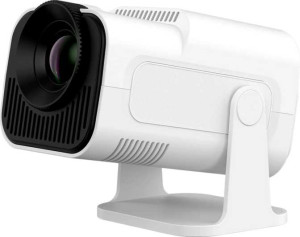
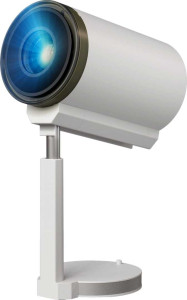
Portronics Beem 470 Mini
Portronics Beem 520

Portronics Beem 470 Mini Portronics Beem 520

Overview

Welcome to our in-depth spec comparison of the Portronics Beem 470 Mini and the Portronics Beem 520. Both projectors share a strong common foundation, including built-in smart TV, AirPlay, Chromecast, Bluetooth, and Wi-Fi connectivity, but they take notably different paths when it comes to output resolution, projection size, and physical form factor. Read on to discover which model best fits your setup and viewing needs.

Common Features

  • Neither product uses a laser light source.
  • Dolby Vision support is not available on either product.
  • Both products have 1 HDMI port.
  • AirPlay is supported on both products.
  • Bluetooth is available on both products.
  • Wi-Fi is supported on both products.
  • Both products have 1 USB port.
  • Chromecast built-in is available on both products.
  • Neither product has a VGA connector.
  • Neither product is DLNA-certified.
  • Stereo speakers are not present on either product.
  • Vertical lens shift is not available on either product.
  • Horizontal lens shift is not available on either product.
  • Both products include a remote control.
  • Built-in smart TV functionality is available on both products.
  • Both products have an audio output power of 1 x 3W.
  • A sleep timer is available on both products.
  • Dolby Atmos support is not available on either product.

Main Differences

  • Width is 136 mm on Portronics Beem 470 Mini and 260 mm on Portronics Beem 520.
  • Height is 136 mm on Portronics Beem 470 Mini and 140 mm on Portronics Beem 520.
  • Thickness is 213 mm on Portronics Beem 470 Mini and 120 mm on Portronics Beem 520.
  • Weight is 1350 g on Portronics Beem 470 Mini and 950 g on Portronics Beem 520.
  • Volume is 3939.648 cm³ on Portronics Beem 470 Mini and 4368 cm³ on Portronics Beem 520.
  • Output resolution is 720p on Portronics Beem 470 Mini and 1080p on Portronics Beem 520.
  • Maximum projection size is 150″ on Portronics Beem 470 Mini and 88″ on Portronics Beem 520.
  • Minimum throw distance is 1.5 m on Portronics Beem 470 Mini and 2 m on Portronics Beem 520.
  • A DVI connector is present on Portronics Beem 470 Mini but not available on Portronics Beem 520.
  • A 3.5 mm audio jack socket is present on Portronics Beem 520 but not available on Portronics Beem 470 Mini.
Specs Comparison
Portronics Beem 470 Mini

Portronics Beem 470 Mini

Portronics Beem 520

Portronics Beem 520

General info:
has laser light source
release date July 2025 February 2025
width 136 mm 260 mm
height 136 mm 140 mm
thickness 213 mm 120 mm
weight 1350 g 950 g
volume 3939.648 cm³ 4368 cm³

Neither the Portronics Beem 470 Mini nor the Portronics Beem 520 uses a laser light source, so both rely on conventional lamp or LED projection technology — no advantage to either on that front. Where they diverge meaningfully is in physical form factor. The Beem 470 Mini is notably more cube-like at 136 × 136 × 213 mm, while the Beem 520 spreads out into a flatter, wider profile at 260 × 140 × 120 mm. In practice, the 470 Mini's taller, more compact footprint may suit shelf placement or tight spaces, whereas the 520's low-profile shape sits more naturally on a desk or table without protruding vertically.

The weight difference is the most impactful differentiator here: the Beem 520 is significantly lighter at 950 g versus the 470 Mini's 1350 g — a gap of 400 g, or roughly 30% heavier for the Mini. For a portable projector, that extra weight is noticeable during transport and handling, giving the Beem 520 a real edge in portability. Interestingly, despite being lighter, the Beem 520 has a slightly larger calculated volume (4368 cm³ vs. 3939 cm³), meaning it occupies more space in a bag even though it weighs less — a trade-off worth considering when packing.

Overall, the Beem 520 holds a clear advantage in this group purely on weight, making it the more carry-friendly option. However, if vertical compactness matters more than weight — for instance, fitting into a specific shelf or compartment — the 470 Mini's smaller footprint in two dimensions could be preferable. Users prioritizing day-to-day portability should lean toward the Beem 520.

Projection quality:
output resolution 720p 1080p
maximum projection size 150" 88"
minimum throw distance 1.5 m 2 m
supports Dolby Vision

Resolution is where these two projectors take very different stances. The Beem 520 outputs at 1080p, delivering a full HD image with noticeably sharper text, finer detail, and more defined edges — especially apparent on larger screens or when sitting closer to the projection. The Beem 470 Mini tops out at 720p, which is adequate for casual viewing but will show softer imagery by comparison, particularly with HD content sources.

Flip the script on screen size, though, and the 470 Mini fights back hard. It can throw an image up to 150″ and needs as little as 1.5 m of distance to do so, making it genuinely flexible in smaller rooms. The Beem 520 caps at 88″ and requires at least 2 m of throw distance — a meaningful constraint in compact living spaces. So while the 520 wins on pixel count, the 470 Mini can fill a much larger wall and do it from closer range, which matters enormously in typical home setups.

Neither unit supports Dolby Vision, so HDR enthusiasts will find the same limitation on both sides. On balance, the Beem 520 has the edge for picture sharpness, making it the stronger choice for content clarity and detail-oriented viewing. However, users with limited room depth or a desire for a truly large image will find the Beem 470 Mini more capable — its throw flexibility and maximum screen size represent a genuine real-world advantage that partially offsets the resolution gap.

Connectivity:
HDMI ports 1 1
has AirPlay
Has Bluetooth
supports Wi-Fi
USB ports 1 1
has Chromecast built-in
has a VGA connector
is DLNA-certified
has a DVI connector
supports Miracast
RJ45 ports 0 0
Has S/PDIF Out port

For the most part, these two projectors are evenly matched on connectivity. Both carry the same wired essentials — one HDMI port and one USB port — and share an identical wireless feature set: Wi-Fi, Bluetooth, AirPlay, Chromecast built-in, and Miracast. In practice, this means both units can receive content from iPhones, Android devices, laptops, and streaming sticks with equal ease, and neither requires a dedicated network cable thanks to the absence of an RJ45 port on both.

The one meaningful differentiator is the Beem 470 Mini's DVI connector, which the Beem 520 does not have. DVI is a legacy video interface, rarely found on modern source devices, but it does provide a direct digital video path for older laptops, desktop GPUs, or certain professional equipment that still uses it. For most consumers this will never matter, but in a business or education context where older hardware is common, it adds a niche but real compatibility advantage.

Stripped of that single distinction, this category is essentially a tie. The Beem 470 Mini holds a narrow technical edge solely due to the DVI port, but only users with legacy equipment will ever benefit from it. Anyone operating in an all-modern-device environment will find both projectors identically capable on the connectivity front.

Features:
has stereo speakers
has lens shift (vertical)
has lens shift (horizontal)
has a remote control
has built-in smart TV
audio output power 1 x 3W 1 x 3W
has a socket for a 3.5 mm audio jack
has a sleep timer
has Dolby Atmos
has an external memory slot
has voice commands

Across most features, these two projectors are virtually identical — both include a remote control, a built-in smart TV platform, a sleep timer, and a single 3W mono speaker. The shared audio output is modest by any standard; a single 3W driver won't fill a large room, and the absence of Dolby Atmos on both confirms that neither is positioning itself as an audio-first device. Users serious about sound will want to route audio externally regardless of which unit they choose.

The sole differentiator in this group is the Beem 520's 3.5 mm audio jack, which the Beem 470 Mini lacks entirely. This small addition carries practical weight: it allows direct connection to wired headphones, a soundbar, or a portable speaker without needing Bluetooth pairing — useful in quiet environments, for late-night viewing, or simply when a wired connection is more reliable. The 470 Mini's omission of this port means external audio must go through wireless channels, which adds a dependency that not every setup can accommodate cleanly.

The Beem 520 takes a clear, if narrow, edge here on the strength of that headphone jack alone. Every other feature in this group is a dead heat. For users who ever anticipate plugging in wired audio — whether headphones or an external speaker — the 520's added flexibility is a genuine practical advantage that the 470 Mini simply cannot match.

Comparison Summary & Verdict

After examining the full specification set, these two projectors clearly serve different priorities. The Portronics Beem 470 Mini stands out with its impressive 150″ maximum projection size and a shorter 1.5 m minimum throw distance, making it ideal for users who want a truly large-screen cinematic experience in a more flexible space. It also adds a DVI connector for broader legacy device compatibility. The Portronics Beem 520, on the other hand, delivers a sharper 1080p output resolution, is notably lighter at 950 g, and includes a 3.5 mm audio jack for direct headphone or speaker use. Choose the Beem 470 Mini if screen size and throw flexibility matter most; opt for the Beem 520 if picture clarity, portability, and audio versatility are your top priorities.

Portronics Beem 470 Mini
Buy Portronics Beem 470 Mini if...

Buy the Portronics Beem 470 Mini if you want the largest possible screen size, with support for projections up to 150″ and a shorter minimum throw distance of 1.5 m, plus a DVI connector for legacy device support.

Portronics Beem 520
Buy Portronics Beem 520 if...

Buy the Portronics Beem 520 if you prioritize a crisper 1080p resolution, a lighter and slimmer build at 950 g, and the convenience of a built-in 3.5 mm audio jack.