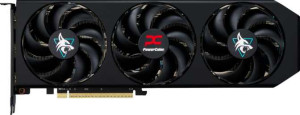
PowerColor Hellhound Radeon RX 9060 XT 16GB
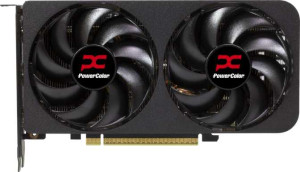
PowerColor Reaper Radeon RX 9060 XT 16GB

PowerColor Hellhound Radeon RX 9060 XT 16GB PowerColor Reaper Radeon RX 9060 XT 16GB

Overview

Choosing between the PowerColor Hellhound Radeon RX 9060 XT 16GB and the PowerColor Reaper Radeon RX 9060 XT 16GB means weighing raw performance headroom against physical footprint. Both cards are built on the same RDNA 4.0 architecture, pack 16GB of GDDR6 memory, and share a 160W TDP, yet they diverge in GPU turbo clock speeds, compute throughput, and card dimensions. Read on to discover which variant is the right fit for your build.

Common Features

  • Both cards have a base GPU clock speed of 1700 MHz.
  • Both cards have a GPU memory speed of 2518 MHz.
  • Both cards feature 2048 shading units.
  • Both cards include 128 texture mapping units (TMUs).
  • Both cards have 64 render output units (ROPs).
  • Double Precision Floating Point (DPFP) is supported on both cards.
  • Both cards have an effective memory speed of 20000 MHz.
  • Both cards offer a maximum memory bandwidth of 322.3 GB/s.
  • Both cards come with 16GB of GDDR6 VRAM.
  • Both cards use a 128-bit memory bus width.
  • ECC memory is supported on both cards.
  • Both cards support DirectX 12 Ultimate.
  • Both cards have an OpenGL version of 4.6.
  • Both cards support OpenCL version 2.2.
  • Multi-display technology is supported on both cards.
  • Ray tracing is supported on both cards.
  • DLSS is not supported on either card.
  • FSR4 is available on both cards.
  • Both cards feature 1 HDMI 2.1b port and 2 DisplayPort outputs, with no USB-C, DVI, or mini DisplayPort outputs.
  • Both cards are built on the RDNA 4.0 architecture using a 4 nm process with 29700 million transistors.
  • Both cards have a Thermal Design Power (TDP) of 160W and use PCIe version 5.
  • Air-water cooling is not available on either card.
  • Both cards have a height of 120 mm.

Main Differences

  • GPU turbo clock speed is 3311 MHz on the PowerColor Hellhound Radeon RX 9060 XT 16GB and 3230 MHz on the PowerColor Reaper Radeon RX 9060 XT 16GB.
  • Pixel rate is 211.9 GPixel/s on the PowerColor Hellhound Radeon RX 9060 XT 16GB and 206.7 GPixel/s on the PowerColor Reaper Radeon RX 9060 XT 16GB.
  • Floating-point performance is 27.12 TFLOPS on the PowerColor Hellhound Radeon RX 9060 XT 16GB and 26.46 TFLOPS on the PowerColor Reaper Radeon RX 9060 XT 16GB.
  • Texture rate is 423.8 GTexels/s on the PowerColor Hellhound Radeon RX 9060 XT 16GB and 413.4 GTexels/s on the PowerColor Reaper Radeon RX 9060 XT 16GB.
  • Card width is 330 mm on the PowerColor Hellhound Radeon RX 9060 XT 16GB and 220 mm on the PowerColor Reaper Radeon RX 9060 XT 16GB.
Specs Comparison
PowerColor Hellhound Radeon RX 9060 XT 16GB

PowerColor Hellhound Radeon RX 9060 XT 16GB

PowerColor Reaper Radeon RX 9060 XT 16GB

PowerColor Reaper Radeon RX 9060 XT 16GB

Performance:
GPU clock speed 1700 MHz 1700 MHz
GPU turbo 3311 MHz 3230 MHz
pixel rate 211.9 GPixel/s 206.7 GPixel/s
floating-point performance 27.12 TFLOPS 26.46 TFLOPS
texture rate 423.8 GTexels/s 413.4 GTexels/s
GPU memory speed 2518 MHz 2518 MHz
shading units 2048 2048
texture mapping units (TMUs) 128 128
render output units (ROPs) 64 64
Has Double Precision Floating Point (DPFP)

Both the Hellhound and Reaper variants of the RX 9060 XT 16GB share an identical foundation: the same 1700 MHz base clock, 2048 shading units, 128 TMUs, 64 ROPs, and 2518 MHz memory speed. This means the underlying GPU silicon and memory subsystem are the same — the only lever PowerColor has pulled is the boost clock ceiling.

That lever, however, creates a consistent performance gap across every derived metric. The Hellhound boosts up to 3311 MHz versus the Reaper's 3230 MHz — an 81 MHz (roughly 2.5%) advantage. Because pixel rate, texture rate, and floating-point throughput are all direct functions of that turbo frequency, the Hellhound leads in every computed performance figure: 27.12 TFLOPS vs 26.46 TFLOPS, 211.9 GPixel/s vs 206.7 GPixel/s, and 423.8 GTexels/s vs 413.4 GTexels/s. In practice, a ~2.5% clock advantage typically translates to a similarly modest real-world framerate uplift — noticeable in benchmarks but unlikely to be perceptible in most gaming scenarios.

Based strictly on these specs, the Hellhound holds a clear, if narrow, performance edge over the Reaper. The Reaper is not disadvantaged in any architectural sense — it simply runs at a lower power or thermal target, which may make it quieter or more efficient depending on its cooling solution. For users who prioritize maximum raw throughput, the Hellhound is the stronger choice in this group.

Memory:
effective memory speed 20000 MHz 20000 MHz
maximum memory bandwidth 322.3 GB/s 322.3 GB/s
VRAM 16GB 16GB
GDDR version GDDR6 GDDR6
memory bus width 128-bit 128-bit
Supports ECC memory

Memory is one area where there is absolutely nothing to separate these two cards. The Hellhound and Reaper both feature 16GB of GDDR6 running at an effective 20000 MHz across a 128-bit bus, producing identical peak bandwidth of 322.3 GB/s. Every single memory specification is a mirror image.

That said, these shared numbers are worth contextualizing. A 128-bit bus is narrower than what higher-end GPUs offer, but the fast GDDR6 clock rate compensates to deliver bandwidth that is well-suited for the RX 9060 XT's performance tier. The 16GB VRAM allocation is genuinely generous at this level — it comfortably handles texture-heavy workloads, high-resolution asset streaming, and modern titles that increasingly push past the 8GB and 12GB thresholds. ECC memory support is a bonus for users doing any compute or professional work alongside gaming, adding a layer of data integrity not always present on consumer cards.

This group is a complete tie. Neither the Hellhound nor the Reaper holds any memory advantage whatsoever — buyers can disregard this category entirely when choosing between the two and focus their decision on other differentiators.

Features:
DirectX version DirectX 12 Ultimate DirectX 12 Ultimate
OpenGL version 4.6 4.6
OpenCL version 2.2 2.2
Supports multi-display technology
supports ray tracing
Supports 3D
supports DLSS
has FSR4
has XeSS (XMX)
AMD SAM / Intel Resizable BAR AMD SAM AMD SAM
has LHR
has RGB lighting
supported displays 3 3

Feature parity is total here. Both the Hellhound and the Reaper carry identical software and API capabilities: DirectX 12 Ultimate support, ray tracing, FSR4, and AMD SAM — with no exceptions on either side. There is not a single feature checkbox that differentiates them.

The more meaningful story is what these shared features represent for buyers. Ray tracing support and DirectX 12 Ultimate compliance ensure both cards are compatible with the full breadth of modern rendering techniques. FSR4 — AMD's latest upscaling generation — is a significant asset, allowing both cards to render at lower resolutions and reconstruct sharper output, effectively boosting framerates in supported titles. The absence of DLSS is simply a platform reality: DLSS is an Nvidia-exclusive technology, so neither card supports it by design. AMD SAM (Smart Access Memory) allows a compatible AMD CPU and motherboard to grant the GPU full access to its VRAM pool, which can yield meaningful performance gains in CPU-bottlenecked scenarios. Both cards support up to 3 simultaneous displays, which covers the vast majority of multi-monitor setups.

As with memory, this group is a dead tie. The feature set is identical across the Hellhound and the Reaper, so prospective buyers gain nothing and lose nothing on this dimension regardless of which model they choose.

Ports:
has an HDMI output
HDMI ports 1 1
HDMI version HDMI 2.1b HDMI 2.1b
DisplayPort outputs 2 2
USB-C ports 0 0
DVI outputs 0 0
mini DisplayPort outputs 0 0

Connectivity is another category where the Hellhound and Reaper are perfectly matched. Both cards offer the same I/O layout: one HDMI 2.1b port and two DisplayPort outputs, totaling three physical connectors — consistent with the three-display maximum noted in their feature specs.

The port quality here is worth noting. HDMI 2.1b is the latest revision of the HDMI standard, supporting high refresh rates at 4K and beyond, making it a future-proof choice for users connecting to modern TVs or high-end monitors over HDMI. The dual DisplayPort outputs serve well for multi-monitor desktop setups or high-refresh-rate gaming displays. The absence of USB-C is not unusual at this product tier and is unlikely to affect the typical gaming use case.

No differentiation exists between these two cards on ports — it is a complete tie. Buyers with specific connectivity needs, such as a particular monitor configuration, can make the same assumption about either card.

General info:
GPU architecture RDNA 4.0 RDNA 4.0
release date June 2025 June 2025
Thermal Design Power (TDP) 160W 160W
PCI Express (PCIe) version 5 5
semiconductor size 4 nm 4 nm
number of transistors 29700 million 29700 million
Has air-water cooling
width 330 mm 220 mm
height 120 mm 120 mm

At the architectural level, these two cards are indistinguishable. Both are built on the RDNA 4.0 architecture using a 4nm process node with 29,700 million transistors, draw the same 160W TDP, and connect via PCIe 5.0. The shared TDP is particularly relevant: it means neither card demands more from a power supply than the other, and both will generate the same amount of heat under load — the cooling solution design, not the power envelope, will determine thermal outcomes.

The one concrete difference in this group is physical size. The Hellhound measures 330mm in length, while the Reaper comes in significantly shorter at 220mm — a 110mm gap that is far from trivial. This difference directly impacts case compatibility: the Reaper will fit comfortably in compact mid-tower and small form factor builds where the Hellhound may simply not clear. For anyone building in a constrained chassis, this is a decisive spec. Conversely, the Hellhound's longer PCB may accommodate a more elaborate cooling array, which could influence thermal and noise performance — though cooling quality is not directly quantifiable from these specs alone.

For general compatibility and platform specs, both cards are on equal footing. But on physical footprint, the Reaper holds a clear advantage for space-constrained builds, while the Hellhound is better suited to standard full-size cases where length is not a concern.

Comparison Summary & Verdict

After a full specification breakdown, both the PowerColor Hellhound Radeon RX 9060 XT 16GB and the PowerColor Reaper Radeon RX 9060 XT 16GB share identical memory configurations, feature sets, and port selections, so the decision rests on two key axes. The Hellhound leads in raw compute, delivering a GPU turbo of 3311 MHz, 27.12 TFLOPS of floating-point performance, and a texture rate of 423.8 GTexels/s — tangible advantages for demanding workloads. The trade-off is its 330 mm length, which requires a spacious chassis. The Reaper concedes a small performance margin in exchange for a far more manageable 220 mm footprint, making it the natural pick for compact or small-form-factor builds. Choose the Hellhound if your case has the room and peak performance is the priority; opt for the Reaper if space is at a premium but you still want the full RDNA 4.0 feature set.

PowerColor Hellhound Radeon RX 9060 XT 16GB
Buy PowerColor Hellhound Radeon RX 9060 XT 16GB if...

Buy the PowerColor Hellhound Radeon RX 9060 XT 16GB if you want the highest GPU turbo clock, floating-point performance, and texture rate this lineup offers, and your case can comfortably accommodate a 330 mm card.

PowerColor Reaper Radeon RX 9060 XT 16GB
Buy PowerColor Reaper Radeon RX 9060 XT 16GB if...

Buy the PowerColor Reaper Radeon RX 9060 XT 16GB if you are building in a compact or space-constrained case, since its 220 mm length delivers the same core feature set and memory configuration in a significantly smaller form factor.