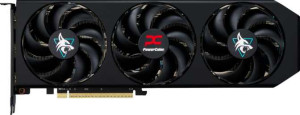
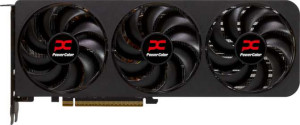
The most telling story in this performance comparison is not found in clock speeds, but in raw hardware scale. The Reaper RX 9070 XT doubles the Hellhound RX 9060 XT 16GB across every execution unit: 4096 vs. 2048 shading units, 256 vs. 128 TMUs, and 128 vs. 64 ROPs. This is not a minor generational refinement — it is a fundamentally larger GPU die. More shading units mean more parallel work completed per clock cycle, more TMUs accelerate texture filtering in complex scenes, and more ROPs directly determine how quickly the GPU can push finished pixels to the framebuffer, which is critical at higher resolutions.
Interestingly, the 9060 XT actually posts a higher GPU turbo clock (3311 MHz vs. 2970 MHz), which reflects a common efficiency trade-off: a smaller die can be pushed to higher frequencies more easily. However, clock speed multiplied by fewer execution units still yields a much lower overall throughput. The 9070 XT's 48.66 TFLOPS of floating-point performance is nearly 80% higher than the 9060 XT's 27.12 TFLOPS, and its pixel and texture fill rates follow the same ratio. Both cards share identical 2518 MHz memory speeds and support double-precision floating point, so neither holds an advantage on those fronts.
The Reaper RX 9070 XT holds a decisive and unambiguous performance edge in this group. The 9060 XT's higher clocks are a consolation, not a counterbalance — the throughput gap is simply too wide. For users prioritizing rendering horsepower, compute workloads, or high-resolution gaming, the 9070 XT is the clear winner here. The 9060 XT positions itself as the more power-efficient, budget-oriented option, but it cannot match the 9070 XT in raw GPU performance.