PowerColor Hellhound Radeon RX 9070
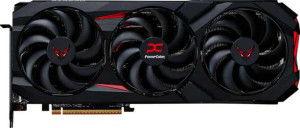
PowerColor Red Devil Radeon RX 9070

PowerColor Hellhound Radeon RX 9070 PowerColor Red Devil Radeon RX 9070

Overview

Welcome to our detailed spec comparison between the PowerColor Hellhound Radeon RX 9070 and the PowerColor Red Devil Radeon RX 9070. Both cards share the same RDNA 4.0 foundation, yet they diverge in key areas such as clock speeds and overall performance headroom, as well as physical dimensions. Read on to discover which card best fits your needs.

Common Features

  • Both cards share a GPU memory speed of 2518 MHz.
  • Both cards have 3584 shading units.
  • Both cards have 224 texture mapping units (TMUs).
  • Both cards have 128 render output units (ROPs).
  • Double Precision Floating Point (DPFP) is supported on both cards.
  • Both cards have an effective memory speed of 20000 MHz.
  • Both cards feature 16GB of VRAM.
  • Both cards use GDDR6 memory.
  • Both cards have a 256-bit memory bus width.
  • ECC memory is supported on both cards.
  • Both cards support DirectX 12.
  • Both cards support OpenGL version 4.6.
  • Both cards support OpenCL version 2.2.
  • Multi-display technology is supported on both cards.
  • Ray tracing is supported on both cards.
  • 3D support is available on both cards.
  • DLSS is not supported on either card.
  • FSR4 is available on both cards.
  • Both cards have one HDMI 2.1b port and three DisplayPort outputs, with no USB-C or DVI outputs.
  • Both cards are built on the RDNA 4.0 architecture with a 5 nm semiconductor size, a TDP of 220W, 53900 million transistors, and PCIe 5 support.
  • Air-water cooling is not available on either card.

Main Differences

  • GPU base clock speed is 1330 MHz on PowerColor Hellhound Radeon RX 9070 and 1440 MHz on PowerColor Red Devil Radeon RX 9070.
  • GPU turbo clock speed is 2590 MHz on PowerColor Hellhound Radeon RX 9070 and 2700 MHz on PowerColor Red Devil Radeon RX 9070.
  • Pixel rate is 331.5 GPixel/s on PowerColor Hellhound Radeon RX 9070 and 345.6 GPixel/s on PowerColor Red Devil Radeon RX 9070.
  • Floating-point performance is 37.13 TFLOPS on PowerColor Hellhound Radeon RX 9070 and 38.71 TFLOPS on PowerColor Red Devil Radeon RX 9070.
  • Texture rate is 580.2 GTexels/s on PowerColor Hellhound Radeon RX 9070 and 604.8 GTexels/s on PowerColor Red Devil Radeon RX 9070.
  • Maximum memory bandwidth is 644.6 GB/s on PowerColor Hellhound Radeon RX 9070 and 644 GB/s on PowerColor Red Devil Radeon RX 9070.
  • Card width is 340 mm on PowerColor Hellhound Radeon RX 9070 and 352 mm on PowerColor Red Devil Radeon RX 9070.
  • Card height is 142 mm on PowerColor Hellhound Radeon RX 9070 and 149 mm on PowerColor Red Devil Radeon RX 9070.
Specs Comparison
PowerColor Hellhound Radeon RX 9070

PowerColor Hellhound Radeon RX 9070

PowerColor Red Devil Radeon RX 9070

PowerColor Red Devil Radeon RX 9070

Performance:
GPU clock speed 1330 MHz 1440 MHz
GPU turbo 2590 MHz 2700 MHz
pixel rate 331.5 GPixel/s 345.6 GPixel/s
floating-point performance 37.13 TFLOPS 38.71 TFLOPS
texture rate 580.2 GTexels/s 604.8 GTexels/s
GPU memory speed 2518 MHz 2518 MHz
shading units 3584 3584
texture mapping units (TMUs) 224 224
render output units (ROPs) 128 128
Has Double Precision Floating Point (DPFP)

Both the Hellhound and the Red Devil are built on identical GPU silicon — the same 3584 shading units, 224 TMUs, and 128 ROPs — meaning any performance difference between them comes entirely from factory clock speeds, not architectural distinction. This is a classic base-vs-premium tier comparison within the same product family.

That distinction matters, because the Red Devil does carry a consistent clock speed advantage across the board. Its 2700 MHz boost clock versus the Hellhound's 2590 MHz translates directly into higher derived metrics: the Red Devil delivers 38.71 TFLOPS of floating-point throughput compared to 37.13 TFLOPS, and its texture rate of 604.8 GTexels/s edges out the Hellhound's 580.2 GTexels/s. In practice, a ~4% clock advantage like this typically produces a similarly modest but real improvement in frame rates and compute workloads — enough to be measurable in benchmarks, though unlikely to be dramatic in day-to-day gaming at equivalent settings. Memory speed is identical at 2518 MHz, so bandwidth is not a differentiator.

The Red Devil holds a clear, if moderate, performance edge in this group, driven purely by its higher factory overclock. For users who want every frame the hardware can offer without manual tuning, the Red Devil is the stronger choice. The Hellhound, sharing the exact same core configuration, remains competitive and the gap is narrow enough that real-world experience will feel very similar in most scenarios.

Memory:
effective memory speed 20000 MHz 20000 MHz
maximum memory bandwidth 644.6 GB/s 644 GB/s
VRAM 16GB 16GB
GDDR version GDDR6 GDDR6
memory bus width 256-bit 256-bit
Supports ECC memory

When it comes to memory, the Hellhound and the Red Devil are effectively identical in every specification that matters. Both carry 16GB of GDDR6 across a 256-bit bus, running at an effective speed of 20000 MHz and delivering just over 644 GB/s of memory bandwidth. That 0.6 GB/s difference in peak bandwidth is purely a rounding artifact and carries zero practical significance.

The configuration itself is worth appreciating in context: a 256-bit bus paired with fast GDDR6 is a well-balanced setup for high-resolution gaming and creative workloads. The 644+ GB/s bandwidth ceiling means neither card will be memory-starved in demanding scenarios like 4K texture streaming or large-dataset compute tasks. The 16GB pool is also generous enough to handle modern AAA titles and most professional applications without hitting capacity limits. ECC memory support on both cards is a minor but noteworthy inclusion for users running workstation or compute workloads where data integrity matters.

This group is a definitive tie. There is no memory-related reason to choose one card over the other — the specs are functionally identical across every meaningful dimension. Any purchasing decision should rest entirely on other factors such as performance headroom, cooling, or price.

Features:
DirectX version DirectX 12 DirectX 12
OpenGL version 4.6 4.6
OpenCL version 2.2 2.2
Supports multi-display technology
supports ray tracing
Supports 3D
supports DLSS
has FSR4
has XeSS (XMX)
AMD SAM / Intel Resizable BAR AMD SAM AMD SAM
has LHR
has RGB lighting
supported displays 4 4

Across every feature listed, the Hellhound and the Red Devil are perfectly matched — there is not a single differentiator in this group. Both support DirectX 12, ray tracing, and FSR4, and both lack DLSS and XeSS (XMX) support, which is expected given their AMD architecture. The absence of DLSS is irrelevant here since that technology is NVIDIA-exclusive; FSR4 is AMD's answer to AI-assisted upscaling and is the relevant capability for this platform.

A few highlights are worth contextualizing for buyers. AMD SAM (Smart Access Memory) enables a compatible AMD CPU and motherboard to access the full GPU framebuffer, which can yield meaningful performance gains in supported titles — both cards offer this equally. Ray tracing support confirms hardware-level acceleration for lighting effects, and the ability to drive up to 4 simultaneous displays makes either card a capable choice for multi-monitor productivity or sim-racing setups.

This group is another complete tie. Feature parity is total between the two cards, so software capabilities, API support, and connectivity options offer no basis for differentiation. Buyers should look to other specification groups — particularly performance and physical design — to inform their choice.

Ports:
has an HDMI output
HDMI ports 1 1
HDMI version HDMI 2.1b HDMI 2.1b
DisplayPort outputs 3 3
USB-C ports 0 0
DVI outputs 0 0
mini DisplayPort outputs 0 0

Port selection is identical on both cards: one HDMI 2.1b output and three DisplayPort outputs, totaling four display connections — which aligns with the four-display limit noted in the Features group. Neither card offers USB-C or any legacy output like DVI or mini DisplayPort.

The presence of HDMI 2.1b is worth noting for display buyers — this version supports up to 4K at very high refresh rates and 8K output, making both cards future-ready for high-end monitors and TVs without needing an adapter. The three DisplayPort outputs are well-suited for multi-monitor desktop setups, and the overall four-port layout gives users meaningful flexibility without overcomplicating the I/O panel.

As with the previous groups, this is a complete tie — port layout and display connectivity are spec-for-spec identical between the Hellhound and the Red Devil. Neither card has any advantage here.

General info:
GPU architecture RDNA 4.0 RDNA 4.0
release date March 2025 March 2025
Thermal Design Power (TDP) 220W 220W
PCI Express (PCIe) version 5 5
semiconductor size 5 nm 5 nm
number of transistors 53900 million 53900 million
Has air-water cooling
width 340 mm 352 mm
height 142 mm 149 mm

At the silicon level, these two cards are indistinguishable: same RDNA 4.0 architecture, same 5nm process node, same 53.9 billion transistors, and an identical 220W TDP. That shared power envelope is particularly telling — despite the Red Devil's higher clock speeds seen in the Performance group, PowerColor has engineered it to draw no more power than the Hellhound, suggesting the Red Devil achieves its gains through a more aggressive but still efficient tuning strategy rather than brute-force power delivery.

Where this group does surface a real difference is physical size. The Red Devil measures 352 mm × 149 mm against the Hellhound's 340 mm × 142 mm — making it notably larger in both length and height. That extra bulk almost certainly accommodates a more substantial cooling solution, which would explain how it sustains higher boost clocks within the same TDP. For most mid-tower or full-tower builds this won't be an issue, but buyers with compact cases should measure clearance carefully before opting for the Red Devil.

The Hellhound holds a practical edge here for space-constrained builds, being the more physically compact card while sharing the same fundamental architecture and power draw. For everyone else, the size difference is a minor consideration — but it is the only meaningful distinction this group offers beyond an otherwise complete tie on core specifications.

Comparison Summary & Verdict

Both the PowerColor Hellhound Radeon RX 9070 and the PowerColor Red Devil Radeon RX 9070 are built on the same RDNA 4.0 architecture with identical memory configurations, port layouts, and feature sets including ray tracing and FSR4 support. The key distinction lies in raw performance: the Red Devil pulls ahead with a higher GPU turbo clock of 2700 MHz, reaching 38.71 TFLOPS of floating-point performance versus 37.13 TFLOPS on the Hellhound. The Hellhound, however, offers a more compact form factor at 340 x 142 mm compared to the Red Devil's 352 x 149 mm. Choose the Hellhound if your build has tighter space constraints, and opt for the Red Devil if squeezing out every last drop of GPU performance is your priority.

PowerColor Hellhound Radeon RX 9070
Buy PowerColor Hellhound Radeon RX 9070 if...

Buy the PowerColor Hellhound Radeon RX 9070 if you have a compact build or tighter case clearance, as its smaller 340 x 142 mm footprint makes it easier to fit while still delivering strong RX 9070-class performance.

PowerColor Red Devil Radeon RX 9070
Buy PowerColor Red Devil Radeon RX 9070 if...

Buy the PowerColor Red Devil Radeon RX 9070 if you want the highest possible performance from the RX 9070 platform, thanks to its faster 2700 MHz turbo clock, higher texture rate of 604.8 GTexels/s, and superior 38.71 TFLOPS floating-point output.