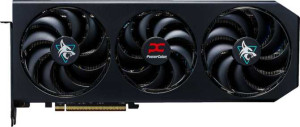
PowerColor Hellhound Radeon RX 9070 XT
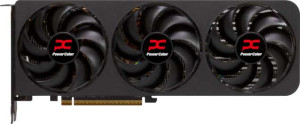
PowerColor Reaper Radeon RX 9070

PowerColor Hellhound Radeon RX 9070 XT PowerColor Reaper Radeon RX 9070

Overview

Welcome to our in-depth specification comparison between the PowerColor Hellhound Radeon RX 9070 XT and the PowerColor Reaper Radeon RX 9070. Both cards share the same RDNA 4.0 architecture and 16GB of GDDR6 memory, yet they diverge significantly when it comes to raw compute performance and power consumption. Read on to discover how these two AMD-based cards stack up across every key specification category.}

Common Features

  • Both cards have a GPU memory speed of 2518 MHz.
  • Both cards feature 128 render output units (ROPs).
  • Double Precision Floating Point (DPFP) is supported on both cards.
  • Both cards have an effective memory speed of 20000 MHz.
  • Both cards offer a maximum memory bandwidth of 644.6 GB/s.
  • Both cards come with 16GB of VRAM.
  • Both cards use GDDR6 memory.
  • Both cards have a 256-bit memory bus width.
  • ECC memory is supported on both cards.
  • Both cards support DirectX 12.
  • Both cards support OpenGL version 4.6.
  • Both cards support OpenCL version 2.2.
  • Multi-display technology is supported on both cards.
  • Ray tracing is supported on both cards.
  • 3D is supported on both cards.
  • DLSS is not supported on either card.
  • FSR4 is available on both cards.
  • Both cards have one HDMI 2.1b output.
  • Both cards have three DisplayPort outputs.
  • Neither card has USB-C, DVI, or mini DisplayPort outputs.
  • Both cards are built on the RDNA 4.0 GPU architecture.
  • Both cards use PCIe version 5.
  • Both cards feature 53900 million transistors.
  • Neither card has air-water cooling.

Main Differences

  • GPU base clock speed is 1660 MHz on PowerColor Hellhound Radeon RX 9070 XT and 1330 MHz on PowerColor Reaper Radeon RX 9070.
  • GPU turbo clock speed is 3010 MHz on PowerColor Hellhound Radeon RX 9070 XT and 2520 MHz on PowerColor Reaper Radeon RX 9070.
  • Pixel rate is 385.3 GPixel/s on PowerColor Hellhound Radeon RX 9070 XT and 322.6 GPixel/s on PowerColor Reaper Radeon RX 9070.
  • Floating-point performance is 49.32 TFLOPS on PowerColor Hellhound Radeon RX 9070 XT and 36.13 TFLOPS on PowerColor Reaper Radeon RX 9070.
  • Texture rate is 770.6 GTexels/s on PowerColor Hellhound Radeon RX 9070 XT and 564.5 GTexels/s on PowerColor Reaper Radeon RX 9070.
  • Shading units count is 4096 on PowerColor Hellhound Radeon RX 9070 XT and 3584 on PowerColor Reaper Radeon RX 9070.
  • Texture mapping units (TMUs) number 256 on PowerColor Hellhound Radeon RX 9070 XT and 224 on PowerColor Reaper Radeon RX 9070.
  • RGB lighting is present on PowerColor Hellhound Radeon RX 9070 XT but not available on PowerColor Reaper Radeon RX 9070.
  • Thermal Design Power (TDP) is 304W on PowerColor Hellhound Radeon RX 9070 XT and 220W on PowerColor Reaper Radeon RX 9070.
  • Semiconductor size is 4 nm on PowerColor Hellhound Radeon RX 9070 XT and 5 nm on PowerColor Reaper Radeon RX 9070.
  • Card width is 340 mm on PowerColor Hellhound Radeon RX 9070 XT and 304 mm on PowerColor Reaper Radeon RX 9070.
  • Card height is 142 mm on PowerColor Hellhound Radeon RX 9070 XT and 127 mm on PowerColor Reaper Radeon RX 9070.
Specs Comparison
PowerColor Hellhound Radeon RX 9070 XT

PowerColor Hellhound Radeon RX 9070 XT

PowerColor Reaper Radeon RX 9070

PowerColor Reaper Radeon RX 9070

Performance:
GPU clock speed 1660 MHz 1330 MHz
GPU turbo 3010 MHz 2520 MHz
pixel rate 385.3 GPixel/s 322.6 GPixel/s
floating-point performance 49.32 TFLOPS 36.13 TFLOPS
texture rate 770.6 GTexels/s 564.5 GTexels/s
GPU memory speed 2518 MHz 2518 MHz
shading units 4096 3584
texture mapping units (TMUs) 256 224
render output units (ROPs) 128 128
Has Double Precision Floating Point (DPFP)

The raw compute gap between these two cards is substantial. The Hellhound RX 9070 XT delivers 49.32 TFLOPS of floating-point performance against the Reaper RX 9070's 36.13 TFLOPS — a difference of roughly 37%. This translates directly to greater throughput in shader-heavy workloads like ray tracing, complex particle systems, and compute tasks. The 9070 XT also runs a significantly higher boost clock at 3010 MHz versus 2520 MHz, meaning it sustains faster per-clock execution during peak GPU-limited scenarios.

The texture and pixel pipelines tell the same story. With 256 TMUs and a texture rate of 770.6 GTexels/s, the 9070 XT can process texture data at nearly 37% higher throughput than the 9070's 564.5 GTexels/s. However, both cards share the same 128 ROPs, meaning their pixel fill rates are closer together in absolute terms — the difference there (385.3 vs 322.6 GPixel/s) comes entirely from the clock speed advantage, not a wider pipeline. Memory bandwidth is a non-issue for differentiation, as both use identical 2518 MHz GPU memory speeds. Both also support Double Precision Floating Point, giving neither an exclusive advantage for GPGPU or professional workflows.

On performance, the Hellhound RX 9070 XT has a clear and consistent edge across every compute and throughput metric in this group. The extra shading units, higher clocks, and resulting TFLOPS advantage make it the stronger card for demanding gaming resolutions and GPU compute workloads. The Reaper RX 9070 is not without capability — its specs are competitive — but buyers prioritizing raw performance headroom should lean toward the 9070 XT.

Memory:
effective memory speed 20000 MHz 20000 MHz
maximum memory bandwidth 644.6 GB/s 644.6 GB/s
VRAM 16GB 16GB
GDDR version GDDR6 GDDR6
memory bus width 256-bit 256-bit
Supports ECC memory

Memory is one area where these two cards are entirely indistinguishable. Both the Hellhound RX 9070 XT and the Reaper RX 9070 feature 16GB of GDDR6 running at an effective 20000 MHz across a 256-bit bus, yielding identical peak bandwidth of 644.6 GB/s. There is no spec in this group — not a single one — that separates them.

That shared memory configuration is genuinely capable. A 256-bit bus with 644.6 GB/s of bandwidth sits comfortably in the high-performance tier, providing enough headroom for high-resolution textures, large frame buffers at 4K, and memory-intensive workloads without becoming a bottleneck. The 16GB capacity also future-proofs both cards reasonably well for titles that are increasingly pushing beyond 8GB at higher settings. ECC memory support on both cards is a minor bonus for users running compute or professional workloads where data integrity matters.

This group is a complete tie. Anyone making a decision between these two cards should look entirely to other spec groups — memory offers no basis for differentiation whatsoever.

Features:
DirectX version DirectX 12 DirectX 12
OpenGL version 4.6 4.6
OpenCL version 2.2 2.2
Supports multi-display technology
supports ray tracing
Supports 3D
supports DLSS
has FSR4
has XeSS (XMX)
AMD SAM / Intel Resizable BAR AMD SAM AMD SAM
has LHR
has RGB lighting
supported displays 4 4

Functionally, these two cards are nearly identical in their feature sets. Both support DirectX 12, ray tracing, AMD SAM (Resizable BAR), and crucially, FSR4 — AMD's latest upscaling generation, which is meaningful for extracting higher frame rates at elevated resolutions without a proportional GPU load increase. Neither card supports DLSS or XeSS, which is expected given their AMD architecture. Up to 4 simultaneous displays are supported on both, covering virtually any multi-monitor setup a user might need.

The one tangible differentiator in this group is aesthetics: the Hellhound RX 9070 XT includes RGB lighting, while the Reaper RX 9070 does not. For users building a themed or illuminated system, this matters — but it has zero bearing on rendering performance, compatibility, or software capability.

For features that actually affect what you can do with the card, this group is effectively a tie. The Hellhound edges ahead only on RGB lighting, which is a purely cosmetic distinction. Buyers who care about case aesthetics may prefer the 9070 XT on that basis alone, but neither card holds a meaningful functional advantage here.

Ports:
has an HDMI output
HDMI ports 1 1
HDMI version HDMI 2.1b HDMI 2.1b
DisplayPort outputs 3 3
USB-C ports 0 0
DVI outputs 0 0
mini DisplayPort outputs 0 0

Port configuration is identical across both cards. Each offers 3 DisplayPort outputs and 1 HDMI 2.1b port, totaling four display connections — which aligns with the four-display limit noted in the Features group. HDMI 2.1b is the most current HDMI specification, supporting high refresh rates at 4K and beyond, making it well-suited for modern gaming monitors and high-end TVs alike.

Neither card includes USB-C, mini DisplayPort, or DVI outputs. The absence of USB-C is worth noting for users who own newer displays that rely on that connection, as an adapter would be required. That said, this applies equally to both cards and is not a differentiator between them.

This is another complete tie — down to the port count, types, and HDMI version. Connectivity should play no role in choosing between these two cards.

General info:
GPU architecture RDNA 4.0 RDNA 4.0
release date March 2025 March 2025
Thermal Design Power (TDP) 304W 220W
PCI Express (PCIe) version 5 5
semiconductor size 4 nm 5 nm
number of transistors 53900 million 53900 million
Has air-water cooling
width 340 mm 304 mm
height 142 mm 127 mm

Both cards share the same RDNA 4.0 architecture, PCIe 5.0 interface, and an identical transistor count of 53,900 million. The notable difference at the silicon level is process node: the Hellhound RX 9070 XT is built on a 4 nm process versus the Reaper RX 9070's 5 nm. A smaller node generally enables higher clock speeds or improved power efficiency — context that helps explain the 9070 XT's substantially higher boost clocks seen in the Performance group, achieved despite running a denser, more complex configuration.

Power consumption is where the practical divergence becomes most relevant for system builders. The 9070 XT carries a 304W TDP against the 9070's considerably lower 220W — an 84W gap that has real consequences. Users will need a more capable PSU, and the 9070 XT will generate meaningfully more heat, potentially requiring better case airflow or a larger cooler to maintain thermals under sustained load. Physical size compounds this: the Hellhound measures 340 × 142 mm compared to the Reaper's more compact 304 × 127 mm, which could matter in smaller mid-tower or ITX-adjacent cases.

For this group, the Reaper RX 9070 holds a practical advantage in system compatibility and efficiency. Its lower TDP, smaller footprint, and less demanding power requirements make it the friendlier option for compact builds or power-conscious users. The 9070 XT's higher TDP is the direct cost of its performance lead — a trade-off buyers should weigh carefully against their case, PSU, and cooling headroom.

Comparison Summary & Verdict

After examining all available specifications, these two cards serve distinct audiences. The PowerColor Hellhound Radeon RX 9070 XT is the clear choice for enthusiasts who demand maximum throughput, boasting a 3010 MHz turbo clock, 49.32 TFLOPS of floating-point performance, and 4096 shading units, along with RGB lighting for those who value aesthetics. However, this performance premium comes with a notably higher 304W TDP and a larger physical footprint. The PowerColor Reaper Radeon RX 9070, on the other hand, delivers competitive output at a more modest 220W TDP, making it better suited for builds where power efficiency or case space is a priority. Both cards are equal in memory configuration, port selection, and feature support including ray tracing and FSR4, so neither compromises on modern GPU essentials.

PowerColor Hellhound Radeon RX 9070 XT
Buy PowerColor Hellhound Radeon RX 9070 XT if...

Buy the PowerColor Hellhound Radeon RX 9070 XT if you want maximum gaming performance, with a higher turbo clock, more shading units, and greater floating-point throughput, and do not mind the larger size and higher power draw.

PowerColor Reaper Radeon RX 9070
Buy PowerColor Reaper Radeon RX 9070 if...

Buy the PowerColor Reaper Radeon RX 9070 if you want a more power-efficient and compact card that still delivers capable performance, ray tracing support, and a full 16GB GDDR6 memory configuration.