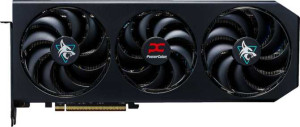
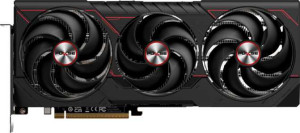
For the most part, the feature sets of these two cards run in lockstep. Both support ray tracing, FSR4, AMD SAM, up to four simultaneous displays, and share identical API support through OpenGL 4.6 and OpenCL 2.2. Neither supports DLSS or XeSS, which is expected for AMD hardware, and FSR4 is the relevant upscaling technology to evaluate here — and both cards have it.
Two differences are worth calling out. The more technically meaningful one is the DirectX version: the Pulse lists DirectX 12 Ultimate while the Hellhound lists DirectX 12. DirectX 12 Ultimate is a superset that formally certifies support for hardware ray tracing, mesh shaders, variable rate shading, and sampler feedback — features that game developers can target with confidence. Whether this reflects a genuine hardware distinction or a difference in how each manufacturer reported the spec is unclear from the data alone, but as listed, the Pulse carries the more complete DirectX certification. The second difference is purely aesthetic: the Hellhound includes RGB lighting, while the Pulse does not.
On features, the Sapphire Pulse has a narrow edge based strictly on its DirectX 12 Ultimate listing, which represents broader formal API coverage. The Hellhound counters with RGB lighting, but that is a cosmetic consideration rather than a functional one. Users who prioritize a cleaner, no-frills look may actually prefer the Pulse's absence of RGB.