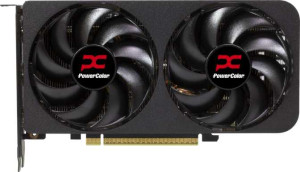
PowerColor Reaper Radeon RX 9060 XT 16GB
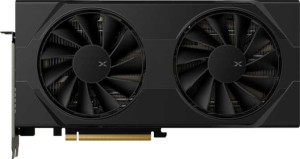
XFX Swift Radeon RX 9060 XT OC Gaming Edition 16GB

PowerColor Reaper Radeon RX 9060 XT 16GB XFX Swift Radeon RX 9060 XT OC Gaming Edition 16GB

Overview

Welcome to our detailed spec comparison between the PowerColor Reaper Radeon RX 9060 XT 16GB and the XFX Swift Radeon RX 9060 XT OC Gaming Edition 16GB. Both cards share the same RDNA 4.0 foundation, 16GB of GDDR6 memory, and a 160W TDP, yet they differ in key areas including clock speeds, memory bandwidth, physical dimensions, and aesthetics. Read on to discover which card best suits your needs.

Common Features

  • Both cards share a GPU memory speed of 2518 MHz.
  • Both cards feature 2048 shading units.
  • Both cards have 128 texture mapping units (TMUs).
  • Both cards include 64 render output units (ROPs).
  • Double Precision Floating Point (DPFP) is supported on both cards.
  • Both cards have an effective memory speed of 20000 MHz.
  • Both cards come with 16GB of VRAM.
  • Both cards use GDDR6 memory.
  • Both cards feature a 128-bit memory bus width.
  • ECC memory is supported on both cards.
  • Both cards support DirectX 12 Ultimate.
  • Both cards support OpenGL version 4.6.
  • Both cards support OpenCL version 2.2.
  • Multi-display technology is supported on both cards.
  • Ray tracing is supported on both cards.
  • 3D support is available on both cards.
  • DLSS is not supported on either card.
  • FSR4 is available on both cards.
  • Both cards include one HDMI 2.1b output and two DisplayPort outputs, with no USB-C or DVI outputs.
  • Both cards are built on the RDNA 4.0 architecture with a 4 nm semiconductor size, 160W TDP, PCIe 5, and 29700 million transistors.
  • Neither card features air-water cooling.

Main Differences

  • GPU base clock speed is 1700 MHz on PowerColor Reaper Radeon RX 9060 XT 16GB and 1900 MHz on XFX Swift Radeon RX 9060 XT OC Gaming Edition 16GB.
  • GPU turbo clock speed is 3230 MHz on PowerColor Reaper Radeon RX 9060 XT 16GB and 3320 MHz on XFX Swift Radeon RX 9060 XT OC Gaming Edition 16GB.
  • Pixel rate is 206.7 GPixel/s on PowerColor Reaper Radeon RX 9060 XT 16GB and 212.5 GPixel/s on XFX Swift Radeon RX 9060 XT OC Gaming Edition 16GB.
  • Floating-point performance is 26.46 TFLOPS on PowerColor Reaper Radeon RX 9060 XT 16GB and 27.2 TFLOPS on XFX Swift Radeon RX 9060 XT OC Gaming Edition 16GB.
  • Texture rate is 413.4 GTexels/s on PowerColor Reaper Radeon RX 9060 XT 16GB and 425 GTexels/s on XFX Swift Radeon RX 9060 XT OC Gaming Edition 16GB.
  • Maximum memory bandwidth is 322.3 GB/s on PowerColor Reaper Radeon RX 9060 XT 16GB and 340 GB/s on XFX Swift Radeon RX 9060 XT OC Gaming Edition 16GB.
  • RGB lighting is present on XFX Swift Radeon RX 9060 XT OC Gaming Edition 16GB but not available on PowerColor Reaper Radeon RX 9060 XT 16GB.
  • Card width is 220 mm on PowerColor Reaper Radeon RX 9060 XT 16GB and 270 mm on XFX Swift Radeon RX 9060 XT OC Gaming Edition 16GB.
  • Card height is 120 mm on PowerColor Reaper Radeon RX 9060 XT 16GB and 124 mm on XFX Swift Radeon RX 9060 XT OC Gaming Edition 16GB.
Specs Comparison
PowerColor Reaper Radeon RX 9060 XT 16GB

PowerColor Reaper Radeon RX 9060 XT 16GB

XFX Swift Radeon RX 9060 XT OC Gaming Edition 16GB

XFX Swift Radeon RX 9060 XT OC Gaming Edition 16GB

Performance:
GPU clock speed 1700 MHz 1900 MHz
GPU turbo 3230 MHz 3320 MHz
pixel rate 206.7 GPixel/s 212.5 GPixel/s
floating-point performance 26.46 TFLOPS 27.2 TFLOPS
texture rate 413.4 GTexels/s 425 GTexels/s
GPU memory speed 2518 MHz 2518 MHz
shading units 2048 2048
texture mapping units (TMUs) 128 128
render output units (ROPs) 64 64
Has Double Precision Floating Point (DPFP)

Both cards share identical fixed silicon resources — 2048 shading units, 128 TMUs, 64 ROPs, and the same 2518 MHz memory speed — meaning any performance difference between them comes down entirely to clock speeds. This is a classic factory-overclock scenario: same GPU die, different tuning. The XFX Swift OC ships with a notably higher base clock of 1900 MHz versus the PowerColor Reaper's 1700 MHz, a gap of 200 MHz (roughly 12%) that matters for sustained workloads where the GPU cannot always sustain its peak boost frequency.

At peak turbo, the gap narrows but remains meaningful: 3320 MHz for the XFX versus 3230 MHz for the PowerColor — a 90 MHz difference. This directly translates into the compute throughput metrics: the XFX edges ahead with 27.2 TFLOPS of floating-point performance and a texture rate of 425 GTexels/s, compared to 26.46 TFLOPS and 413.4 GTexels/s on the PowerColor. In real-world terms, the higher texture throughput benefits texture-heavy scenes and high-resolution rendering, while the TFLOPS advantage marginally improves shader-bound workloads like ray tracing and compute tasks.

The XFX Swift OC holds a clear, if modest, performance edge in this group. The gains are not transformative — expect roughly 2–4% better average frame rates in practice — but the XFX's higher base clock provides a more consistent performance floor, which can reduce frame-time variance in thermally demanding scenarios. If raw out-of-box performance is the priority, the XFX wins this category; the PowerColor Reaper is competitive, but it is the slower card by the numbers.

Memory:
effective memory speed 20000 MHz 20000 MHz
maximum memory bandwidth 322.3 GB/s 340 GB/s
VRAM 16GB 16GB
GDDR version GDDR6 GDDR6
memory bus width 128-bit 128-bit
Supports ECC memory

At the foundation, these two cards are virtually identical in memory configuration: both carry 16GB of GDDR6 across a 128-bit bus at an effective speed of 20000 MHz, and both support ECC memory — a feature useful for workstation and compute tasks where data integrity matters. For gaming purposes, 16GB is a generous buffer that comfortably handles high-resolution texture packs and modern titles pushing VRAM limits, so neither card is at a disadvantage here.

The one meaningful divergence is maximum memory bandwidth: the XFX Swift OC is rated at 340 GB/s, compared to 322.3 GB/s on the PowerColor Reaper — a gap of roughly 5.5%. Higher memory bandwidth directly benefits scenarios where the GPU is starved for data, such as rendering at high resolutions, applying demanding post-processing effects, or running compute workloads that stream large datasets. It also complements the XFX's higher clock speeds noted in the performance group, as a faster GPU can better exploit additional bandwidth headroom.

The XFX Swift OC takes a narrow edge in memory throughput. In practice, the bandwidth advantage is unlikely to be transformative in typical 1080p or 1440p gaming, but it becomes more relevant at 4K or in memory-intensive workloads. For users who plan to push the card to its limits — high resolutions, compute tasks, or heavily modded games — the XFX's bandwidth lead is a tangible, if modest, advantage. In everyday use, the two cards are effectively tied on memory specs.
Features:
DirectX version DirectX 12 Ultimate DirectX 12 Ultimate
OpenGL version 4.6 4.6
OpenCL version 2.2 2.2
Supports multi-display technology
supports ray tracing
Supports 3D
supports DLSS
has FSR4
has XeSS (XMX)
AMD SAM / Intel Resizable BAR AMD SAM AMD SAM
has LHR
has RGB lighting
supported displays 3 3

From a software and API standpoint, these two cards are completely interchangeable. Both support DirectX 12 Ultimate, OpenGL 4.6, and OpenCL 2.2 — the full modern stack expected of a current-generation GPU. Ray tracing, 3D output, and multi-display across up to 3 screens are shared capabilities, as is AMD SAM (Smart Access Memory), which allows a compatible AMD CPU to access the full VRAM pool directly, yielding measurable frame rate gains in supported titles. Neither card supports DLSS (an Nvidia-exclusive technology), but both offer FSR4 — AMD's latest upscaling solution — which provides AI-accelerated image reconstruction and is a meaningful asset for boosting frame rates at higher resolutions.

The only tangible differentiator in this group is aesthetic: the XFX Swift OC includes RGB lighting, while the PowerColor Reaper does not. For users building a visually coordinated system with RGB-synced components, this is a genuine point of distinction. For those indifferent to aesthetics, it is irrelevant to real-world performance or compatibility.

On functional features, this group is a dead heat — every capability that matters for gaming, compute, and display output is identical across both cards. The XFX Swift OC picks up a marginal edge solely due to its RGB lighting, which will sway buyers with aesthetic priorities but carries no technical weight for anyone focused purely on performance or workload capability.

Ports:
has an HDMI output
HDMI ports 1 1
HDMI version HDMI 2.1b HDMI 2.1b
DisplayPort outputs 2 2
USB-C ports 0 0
DVI outputs 0 0
mini DisplayPort outputs 0 0

Port selection is identical on both cards: one HDMI 2.1b output and two DisplayPort outputs, totalling three display connections — which aligns with the three-display limit noted in the Features group. There are no USB-C, DVI, or mini DisplayPort outputs on either card. The combination of HDMI and DisplayPort covers virtually every modern monitor and TV on the market, so real-world connectivity needs are well served regardless of which card you choose.

The HDMI 2.1b specification deserves a mention for context: it supports up to 10K resolution and high refresh rates including 4K at 144Hz and 8K at 60Hz, with native Variable Refresh Rate (VRR) support — making it fully capable of driving the latest high-end displays and TVs without any adapter. The DisplayPort outputs similarly handle high-bandwidth, high-refresh multi-monitor setups with ease.

This group is a complete tie. There is no distinction whatsoever between the PowerColor Reaper and the XFX Swift OC in terms of ports — buyers can make their decision entirely on other criteria without any concern about connectivity differences.

General info:
GPU architecture RDNA 4.0 RDNA 4.0
release date June 2025 June 2025
Thermal Design Power (TDP) 160W 160W
PCI Express (PCIe) version 5 5
semiconductor size 4 nm 4 nm
number of transistors 29700 million 29700 million
Has air-water cooling
width 220 mm 270 mm
height 120 mm 124 mm

Sharing the same RDNA 4.0 architecture, 4nm fabrication process, and 29.7 billion transistors, these two cards are built from identical silicon. Their 160W TDP and PCIe 5.0 interface are likewise the same — meaning power supply requirements and motherboard compatibility are interchangeable between them. The 160W figure is notably efficient for a card at this performance tier, making both suitable for mid-range system builds without demanding premium PSU headroom.

The one concrete difference in this group is physical size. The PowerColor Reaper measures 220mm in length, while the XFX Swift OC stretches to 270mm — a 50mm difference that is far from trivial. In practical terms, the XFX is a considerably larger card that may not fit in compact or mid-tower cases with tight GPU clearance. The PowerColor's shorter footprint is a genuine advantage for small-form-factor builds or cases with obstructed lower bays, and it achieves this without any sacrifice in TDP — suggesting its cooler is more densely engineered relative to its size.

For users with spacious full-tower cases, the size gap is a non-issue. But for anyone building in a constrained enclosure, the PowerColor Reaper has a meaningful practical edge in this group — it is the more case-friendly card by a significant margin, while demanding exactly the same power and offering the same platform compatibility.

Comparison Summary & Verdict

Both cards deliver a solid RDNA 4.0 experience with identical memory configurations, display outputs, and feature support including ray tracing and FSR4. The key distinction lies in outright performance and size. The XFX Swift Radeon RX 9060 XT OC Gaming Edition 16GB pulls ahead with a higher GPU turbo clock of 3320 MHz, 27.2 TFLOPS of floating-point performance, 340 GB/s memory bandwidth, and RGB lighting, making it the stronger pick for enthusiasts who want every last frame. The PowerColor Reaper Radeon RX 9060 XT 16GB, with its more compact 220 mm length and 120 mm height, is the smarter choice for small form factor builds or users who simply want a no-frills, space-efficient card without sacrificing the core RX 9060 XT feature set.

PowerColor Reaper Radeon RX 9060 XT 16GB
Buy PowerColor Reaper Radeon RX 9060 XT 16GB if...

Buy the PowerColor Reaper Radeon RX 9060 XT 16GB if you are building a compact or small form factor PC and need a shorter, slimmer card that still delivers the full RX 9060 XT feature set.

XFX Swift Radeon RX 9060 XT OC Gaming Edition 16GB
Buy XFX Swift Radeon RX 9060 XT OC Gaming Edition 16GB if...

Buy the XFX Swift Radeon RX 9060 XT OC Gaming Edition 16GB if you want maximum out-of-the-box performance, higher clock speeds, greater memory bandwidth, and RGB lighting in a full-size build.