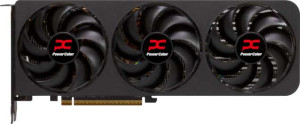
PowerColor Reaper Radeon RX 9070
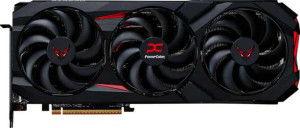
PowerColor Red Devil Radeon RX 9070

PowerColor Reaper Radeon RX 9070 PowerColor Red Devil Radeon RX 9070

Overview

Welcome to our in-depth spec comparison between the PowerColor Reaper Radeon RX 9070 and the PowerColor Red Devil Radeon RX 9070. Both cards share the same RDNA 4.0 foundation, 16GB GDDR6 memory, and a 220W TDP, yet they diverge in key areas worth examining closely. In this comparison, we explore their differences in GPU clock speeds, raw compute performance, physical dimensions, and extra features like RGB lighting to help you find the right fit for your build.

Common Features

  • GPU memory speed is 2518 MHz on both products.
  • Both products have 3584 shading units.
  • Both products have 224 texture mapping units (TMUs).
  • Both products have 128 render output units (ROPs).
  • Double Precision Floating Point (DPFP) is supported on both products.
  • Effective memory speed is 20000 MHz on both products.
  • Both products feature 16GB of VRAM.
  • Both products use GDDR6 memory.
  • Both products have a 256-bit memory bus width.
  • ECC memory is supported on both products.
  • Both products support DirectX 12.
  • Both products support OpenGL version 4.6.
  • Both products support OpenCL version 2.2.
  • Multi-display technology is supported on both products.
  • Ray tracing is supported on both products.
  • 3D support is available on both products.
  • DLSS is not supported on either product.
  • FSR4 is available on both products.
  • Both products have one HDMI 2.1b output and three DisplayPort outputs, with no USB-C, DVI, or mini DisplayPort outputs.
  • Both products are built on the RDNA 4.0 architecture with a 5 nm semiconductor size, 53900 million transistors, a 220W TDP, and PCIe 5 connectivity.
  • Air-water cooling is not available on either product.

Main Differences

  • GPU base clock speed is 1330 MHz on PowerColor Reaper Radeon RX 9070 and 1440 MHz on PowerColor Red Devil Radeon RX 9070.
  • GPU turbo clock speed is 2520 MHz on PowerColor Reaper Radeon RX 9070 and 2700 MHz on PowerColor Red Devil Radeon RX 9070.
  • Pixel rate is 322.6 GPixel/s on PowerColor Reaper Radeon RX 9070 and 345.6 GPixel/s on PowerColor Red Devil Radeon RX 9070.
  • Floating-point performance is 36.13 TFLOPS on PowerColor Reaper Radeon RX 9070 and 38.71 TFLOPS on PowerColor Red Devil Radeon RX 9070.
  • Texture rate is 564.5 GTexels/s on PowerColor Reaper Radeon RX 9070 and 604.8 GTexels/s on PowerColor Red Devil Radeon RX 9070.
  • Maximum memory bandwidth is 644.6 GB/s on PowerColor Reaper Radeon RX 9070 and 644 GB/s on PowerColor Red Devil Radeon RX 9070.
  • RGB lighting is present on PowerColor Red Devil Radeon RX 9070 but not available on PowerColor Reaper Radeon RX 9070.
  • Width is 304 mm on PowerColor Reaper Radeon RX 9070 and 352 mm on PowerColor Red Devil Radeon RX 9070.
  • Height is 127 mm on PowerColor Reaper Radeon RX 9070 and 149 mm on PowerColor Red Devil Radeon RX 9070.
Specs Comparison
PowerColor Reaper Radeon RX 9070

PowerColor Reaper Radeon RX 9070

PowerColor Red Devil Radeon RX 9070

PowerColor Red Devil Radeon RX 9070

Performance:
GPU clock speed 1330 MHz 1440 MHz
GPU turbo 2520 MHz 2700 MHz
pixel rate 322.6 GPixel/s 345.6 GPixel/s
floating-point performance 36.13 TFLOPS 38.71 TFLOPS
texture rate 564.5 GTexels/s 604.8 GTexels/s
GPU memory speed 2518 MHz 2518 MHz
shading units 3584 3584
texture mapping units (TMUs) 224 224
render output units (ROPs) 128 128
Has Double Precision Floating Point (DPFP)

Both cards share identical silicon foundations — the same 3584 shading units, 224 TMUs, and 128 ROPs — confirming they are built on the exact same GPU die. Memory subsystem performance is also locked in sync, with both running at 2518 MHz. This means any performance delta between them comes down entirely to how aggressively each card is factory-clocked.

And that delta is meaningful. The Red Devil ships with a base clock of 1440 MHz versus the Reaper's 1330 MHz, and its turbo ceiling reaches 2700 MHz compared to 2520 MHz — a gap of roughly 7%. This directly translates into measurably higher throughput across every compute metric: floating-point performance of 38.71 TFLOPS versus 36.13 TFLOPS, a texture fill rate of 604.8 GTexels/s versus 564.5 GTexels/s, and a pixel rate of 345.6 GPixel/s versus 322.6 GPixel/s. In practice, this kind of clock advantage tends to show up as a consistent 5–8% lead in GPU-bound workloads — noticeable in demanding titles at high resolutions or in GPU compute tasks.

The Red Devil holds a clear performance edge in this group. Both cards support Double Precision Floating Point, so there is no differentiation there. The Reaper is not a slow card by any measure, but if raw GPU throughput is the priority, the Red Devil's higher factory clocks give it a tangible, consistent advantage that stems directly from its more aggressive tuning rather than any architectural difference.

Memory:
effective memory speed 20000 MHz 20000 MHz
maximum memory bandwidth 644.6 GB/s 644 GB/s
VRAM 16GB 16GB
GDDR version GDDR6 GDDR6
memory bus width 256-bit 256-bit
Supports ECC memory

On paper and in practice, the memory configurations of these two cards are functionally identical. Both feature 16GB of GDDR6 running across a 256-bit bus at an effective speed of 20000 MHz, yielding a maximum bandwidth figure that differs by less than 1 GB/s — 644.6 GB/s for the Reaper versus 644 GB/s for the Red Devil. That margin is well within rounding variance and carries absolutely no real-world significance.

What does matter here is what both cards share. A 256-bit bus paired with 16GB of GDDR6 at this speed is a robust memory setup for a GPU in this class — wide enough to feed the shader array without creating a bottleneck in memory-intensive scenarios like high-resolution texture streaming, large open-world environments, or content creation workloads. The 16GB capacity is also a future-conscious choice, providing headroom as games increasingly push beyond the 8–12GB limits that have constrained previous-generation mid-range cards.

ECC memory support is present on both, which is a minor but appreciated feature for users running compute or professional workloads alongside gaming. Ultimately, this group is a complete tie — the memory subsystem is not a differentiating factor between the Reaper and the Red Devil in any meaningful way.

Features:
DirectX version DirectX 12 DirectX 12
OpenGL version 4.6 4.6
OpenCL version 2.2 2.2
Supports multi-display technology
supports ray tracing
Supports 3D
supports DLSS
has FSR4
has XeSS (XMX)
AMD SAM / Intel Resizable BAR AMD SAM AMD SAM
has LHR
has RGB lighting
supported displays 4 4

From a software and API standpoint, these two cards are carbon copies of each other. Both support DirectX 12, ray tracing, and FSR4 — AMD's latest upscaling technology — while neither supports DLSS or XeSS, which is expected given their AMD architecture. AMD SAM (Smart Access Memory) is present on both, enabling CPUs to access the full VRAM pool for a modest but real performance uplift in compatible systems. The 4-display output cap is identical as well. For anyone evaluating these cards purely on what they can do in games or compute applications, the feature set is a wash.

The only differentiator in this group is aesthetic: the Red Devil includes RGB lighting, while the Reaper does not. This is a purely cosmetic distinction with no bearing on gaming or workload performance, but it is worth noting for builders who care about the visual character of their system. RGB can be a meaningful factor in an open-case or showcase build, while its absence on the Reaper may actually appeal to users preferring a cleaner, understated look.

Functionally, this group is a tie — every capability that affects actual workload performance is shared equally. The Red Devil holds a marginal edge only if RGB lighting is a priority for the buyer; otherwise, the Reaper delivers an identical feature set in a no-frills package.

Ports:
has an HDMI output
HDMI ports 1 1
HDMI version HDMI 2.1b HDMI 2.1b
DisplayPort outputs 3 3
USB-C ports 0 0
DVI outputs 0 0
mini DisplayPort outputs 0 0

No differentiation exists between these two cards in terms of connectivity — the port layout is identical across the board. Both offer 1 HDMI 2.1b port and 3 DisplayPort outputs, totalling four display connections, which aligns with the four-display limit noted in their features. There are no USB-C, DVI, or mini DisplayPort outputs on either card.

The inclusion of HDMI 2.1b is the spec worth highlighting here. It supports high-bandwidth output capable of driving displays at 4K and beyond at high refresh rates, making both cards well-suited for modern monitor and TV setups without needing an adapter. The three DisplayPort outputs give multi-monitor users plenty of flexibility for productivity or immersive gaming arrangements.

This group is a complete tie. Connectivity will not be a deciding factor between the Reaper and the Red Devil — buyers on either side get the same port selection and the same practical display capability.

General info:
GPU architecture RDNA 4.0 RDNA 4.0
release date March 2025 March 2025
Thermal Design Power (TDP) 220W 220W
PCI Express (PCIe) version 5 5
semiconductor size 5 nm 5 nm
number of transistors 53900 million 53900 million
Has air-water cooling
width 304 mm 352 mm
height 127 mm 149 mm

At the architectural level, these cards are inseparable. Both are built on RDNA 4.0 using a 5nm process node with an identical transistor count of 53.9 billion, and both draw the same 220W TDP — meaning power supply requirements and expected thermal output are equivalent. PCIe 5.0 support is shared as well, though in practice this makes no difference versus PCIe 4.0 for current GPU workloads.

Where this group does reveal a real distinction is physical size. The Red Devil measures 352 × 149 mm, while the Reaper comes in at 304 × 127 mm — a difference of 48mm in length and 22mm in height. That is a substantial gap. The Red Devil's larger footprint is almost certainly housing a more expansive cooling solution, which connects back to its higher factory clocks seen in the Performance group. The Reaper's more compact dimensions make it a meaningfully better fit for smaller mid-tower or ITX-adjacent cases where clearance is a genuine constraint.

Given identical TDPs, neither card has an inherent power efficiency advantage. The practical edge here depends entirely on the buyer's build: the Reaper has a clear advantage for space-constrained systems, while the Red Devil's larger cooler suggests it may have more thermal headroom to sustain its higher clocks over extended sessions — though the data in this group alone does not confirm that outcome.

Comparison Summary & Verdict

After examining every specification, it is clear that both cards are built on a strong shared foundation: identical 16GB GDDR6 memory, the same 256-bit bus, full ray tracing support, FSR4, and a unified port layout. The differences, however, are meaningful. The PowerColor Red Devil Radeon RX 9070 pulls ahead with a higher GPU turbo clock of 2700 MHz, greater floating-point performance at 38.71 TFLOPS, a faster texture rate, and adds RGB lighting, making it the stronger choice for enthusiasts who want every frame they can get. The PowerColor Reaper Radeon RX 9070, on the other hand, is notably more compact at 304 mm x 127 mm, making it ideal for smaller chassis builds where the Red Devil simply will not fit. Choose based on your case constraints and how much the performance delta matters to your workloads.

PowerColor Reaper Radeon RX 9070
Buy PowerColor Reaper Radeon RX 9070 if...

Buy the PowerColor Reaper Radeon RX 9070 if you are building in a compact case where space is tight, as its smaller 304 mm x 127 mm footprint gives it a clear size advantage over the Red Devil.

PowerColor Red Devil Radeon RX 9070
Buy PowerColor Red Devil Radeon RX 9070 if...

Buy the PowerColor Red Devil Radeon RX 9070 if you want maximum performance, as it offers a higher GPU turbo clock, greater floating-point output, and RGB lighting for enthusiast builds with no space constraints.