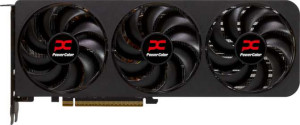
PowerColor Reaper Radeon RX 9070 XT
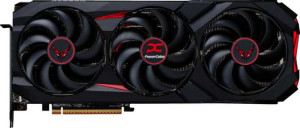
PowerColor Red Devil Radeon RX 9070 XT

PowerColor Reaper Radeon RX 9070 XT PowerColor Red Devil Radeon RX 9070 XT

Overview

Welcome to our in-depth spec comparison between the PowerColor Reaper Radeon RX 9070 XT and the PowerColor Red Devil Radeon RX 9070 XT. Both cards share the same RDNA 4.0 architecture and 16GB of GDDR6 memory, yet they diverge in key areas including GPU turbo clock speeds, raw compute performance, and physical dimensions. Read on to find out which of these two AMD-powered cards best suits your needs.

Common Features

  • Both cards share a base GPU clock speed of 1660 MHz.
  • Both cards have a GPU memory speed of 2518 MHz.
  • Both cards feature 4096 shading units.
  • Both cards include 256 texture mapping units (TMUs).
  • Both cards have 128 render output units (ROPs).
  • Double Precision Floating Point (DPFP) support is available on both cards.
  • Both cards have an effective memory speed of 20000 MHz.
  • Both cards offer a maximum memory bandwidth of 644.6 GB/s.
  • Both cards come with 16GB of VRAM.
  • Both cards use GDDR6 memory.
  • Both cards have a 256-bit memory bus width.
  • ECC memory support is available on both cards.
  • Both cards support DirectX 12.
  • Both cards support OpenGL version 4.6.
  • Both cards support OpenCL version 2.2.
  • Multi-display technology is supported on both cards.
  • Ray tracing support is available on both cards.
  • DLSS support is not available on either card.
  • FSR4 support is available on both cards.
  • Both cards have 1 HDMI 2.1b port and 3 DisplayPort outputs, with no USB-C or DVI outputs.
  • Both cards are built on the RDNA 4.0 GPU architecture.
  • Both cards have a Thermal Design Power (TDP) of 304W.
  • Both cards use PCIe version 5.
  • Both cards are manufactured on a 4 nm semiconductor process.
  • Both cards feature 53,900 million transistors.
  • Neither card supports air-water cooling.

Main Differences

  • GPU turbo clock speed is 2970 MHz on the PowerColor Reaper Radeon RX 9070 XT and 3060 MHz on the PowerColor Red Devil Radeon RX 9070 XT.
  • Pixel rate is 380.2 GPixel/s on the PowerColor Reaper Radeon RX 9070 XT and 391.7 GPixel/s on the PowerColor Red Devil Radeon RX 9070 XT.
  • Floating-point performance is 48.66 TFLOPS on the PowerColor Reaper Radeon RX 9070 XT and 50.14 TFLOPS on the PowerColor Red Devil Radeon RX 9070 XT.
  • Texture rate is 760.3 GTexels/s on the PowerColor Reaper Radeon RX 9070 XT and 783.4 GTexels/s on the PowerColor Red Devil Radeon RX 9070 XT.
  • Card width is 304 mm on the PowerColor Reaper Radeon RX 9070 XT and 352 mm on the PowerColor Red Devil Radeon RX 9070 XT.
  • Card height is 127 mm on the PowerColor Reaper Radeon RX 9070 XT and 149 mm on the PowerColor Red Devil Radeon RX 9070 XT.
Specs Comparison
PowerColor Reaper Radeon RX 9070 XT

PowerColor Reaper Radeon RX 9070 XT

PowerColor Red Devil Radeon RX 9070 XT

PowerColor Red Devil Radeon RX 9070 XT

Performance:
GPU clock speed 1660 MHz 1660 MHz
GPU turbo 2970 MHz 3060 MHz
pixel rate 380.2 GPixel/s 391.7 GPixel/s
floating-point performance 48.66 TFLOPS 50.14 TFLOPS
texture rate 760.3 GTexels/s 783.4 GTexels/s
GPU memory speed 2518 MHz 2518 MHz
shading units 4096 4096
texture mapping units (TMUs) 256 256
render output units (ROPs) 128 128
Has Double Precision Floating Point (DPFP)

At their core, both cards share identical architectural foundations: the same 1660 MHz base clock, 4096 shading units, 256 TMUs, 128 ROPs, and 2518 MHz memory speed. This means the two cards are built on the same silicon with the same theoretical bandwidth and parallelism ceiling — any performance difference between them comes down entirely to how aggressively the boost behavior is tuned.

That is where the Red Devil pulls ahead. Its 3060 MHz turbo clock outpaces the Reaper's 2970 MHz by 90 MHz — a roughly 3% uplift. That gap flows directly into every derived throughput metric: the Red Devil delivers 50.14 TFLOPS of floating-point performance versus 48.66 TFLOPS, and its texture rate of 783.4 GTexels/s edges out the Reaper's 760.3 GTexels/s. In practice, a 3% clock advantage rarely produces dramatic frame-rate differences, but it does translate to a consistent, measurable edge in GPU-bound workloads — particularly at high resolutions or in compute-heavy scenarios where sustained boost clocks matter most.

The Red Devil holds a clear, if modest, performance advantage in this group, driven entirely by its higher turbo clock. The Reaper is not slower by design — it is the same GPU with a more conservative boost ceiling, likely reflecting a different thermal and power target. Buyers who prioritize peak throughput should favor the Red Devil; those more concerned with thermals, acoustics, or cost will find the Reaper's lower ceiling is the primary trade-off to weigh.
Memory:
effective memory speed 20000 MHz 20000 MHz
maximum memory bandwidth 644.6 GB/s 644.6 GB/s
VRAM 16GB 16GB
GDDR version GDDR6 GDDR6
memory bus width 256-bit 256-bit
Supports ECC memory

Memory is a complete non-story here — every single spec is identical between the two cards. Both feature 16GB of GDDR6 running at an effective 20000 MHz across a 256-bit bus, yielding 644.6 GB/s of peak bandwidth. That bandwidth figure is substantial for this class of GPU, giving both cards ample headroom for high-resolution textures, large frame buffers, and memory-intensive workloads like ray tracing or high-res video editing.

The 16GB VRAM allocation deserves particular attention: it positions both cards comfortably above the 12GB threshold that increasingly becomes a bottleneck in modern AAA titles at 4K with high texture settings. ECC memory support — identical on both — adds a layer of data integrity useful in prosumer compute tasks, though it is largely a background feature for gaming use cases.

This group is an absolute tie. No matter which card a buyer chooses, they receive the same memory subsystem with zero compromise on either side. Any decision between the Reaper and the Red Devil should rest entirely on the performance and design differences analyzed in other specification groups.

Features:
DirectX version DirectX 12 DirectX 12
OpenGL version 4.6 4.6
OpenCL version 2.2 2.2
Supports multi-display technology
supports ray tracing
Supports 3D
supports DLSS
has FSR4
has XeSS (XMX)
AMD SAM / Intel Resizable BAR AMD SAM AMD SAM
has LHR
has RGB lighting
supported displays 4 4

Feature parity is total between these two cards — every capability listed is shared identically. The most consequential shared feature is FSR4 support, AMD's latest upscaling technology, which allows both cards to render at lower resolutions and reconstruct sharp, high-quality output frames. This is a meaningful real-world advantage for 4K gaming, where FSR4 can substantially boost frame rates without a proportional hit to visual fidelity. The absence of DLSS is expected on AMD hardware and is not a disadvantage within the AMD ecosystem.

Both cards also support ray tracing and AMD SAM (Smart Access Memory), the latter enabling a compatible AMD CPU to access the full GPU frame buffer directly — a feature that can yield measurable performance gains in SAM-optimized titles. Multi-display support up to 4 simultaneous outputs rounds out a capable feature set for power users running complex desktop setups or sim-racing rigs.

As with memory, this group is a complete tie. Neither card holds any feature advantage over the other. Buyers can disregard this category entirely when choosing between the Reaper and the Red Devil, and focus their decision on the performance and physical design differences covered elsewhere.

Ports:
has an HDMI output
HDMI ports 1 1
HDMI version HDMI 2.1b HDMI 2.1b
DisplayPort outputs 3 3
USB-C ports 0 0
DVI outputs 0 0
mini DisplayPort outputs 0 0

Both cards offer an identical port configuration: one HDMI 2.1b output and three DisplayPort outputs, totaling four display connections — which aligns with the four supported displays noted in the features group. HDMI 2.1b is the most current HDMI specification, capable of driving 4K at up to 144Hz or 8K at 60Hz without compression, making it well-suited for high-refresh gaming monitors and modern TVs alike.

The three DisplayPort outputs provide flexibility for multi-monitor productivity setups or mixed display environments. The absence of USB-C is worth noting for users who rely on USB-C to DisplayPort adapters or who own USB-C native monitors — neither card accommodates that use case directly. However, this is a shared limitation rather than a differentiator between the two.

This group is another complete tie. The port layout is functionally identical on both cards, and no connectivity advantage exists on either side. Users with specific display connection requirements — such as USB-C — should factor that in as a shared constraint when evaluating both options.

General info:
GPU architecture RDNA 4.0 RDNA 4.0
release date March 2025 March 2025
Thermal Design Power (TDP) 304W 304W
PCI Express (PCIe) version 5 5
semiconductor size 4 nm 4 nm
number of transistors 53900 million 53900 million
Has air-water cooling
width 304 mm 352 mm
height 127 mm 149 mm

Underneath, these two cards are built on the same foundation: identical RDNA 4.0 architecture, the same 4nm manufacturing process, and an equal transistor count of 53.9 billion. Their shared 304W TDP is particularly telling — despite the Red Devil's higher turbo clock advantage seen in the performance group, PowerColor has tuned it to draw no more power than the Reaper. That means the Red Devil extracts more performance from the same power envelope, a meaningful efficiency distinction.

Where this group reveals a real and practical difference is physical size. The Reaper measures 304mm × 127mm, while the Red Devil is considerably larger at 352mm × 149mm — that is 48mm longer and 22mm taller. The Red Devil's extra bulk almost certainly accommodates a larger cooler with more heatsink surface area and fan coverage, which is likely how it sustains that higher boost clock within the same TDP. The trade-off is chassis compatibility: the Red Devil demands meaningfully more case clearance and will not fit in compact or mid-tower builds where the Reaper might.

Neither card has an outright advantage here — it depends entirely on the buyer's situation. The Reaper's smaller footprint is a genuine edge for space-constrained builds, while the Red Devil's larger design is the enabler of its performance lead. Both run on PCIe 5.0, so neither is bottlenecked by slot bandwidth on any modern platform.

Comparison Summary & Verdict

Both the PowerColor Reaper and Red Devil Radeon RX 9070 XT are built on the same RDNA 4.0 foundation, share identical memory specs, and offer the same feature set including FSR4 and ray tracing support. The key distinction lies in performance headroom and size: the Red Devil reaches a higher GPU turbo of 3060 MHz, resulting in superior pixel rate, texture throughput, and 50.14 TFLOPS of floating-point performance. The Reaper, on the other hand, is meaningfully more compact at 304 x 127 mm versus the Red Devil’s 352 x 149 mm, making it a better fit for space-constrained builds. Enthusiasts chasing every last frame should lean toward the Red Devil, while builders prioritizing a smaller form factor without sacrificing core features will find the Reaper an excellent choice.

PowerColor Reaper Radeon RX 9070 XT
Buy PowerColor Reaper Radeon RX 9070 XT if...

Buy the PowerColor Reaper Radeon RX 9070 XT if you need a more compact card that fits smaller PC cases, while still getting the full RDNA 4.0 feature set and 16GB of GDDR6 memory.

PowerColor Red Devil Radeon RX 9070 XT
Buy PowerColor Red Devil Radeon RX 9070 XT if...

Buy the PowerColor Red Devil Radeon RX 9070 XT if you want maximum performance, as its higher GPU turbo clock of 3060 MHz delivers better pixel rate, texture rate, and floating-point throughput.