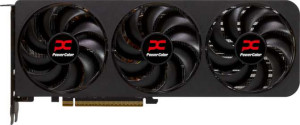
PowerColor Reaper Radeon RX 9070 XT
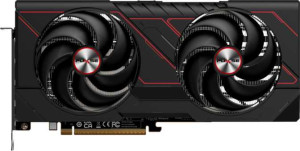
Sapphire Pulse Radeon RX 9070

PowerColor Reaper Radeon RX 9070 XT Sapphire Pulse Radeon RX 9070

Overview

When choosing between the PowerColor Reaper Radeon RX 9070 XT and the Sapphire Pulse Radeon RX 9070, buyers face a compelling trade-off between raw computational muscle and power-efficient elegance. Both cards share the same RDNA 4.0 architecture and 16GB GDDR6 memory, yet they diverge meaningfully in GPU clock speeds, thermal envelopes, and display connectivity. This comparison examines where each card pulls ahead and what those differences mean for your build.

Common Features

  • GPU memory speed is 2518 MHz on both products.
  • Both products have 128 render output units (ROPs).
  • Double Precision Floating Point (DPFP) is supported on both products.
  • Effective memory speed is 20000 MHz on both products.
  • Maximum memory bandwidth is 644.6 GB/s on both products.
  • Both products feature 16GB of VRAM.
  • Both products use GDDR6 memory.
  • Memory bus width is 256-bit on both products.
  • ECC memory support is available on both products.
  • OpenGL version 4.6 is supported on both products.
  • OpenCL version 2.2 is supported on both products.
  • Multi-display technology is supported on both products.
  • Ray tracing is supported on both products.
  • 3D support is available on both products.
  • DLSS is not supported on either product.
  • FSR4 is available on both products.
  • XeSS (XMX) is not supported on either product.
  • Both products have an HDMI 2.1b output.
  • Neither product has USB-C ports, DVI outputs, or mini DisplayPort outputs.
  • Both products are built on the RDNA 4.0 GPU architecture.
  • Both products use PCIe version 5.
  • Both products contain 53900 million transistors.
  • Neither product has air-water cooling.

Main Differences

  • GPU base clock speed is 1660 MHz on PowerColor Reaper Radeon RX 9070 XT and 1330 MHz on Sapphire Pulse Radeon RX 9070.
  • GPU turbo clock speed is 2970 MHz on PowerColor Reaper Radeon RX 9070 XT and 2520 MHz on Sapphire Pulse Radeon RX 9070.
  • Pixel rate is 380.2 GPixel/s on PowerColor Reaper Radeon RX 9070 XT and 322.6 GPixel/s on Sapphire Pulse Radeon RX 9070.
  • Floating-point performance is 48.66 TFLOPS on PowerColor Reaper Radeon RX 9070 XT and 36.13 TFLOPS on Sapphire Pulse Radeon RX 9070.
  • Texture rate is 760.3 GTexels/s on PowerColor Reaper Radeon RX 9070 XT and 564.5 GTexels/s on Sapphire Pulse Radeon RX 9070.
  • Shading units number 4096 on PowerColor Reaper Radeon RX 9070 XT and 3584 on Sapphire Pulse Radeon RX 9070.
  • Texture mapping units (TMUs) number 256 on PowerColor Reaper Radeon RX 9070 XT and 224 on Sapphire Pulse Radeon RX 9070.
  • DirectX 12 Ultimate is supported on Sapphire Pulse Radeon RX 9070, while PowerColor Reaper Radeon RX 9070 XT supports DirectX 12.
  • HDMI port count is 1 on PowerColor Reaper Radeon RX 9070 XT and 2 on Sapphire Pulse Radeon RX 9070.
  • DisplayPort outputs number 3 on PowerColor Reaper Radeon RX 9070 XT and 2 on Sapphire Pulse Radeon RX 9070.
  • Thermal Design Power (TDP) is 304W on PowerColor Reaper Radeon RX 9070 XT and 220W on Sapphire Pulse Radeon RX 9070.
  • Semiconductor size is 4 nm on PowerColor Reaper Radeon RX 9070 XT and 5 nm on Sapphire Pulse Radeon RX 9070.
  • Card width is 304 mm on PowerColor Reaper Radeon RX 9070 XT and 280 mm on Sapphire Pulse Radeon RX 9070.
  • Card height is 127 mm on PowerColor Reaper Radeon RX 9070 XT and 120.3 mm on Sapphire Pulse Radeon RX 9070.
Specs Comparison
PowerColor Reaper Radeon RX 9070 XT

PowerColor Reaper Radeon RX 9070 XT

Sapphire Pulse Radeon RX 9070

Sapphire Pulse Radeon RX 9070

Performance:
GPU clock speed 1660 MHz 1330 MHz
GPU turbo 2970 MHz 2520 MHz
pixel rate 380.2 GPixel/s 322.6 GPixel/s
floating-point performance 48.66 TFLOPS 36.13 TFLOPS
texture rate 760.3 GTexels/s 564.5 GTexels/s
GPU memory speed 2518 MHz 2518 MHz
shading units 4096 3584
texture mapping units (TMUs) 256 224
render output units (ROPs) 128 128
Has Double Precision Floating Point (DPFP)

The PowerColor Reaper RX 9070 XT holds a decisive performance advantage over the Sapphire Pulse RX 9070 across nearly every compute metric. The most telling gap is in raw shader throughput: the 9070 XT packs 4096 shading units versus 3584 on the 9070, a 14% increase in compute resources before clock speeds are even factored in. Once you add the significantly higher boost clock — 2970 MHz versus 2520 MHz — the advantage compounds to roughly 48.66 TFLOPS of floating-point performance against 36.13 TFLOPS, a gap of approximately 35%. In practical terms, this translates to a noticeably higher sustained frame rate ceiling in GPU-bound workloads, particularly at higher resolutions where shader throughput is the bottleneck.

The texture pipeline tells a similar story: the 9070 XT's 760.3 GTexels/s texture fill rate versus the 9070's 564.5 GTexels/s means the XT can push substantially more textured detail per second, which matters most in open-world scenes and at 4K. Both cards share identical 128 ROPs and the same 2518 MHz memory speed, meaning their pixel output and memory bandwidth ceilings are aligned — the 9070 XT's higher pixel rate of 380.2 GPixel/s (vs. 322.6) stems purely from its clock speed advantage rather than a rasterization hardware difference. Both support Double Precision Floating Point, which is relevant for compute and professional workloads beyond gaming.

The verdict for this group is clear: the PowerColor Reaper RX 9070 XT has an unambiguous performance edge, with ~35% more compute throughput and a significantly higher boost clock. The Sapphire Pulse RX 9070 is not a slow card, but buyers prioritizing peak rendering performance should note that the XT's lead is substantial, not marginal.

Memory:
effective memory speed 20000 MHz 20000 MHz
maximum memory bandwidth 644.6 GB/s 644.6 GB/s
VRAM 16GB 16GB
GDDR version GDDR6 GDDR6
memory bus width 256-bit 256-bit
Supports ECC memory

When it comes to memory, the PowerColor Reaper RX 9070 XT and the Sapphire Pulse RX 9070 are a perfect match — every single specification in this group is identical. Both cards carry 16GB of GDDR6 VRAM across a 256-bit memory bus, delivering 644.6 GB/s of peak bandwidth at an effective speed of 20000 MHz. There is no daylight between them here.

In practical terms, 16GB is a generous allocation for current-generation gaming, comfortably handling high-resolution texture packs, 4K asset streaming, and multi-monitor setups without memory pressure. The 644.6 GB/s bandwidth figure is also substantial — enough that neither card should encounter memory bottlenecks in typical gaming or creative workloads. Both also support ECC memory, a feature more relevant to compute and professional use cases where data integrity under sustained load matters.

This group is a complete tie. Memory configuration will not be a deciding factor between these two cards — buyers should look to other specification groups, particularly performance metrics, to differentiate them.

Features:
DirectX version DirectX 12 DirectX 12 Ultimate
OpenGL version 4.6 4.6
OpenCL version 2.2 2.2
Supports multi-display technology
supports ray tracing
Supports 3D
supports DLSS
has FSR4
has XeSS (XMX)
AMD SAM / Intel Resizable BAR AMD SAM AMD SAM
has LHR
has RGB lighting
supported displays 4 4

Feature parity is nearly total between these two cards, but there is one meaningful distinction: the Sapphire Pulse RX 9070 lists support for DirectX 12 Ultimate, while the PowerColor Reaper RX 9070 XT specifies DirectX 12. DirectX 12 Ultimate is a superset of DirectX 12, formally certifying support for hardware-accelerated ray tracing, mesh shaders, sampler feedback, and variable rate shading — features that game developers can target with confidence on a DX12 Ultimate-certified card. Based strictly on the provided data, this gives the Pulse RX 9070 a nominal edge in future API compatibility.

Beyond that distinction, the two cards share an identical software and API foundation. Both support ray tracing, FSR4, AMD SAM (Smart Access Memory for bandwidth optimization with compatible AMD platforms), and up to 4 simultaneous displays. Neither supports DLSS — expected, as that is an Nvidia-exclusive technology — and neither carries XeSS with XMX acceleration. The absence of LHR on both is also worth noting positively, as it means no artificial compute restrictions.

On balance, this group edges toward the Sapphire Pulse RX 9070 solely on the basis of its DirectX 12 Ultimate certification. All other features are identical, so this distinction alone is unlikely to be a dealbreaker — but for buyers who prioritize long-term API compatibility and access to the full DX12 Ultimate feature tier in upcoming titles, the Pulse RX 9070 holds the technical edge here.
Ports:
has an HDMI output
HDMI ports 1 2
HDMI version HDMI 2.1b HDMI 2.1b
DisplayPort outputs 3 2
USB-C ports 0 0
DVI outputs 0 0
mini DisplayPort outputs 0 0

Both cards offer the same total of 4 display outputs and identical HDMI 2.1b support, but the split between port types differs in a way that matters depending on your setup. The PowerColor Reaper RX 9070 XT goes 1 HDMI + 3 DisplayPort, while the Sapphire Pulse RX 9070 flips the balance to 2 HDMI + 2 DisplayPort. Neither configuration is objectively superior — the right choice depends entirely on what monitors and devices you are connecting.

The Pulse RX 9070's dual HDMI layout is a practical advantage for users running a mix of a gaming monitor and a TV, or any setup where two HDMI-native devices need to connect simultaneously without adapters. Conversely, the Reaper RX 9070 XT's three DisplayPort outputs suit a multi-monitor desktop workstation better, since DisplayPort is the preferred interface for high-refresh-rate and high-resolution PC monitors and supports daisy-chaining on compatible displays.

This group is a contextual tie at the hardware level — total output count and HDMI version are identical. The Sapphire Pulse RX 9070 has a marginal edge for home theater or console-adjacent setups, while the PowerColor Reaper RX 9070 XT is better suited to multi-monitor PC configurations. Neither card is disadvantaged in absolute terms.

General info:
GPU architecture RDNA 4.0 RDNA 4.0
release date March 2025 March 2025
Thermal Design Power (TDP) 304W 220W
PCI Express (PCIe) version 5 5
semiconductor size 4 nm 5 nm
number of transistors 53900 million 53900 million
Has air-water cooling
width 304 mm 280 mm
height 127 mm 120.3 mm

Sharing the same RDNA 4.0 architecture and an identical transistor count of 53,900 million, these two cards are built from the same fundamental silicon design. The notable divergence is in process node: the PowerColor Reaper RX 9070 XT is manufactured on a 4 nm process versus 5 nm for the Sapphire Pulse RX 9070. A smaller node generally enables higher clock speeds and better power efficiency at equivalent loads — which helps explain how the XT achieves its significantly higher boost clocks despite the same transistor budget.

That said, the XT's more advanced node does not translate into lower power consumption in practice. Its TDP of 304W is substantially higher than the Pulse RX 9070's 220W — a gap of 84W, or roughly 38% more power draw. This has real-world consequences: the XT will require a more capable PSU, generate more heat under load, and demand better case airflow. The Pulse RX 9070 is meaningfully more system-friendly in constrained or compact builds. Both cards rely on air cooling only, so neither offers a hybrid cooling advantage.

Physical size reinforces this theme. At 304 mm long, the Reaper RX 9070 XT is notably larger than the Pulse RX 9070's 280 mm, which could be a limiting factor in smaller mid-tower or ITX cases. For this group, the Sapphire Pulse RX 9070 holds a clear practical edge — it is smaller, draws significantly less power, and will be easier to accommodate across a wider range of builds. The XT's 4 nm process is the one advantage it carries here, but it is offset by its considerably higher thermal and power demands.

Comparison Summary & Verdict

After examining all available specifications, a clear picture emerges for each card. The PowerColor Reaper Radeon RX 9070 XT is the stronger performer, offering a 2970 MHz turbo clock, 48.66 TFLOPS of floating-point performance, and more shading units, making it the better choice for users who demand maximum frame rates and computational throughput. However, this comes at the cost of a 304W TDP and a larger physical footprint. The Sapphire Pulse Radeon RX 9070, by contrast, operates at a much more modest 220W TDP, supports DirectX 12 Ultimate, and offers two HDMI ports — advantages that suit home theater setups and power-conscious builds. Shared strengths like 16GB GDDR6 memory, ray tracing, and FSR4 support mean both cards are capable, modern GPUs; your decision ultimately comes down to performance headroom versus efficiency and connectivity flexibility.

PowerColor Reaper Radeon RX 9070 XT
Buy PowerColor Reaper Radeon RX 9070 XT if...

Buy the PowerColor Reaper Radeon RX 9070 XT if you want the highest possible GPU performance, with a faster turbo clock, greater floating-point throughput, and more shading units for demanding workloads and gaming.

Sapphire Pulse Radeon RX 9070
Buy Sapphire Pulse Radeon RX 9070 if...

Buy the Sapphire Pulse Radeon RX 9070 if you prioritize lower power consumption, DirectX 12 Ultimate support, and dual HDMI outputs — ideal for efficient builds or multi-display home theater setups.