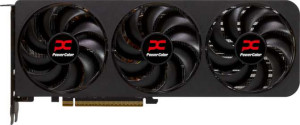
PowerColor Reaper Radeon RX 9070 XT
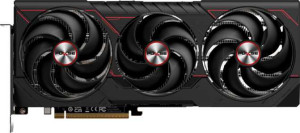
Sapphire Pulse Radeon RX 9070 XT

PowerColor Reaper Radeon RX 9070 XT Sapphire Pulse Radeon RX 9070 XT

Overview

Welcome to our in-depth spec comparison between the PowerColor Reaper Radeon RX 9070 XT and the Sapphire Pulse Radeon RX 9070 XT. Both cards share the same RDNA 4.0 architecture and identical raw performance numbers, making this a fascinating matchup. The real story lies in the finer details: DirectX support levels, display output configurations, and physical dimensions that could influence your build. Read on to see which card fits your setup best.

Common Features

  • Both cards share a base GPU clock speed of 1660 MHz.
  • Both cards share a GPU turbo clock speed of 2970 MHz.
  • Both cards deliver a pixel rate of 380.2 GPixel/s.
  • Both cards offer a floating-point performance of 48.66 TFLOPS.
  • Both cards provide a texture rate of 760.3 GTexels/s.
  • Both cards have a GPU memory speed of 2518 MHz.
  • Both cards include 4096 shading units.
  • Both cards include 256 texture mapping units (TMUs).
  • Both cards have an effective memory speed of 20000 MHz.
  • Both cards offer a maximum memory bandwidth of 644.6 GB/s.
  • Both cards come with 16GB of VRAM.
  • Both cards use GDDR6 memory.
  • Both cards feature a 256-bit memory bus width.
  • ECC memory support is available on both cards.
  • Both cards support OpenGL version 4.6.
  • Both cards support OpenCL version 2.2.
  • Multi-display technology support is available on both cards.
  • Ray tracing support is available on both cards.
  • 3D support is available on both cards.
  • DLSS support is not available on either card.
  • FSR4 support is available on both cards.
  • XeSS (XMX) support is not available on either card.
  • Both cards feature an HDMI 2.1b output.
  • Neither card includes USB-C ports, DVI outputs, or mini DisplayPort outputs.
  • Both cards are built on the RDNA 4.0 GPU architecture.
  • Both cards have a Thermal Design Power (TDP) of 304W.
  • Both cards use PCIe version 5.
  • Both cards are manufactured on a 4 nm semiconductor process.
  • Both cards feature 53900 million transistors.
  • Neither card includes air-water cooling.

Main Differences

  • DirectX version is DirectX 12 on PowerColor Reaper Radeon RX 9070 XT and DirectX 12 Ultimate on Sapphire Pulse Radeon RX 9070 XT.
  • HDMI port count is 1 on PowerColor Reaper Radeon RX 9070 XT and 2 on Sapphire Pulse Radeon RX 9070 XT.
  • DisplayPort output count is 3 on PowerColor Reaper Radeon RX 9070 XT and 2 on Sapphire Pulse Radeon RX 9070 XT.
  • Card width is 304 mm on PowerColor Reaper Radeon RX 9070 XT and 320 mm on Sapphire Pulse Radeon RX 9070 XT.
  • Card height is 127 mm on PowerColor Reaper Radeon RX 9070 XT and 120.3 mm on Sapphire Pulse Radeon RX 9070 XT.
Specs Comparison
PowerColor Reaper Radeon RX 9070 XT

PowerColor Reaper Radeon RX 9070 XT

Sapphire Pulse Radeon RX 9070 XT

Sapphire Pulse Radeon RX 9070 XT

Performance:
GPU clock speed 1660 MHz 1660 MHz
GPU turbo 2970 MHz 2970 MHz
pixel rate 380.2 GPixel/s 380.2 GPixel/s
floating-point performance 48.66 TFLOPS 48.66 TFLOPS
texture rate 760.3 GTexels/s 760.3 GTexels/s
GPU memory speed 2518 MHz 2518 MHz
shading units 4096 4096
texture mapping units (TMUs) 256 256
render output units (ROPs) 128 128
Has Double Precision Floating Point (DPFP)

When comparing the Performance specs of the PowerColor Reaper and the Sapphire Pulse, both carrying the Radeon RX 9070 XT silicon, the picture is straightforward: every single metric is identical. Both cards share a base GPU clock of 1660 MHz, a turbo boost ceiling of 2970 MHz, and a floating-point throughput of 48.66 TFLOPS — a figure that positions this GPU generation as a serious contender in the high-performance segment.

Under the hood, the hardware configuration is a perfect match: 4096 shading units, 256 TMUs, and 128 ROPs, all fed by memory running at 2518 MHz. The ROPs and pixel rate of 380.2 GPixel/s are particularly relevant for high-resolution rendering, while the texture rate of 760.3 GTexels/s reflects strong throughput for texture-heavy scenes. Both also support Double Precision Floating Point, which matters for compute workloads and certain professional or simulation tasks, though it is rarely the deciding factor in gaming.

In terms of raw performance, this is a dead heat. Since both cards are built on the same GPU with no factory overclock differentiating them at the spec level, neither the Reaper nor the Pulse holds any measurable performance advantage over the other based on this data alone. A buyer choosing between them should look to other spec groups — such as cooling, power design, or connectivity — to find meaningful differentiation.

Memory:
effective memory speed 20000 MHz 20000 MHz
maximum memory bandwidth 644.6 GB/s 644.6 GB/s
VRAM 16GB 16GB
GDDR version GDDR6 GDDR6
memory bus width 256-bit 256-bit
Supports ECC memory

The memory configuration on both the PowerColor Reaper and the Sapphire Pulse is, once again, completely uniform. Each card carries 16GB of GDDR6 across a 256-bit bus, delivering a peak bandwidth of 644.6 GB/s at an effective speed of 20000 MHz. The 16GB allocation is a meaningful advantage for this GPU tier — it comfortably handles high-resolution texture packs, large open-world asset streaming, and increasingly VRAM-hungry AI-accelerated workloads without hitting the memory ceiling that plagues narrower configurations.

The 256-bit bus width is the architectural backbone behind that bandwidth figure. Combined with GDDR6 running at 20 Gbps effective, it produces throughput that keeps the GPU's shading and texture units well-fed, minimizing memory bottlenecks even at 4K. Both cards also support ECC memory, an error-correction feature more commonly associated with workstation and compute cards — it adds a layer of data integrity for professional or mixed-use scenarios without impacting consumer gaming performance.

There is no differentiator to declare here: the Reaper and the Pulse are in a complete memory tie. Buyers prioritizing memory capacity, speed, or reliability will find no reason to favor one over the other based on this data. As with performance, the decision will need to hinge on factors outside this spec group.

Features:
DirectX version DirectX 12 DirectX 12 Ultimate
OpenGL version 4.6 4.6
OpenCL version 2.2 2.2
Supports multi-display technology
supports ray tracing
Supports 3D
supports DLSS
has FSR4
has XeSS (XMX)
AMD SAM / Intel Resizable BAR AMD SAM AMD SAM
has LHR
has RGB lighting
supported displays 4 4

Across most of the feature set, the PowerColor Reaper and the Sapphire Pulse are virtually indistinguishable — both support ray tracing, FSR4, AMD SAM, and up to four simultaneous displays. The absence of DLSS is expected on AMD hardware, and FSR4 serves as the direct counterpart for AI-assisted upscaling. What actually separates these two cards in this group is a single but notable entry: the Sapphire Pulse is listed with DirectX 12 Ultimate, while the PowerColor Reaper carries the base DirectX 12 specification.

DirectX 12 Ultimate is not merely a branding distinction — it is a defined feature tier that formally guarantees support for hardware-accelerated ray tracing, mesh shaders, variable rate shading, and sampler feedback. These capabilities underpin next-generation rendering techniques that game developers are increasingly building around. A card certified to DirectX 12 Ultimate signals full compliance with that complete feature set, whereas the base DirectX 12 label does not make the same guarantees on paper, even if the underlying hardware may be capable.

Based strictly on the provided specs, the Sapphire Pulse holds a clear edge in this group solely due to its DirectX 12 Ultimate designation. For users targeting the most modern rendering pipelines and wanting formal assurance of next-gen feature support, that distinction matters. All other features in this group are evenly matched between the two cards.

Ports:
has an HDMI output
HDMI ports 1 2
HDMI version HDMI 2.1b HDMI 2.1b
DisplayPort outputs 3 2
USB-C ports 0 0
DVI outputs 0 0
mini DisplayPort outputs 0 0

Both cards offer four total display outputs and share the same HDMI 2.1b standard, which supports 4K at high refresh rates and 8K output — so the version parity means neither card has a bandwidth or resolution advantage at the cable level. The real distinction lies in how those four ports are distributed: the PowerColor Reaper gives you 1 HDMI and 3 DisplayPort, while the Sapphire Pulse flips the balance to 2 HDMI and 2 DisplayPort.

This is a connectivity preference question more than a performance one. The Reaper's triple-DisplayPort layout suits users who rely on DisplayPort-native monitors — common in high-refresh-rate gaming and productivity setups — or who use a DisplayPort daisy-chain or MST hub. The Pulse's dual-HDMI configuration is more practical for mixed living-room or media-center builds where TVs, projectors, or HDMI-only displays are in the mix, since it lets you connect two such devices simultaneously without adapters.

Neither layout is objectively superior, but the Sapphire Pulse has a situational edge for users with multiple HDMI-dependent devices, while the PowerColor Reaper is better suited to monitor-heavy PC setups that lean on DisplayPort. Buyers should simply match the port layout to their existing display hardware before deciding.

General info:
GPU architecture RDNA 4.0 RDNA 4.0
release date March 2025 March 2025
Thermal Design Power (TDP) 304W 304W
PCI Express (PCIe) version 5 5
semiconductor size 4 nm 4 nm
number of transistors 53900 million 53900 million
Has air-water cooling
width 304 mm 320 mm
height 127 mm 120.3 mm

At the architectural level, these two cards are cut from identical cloth — both are built on the RDNA 4.0 architecture using a 4nm process node with 53.9 billion transistors, draw the same 304W TDP, and connect via PCIe 5.0. The shared TDP means you can expect equivalent power supply requirements and broadly similar thermal output between the two, so neither card demands a more substantial cooling or power delivery investment than the other.

The only measurable divergence in this group is physical dimensions. The PowerColor Reaper is slightly shorter in length at 304mm but taller at 127mm, while the Sapphire Pulse is longer at 320mm but sits lower at 120.3mm. In practical terms, the Pulse's extra 16mm of length could be a consideration in compact mid-tower or ITX-adjacent builds with tight GPU clearance, whereas the Reaper's additional height might matter in cases with low PCIe slot spacing or obstructions near the motherboard.

For case compatibility, the PowerColor Reaper holds a marginal edge in length-constrained builds, while the Sapphire Pulse fits better where vertical clearance is tight. Neither difference is dramatic, but measuring your case's GPU clearance before purchasing remains advisable. On every other spec in this group, the two cards are completely tied.

Comparison Summary & Verdict

After a thorough comparison, it is clear that the PowerColor Reaper Radeon RX 9070 XT and the Sapphire Pulse Radeon RX 9070 XT are nearly identical in raw power, sharing the same clocks, memory, and thermal envelope. The differences come down to connectivity and form. The Sapphire Pulse stands out with DirectX 12 Ultimate support and two HDMI 2.1b ports, making it the stronger pick for users who need richer API feature sets or want to drive multiple displays via HDMI. The PowerColor Reaper, on the other hand, offers three DisplayPort outputs and a slightly more compact footprint at 304 mm wide, appealing to users in tighter cases or those who prefer DisplayPort-centric multi-monitor setups. Neither card is objectively superior in performance, so your choice should hinge on your display ecosystem and software requirements.

PowerColor Reaper Radeon RX 9070 XT
Buy PowerColor Reaper Radeon RX 9070 XT if...

Buy the PowerColor Reaper Radeon RX 9070 XT if you prefer a slightly more compact card and want three DisplayPort outputs for a DisplayPort-based multi-monitor setup.

Sapphire Pulse Radeon RX 9070 XT
Buy Sapphire Pulse Radeon RX 9070 XT if...

Buy the Sapphire Pulse Radeon RX 9070 XT if you need DirectX 12 Ultimate support or require two HDMI 2.1b ports to connect multiple HDMI displays simultaneously.