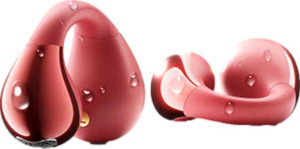
QCY Crossky C30S
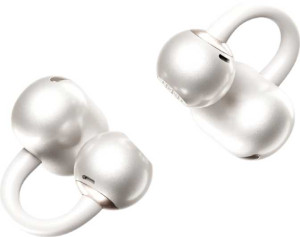
QCY Crossky C50

QCY Crossky C30S QCY Crossky C50

Overview

When choosing between the QCY Crossky C30S and the QCY Crossky C50, buyers will find two open-ear, wireless earbuds that share a solid common foundation — including IPX5 water resistance, Bluetooth 6, and a quad-microphone setup. Yet beneath the surface, key battlegrounds emerge around battery endurance, audio codec support, and spatial audio capabilities, making this a nuanced comparison worth exploring in detail.

Common Features

  • Both products use an open-ear fit design.
  • Both products have an IPX5 ingress protection rating, making them water resistant.
  • Both products are fully wireless with no wires or cables.
  • Neither product is a neckband earbud style.
  • Neither product includes wingtips.
  • Neither product features RGB lighting.
  • Both products have stereo speakers.
  • Neither product has active noise cancellation (ANC).
  • Neither product has passive noise reduction.
  • Both products use a 10.8 mm driver unit size.
  • Both products have a frequency range of 20 Hz to 20000 Hz.
  • Neither product supports Dolby Atmos.
  • Neither product supports Dirac Virtuo.
  • Neither product has a neodymium magnet.
  • Neither product supports wireless charging.
  • Neither product has a solar power battery.
  • Both products have a battery level indicator.
  • Both products have a rechargeable battery.
  • Neither product supports fast pairing.
  • Both products have a USB Type-C charging port.
  • Both products use Bluetooth version 6.
  • Neither product supports LDHC.
  • Neither product supports Bluetooth LE Audio.
  • Neither product supports aptX Adaptive, aptX Low Latency, or aptX HD.
  • Neither product has an ambient sound mode.
  • Neither product has in/on-ear detection.
  • Both products support fast charging.
  • Neither product can read notifications.
  • Neither product has a built-in translator.
  • Both products have a mute function.
  • Both products can be used as a headset.
  • Both products have a control panel placed on the device.
  • Both products have 4 microphones.
  • Both products feature a noise-canceling microphone.

Main Differences

  • Spatial audio support is present on the QCY Crossky C30S but not available on the QCY Crossky C50.
  • Battery life is 6 hours on the QCY Crossky C30S and 8.5 hours on the QCY Crossky C50.
  • Battery life of the charging case is 34 hours on the QCY Crossky C30S and 27.5 hours on the QCY Crossky C50.
  • Charge time is 2 hours on the QCY Crossky C30S and 1.5 hours on the QCY Crossky C50.
  • Battery power is 32 mAh on the QCY Crossky C30S and 35 mAh on the QCY Crossky C50.
  • Charging case battery power is 460 mAh on the QCY Crossky C30S and 380 mAh on the QCY Crossky C50.
  • LDAC support is present on the QCY Crossky C30S but not available on the QCY Crossky C50.
  • AAC support is present on the QCY Crossky C30S but not available on the QCY Crossky C50.
Specs Comparison
QCY Crossky C30S

QCY Crossky C30S

QCY Crossky C50

QCY Crossky C50

Design:
Fit Open-ear Open-ear
Ingress Protection (IP) rating IPX5 IPX5
water resistance Water resistant Water resistant
has no wires or cables
are neckband earbuds
wingtips included
has RGB lighting
has stereo speakers
has UV light
Has a display

In terms of design, the QCY Crossky C30S and QCY Crossky C50 are effectively identical across every measured specification in this category. Both adopt an open-ear fit, are fully wireless with no cables, and neither includes wingtips or RGB lighting. They also share the same IPX5 water resistance rating, meaning both can handle sweat and light rain but are not suited for submersion.

The open-ear form factor is a meaningful shared trait worth noting: it allows ambient sound awareness during outdoor use, making both models better suited for activities like running or cycling where situational awareness matters. The IPX5 rating is solid for sport use but sits below the IPX7 or IP67 ratings found on more rugged alternatives, so neither has an edge in durability.

Since every design specification is a match, this category is a complete tie. Buyers should look to other spec groups — such as audio performance, battery life, or connectivity — to differentiate between these two models.

Sound quality:
has active noise cancellation (ANC)
has passive noise reduction
driver unit size 10.8 mm 10.8 mm
lowest frequency 20 Hz 20 Hz
highest frequency 20000 Hz 20000 Hz
supports spatial audio
has Dolby Atmos
has Dirac Virtuo
has a neodymium magnet

At the hardware level, the two earbuds are neck and neck: both use a 10.8 mm driver and cover the standard 20 Hz – 20,000 Hz frequency range, spanning the full extent of human hearing. Neither model employs active or passive noise cancellation — expected given the open-ear design — and neither features a neodymium magnet, which is sometimes associated with tighter, more efficient magnetic circuits in premium drivers.

The one meaningful split between them is spatial audio: the C30S supports it, while the C50 does not. Spatial audio processing creates a more expansive, three-dimensional soundstage — particularly noticeable when watching video content or playing games — so its absence on the C50 is a genuine functional gap rather than a marketing distinction.

Overall, the C30S holds a clear edge in this category purely due to spatial audio support. The underlying driver hardware is identical, so the difference comes down to software-level audio processing — but for users who value immersive or cinematic listening, that distinction matters.

Power:
Battery life 6 hours 8.5 hours
Battery life of charging case 34 hours 27.5 hours
charge time 2 hours 1.5 hours
battery power 32 mAh 35 mAh
battery power (charging case) 460mAh 380mAh
has wireless charging
Has a solar power battery
has a battery level indicator
has a rechargeable battery

This category reveals a genuine trade-off rather than a clear-cut winner. The C50 lasts 8.5 hours per charge versus the C30S's 6 hours — a 42% advantage per session that makes a real difference for long travel days or extended outdoor use without access to the case. It also charges faster at 1.5 hours compared to 2 hours, a small but welcome convenience edge.

Flip the lens to total endurance, however, and the picture reverses. The C30S's larger 460 mAh case delivers a combined 34 hours of listening, while the C50's 380 mAh case caps out at 27.5 hours — roughly 6.5 hours less overall. That gap means the C30S can squeeze out more full top-ups before needing a wall outlet, making it better suited for multi-day trips where charging opportunities are scarce.

Neither product supports wireless charging, so the decision here hinges on usage pattern. Listeners who wear earbuds in long, uninterrupted stretches will prefer the C50's stronger per-session runtime, while those who use earbuds in shorter bursts spread across several days will get more total mileage from the C30S's higher-capacity case. On balance, the two products split this category evenly — each holds a legitimate advantage depending on how the user actually listens.

Connectivity:
has fast pairing
Has USB Type-C
Bluetooth version 6 6
has LDAC
has LDHC
has Bluetooth LE Audio
has aptX Adaptive
has aptX Low Latency
has aptX HD
has aptX
has aptX Lossless
has aptX Voice
has Auracast
maximum Bluetooth range 10 m 10 m
supports Bluetooth pairing using NFC
Can be used wirelessly
has AAC

Both earbuds share a solid connectivity foundation: Bluetooth 6, a 10 m wireless range, and USB-C charging. Bluetooth 6 is a current-generation standard that brings improved connection stability and efficiency over its predecessors, so neither model is at a disadvantage on that front.

Where they diverge is codec support, and the gap is meaningful. The C30S supports both LDAC and AAC, while the C50 supports neither. LDAC is Sony's high-resolution codec capable of transmitting significantly more audio data than standard SBC, making it the preferred choice for listeners streaming high-quality audio from compatible Android devices. AAC, meanwhile, is the codec of choice for Apple device users, delivering noticeably cleaner audio than SBC on iPhones and iPads. The C50's lack of both codecs means it falls back to SBC by default — a usable but audibly inferior baseline regardless of the source device.

The C30S holds a clear advantage in connectivity. Its codec versatility makes it meaningfully more compatible with a wider range of devices and better positioned for listeners who care about audio transmission quality. For the C50, the absence of AAC alone is a notable omission for anyone in the Apple ecosystem, making the C30S the stronger pick for most users in this category.

Features:
release date July 2025 July 2025
has ambient sound mode
has in/on-ear detection
Supports fast charging
can read notifications
Has a built-in translator
has a mute function
can be used as a headset
control panel placed on a device
Has voice prompts
travel bag is included
Has an in-line control panel
Has a temperature sensor
Has a built-in camera remote control function

Across every feature in this category, the C30S and C50 are perfectly matched. Both support fast charging, include on-device controls, offer voice prompts, ship with a travel bag, and can function as a headset with a mute function — a practical set of features for daily commuters and remote workers alike.

A few shared absences are worth flagging for context. Neither model includes ambient sound mode or in/on-ear detection — features increasingly common at this tier. Ambient mode is particularly relevant given the open-ear design, where its omission is less critical than it would be on a sealed IEM, but in-ear detection (auto pause/play when removed) remains a convenience gap on both devices.

With no differentiating data points anywhere in this group, the verdict is a complete tie. Prospective buyers should weigh the feature set as a shared baseline and turn to other categories — connectivity, sound quality, or battery — to make their final call.

Microphone:
number of microphones 4 4
has a noise-canceling microphone

Microphone hardware is identical across both models: each carries 4 microphones with noise-canceling capability. A quad-mic array is a respectable configuration at this price tier, enabling beamforming and echo suppression algorithms that help isolate the speaker's voice from background noise — useful for calls in busy environments like cafés or city streets.

This category is a complete tie. With no differentiating specs available, neither the C30S nor the C50 holds any measurable advantage for call quality or voice pickup based on the provided data.

Comparison Summary & Verdict

Both the QCY Crossky C30S and the QCY Crossky C50 deliver a nearly identical hardware base, but they diverge in meaningful ways. The QCY Crossky C30S stands out for listeners who prioritize audio fidelity, thanks to its LDAC and AAC codec support alongside spatial audio — features entirely absent on the C50. Its charging case also holds a larger 460 mAh battery for up to 34 hours of total playtime. The QCY Crossky C50, on the other hand, appeals to users who value longer per-session battery life at 8.5 hours per charge and a quicker 1.5-hour charge time, making it the more practical daily companion. Neither product includes ANC or wireless charging, so the decision ultimately hinges on whether premium codec and spatial audio support or raw endurance matters most to you.

QCY Crossky C30S
Buy QCY Crossky C30S if...

Buy the QCY Crossky C30S if you want richer audio through LDAC and AAC codec support, spatial audio, and a higher-capacity charging case for extended total playtime.

QCY Crossky C50
Buy QCY Crossky C50 if...

Buy the QCY Crossky C50 if you prioritize longer single-session battery life at 8.5 hours and a faster 1.5-hour charge time for everyday convenience.