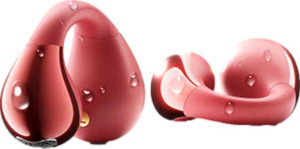
QCY Crossky C30S
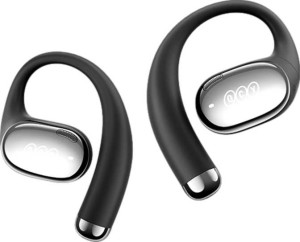
QCY Crossky R70

QCY Crossky C30S QCY Crossky R70

Overview

Choosing between the QCY Crossky C30S and the QCY Crossky R70 is no straightforward task — both are open-ear, wireless earbuds sharing an impressive common foundation of LDAC support, Bluetooth 6, IPX5 water resistance, and a 4-microphone noise-canceling setup. Yet beneath the surface, meaningful distinctions emerge. This comparison zeroes in on the key battlegrounds of battery endurance and audio capabilities to help you determine which of these earbuds truly matches your everyday needs.

Common Features

  • Both products have an open-ear fit.
  • Both products have an IPX5 ingress protection rating, making them water resistant.
  • Neither product has wires or cables.
  • Neither product is a neckband earbud design.
  • Neither product has RGB lighting.
  • Both products have stereo speakers.
  • Neither product has a UV light.
  • Neither product has active noise cancellation (ANC).
  • Neither product has passive noise reduction.
  • Both products have a lowest frequency of 20 Hz and a highest frequency of 20000 Hz.
  • Neither product supports Dolby Atmos.
  • Neither product has a neodymium magnet.
  • Both products have a charge time of 2 hours.
  • Neither product supports wireless charging.
  • Neither product has a solar power battery.
  • Both products have a battery level indicator.
  • Both products have a rechargeable battery.
  • Neither product supports fast pairing.
  • Both products have USB Type-C connectivity.
  • Both products use Bluetooth version 6.
  • Both products support LDAC.
  • Neither product supports LDHC, Bluetooth LE Audio, aptX Adaptive, or aptX Low Latency.
  • Neither product has an ambient sound mode.
  • Neither product has in/on-ear detection.
  • Both products support fast charging.
  • Both products support multipoint connection with up to 2 devices.
  • Neither product can read notifications.
  • Both products have a mute function.
  • Both products can be used as a headset.
  • Both products have a control panel placed on the device.
  • Both products have 4 microphones.
  • Both products have a noise-canceling microphone.

Main Differences

  • Wingtips are included with the QCY Crossky R70 but not included with the QCY Crossky C30S.
  • Spatial audio support is present on the QCY Crossky C30S but not available on the QCY Crossky R70.
  • Battery life is 6 hours on the QCY Crossky C30S and 13 hours on the QCY Crossky R70.
  • Battery life of the charging case is 34 hours on the QCY Crossky C30S and 49 hours on the QCY Crossky R70.
Specs Comparison
QCY Crossky C30S

QCY Crossky C30S

QCY Crossky R70

QCY Crossky R70

Design:
Fit Open-ear Open-ear
Ingress Protection (IP) rating IPX5 IPX5
water resistance Water resistant Water resistant
has no wires or cables
are neckband earbuds
wingtips included
has RGB lighting
has stereo speakers
has UV light
Has a display

In terms of overall design philosophy, the QCY Crossky C30S and QCY Crossky R70 share a nearly identical foundation: both are fully wireless, open-ear earbuds with no neckband, no RGB lighting, no display, and an IPX5 water resistance rating. That IPX5 certification means both can handle sweat and light rain without issue, making either a reasonable companion for outdoor workouts or casual use in unpredictable weather.

The one meaningful differentiator in this group is that the R70 includes wingtips while the C30S does not. For an open-ear design — which by nature provides less passive retention than in-ear options — wingtips are a practical advantage. They help anchor the earbuds during high-movement activities like running or cycling, reducing the risk of them shifting or falling out. Users who plan to wear these during intense physical activity will find the R70′s wingtips a tangible benefit.

Both products are otherwise evenly matched on design fundamentals. If secure fit during active use is a priority, the R70 holds a clear edge in this category solely due to its included wingtips. For more casual, low-movement use, the C30S′s absence of wingtips is unlikely to matter.

Sound quality:
has active noise cancellation (ANC)
has passive noise reduction
lowest frequency 20 Hz 20 Hz
highest frequency 20000 Hz 20000 Hz
supports spatial audio
has Dolby Atmos
has Dirac Virtuo
has a neodymium magnet

Both the QCY Crossky C30S and QCY Crossky R70 cover the full standard audible range of 20 Hz to 20,000 Hz, meaning neither product is specced to reproduce frequencies beyond what human hearing can detect. Neither offers ANC or passive noise reduction — expected for open-ear designs, which are architecturally unsuited to isolation — nor do they carry premium audio certifications like Dolby Atmos or Dirac Virtuo.

The single differentiator here is that the C30S supports spatial audio while the R70 does not. Spatial audio processing creates a wider, more three-dimensional soundstage, which can meaningfully improve the experience of watching video content, gaming, or listening to music mixed for immersive formats. For an open-ear earbud where natural sound isolation is already absent, spatial audio can partly compensate by adding perceived depth and directionality to the listening experience.

On sound quality specs, the C30S has a clear edge thanks to its spatial audio support. The R70 matches it in every other measurable dimension in this category, but for users who value an expansive, immersive soundstage, the C30S is the stronger choice.

Power:
Battery life 6 hours 13 hours
Battery life of charging case 34 hours 49 hours
charge time 2 hours 2 hours
has wireless charging
Has a solar power battery
has a battery level indicator
has a rechargeable battery

Battery life is where these two models diverge most dramatically. The QCY Crossky R70 delivers 13 hours of continuous playback per charge, more than double the 6 hours offered by the QCY Crossky C30S. That gap has real consequences: the R70 can comfortably cover a full workday, a long-haul flight, or back-to-back workout sessions without reaching for the case, while the C30S will require a mid-day top-up for heavy users.

The case capacity tells a similar story. Combined with its case, the R70 stretches to 49 hours of total battery life versus 34 hours for the C30S — a 44% difference. For travelers or anyone who goes days between charges, that additional reserve is a meaningful practical advantage. Both share an identical 2-hour charge time and neither supports wireless charging, so recharging convenience is evenly matched.

The R70 wins this category decisively. Its substantially longer per-session and total battery life make it the more capable option for extended or frequent use, with no trade-off in charging speed to offset the C30S′s shorter runtime.

Connectivity:
has fast pairing
Has USB Type-C
Bluetooth version 6 6
has LDAC
has LDHC
has Bluetooth LE Audio
has aptX Adaptive
has aptX Low Latency
has aptX HD
has aptX
has aptX Lossless
has aptX Voice
has Auracast
maximum Bluetooth range 10 m 10 m
supports Bluetooth pairing using NFC
Can be used wirelessly
has AAC

Across every connectivity specification, the QCY Crossky C30S and QCY Crossky R70 are identical. Both run on Bluetooth 6, the latest generation of the standard, which brings improvements in connection stability, interference resistance, and energy efficiency over previous versions. Both cap out at a 10-meter wireless range, which is standard for earbuds used in close proximity to a paired device.

On the codec front, both support LDAC and AAC — a strong pairing. LDAC is Sony′s high-resolution audio codec capable of transmitting up to three times more data than standard Bluetooth audio, making it the most significant codec on this list for audiophiles using compatible Android devices. AAC covers Apple ecosystem users well. Neither product supports aptX variants or Bluetooth LE Audio, but the presence of LDAC largely fills the gap for high-quality wireless audio transmission.

This category is a complete tie. There is no connectivity-based reason to choose one over the other — both offer the same Bluetooth version, range, codec support, and charging port. The decision between these two models should rest entirely on the differentiators found in other specification groups.

Features:
release date July 2025 April 2025
has ambient sound mode
has in/on-ear detection
Supports fast charging
multipoint count 2 2
can read notifications
has a mute function
can be used as a headset
control panel placed on a device
Has voice prompts
travel bag is included
Has an in-line control panel
Has a temperature sensor
Has a built-in camera remote control function

Feature-for-feature, the QCY Crossky C30S and QCY Crossky R70 are perfectly matched in this category. Both support fast charging, which is a practical daily convenience that meaningfully reduces downtime compared to standard charging speeds. Both also offer multipoint connectivity for 2 devices simultaneously, allowing seamless switching between, say, a laptop and a smartphone — a feature that distinguishes them from more basic earbuds that lock to a single source.

On the usability side, both include on-device controls, a mute function, voice prompts, and headset capability for calls. The inclusion of a travel bag on both models is a small but welcome addition that adds perceived value and practical portability. Neither product offers ambient sound mode or in-ear detection, which are absent features worth noting for users who rely on those in daily routines — but neither model has an advantage over the other in this regard.

This group is a complete tie. Every feature present on one is equally present on the other, with no omissions or additions that would differentiate the two. Users prioritizing specific features from this list can choose either model without compromise.

Microphone:
number of microphones 4 4
has a noise-canceling microphone

Microphone hardware is identical across both models. The QCY Crossky C30S and QCY Crossky R70 each carry 4 microphones paired with noise-canceling microphone technology. A quad-mic array is a meaningful spec for call quality — more microphones allow the device to use beamforming techniques, isolating the speaker′s voice while suppressing surrounding noise from multiple directions.

The noise-canceling microphone capability on both models is particularly relevant given their open-ear design, which offers no passive isolation to naturally block ambient sound from bleeding into calls. The active mic processing helps compensate for that architectural trade-off, improving intelligibility for the person on the other end in noisy environments like commutes or busy offices.

With no differences to separate them, this category is a complete tie. Both products offer the same microphone count and the same noise-canceling capability, making call performance an equal proposition on either device.

Comparison Summary & Verdict

Having examined every specification side by side, both the QCY Crossky C30S and the QCY Crossky R70 share a strong, well-rounded feature set — including LDAC audio, Bluetooth 6, IPX5 water resistance, fast charging, and a capable 4-microphone system. However, their differences point each model toward a distinct type of user. The QCY Crossky R70 stands out with its exceptional 13-hour battery life and a 49-hour charging case, making it the superior choice for all-day listeners, commuters, and those who need a more secure fit thanks to its included wingtips. The QCY Crossky C30S, while offering a shorter 6-hour playback time, brings spatial audio support to the table — a feature absent on the R70 — appealing to users who prioritize an immersive, enveloping soundstage. Choose the R70 for endurance and fit security; choose the C30S for a richer spatial audio experience.

QCY Crossky C30S
Buy QCY Crossky C30S if...

Buy the QCY Crossky C30S if spatial audio support is a priority for you and you value a more immersive listening experience over extended battery life.

QCY Crossky R70
Buy QCY Crossky R70 if...

Buy the QCY Crossky R70 if you need longer battery life for all-day listening sessions and want the added stability of included wingtips for a more secure fit.