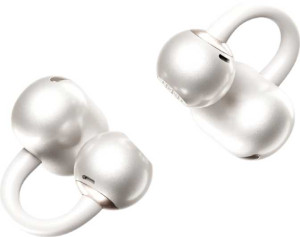
QCY Crossky C50
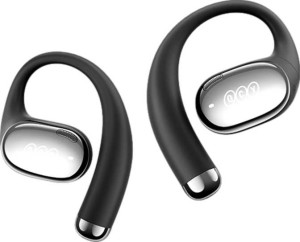
QCY Crossky R70

QCY Crossky C50 QCY Crossky R70

Overview

Welcome to our in-depth spec comparison between the QCY Crossky C50 and the QCY Crossky R70, two open-ear wireless earbuds from QCY sharing a solid foundation of features. While both models offer IPX5 water resistance, fast charging, and a 4-microphone noise-canceling setup, the key battlegrounds lie in battery endurance, audio codec support, and fit accessories. Read on to see which model aligns best with your listening needs.

Common Features

  • Both products have an open-ear fit.
  • Both products carry an IPX5 ingress protection rating, making them water resistant.
  • Both products are wireless, with no wires or cables.
  • Neither product is a neckband earbud design.
  • Neither product features RGB lighting.
  • Both products have stereo speakers.
  • Neither product includes a UV light.
  • Neither product supports active noise cancellation (ANC).
  • Neither product offers passive noise reduction.
  • Both products have a frequency range of 20 Hz to 20000 Hz.
  • Neither product supports spatial audio.
  • Neither product has Dolby Atmos or Dirac Virtuo.
  • Neither product uses a neodymium magnet.
  • Neither product supports wireless charging.
  • Neither product has a solar power battery.
  • Both products have a battery level indicator.
  • Both products have a rechargeable battery.
  • Neither product supports fast pairing.
  • Both products have a USB Type-C connector.
  • Both products use Bluetooth version 6.
  • Neither product supports LDHC, Bluetooth LE Audio, aptX Adaptive, aptX Low Latency, or aptX HD.
  • Neither product has an ambient sound mode.
  • Neither product features in/on-ear detection.
  • Both products support fast charging.
  • Neither product can read notifications.
  • Both products have a mute function.
  • Both products can be used as a headset.
  • Both products have a control panel placed on the device.
  • Both products have voice prompts.
  • Both products are equipped with 4 microphones.
  • Both products feature a noise-canceling microphone.

Main Differences

  • Wingtips are included with the QCY Crossky R70 but not with the QCY Crossky C50.
  • Battery life is 8.5 hours on the QCY Crossky C50 and 13 hours on the QCY Crossky R70.
  • Battery life of the charging case is 27.5 hours on the QCY Crossky C50 and 49 hours on the QCY Crossky R70.
  • Charge time is 1.5 hours on the QCY Crossky C50 and 2 hours on the QCY Crossky R70.
  • LDAC support is present on the QCY Crossky R70 but not available on the QCY Crossky C50.
  • AAC support is present on the QCY Crossky R70 but not available on the QCY Crossky C50.
Specs Comparison
QCY Crossky C50

QCY Crossky C50

QCY Crossky R70

QCY Crossky R70

Design:
Fit Open-ear Open-ear
Ingress Protection (IP) rating IPX5 IPX5
water resistance Water resistant Water resistant
has no wires or cables
are neckband earbuds
wingtips included
has RGB lighting
has stereo speakers
has UV light
Has a display

Both the QCY Crossky C50 and QCY Crossky R70 share the same foundational design philosophy: an open-ear, truly wireless form factor with no neckband, no RGB lighting, no display, and an IPX5 water resistance rating. In practical terms, IPX5 means both can handle sweat and light rain without issue, making them equally suitable for outdoor workouts or commutes in unpredictable weather. Stereo audio is present on both, so neither sacrifices soundstage for the sake of a compact design.

The one meaningful design distinction is that the R70 includes wingtips, while the C50 does not. For open-ear earbuds, this is a notable real-world differentiator — wingtips hook into the outer ear to anchor the fit during high-movement activities like running or cycling. Without them, the C50 relies entirely on its ear-hook geometry to stay in place, which may be less secure for users with certain ear shapes or during intense exercise.

Edge: QCY Crossky R70. The inclusion of wingtips gives the R70 a tangible advantage in fit security for active use cases, while sharing every other design attribute with the C50. For users who prioritize a stable fit during movement, the R70 is the clearer choice in this category.

Sound quality:
has active noise cancellation (ANC)
has passive noise reduction
lowest frequency 20 Hz 20 Hz
highest frequency 20000 Hz 20000 Hz
supports spatial audio
has Dolby Atmos
has Dirac Virtuo
has a neodymium magnet

On paper, the QCY Crossky C50 and QCY Crossky R70 are acoustically identical across every measurable spec provided. Both cover the standard 20 Hz – 20,000 Hz frequency range, which spans the full extent of typical human hearing — neither extends into sub-bass or ultrasonic territory beyond that baseline. Neither model features ANC, passive noise reduction, spatial audio, Dolby Atmos, Dirac Virtuo processing, or a neodymium magnet driver.

The absence of a neodymium magnet is worth flagging for audio-conscious buyers. Neodymium drivers are the industry standard in quality earbuds precisely because they deliver stronger magnetic flux for a given size, which generally translates to tighter bass response and better overall efficiency. Its omission on both models suggests more budget-oriented driver hardware. Similarly, the lack of any noise isolation — active or passive — is a natural consequence of the open-ear design, meaning environmental sound will always bleed in freely.

Verdict: Tied. Every sound quality specification is identical between the two. Neither holds any acoustic advantage over the other based on the available data, and buyers should treat audio performance as an equal factor when choosing between them.

Power:
Battery life 8.5 hours 13 hours
Battery life of charging case 27.5 hours 49 hours
charge time 1.5 hours 2 hours
has wireless charging
Has a solar power battery
has a battery level indicator
has a rechargeable battery

Battery life is where these two models diverge most dramatically. The QCY Crossky R70 delivers 13 hours of playback per charge versus 8.5 hours for the C50 — a gap of over 50% in favor of the R70. For open-ear earbuds typically worn during extended outdoor activities or all-day use, that difference is meaningful: the R70 can comfortably cover a full workday on a single charge, while the C50 may require a top-up for heavy users.

The case capacity gap is even wider. The R70's case extends total battery life to 49 hours, compared to 27.5 hours for the C50. Practically, the R70's ecosystem of case + earbuds can sustain multiple days of regular use before needing a wall outlet, making it notably better suited to travel or situations where charging access is limited. The trade-off is charge time: the R70 takes 2 hours to fully recharge versus 1.5 hours for the C50, though this is a minor inconvenience relative to the substantially larger capacity it is replenishing. Neither model supports wireless charging.

Edge: QCY Crossky R70 — and it's not close. Across both per-session endurance and total case capacity, the R70 outpaces the C50 by a wide margin. Unless the C50's shorter charge time is a priority, the R70 is the stronger choice for users who value fewer interruptions between charges.

Connectivity:
has fast pairing
Has USB Type-C
Bluetooth version 6 6
has LDAC
has LDHC
has Bluetooth LE Audio
has aptX Adaptive
has aptX Low Latency
has aptX HD
has aptX
has aptX Lossless
has aptX Voice
has Auracast
maximum Bluetooth range 10 m 10 m
supports Bluetooth pairing using NFC
Can be used wirelessly
has AAC

At the foundation, both earbuds share the same connectivity backbone: Bluetooth 6, a 10 m range, USB-C charging, and wireless-only operation. Neither supports fast pairing, NFC, or any of the aptX codec family, and both lack Bluetooth LE Audio and Auracast. For most users, Bluetooth 6 is a genuine asset — it brings improved interference handling and connection stability over its predecessors, so the shared base here is a solid one.

The meaningful split comes down to audio codec support. The QCY Crossky R70 supports both LDAC and AAC, while the C50 supports neither. LDAC, developed by Sony, transmits audio at up to three times the bitrate of standard Bluetooth SBC, making it the go-to codec for users streaming high-resolution audio from compatible Android devices. AAC, meanwhile, is the preferred codec for Apple device users, offering lower latency and better audio fidelity than SBC on iOS. In other words, the R70 is meaningfully better positioned for both major smartphone ecosystems when audio quality is a priority.

Edge: QCY Crossky R70. The addition of LDAC and AAC is a tangible connectivity advantage — not a paperspec nicety. Users pairing with an iPhone or a high-res Android source will get a noticeably richer audio pipeline with the R70 than with the C50, which is limited to SBC fallback regardless of source device.

Features:
release date July 2025 April 2025
has ambient sound mode
has in/on-ear detection
Supports fast charging
can read notifications
has a mute function
can be used as a headset
control panel placed on a device
Has voice prompts
travel bag is included
Has an in-line control panel
Has a temperature sensor
Has a built-in camera remote control function

Across every feature spec in this category, the QCY Crossky C50 and QCY Crossky R70 are a perfect match. Both support fast charging, include on-device controls, offer voice prompts, a mute function, headset capability for calls, and even bundle in a travel bag. These are practical, everyday-use features that hold up well for commuters and active users alike.

A few notable absences apply equally to both: neither has ambient sound mode, in-ear detection, or notification readout. The lack of ambient mode is worth contextualizing — since both use an open-ear design, the ear canal remains unobstructed anyway, so the absence of a dedicated transparency feature is largely a non-issue in practice. In-ear detection, which auto-pauses playback when an earbud is removed, would have been a convenience addition, but neither model offers it.

Verdict: Tied. There is no differentiator to speak of in this group — the feature set is identical across both products in every listed spec. Buyers should weigh other spec groups when deciding between the two.

Microphone:
number of microphones 4 4
has a noise-canceling microphone

Call quality hardware is identical on both models. The QCY Crossky C50 and QCY Crossky R70 each carry 4 microphones with noise-canceling capability — a configuration that goes beyond the single-mic minimum found on entry-level earbuds. With four mics to work with, the hardware has enough inputs to support beamforming techniques, where the signal from multiple mics is combined to better isolate the speaker's voice and suppress surrounding noise.

Verdict: Tied. Microphone count and noise-canceling support are identical across both products. Neither holds an advantage in this category, and call performance can be treated as an equal factor when comparing the two.

Comparison Summary & Verdict

After examining every specification, the two earbuds diverge most meaningfully in a few critical areas. The QCY Crossky R70 holds a clear advantage for users who demand longer sessions, offering 13 hours of battery life and up to 49 hours with its charging case, alongside support for LDAC and AAC codecs for higher-quality audio streaming. It also ships with wingtips for a more secure fit during active use. The QCY Crossky C50, on the other hand, charges faster at just 1.5 hours, making it the better pick for users who prioritize quick turnaround over extended playtime. Both share the same open-ear design, Bluetooth 6, USB-C charging, and fast charging support, making either a capable everyday companion depending on your priorities.

QCY Crossky C50
Buy QCY Crossky C50 if...

Buy the QCY Crossky C50 if you prioritize a faster charge time and do not need extended battery life or advanced audio codec support like LDAC and AAC.

QCY Crossky R70
Buy QCY Crossky R70 if...

Buy the QCY Crossky R70 if you want significantly longer battery life, superior audio codec support with LDAC and AAC, and a more secure fit thanks to included wingtips.