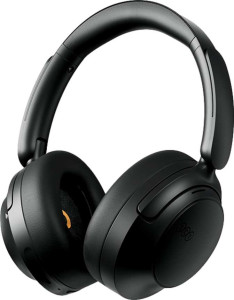
QCY H3S
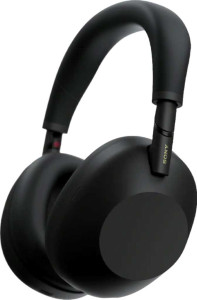
Sony WH-1000XM6

QCY H3S Sony WH-1000XM6

Overview

Welcome to our in-depth specification comparison between the QCY H3S and the Sony WH-1000XM6. Both are over-ear, foldable headphones packed with active noise cancellation, spatial audio, and LDAC support — but they take very different paths when it comes to battery life, frequency range, and connectivity options. Whether you are chasing endurance on a budget or premium audio versatility, this side-by-side breakdown will help you find the right fit.

Common Features

  • Both headphones have an over-ear fit.
  • Neither headphone offers water resistance.
  • Both headphones can be folded.
  • Neither headphone is designed for kids.
  • Neither headphone has an open-back design.
  • Both headphones have stereo speakers.
  • Both headphones have active noise cancellation (ANC).
  • Both headphones support spatial audio.
  • Both headphones have passive noise reduction.
  • Both headphones have USB Type-C charging.
  • Both headphones have a battery level indicator.
  • Neither headphone supports wireless charging.
  • Neither headphone has a solar power battery.
  • Both headphones have a rechargeable battery.
  • Neither headphone has a removable battery.
  • Both headphones support LDAC audio codec.
  • Both headphones support AAC audio codec.
  • Neither headphone supports aptX Adaptive, aptX, LDHC, aptX Low Latency, aptX HD, or aptX Lossless.
  • Both headphones have a noise-canceling microphone.
  • Both headphones have an ambient sound mode.
  • Both headphones support multipoint connection with up to 2 devices.
  • Both headphones have a control panel placed on the device.
  • Both headphones can be used as a headset.
  • Neither headphone has an in-line control panel.

Main Differences

  • Weight is 240 g on QCY H3S and 254 g on Sony WH-1000XM6.
  • A detachable cable is available on Sony WH-1000XM6 but not on QCY H3S.
  • A tangle-free cable is included with Sony WH-1000XM6 but not with QCY H3S.
  • Lowest frequency reaches 20 Hz on QCY H3S and 4 Hz on Sony WH-1000XM6.
  • Highest frequency reaches 20000 Hz on QCY H3S and 40000 Hz on Sony WH-1000XM6.
  • Driver unit size is 40 mm on QCY H3S and 30 mm on Sony WH-1000XM6.
  • Battery life is 102 hours on QCY H3S and 30 hours on Sony WH-1000XM6.
  • Connectivity is wireless only on QCY H3S, while Sony WH-1000XM6 supports both wireless and wired.
  • Bluetooth version is 6 on QCY H3S and 5.3 on Sony WH-1000XM6.
  • Bluetooth LE Audio support is present on Sony WH-1000XM6 but not available on QCY H3S.
  • Auracast support is present on Sony WH-1000XM6 but not available on QCY H3S.
  • Fast pairing is available on Sony WH-1000XM6 but not on QCY H3S.
  • In/on-ear detection is available on Sony WH-1000XM6 but not on QCY H3S.
  • Number of microphones is 7 on QCY H3S and 12 on Sony WH-1000XM6.
Specs Comparison
QCY H3S

QCY H3S

Sony WH-1000XM6

Sony WH-1000XM6

Design:
Fit Over-ear Over-ear
weight 240 g 254 g
has a detachable cable
water resistance None None
can be folded
is designed for kids
has a tangle free cable
has an open-back design
has stereo speakers

Both the QCY H3S and Sony WH-1000XM6 share the same fundamental design philosophy: over-ear, closed-back headphones with foldable form factors and no water resistance. These shared traits mean both are equally portable and equally unsuitable for workouts or outdoor use in wet conditions.

Where the two diverge meaningfully is in cable practicality. The Sony WH-1000XM6 ships with a detachable, tangle-free cable, which is a notable real-world advantage — a damaged cable can simply be swapped out, and daily packing is less frustrating. The H3S, by contrast, has a non-detachable cable with no tangle-free treatment, meaning wear and tear on the cable could eventually compromise the entire headset, and cable management is a minor but persistent nuisance.

On weight, the H3S comes in at 240 g versus the XM6's 254 g — a 14 g difference that is unlikely to be perceptible during normal use. Overall, the Sony WH-1000XM6 holds a clear edge in design due to its superior cable system, which adds both longevity and everyday convenience that the H3S simply does not match.

Sound quality:
has active noise cancellation (ANC)
lowest frequency 20 Hz 4 Hz
highest frequency 20000 Hz 40000 Hz
driver unit size 40 mm 30 mm
supports spatial audio
has passive noise reduction

At first glance, both headphones check the same foundational boxes — active noise cancellation, passive noise reduction, and spatial audio support — but the frequency response figures reveal a substantial gap in audio ambition. The Sony WH-1000XM6 extends from 4 Hz to 40,000 Hz, while the QCY H3S covers the standard 20 Hz to 20,000 Hz range. The XM6's lower floor captures sub-bass rumble that most people feel rather than consciously hear, adding physical depth to music, while its upper ceiling of 40 kHz enables Hi-Res Audio playback — meaningful for users with high-bitrate sources, even if the upper range exceeds typical human hearing.

The driver size comparison is counterintuitive: the H3S uses a 40 mm driver versus the XM6's 30 mm driver. A larger driver can move more air and potentially produce stronger bass, but driver size alone does not determine output quality — engineering, materials, and tuning are equally decisive. Given that the XM6's smaller driver still achieves a far wider frequency range, Sony has clearly prioritized precision engineering over raw diaphragm area.

The Sony WH-1000XM6 holds a clear edge in this category. Its dramatically wider frequency response is a concrete, spec-supported advantage that translates to richer low-end presence and Hi-Res Audio compatibility. For users who prioritize audio fidelity, the XM6's figures are meaningfully superior to what the H3S offers on paper.
Power:
Battery life 102 hours 30 hours
Has USB Type-C
has a battery level indicator
has wireless charging
Has a solar power battery
has a rechargeable battery
has a removable battery

Battery life is where the QCY H3S delivers its most dramatic advantage of the entire comparison. Its rated 102 hours of playback dwarfs the Sony WH-1000XM6's 30 hours — a gap so large it fundamentally changes how each headphone fits into daily life. The H3S can realistically go weeks between charges for a typical listener, making it an exceptional choice for travelers, remote workers, or anyone who finds charging headphones a persistent nuisance.

The XM6's 30 hours is still a respectable figure by premium headphone standards and covers most real-world use cases — roughly a week of daily commutes — but it requires noticeably more frequent charging discipline than the H3S demands. Both headphones share USB-C charging, a battery indicator, and non-removable rechargeable batteries, so the infrastructure around charging is identical; the endurance gap is the sole differentiator here.

The QCY H3S wins this category decisively. A 3.4× battery life advantage is not a marginal difference — it is a lifestyle difference, and no amount of shared feature parity between the two products changes that calculus.

Connectivity:
connectivity Wireless Wireless & wired
Bluetooth version 6 5.3
has aptX Adaptive
has aptX
has LDAC
has LDHC
has Bluetooth LE Audio
has aptX Low Latency
has aptX HD
has aptX Lossless
has AAC
has Auracast
maximum Bluetooth range 10 m 10 m
has fast pairing
supports Bluetooth pairing using NFC

Shared ground between these two is meaningful: both support LDAC and AAC — covering high-quality wireless audio for Sony and Apple ecosystems respectively — and both top out at a 10 m Bluetooth range. The interesting tension, however, lies in how each headphone diverges from there. The QCY H3S runs on Bluetooth 6, a newer specification than the XM6's Bluetooth 5.3, which theoretically offers improved connection stability and efficiency. In practice, though, Bluetooth version alone rarely defines the user experience as much as the feature set built on top of it.

That feature set is where the Sony WH-1000XM6 pulls ahead. It supports Bluetooth LE Audio and Auracast — the latter enabling broadcast audio sharing to multiple listeners simultaneously, a genuinely novel capability for public venues and shared listening scenarios. It also includes fast pairing and a wired connection fallback, adding both convenience and a reliability safety net that the H3S, being wireless-only with no fast pairing, cannot match.

The Sony WH-1000XM6 holds the edge in connectivity. Despite the H3S carrying a newer Bluetooth version, the XM6's combination of LE Audio, Auracast, fast pairing, and wired support represents a richer and more future-oriented connectivity package in practical, real-world terms.

Features:
release date October 2025 May 2025
has a noise-canceling microphone
has ambient sound mode
has in/on-ear detection
number of microphones 7 12
multipoint count 2 2
control panel placed on a device
can be used as a headset
Has an in-line control panel

The feature sets here are largely aligned — both headphones offer noise-canceling microphones, ambient sound mode, on-device controls, multipoint connection to 2 devices simultaneously, and headset capability. For most users, these shared features cover the essential daily-use checklist. The real separation comes down to two specific differentiators.

The first is microphone count: the Sony WH-1000XM6 deploys 12 microphones versus the QCY H3S's 7. More microphones generally enable more sophisticated beamforming and noise isolation algorithms, which translates to cleaner call quality and more effective ANC processing — a tangible advantage for frequent callers or those working in noisy environments. The second differentiator is in/on-ear detection, which the XM6 has and the H3S lacks. This sensor automatically pauses playback when the headphones are removed, a small but genuinely convenient quality-of-life feature that frequent wearers quickly come to rely on.

The Sony WH-1000XM6 edges ahead in this category. Neither advantage is transformative in isolation, but together — a significantly larger microphone array and automatic ear detection — they represent a more refined and thoughtfully equipped feature set than the H3S provides.

Comparison Summary & Verdict

After examining every specification, these two headphones serve notably different audiences. The QCY H3S stands out with its extraordinary 102-hour battery life, newer Bluetooth 6, and larger 40 mm drivers — making it an excellent choice for users who prioritize long-haul endurance and wireless-only simplicity. The Sony WH-1000XM6, on the other hand, counters with a vastly wider frequency range of 4 Hz to 40000 Hz, wired and wireless connectivity, a detachable cable, 12 microphones, in/on-ear detection, Bluetooth LE Audio, Auracast, and fast pairing support — features that cater to audiophiles and professionals who demand versatility and cutting-edge communication tools. Both share strong fundamentals, but the Sony commands a more feature-rich, future-proof package while the QCY H3S wins decisively on stamina.

QCY H3S
Buy QCY H3S if...

Buy the QCY H3S if you need an exceptional battery life of up to 102 hours and prefer a wireless-only headphone with the latest Bluetooth 6 standard.

Sony WH-1000XM6
Buy Sony WH-1000XM6 if...

Buy the Sony WH-1000XM6 if you want a wider frequency range, wired and wireless flexibility, more microphones, and advanced features like Auracast, Bluetooth LE Audio, and fast pairing.