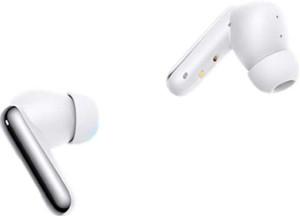
QCY Melobuds N50
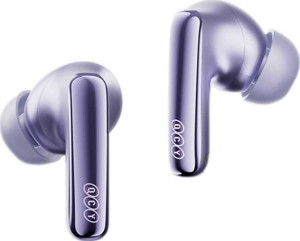
QCY MeloBuds N70

QCY Melobuds N50 QCY MeloBuds N70

Overview

Welcome to our in-depth spec comparison between the QCY Melobuds N50 and the QCY MeloBuds N70, two true wireless earbuds from QCY that share a strong foundation but diverge in some meaningful areas. Both models offer active noise cancellation, a six-microphone setup, and IPX5 water resistance, yet they tell different stories when it comes to battery endurance, Bluetooth version, and codec support. Read on to see which one fits your needs best.

Common Features

  • Both products use an in-ear fit design.
  • Both products carry an IPX5 ingress protection rating.
  • Both products are true wireless, with no wires or cables.
  • Neither product is a neckband earbud.
  • Both products feature stereo speakers.
  • Both products support active noise cancellation (ANC).
  • Both products offer passive noise reduction.
  • Both products have a frequency range of 20 Hz to 20000 Hz.
  • Spatial audio is not supported on either product.
  • Both products have a charge time of 1.5 hours.
  • Wireless charging is not available on either product.
  • Both products have a rechargeable battery with a battery level indicator.
  • Both products support fast charging.
  • Both products connect via USB Type-C.
  • Neither product supports aptX, aptX HD, aptX Low Latency, aptX Adaptive, LDHC, or Bluetooth LE Audio.
  • Fast pairing is not available on either product.
  • Both products include an ambient sound mode.
  • Both products have a mute function and can be used as a headset.
  • Both products feature 6 microphones with noise-canceling capability.
  • Both products have a control panel placed on the device.

Main Differences

  • Battery life is 6 hours on QCY Melobuds N50 and 10 hours on QCY MeloBuds N70.
  • Battery life with ANC enabled is 4 hours on QCY Melobuds N50 and 7 hours on QCY MeloBuds N70.
  • Battery life of the charging case is 22 hours on QCY Melobuds N50 and 40 hours on QCY MeloBuds N70.
  • Earbud battery capacity is 35 mAh on QCY Melobuds N50 and 40 mAh on QCY MeloBuds N70.
  • Charging case battery capacity is 380 mAh on QCY Melobuds N50 and 480 mAh on QCY MeloBuds N70.
  • Bluetooth version is 5.4 on QCY Melobuds N50 and 6 on QCY MeloBuds N70.
  • LDAC support is present on QCY MeloBuds N70 but not available on QCY Melobuds N50.
  • AAC support is present on QCY MeloBuds N70 but not available on QCY Melobuds N50.
Specs Comparison
QCY Melobuds N50

QCY Melobuds N50

QCY MeloBuds N70

QCY MeloBuds N70

Design:
Fit In-ear In-ear
Ingress Protection (IP) rating IPX5 IPX5
has no wires or cables
are neckband earbuds
wingtips included
has RGB lighting
has stereo speakers
has UV light
Has a display

In terms of design, the QCY Melobuds N50 and QCY MeloBuds N70 are virtually identical across every measured spec. Both use an in-ear fit, are fully wireless with no cables or neckband, and neither includes wingtips, RGB lighting, a UV light, or a display. Both also share the same IPX5 water resistance rating, meaning they can handle sweat and splashes but are not suited for submersion.

With IPX5, users of either model can comfortably exercise or use them in light rain without concern, though neither is recommended for swimming or heavy water exposure. The absence of wingtips may be worth noting for users who prioritize a more secure fit during high-intensity workouts, as both models rely solely on the earbud shell itself to stay in place.

Since every design spec is identical between the two, this category is a complete tie. Neither the N50 nor the N70 holds any design advantage over the other based on the available data. Buyers should look to other spec groups to differentiate between these two models.

Sound quality:
has active noise cancellation (ANC)
has passive noise reduction
lowest frequency 20 Hz 20 Hz
highest frequency 20000 Hz 20000 Hz
supports spatial audio
has Dolby Atmos
has Dirac Virtuo
has a neodymium magnet

Both the N50 and N70 cover the full standard human hearing range of 20 Hz to 20,000 Hz, meaning neither model is specced to extend beyond conventional audio boundaries. In practice, this is perfectly adequate for music, podcasts, and calls, though audiophiles chasing sub-bass rumble or extended treble sparkle will find both equally limited.

On the noise isolation front, both earbuds combine active noise cancellation (ANC) with passive noise reduction — a pairing that, when well-tuned, can meaningfully block out commute noise and open-office chatter. Neither model supports spatial audio, Dolby Atmos, or Dirac Virtuo, so immersive or virtualized soundstage experiences are off the table for both.

Much like the Design category, sound quality specs produce a complete tie between the N50 and N70. Every measured attribute is identical, so there is no data-supported basis to favor one over the other here. Users prioritizing audio differentiation will need to look beyond this spec group.

Power:
Battery life 6 hours 10 hours
Battery life of charging case 22 hours 40 hours
Battery life (ANC) 4 hours 7 hours
charge time 1.5 hours 1.5 hours
battery power 35 mAh 40 mAh
battery power (charging case) 380mAh 480mAh
has wireless charging
Has a solar power battery
has a battery level indicator
has a rechargeable battery

Battery life is where a meaningful gap opens up between these two models. The N70 delivers 10 hours of playback per charge versus just 6 hours on the N50 — a 67% increase that translates directly into fewer interruptions during long travel days or extended work sessions. The case advantage is equally significant: the N70's 480 mAh case extends total listening to 40 hours, compared to the N50's 380 mAh case topping out at 22 hours. For a user who charges their case once or twice a week, that difference is tangible.

ANC battery impact is also worth examining. Enabling active noise cancellation cuts the N50 down to just 4 hours, while the N70 holds at 7 hours with ANC on — a considerably more usable figure for daily commuters or frequent flyers who rely on noise cancellation throughout the day. Both models take the same 1.5 hours to fully charge, so neither has a speed advantage there.

The N70 holds a clear and decisive edge in this category. Across every battery metric — earbud capacity, case capacity, standard playback, and ANC endurance — it outperforms the N50 by a substantial margin. For power-conscious buyers, the N70 is the stronger choice based strictly on these specs.

Connectivity:
has fast pairing
Has USB Type-C
Bluetooth version 5.4 6
has LDAC
has LDHC
has Bluetooth LE Audio
has aptX Adaptive
has aptX Low Latency
has aptX HD
has aptX
has aptX Lossless
has aptX Voice
has Auracast
maximum Bluetooth range 10 m 10 m
supports Bluetooth pairing using NFC
Can be used wirelessly
has AAC

Connectivity is another area where the N70 pulls ahead in meaningful ways. Most notably, it runs on Bluetooth 6 compared to the N50's Bluetooth 5.4. The newer version brings improvements in connection stability, interference handling, and energy efficiency — advantages that are subtle in ideal conditions but noticeable in crowded wireless environments like airports or offices.

The more practically impactful difference is codec support. The N70 adds both LDAC and AAC, while the N50 supports neither. LDAC is Sony's high-resolution audio codec capable of transmitting significantly more data than standard Bluetooth audio, making it relevant for users streaming lossless or hi-res content from compatible Android devices. AAC, meanwhile, is the preferred codec for Apple devices, delivering cleaner audio over Bluetooth on iPhones and iPads. The N50's lack of both means it falls back to the baseline SBC codec regardless of the source device — a noticeable limitation for audio-conscious users on either major mobile platform.

The N70 has a clear connectivity advantage. The combination of a newer Bluetooth version and superior codec support — particularly LDAC and AAC — gives it a tangible edge in both audio quality potential and platform compatibility. The shared 10 m range and identical charging port keep those aspects even, but the codec gap alone is enough to favor the N70 for users who care about audio fidelity.

Features:
release date January 2025 August 2025
has ambient sound mode
has in/on-ear detection
has find device feature
Supports fast charging
can read notifications
has a mute function
can be used as a headset
control panel placed on a device
Has voice prompts
travel bag is included
Has an in-line control panel
Has a temperature sensor

Across every feature in this category, the N50 and N70 are spec-for-spec identical. Both offer ambient sound mode — useful for staying aware of surroundings without removing the earbuds — alongside a mute function, on-device controls, and voice prompts, forming a practical everyday feature set that covers the essentials without any frills.

Fast charging support on both models is worth highlighting in context: paired with their respective battery capacities, it means less time tethered to a cable when topping up before a commute or meeting. Both also ship with a travel bag, a small but appreciated inclusion for users who move frequently. Notable absences shared by both include in-ear detection, a find-my-device feature, and notification readout — features that have become common at higher price points but are absent here on either model.

This category is a complete tie. There is no feature present on one model that is missing from the other, leaving no basis to favor either the N50 or the N70 on features alone. Buyers weighing these two should focus their decision on the categories where differences do exist, namely Power and Connectivity.

Microphone:
number of microphones 6 6
has a noise-canceling microphone

Microphone hardware is identical across both models. Each earbud array features 6 microphones in total combined with noise-canceling microphone technology — a configuration that, at this count, is generally associated with more robust voice pickup and better environmental noise suppression during calls. Multiple mics allow beamforming algorithms to focus on the speaker's voice while filtering out background sound from multiple directions.

For users who frequently take calls in noisy environments — busy streets, open-plan offices, or public transport — a 6-mic setup with noise cancellation is a reassuring spec to see on both devices. It suggests call quality was a genuine design consideration rather than an afterthought on either model.

With no difference in mic count or noise-canceling capability, this category is a complete tie. The N50 and N70 are evenly matched on paper for voice communication, and neither holds a measurable advantage based on the available data.

Comparison Summary & Verdict

After examining every specification, the QCY Melobuds N50 and the QCY MeloBuds N70 are closely matched in design, microphone quality, and core features, but the N70 pulls ahead in several measurable ways. The N70 offers significantly longer battery life — 10 hours versus 6 — and a charging case that extends total playback to 40 hours compared to 22 on the N50. It also steps up to Bluetooth 6 and adds support for LDAC and AAC codecs, making it the stronger choice for audiophiles and heavy daily users. The QCY Melobuds N50, however, remains a solid pick for those who need a capable ANC earbud at likely a more accessible price point, without the need for premium codec support or extended battery capacity.

QCY Melobuds N50
Buy QCY Melobuds N50 if...

Buy the QCY Melobuds N50 if you want a capable ANC earbud with solid core features and do not require advanced codec support like LDAC or AAC.

QCY MeloBuds N70
Buy QCY MeloBuds N70 if...

Buy the QCY MeloBuds N70 if you prioritize longer battery life, Bluetooth 6 connectivity, and high-quality audio codec support including LDAC and AAC.