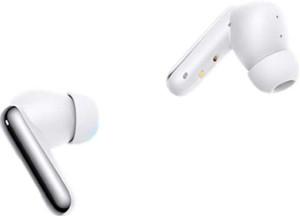
QCY Melobuds N50
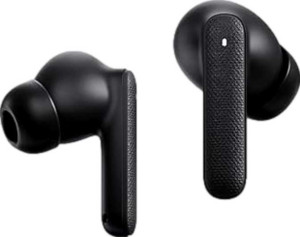
QCY T17 Pro

QCY Melobuds N50 QCY T17 Pro

Overview

Welcome to our in-depth specification comparison between the QCY Melobuds N50 and the QCY T17 Pro, two wireless in-ear earbuds from QCY that take notably different approaches to the listening experience. While they share a strong foundation of common features, key battlegrounds emerge around noise cancellation capabilities, battery endurance, and audio latency, making the choice between them more nuanced than it might first appear.

Common Features

  • Both the QCY Melobuds N50 and QCY T17 Pro use an in-ear fit.
  • Neither product uses wires or cables.
  • Neither product is a neckband-style earbud.
  • Neither product includes wingtips.
  • RGB lighting is not present on either product.
  • Both products feature stereo speakers.
  • Neither product includes a UV light.
  • Neither product has a display.
  • Both products offer passive noise reduction.
  • The lowest frequency is 20 Hz on both products.
  • The highest frequency is 20000 Hz on both products.
  • Spatial audio is not supported on either product.
  • Neither product supports Dolby Atmos.
  • A neodymium magnet is not used in either product.
  • Charge time is 1.5 hours on both products.
  • Wireless charging is not available on either product.
  • Both products include a battery level indicator.
  • Both products have a rechargeable battery.
  • Neither product supports fast pairing.
  • Both products use a USB Type-C connector.
  • LDAC support is not available on either product.
  • Bluetooth LE Audio is not supported on either product.
  • aptX Adaptive support is not available on either product.
  • aptX Low Latency is not supported on either product.
  • aptX HD is not supported on either product.
  • In-ear or on-ear detection is not available on either product.
  • A find device feature is not present on either product.
  • Both products support fast charging.
  • Notification reading is not available on either product.
  • Both products include a mute function.
  • Both products can be used as a headset.
  • Both products have a control panel placed on the device.
  • Both products have voice prompts.
  • Both products feature a noise-canceling microphone.

Main Differences

  • Active noise cancellation (ANC) is available on the QCY Melobuds N50 but not on the QCY T17 Pro.
  • The driver unit size is 12 mm on the QCY Melobuds N50 and 10 mm on the QCY T17 Pro.
  • Battery life is 6 hours on the QCY Melobuds N50 and 7 hours on the QCY T17 Pro.
  • Battery life of the charging case is 22 hours on the QCY Melobuds N50 and 28 hours on the QCY T17 Pro.
  • The Bluetooth version is 5.4 on the QCY Melobuds N50 and 5.3 on the QCY T17 Pro.
  • Audio latency is 68 ms on the QCY Melobuds N50 and 60 ms on the QCY T17 Pro.
  • Ambient sound mode is available on the QCY Melobuds N50 but not on the QCY T17 Pro.
Specs Comparison
QCY Melobuds N50

QCY Melobuds N50

QCY T17 Pro

QCY T17 Pro

Design:
Fit In-ear In-ear
has no wires or cables
are neckband earbuds
wingtips included
has RGB lighting
has stereo speakers
has UV light
Has a display

In terms of design, the QCY Melobuds N50 and the QCY T17 Pro are virtually identical across every measurable spec in this category. Both use an in-ear fit, are fully wireless with no cables or neckband, omit wingtips, lack RGB lighting, and feature stereo speakers — with no display or UV light on either.

Because there are no differentiating specs in this group, the design category is a complete tie. Users choosing between these two models cannot use design alone as a deciding factor and should look to other spec groups — such as audio performance, battery life, or connectivity — to determine which product better suits their needs.

Sound quality:
has active noise cancellation (ANC)
has passive noise reduction
driver unit size 12 mm 10 mm
lowest frequency 20 Hz 20 Hz
highest frequency 20000 Hz 20000 Hz
supports spatial audio
has Dolby Atmos
has Dirac Virtuo
has a neodymium magnet

The most significant differentiator here is noise isolation. The QCY Melobuds N50 includes Active Noise Cancellation (ANC), while the QCY T17 Pro relies solely on passive noise reduction from the physical in-ear seal. In practice, ANC uses microphones to actively counter low-frequency ambient noise — think commuter rumble, office hum, or airplane cabin drone — offering a noticeably quieter listening environment that passive isolation alone cannot match.

On the driver side, the N50 uses a 12 mm driver compared to the T17 Pro's 10 mm driver. Larger drivers generally have more surface area to move air, which can translate to fuller bass response and a more expansive soundstage — though driver size alone does not guarantee superior tuning. Both earbuds share an identical frequency range of 20 Hz – 20,000 Hz, covering the full spectrum of human hearing, and neither supports spatial audio formats like Dolby Atmos or Dirac Virtuo.

The N50 holds a clear edge in this category. The combination of ANC and a larger driver gives it a meaningful advantage for users who prioritize immersive, distraction-free listening — two differentiators the T17 Pro simply does not offer.

Power:
Battery life 6 hours 7 hours
Battery life of charging case 22 hours 28 hours
charge time 1.5 hours 1.5 hours
has wireless charging
Has a solar power battery
has a battery level indicator
has a rechargeable battery

Battery endurance is where the QCY T17 Pro pulls ahead. It delivers 7 hours of playback per charge versus 6 hours on the QCY Melobuds N50 — a modest but real difference that could matter during long flights or extended work sessions where reaching for the case is inconvenient. The gap widens at the system level: the T17 Pro's case extends total battery life to 28 hours, compared to 22 hours combined for the N50. That extra 6 hours of case capacity means fewer trips to a wall outlet across a typical week of use.

Where the two products are evenly matched: both charge in 1.5 hours, neither supports wireless charging, and both include a battery level indicator — a small but useful feature for avoiding unexpected cutoffs. The absence of wireless charging on both models is worth noting for users who prioritize a cable-free lifestyle, though it is a common omission at this price tier.

Overall, the T17 Pro has a clear power advantage, offering more continuous listening time and significantly greater total battery capacity. For users who frequently go long stretches without access to charging, this difference is practically meaningful.

Connectivity:
has fast pairing
Has USB Type-C
Bluetooth version 5.4 5.3
has LDAC
has LDHC
has Bluetooth LE Audio
has aptX Adaptive
has aptX Low Latency
has aptX HD
has aptX
has aptX Lossless
audio latency 68 ms 60 ms
has aptX Voice
has Auracast
maximum Bluetooth range 10 m 10 m
supports Bluetooth pairing using NFC
Can be used wirelessly
has AAC

Connectivity is largely a wash between these two, with a couple of nuanced differences worth unpacking. The QCY Melobuds N50 runs on Bluetooth 5.4, one step ahead of the QCY T17 Pro's Bluetooth 5.3. In practical terms, 5.4 introduced improvements to connection efficiency and LE Audio groundwork, though neither earbud actually supports LE Audio or Auracast — meaning the real-world benefit of that version bump is marginal for most users.

The more tangible differentiator is audio latency. The T17 Pro posts a slightly lower 60 ms latency versus the N50's 68 ms. Both figures are low enough that casual listeners and even most video watchers are unlikely to perceive lip-sync drift, but competitive gamers or users highly sensitive to audio-video sync may prefer the T17 Pro's edge here. Beyond this, both share identical range at 10 m, USB-C charging, and a complete absence of premium codec support — no aptX, LDAC, AAC, or any high-resolution audio pathway on either model.

This category ends in a near tie. The N50 has a marginally newer Bluetooth version, while the T17 Pro has a slightly lower latency — but neither gap is large enough to be a deciding factor for the vast majority of users.

Features:
release date January 2025 October 2025
has ambient sound mode
has in/on-ear detection
has find device feature
Supports fast charging
can read notifications
has a mute function
can be used as a headset
control panel placed on a device
Has voice prompts
travel bag is included
Has an in-line control panel
Has a temperature sensor
Has a built-in camera remote control function

Across most features, these two earbuds are functionally identical — both support fast charging, include on-device controls, offer voice prompts, pack a travel bag, and can serve as a headset with mute functionality. The one feature that separates them is ambient sound mode, which the QCY Melobuds N50 has and the QCY T17 Pro lacks.

Ambient sound mode uses the earbuds' microphones to pipe in environmental audio, letting users stay aware of their surroundings — conversations, announcements, traffic — without removing the earbuds. Combined with the ANC noted in the sound quality group, the N50 effectively offers a full noise management suite: block the world out when needed, or let it back in on demand. The T17 Pro offers no equivalent, which is a practical limitation for users who frequently move between noisy and social environments.

The N50 has a clear edge here. Ambient sound mode is a genuinely useful daily-use feature, and its absence on the T17 Pro is a meaningful gap — particularly for commuters, office workers, or anyone who values situational awareness without sacrificing comfort.

Microphone:
has a noise-canceling microphone

Both the QCY Melobuds N50 and the QCY T17 Pro feature a noise-canceling microphone, meaning call quality is at least nominally addressed on both models. A noise-canceling mic uses additional microphones or signal processing to suppress background noise during calls — useful in louder environments like cafes, streets, or open offices where ambient sound would otherwise bleed into the other person's audio.

Since this is the only microphone-related spec available for both products and they share it equally, this category is a complete tie. Neither model holds an advantage here based on the provided data, and users should weigh other spec groups to differentiate between the two.

Comparison Summary & Verdict

After examining all the evidence, both earbuds prove to be capable wireless companions, but each serves a distinct listener profile. The QCY Melobuds N50 stands out with its active noise cancellation, ambient sound mode, larger 12 mm driver, and newer Bluetooth 5.4, making it the stronger pick for commuters and focus-driven listeners who want to control their sonic environment. The QCY T17 Pro, on the other hand, counters with a longer 7-hour battery life, an impressive 28-hour charging case, and a lower 60 ms audio latency, appealing to endurance-focused users and those who frequently engage in video or mobile content. If noise isolation and feature depth matter most, lean toward the N50; if all-day battery and snappier audio sync are your priorities, the T17 Pro is the more practical choice.

QCY Melobuds N50
Buy QCY Melobuds N50 if...

Buy the QCY Melobuds N50 if you want active noise cancellation and an ambient sound mode to manage your environment, paired with a larger driver for a fuller sound.

QCY T17 Pro
Buy QCY T17 Pro if...

Buy the QCY T17 Pro if you prioritize longer battery life with up to 7 hours of playback and 28 hours from the case, along with lower audio latency for video and media use.