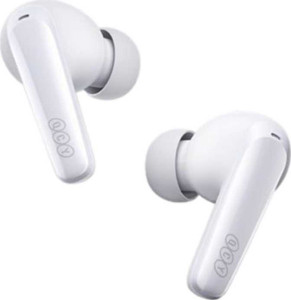
QCY T13X Pro
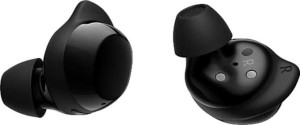
Samsung Galaxy Buds Core

QCY T13X Pro Samsung Galaxy Buds Core

Overview

Welcome to our detailed spec comparison between the QCY T13X Pro and the Samsung Galaxy Buds Core. Both earbuds share a solid foundation — in-ear fit, passive noise reduction, fast charging, and a noise-canceling microphone — but they diverge in some meaningful ways. In this comparison, we examine their distinct approaches to active noise cancellation, smart features, microphone setup, and connectivity standards to help you decide which pair best fits your lifestyle and listening needs.

Common Features

  • Both products use an in-ear fit design.
  • Neither product has wires or cables.
  • Neither product is a neckband earbud design.
  • Neither product features RGB lighting.
  • Both products have stereo speakers.
  • Neither product includes a UV light.
  • Neither product has a display.
  • Both products offer passive noise reduction.
  • The lowest frequency on both products is 20 Hz.
  • The highest frequency on both products is 20000 Hz.
  • Spatial audio is not supported on either product.
  • Dolby Atmos is not available on either product.
  • Neither product has a neodymium magnet.
  • Both products offer 8 hours of battery life.
  • Wireless charging is not available on either product.
  • Neither product has a solar power battery.
  • Both products include a battery level indicator.
  • Both products have a rechargeable battery.
  • Both products include a USB Type-C connection.
  • LDAC is not supported on either product.
  • Bluetooth LE Audio is not supported on either product.
  • aptX Adaptive is not supported on either product.
  • aptX Low Latency is not supported on either product.
  • aptX HD is not supported on either product.
  • aptX is not supported on either product.
  • Fast charging is supported on both products.
  • Both products include a mute function.
  • Both products can be used as a headset.
  • Both products have a control panel placed on the device.
  • Voice prompts are available on both products.
  • A travel bag is included with both products.
  • Neither product has an in-line control panel.
  • Neither product has a temperature sensor.
  • Both products have a noise-canceling microphone.

Main Differences

  • Wingtips are included with the Samsung Galaxy Buds Core but not with the QCY T13X Pro.
  • Active noise cancellation (ANC) is present on the Samsung Galaxy Buds Core but not available on the QCY T13X Pro.
  • The charging case battery life is 27 hours on the Samsung Galaxy Buds Core and 22 hours on the QCY T13X Pro.
  • Fast pairing is supported on the Samsung Galaxy Buds Core but not on the QCY T13X Pro.
  • The Bluetooth version is 5.4 on the Samsung Galaxy Buds Core and 5.3 on the QCY T13X Pro.
  • AAC support is present on the Samsung Galaxy Buds Core but not available on the QCY T13X Pro.
  • Ambient sound mode is available on the Samsung Galaxy Buds Core but not on the QCY T13X Pro.
  • In/on-ear detection is present on the Samsung Galaxy Buds Core but not on the QCY T13X Pro.
  • A find device feature is available on the Samsung Galaxy Buds Core but not on the QCY T13X Pro.
  • The ability to read notifications is present on the Samsung Galaxy Buds Core but not on the QCY T13X Pro.
  • The number of microphones is 6 on the Samsung Galaxy Buds Core and 4 on the QCY T13X Pro.
Specs Comparison
QCY T13X Pro

QCY T13X Pro

Samsung Galaxy Buds Core

Samsung Galaxy Buds Core

Design:
Fit In-ear In-ear
has no wires or cables
are neckband earbuds
wingtips included
has RGB lighting
has stereo speakers
has UV light
Has a display

Both the QCY T13X Pro and the Samsung Galaxy Buds Core share the same fundamental design philosophy: fully wireless, in-ear earbuds with stereo audio and no frills like RGB lighting, UV sanitization, or an onboard display. For most users, this common ground means a familiar, compact form factor focused purely on audio delivery rather than flashy extras.

The only meaningful design differentiator here is that the Samsung Galaxy Buds Core includes wingtips, while the QCY T13X Pro does not. In practice, wingtips are small ear hooks or fins that anchor the earbud against the outer ear, significantly reducing the chance of them falling out during physical activity or head movement. For gym goers, runners, or anyone who finds standard in-ear tips prone to slipping, this is a tangible ergonomic advantage — not just a cosmetic one.

In this design category, the Samsung Galaxy Buds Core holds a clear edge solely due to the inclusion of wingtips, which directly improves fit stability and broadens its suitability for active use cases. The QCY T13X Pro is not at a severe disadvantage for casual, stationary listening, but users who prioritize a secure fit during movement will find the Buds Core the more practical choice based on these specs alone.

Sound quality:
has active noise cancellation (ANC)
has passive noise reduction
lowest frequency 20 Hz 20 Hz
highest frequency 20000 Hz 20000 Hz
supports spatial audio
has Dolby Atmos
has Dirac Virtuo
has a neodymium magnet

On paper, both earbuds cover the same 20 Hz – 20,000 Hz frequency range, which spans the full extent of human hearing. Neither supports spatial audio, Dolby Atmos, or Dirac Virtuo, so the listening experience on both is conventional stereo — functional and widely compatible, but without any immersive audio processing layered on top.

Where these two products genuinely diverge is noise isolation. Both offer passive noise reduction — the physical seal of an in-ear fit that naturally blocks ambient sound — but the Samsung Galaxy Buds Core adds Active Noise Cancellation (ANC), which uses microphones and signal processing to actively counteract external noise in real time. ANC makes a meaningful difference in consistently noisy environments like commutes, open offices, or flights, where passive isolation alone leaves a noticeable amount of ambient sound bleeding through.

The verdict here is straightforward: the Samsung Galaxy Buds Core holds a clear advantage in this category. The shared frequency range means raw driver capability is comparable on paper, but the addition of ANC gives the Buds Core a practical edge in real-world listening conditions that the QCY T13X Pro simply cannot match.

Power:
Battery life 8 hours 8 hours
Battery life of charging case 22 hours 27 hours
has wireless charging
Has a solar power battery
has a battery level indicator
has a rechargeable battery

Earbud battery life is identical across both options at 8 hours per charge — a respectable figure for a single session that covers most commutes, workdays, or workouts without needing to dip into the case. Neither supports wireless charging, so both rely on a wired connection to top up, which is a minor but worth-noting limitation for users who have invested in a Qi charging ecosystem.

The only differentiator in this category is the charging case capacity. The QCY T13X Pro extends total listening time to 30 hours combined (8 + 22), while the Samsung Galaxy Buds Core pushes that to 35 hours combined (8 + 27). That extra 5 hours of case reserve is roughly half an additional full earbud charge — meaningful for multi-day trips or situations where access to a power outlet is limited, but unlikely to matter for typical daily users who charge overnight.

The Samsung Galaxy Buds Core holds a slim edge here, purely on the strength of its larger case reserve. For frequent travelers or light-charging users, that additional headroom is a genuine practical benefit. For everyone else, the power story is essentially a wash.

Connectivity:
has fast pairing
Has USB Type-C
Bluetooth version 5.3 5.4
has LDAC
has LDHC
has Bluetooth LE Audio
has aptX Adaptive
has aptX Low Latency
has aptX HD
has aptX
has aptX Lossless
has aptX Voice
has Auracast
maximum Bluetooth range 10 m 10 m
supports Bluetooth pairing using NFC
Can be used wirelessly
has AAC

At a foundational level, both earbuds share the same 10-meter Bluetooth range and USB-C charging, and neither ventures into premium audio codec territory — no LDAC, aptX variants, or Bluetooth LE Audio on either side. That said, the Samsung Galaxy Buds Core pulls ahead in a few connectivity details that add up in daily use.

The Buds Core runs on Bluetooth 5.4 versus the QCY T13X Pro's 5.3 — a marginal generational step that, in practice, offers negligible real-world difference for most users. More impactful are two other advantages: fast pairing and AAC codec support. Fast pairing streamlines the initial setup and reconnection experience, particularly with Android devices, eliminating the need to manually navigate Bluetooth menus. AAC, meanwhile, is the standard high-quality audio codec for Apple devices and is broadly supported on Android — its absence on the QCY T13X Pro means audio is transmitted via the more basic SBC codec by default, which can result in slightly lower audio fidelity depending on the source device and content.

The Samsung Galaxy Buds Core holds a clear connectivity edge. While neither product offers advanced audiophile codecs, the combination of fast pairing and AAC support gives the Buds Core a more polished, versatile connection experience across a wider range of devices and use cases.

Features:
release date October 2025 June 2025
has ambient sound mode
has in/on-ear detection
has find device feature
Supports fast charging
can read notifications
has a mute function
can be used as a headset
control panel placed on a device
Has voice prompts
travel bag is included
Has an in-line control panel
Has a temperature sensor
Has a built-in camera remote control function

Several features are shared across both earbuds — fast charging, mute, headset capability, on-device controls, voice prompts, and an included travel bag — establishing a solid and comparable baseline. The real story in this category is how much further the Samsung Galaxy Buds Core extends that foundation.

Three of the Buds Core's exclusive features stand out as genuinely impactful in daily use. Ambient sound mode lets external audio pass through the earbuds, which is a safety and convenience essential for anyone who needs to stay aware of their surroundings while listening — something the QCY T13X Pro cannot do at all. In/on-ear detection automatically pauses playback when an earbud is removed, a small but frequently appreciated quality-of-life feature that prevents missed audio and unnecessary battery drain. And the find device feature helps locate misplaced earbuds — a practical safeguard for a small, easy-to-lose product. Notification readout is an additional layer of hands-free convenience that the QCY T13X Pro also lacks.

This is the category with the widest gap between the two products. The Samsung Galaxy Buds Core holds a commanding advantage, offering a meaningfully smarter and more context-aware feature set. The QCY T13X Pro covers the essentials competently, but users who value an intelligent, integrated listening experience will find the Buds Core substantially more capable based on these specs.

Microphone:
number of microphones 4 6
has a noise-canceling microphone

Both earbuds feature noise-canceling microphones, meaning call quality in moderately noisy environments should be reasonable on either option. Where they diverge is microphone count: the QCY T13X Pro carries 4 microphones, while the Samsung Galaxy Buds Core steps up to 6.

More microphones generally enable more sophisticated beamforming and noise-isolation algorithms — the system has more audio reference points to distinguish the user's voice from ambient sound. In practical terms, this translates to cleaner call audio in challenging environments like busy streets or windy conditions, where a higher microphone count gives the processing more data to work with when filtering unwanted noise.

The Samsung Galaxy Buds Core holds the edge in this category. While both products tackle call noise reduction, the Buds Core's additional two microphones provide a structural advantage in pickup accuracy and environmental noise suppression that the QCY T13X Pro's 4-mic array is unlikely to fully match.

Comparison Summary & Verdict

After reviewing every specification, a clear picture emerges for each of these earbuds. The Samsung Galaxy Buds Core is the more feature-rich option, bringing active noise cancellation, ambient sound mode, in/on-ear detection, a find device feature, notification readout, fast pairing, AAC support, Bluetooth 5.4, a superior 6-microphone array, and a longer 27-hour charging case battery life. It suits users who want a polished, smart listening experience with modern connectivity. The QCY T13X Pro, on the other hand, keeps things straightforward — it still delivers the same 8-hour playback, fast charging, passive noise reduction, and a capable 4-microphone setup, making it a solid pick for those who want reliable core performance. Choose the QCY T13X Pro if simplicity and value matter most; choose the Samsung Galaxy Buds Core if you want a well-rounded, feature-packed earbud with advanced noise management and smarter daily-use tools.

QCY T13X Pro
Buy QCY T13X Pro if...

Buy the QCY T13X Pro if you want a no-frills earbud experience with reliable passive noise reduction, a 4-microphone setup, and solid battery life at a likely lower price point.

Samsung Galaxy Buds Core
Buy Samsung Galaxy Buds Core if...

Buy the Samsung Galaxy Buds Core if you need active noise cancellation, ambient sound mode, smarter features like in/on-ear detection and find device, plus superior Bluetooth 5.4 connectivity and a longer-lasting charging case.