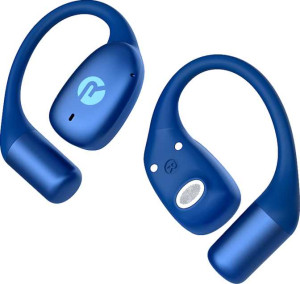
Raycon Essential Open Earbuds
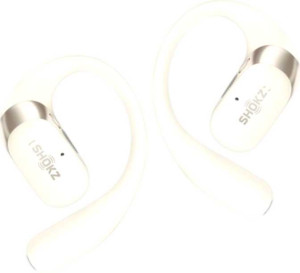
Shokz OpenFit 2

Raycon Essential Open Earbuds Shokz OpenFit 2

Overview

Welcome to our detailed specification comparison between the Raycon Essential Open Earbuds and the Shokz OpenFit 2. Both are wireless, open-ear earbuds sharing a number of core traits, yet they diverge in meaningful ways across battery endurance, water resistance, audio range, and connectivity features. Whether you prioritize longer listening sessions, a wider frequency response, or enhanced durability, this side-by-side breakdown will help you identify which pair is the right fit for your lifestyle.

Common Features

  • Both products have an open-ear fit design.
  • Neither product has wires or cables.
  • Neither product is a neckband earbud.
  • Both products include wingtips.
  • Neither product has RGB lighting.
  • Both products have stereo speakers.
  • Neither product has a UV light.
  • Neither product has a display.
  • Neither product has active noise cancellation (ANC).
  • Neither product has passive noise reduction.
  • Neither product supports spatial audio.
  • Neither product has Dolby Atmos.
  • Neither product has a neodymium magnet.
  • Both products have a charge time of 1 hour.
  • Neither product has a solar power battery.
  • Both products have a battery level indicator.
  • Both products have a rechargeable battery.
  • Neither product has fast pairing.
  • Both products have USB Type-C connectivity.
  • Neither product has LDAC, LDHC, Bluetooth LE Audio, aptX Adaptive, aptX Low Latency, or aptX HD support.
  • Neither product has an ambient sound mode.
  • Neither product has in/on-ear detection.
  • Both products support fast charging.
  • Both products support multipoint connection with 2 devices.
  • Neither product can read notifications.
  • Both products have a mute function.
  • Both products can be used as a headset.
  • Both products have a control panel placed on the device.
  • Both products have a noise-canceling microphone.

Main Differences

  • Ingress Protection rating is IPX4 on Raycon Essential Open Earbuds and IP55 on Shokz OpenFit 2.
  • Water resistance is sweat resistant on Raycon Essential Open Earbuds and water resistant on Shokz OpenFit 2.
  • Lowest frequency is 20 Hz on Raycon Essential Open Earbuds and 50 Hz on Shokz OpenFit 2.
  • Highest frequency is 20000 Hz on Raycon Essential Open Earbuds and 16000 Hz on Shokz OpenFit 2.
  • Sound pressure level is 100 dB/mW on Raycon Essential Open Earbuds and 96.5 dB/mW on Shokz OpenFit 2.
  • Battery life is 8 hours on Raycon Essential Open Earbuds and 11 hours on Shokz OpenFit 2.
  • Battery life of the charging case is 24 hours on Raycon Essential Open Earbuds and 37 hours on Shokz OpenFit 2.
  • Battery power of the charging case is 500 mAh on Raycon Essential Open Earbuds and 600 mAh on Shokz OpenFit 2.
  • Wireless charging is available on Raycon Essential Open Earbuds but not available on Shokz OpenFit 2.
  • Bluetooth version is 6 on Raycon Essential Open Earbuds and 5.4 on Shokz OpenFit 2.
  • AAC support is present on Shokz OpenFit 2 but not available on Raycon Essential Open Earbuds.
  • A find device feature is present on Shokz OpenFit 2 but not available on Raycon Essential Open Earbuds.
Specs Comparison
Raycon Essential Open Earbuds

Raycon Essential Open Earbuds

Shokz OpenFit 2

Shokz OpenFit 2

Design:
Fit Open-ear Open-ear
Ingress Protection (IP) rating IPX4 IP55
water resistance Sweat resistant Water resistant
has no wires or cables
are neckband earbuds
wingtips included
has RGB lighting
has stereo speakers
has UV light
Has a display

Both the Raycon Essential Open Earbuds and the Shokz OpenFit 2 share the same fundamental design philosophy: fully wireless, open-ear earbuds with wingtips for a secure fit and stereo sound — no neckbands, no cables, no gimmicks like RGB lighting or displays. For users who want situational awareness without sacrificing audio, both deliver that core promise.

The most meaningful differentiator in this group is water protection. The Raycon carries an IPX4 rating, which covers sweat and light splashes — adequate for workouts but vulnerable to heavier exposure like rain. The Shokz steps up to a full IP55 rating, adding both a dust-resistance component and a significantly higher water-resistance threshold that can handle sustained low-pressure water jets. In practical terms, the Shokz can tolerate a rainy run or a sweaty gym session far more confidently than the Raycon.

On design, the two products are otherwise evenly matched in form factor and feature set. But the Shokz OpenFit 2 holds a clear edge here purely on the strength of its superior ingress protection, making it the more durable and versatile choice for active outdoor use.

Sound quality:
has active noise cancellation (ANC)
has passive noise reduction
lowest frequency 20 Hz 50 Hz
highest frequency 20000 Hz 16000 Hz
supports spatial audio
has Dolby Atmos
has Dirac Virtuo
sound pressure level 100 dB/mW 96.5 dB/mW
has a neodymium magnet

Neither the Raycon Essential Open Earbuds nor the Shokz OpenFit 2 offers ANC or passive noise reduction — a deliberate trade-off inherent to the open-ear form factor, where ambient awareness is the point. That shared limitation sets the baseline: both are tuned for transparency, not isolation.

Where they diverge is in raw frequency response and loudness. The Raycon covers a wider 20 Hz–20,000 Hz range, which spans the full theoretical limit of human hearing, including deep bass extension down to 20 Hz. The Shokz is narrower at 50 Hz–16,000 Hz, rolling off earlier at both ends — meaning less sub-bass presence and a slight reduction in upper-frequency air and detail. The Raycon also measures louder at 100 dB/mW versus 96.5 dB/mW for the Shokz, a difference of 3.5 dB that translates to a perceptibly higher maximum volume ceiling.

On paper, the Raycon Essential Open Earbuds hold a clear sound quality edge in this group. The broader frequency range suggests greater potential for tonal completeness — particularly in bass and treble extension — and the higher sensitivity means it can get louder from the same power. Neither product includes advanced audio processing like spatial audio or Dolby Atmos, so these hardware characteristics are the primary differentiators here.

Power:
Battery life 8 hours 11 hours
Battery life of charging case 24 hours 37 hours
charge time 1 hours 1 hours
battery power (charging case) 500mAh 600mAh
has wireless charging
Has a solar power battery
has a battery level indicator
has a rechargeable battery

Battery endurance is where the Shokz OpenFit 2 pulls ahead most convincingly. Its earbuds last 11 hours per charge compared to 8 hours for the Raycon — a 37% improvement that makes a genuine difference for all-day listeners or long-haul travelers who cannot easily reach a case. The total system endurance gap is even wider: 37 hours combined for the Shokz versus 24 hours for the Raycon, backed by a slightly larger 600 mAh case versus 500 mAh. Both charge to full in the same 1 hour, so the Shokz simply offers more runtime for the same wait.

The one area where the Raycon reclaims ground is wireless charging — a convenience feature the Shokz entirely lacks. For users who keep a Qi pad on their desk or nightstand, the ability to drop the case down without fumbling for a cable is a meaningful quality-of-life advantage, even if it does not change the underlying capacity numbers.

Overall, the Shokz OpenFit 2 has a clear power advantage in raw endurance, which is the most critical battery metric for most users. The Raycon counters with wireless charging convenience, but that is a secondary consideration — if longevity between charges is the priority, the Shokz is the stronger choice here.

Connectivity:
has fast pairing
Has USB Type-C
Bluetooth version 6 5.4
has LDAC
has LDHC
has Bluetooth LE Audio
has aptX Adaptive
has aptX Low Latency
has aptX HD
has aptX
has aptX Lossless
has aptX Voice
has Auracast
maximum Bluetooth range 10 m 10 m
supports Bluetooth pairing using NFC
Can be used wirelessly
has AAC

Connectivity between these two is largely similar — identical 10 m Bluetooth range, USB-C charging, and no NFC or fast pairing on either side. Neither supports advanced high-resolution codecs like LDAC or aptX in any form, which is fairly typical for open-ear earbuds at this tier. The meaningful points of divergence, though modest, are worth unpacking.

The Raycon ships with Bluetooth 6, the newer specification, which on paper offers improvements in connection efficiency and channel sounding precision over the Bluetooth 5.4 found in the Shokz. However, the real-world benefit of this version gap depends heavily on whether the source device also supports Bluetooth 6 — without a compatible host, the advantage is largely theoretical for most users today. Conversely, the Shokz supports AAC, a codec that meaningfully improves audio transmission quality when paired with Apple devices in particular. For iPhone users, AAC reduces the compression artifacts inherent to standard SBC streaming, resulting in noticeably cleaner audio over Bluetooth.

This group is a genuine trade-off rather than a clear win for either side. The Raycon offers a more future-facing Bluetooth version, while the Shokz delivers a tangible, immediately usable audio quality improvement for AAC-compatible devices. Users in the Apple ecosystem will likely find the Shokz OpenFit 2's AAC support the more practical advantage today.

Features:
release date September 2025 January 2025
has ambient sound mode
has in/on-ear detection
has find device feature
Supports fast charging
multipoint count 2 2
can read notifications
has a mute function
can be used as a headset
control panel placed on a device
Has voice prompts
travel bag is included
Has an in-line control panel
Has a temperature sensor
Has a built-in camera remote control function

Across the features category, these two earbuds are remarkably well-matched. Both support multipoint pairing for two devices simultaneously, fast charging, on-device controls, voice prompts, a mute function, headset use for calls, and even include a travel bag. For the vast majority of daily use cases, the feature set feels functionally equivalent.

The single differentiator is the find device feature on the Shokz OpenFit 2, which the Raycon lacks. For earbuds that are small, wireless, and easy to misplace — especially open-ear designs often removed and set down casually — the ability to locate them via an app is a genuinely useful safety net. It is a minor feature in isolation, but one that owners tend to appreciate precisely when they need it most.

The Shokz OpenFit 2 takes a narrow edge here on the strength of that lone differentiator. Everything else is a draw, and neither product is missing anything that would be considered a significant omission at this tier. The Raycon's absence of a find device feature is a practical gap, but unlikely to be a deciding factor for users who are not prone to misplacing their gear.

Microphone:
has a noise-canceling microphone

Microphone specs are a clean tie: both the Raycon Essential Open Earbuds and the Shokz OpenFit 2 include a noise-canceling microphone. For open-ear earbuds — which by design sit in ambient environments rather than sealing against them — having microphone noise cancellation is particularly relevant, as it helps isolate the caller's voice from the surrounding environment that the open fit freely lets in.

With only a single shared data point available, no differentiation can be drawn between the two products in this category. Based strictly on the provided specs, this group is a complete tie.

Comparison Summary & Verdict

After reviewing all the specifications, both earbuds serve the open-ear wireless market well, but each has a distinct edge. The Raycon Essential Open Earbuds stand out with a broader frequency range (20–20,000 Hz), a higher sound pressure level of 100 dB/mW, a newer Bluetooth 6 connection, and the convenience of wireless charging. The Shokz OpenFit 2, on the other hand, pulls ahead with superior battery life of 11 hours (plus a 37-hour case), a stronger IP55 water resistance rating, AAC audio codec support, and a handy find-device feature. Casual users who value cord-free charging and wider audio reproduction may lean toward Raycon, while active users needing longer battery endurance and better weather protection will find the Shokz the more dependable daily companion.

Raycon Essential Open Earbuds
Buy Raycon Essential Open Earbuds if...

Buy the Raycon Essential Open Earbuds if you want wireless charging convenience, a wider frequency range, and the latest Bluetooth 6 connectivity at an open-ear form factor.

Shokz OpenFit 2
Buy Shokz OpenFit 2 if...

Buy the Shokz OpenFit 2 if you need longer battery life, stronger IP55 water resistance for outdoor or sport use, and AAC codec support for improved audio streaming quality.