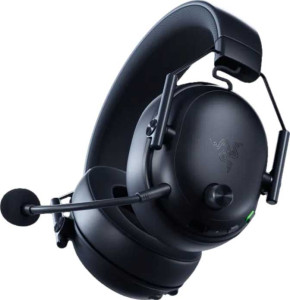
Razer BlackShark V3
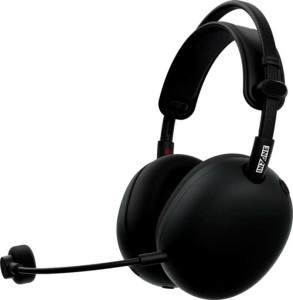
Sony Inzone H9 II

Razer BlackShark V3 Sony Inzone H9 II

Common Features

  • The fit is over-ear on both products.
  • Both have a detachable cable.
  • Both do not have RGB lighting.
  • Both have a closed-back design.
  • Both cables are tangle free.
  • Both have stereo speakers.
  • Both support virtual surround sound.
  • Both support spatial audio.
  • Both have passive noise reduction.
  • Both use two drivers.
  • Both have a noise-canceling microphone.
  • Both have a removable microphone.
  • Both microphones have a mute function.
  • Both have one microphone.
  • Both have a rechargeable battery.
  • Both show battery level indicator.
  • Both do not have a removable battery.
  • Both can be used wirelessly.
  • Both have USB Type-C connectivity.
  • Both have a control panel placed on the device.
  • Both can be used as a headset.
  • Both do not have a vibration function.
  • Both include a travel bag.

Main Differences

  • Weight is 270 g on Razer BlackShark V3 and 260 g on Sony Inzone H9 II.
  • The Razer BlackShark V3 cannot be folded while the Sony Inzone H9 II can be folded.
  • The lowest frequency is 12 Hz on Razer BlackShark V3 and 20 Hz on Sony Inzone H9 II.
  • The highest frequency is 28000 Hz on Razer BlackShark V3 and 20000 Hz on Sony Inzone H9 II.
  • Active noise cancellation is not available on Razer BlackShark V3 but is available on Sony Inzone H9 II.
  • Driver unit size is 50 mm on Razer BlackShark V3 and 30 mm on Sony Inzone H9 II.
  • Razer BlackShark V3 has a neodymium magnet while Sony Inzone H9 II does not.
  • Battery life is 70 hours on Razer BlackShark V3 and 30 hours on Sony Inzone H9 II.
  • Charge time is 4 hours on Razer BlackShark V3 and 3.5 hours on Sony Inzone H9 II.
  • Connectivity includes USB on Razer BlackShark V3 but includes 3.5mm on Sony Inzone H9 II.
  • AAC support is not available on Razer BlackShark V3 but is available on Sony Inzone H9 II.
Specs Comparison
Razer BlackShark V3

Razer BlackShark V3

Sony Inzone H9 II

Sony Inzone H9 II

Design:
Fit Over-ear Over-ear
has a detachable cable
weight 270 g 260 g
has RGB lighting
can be folded
has an open-back design
has a tangle free cable
has stereo speakers

Both the Razer BlackShark V3 and Sony Inzone H9 II are over-ear headphones, providing a similar fit. They each feature a detachable cable, making them more versatile for different setups. The Razer BlackShark V3 weighs 270 g, slightly heavier than the 260 g of the Sony Inzone H9 II, though the difference is minimal.

Neither product offers RGB lighting, and both come with a tangle-free cable, ensuring a clean, hassle-free experience. The Razer BlackShark V3 does not have a foldable design, whereas the Sony Inzone H9 II can be folded for easier storage and portability.

Neither headphone has an open-back design, and both are equipped with stereo speakers for balanced sound. Overall, the key design differences are the foldability of the Sony Inzone H9 II and the slightly lighter weight of the Razer BlackShark V3.

Sound quality:
lowest frequency 12 Hz 20 Hz
highest frequency 28000 Hz 20000 Hz
has active noise cancellation (ANC)
Surround sound Virtual Virtual
supports spatial audio
driver unit size 50 mm 30 mm
has a neodymium magnet
has passive noise reduction
drivers count 2 2

The Razer BlackShark V3 and Sony Inzone H9 II both offer virtual surround sound and support for spatial audio, providing an immersive listening experience. The Razer BlackShark V3 has a wider frequency range, with a lowest frequency of 12 Hz and a highest of 28,000 Hz, compared to the Sony Inzone H9 II, which has a lowest frequency of 20 Hz and a highest of 20,000 Hz.

In terms of active noise cancellation (ANC), the Sony Inzone H9 II includes this feature, while the Razer BlackShark V3 does not. Both headphones feature passive noise reduction, but the Razer BlackShark V3 does not include any ANC capabilities.

The Razer BlackShark V3 has a larger 50 mm driver unit, while the Sony Inzone H9 II uses a smaller 30 mm driver unit. Additionally, the Razer BlackShark V3 uses neodymium magnets, while the Sony Inzone H9 II does not have this feature. Both models have two drivers.

Microphone:
has a noise-canceling microphone
has a removable microphone
has a mute function
number of microphones 1 1

Both the Razer BlackShark V3 and Sony Inzone H9 II are equipped with a noise-canceling microphone, ensuring clear communication. They each feature a removable microphone, allowing for easy storage or replacement. Additionally, both models have a mute function for quick audio control.

In terms of microphone count, both the Razer BlackShark V3 and Sony Inzone H9 II have a single microphone.

Overall, the microphone features on both headsets are identical, offering the same noise-canceling, removable design, mute function, and single microphone setup.

Power:
Battery life 70 hours 30 hours
charge time 4 hours 3.5 hours
has a rechargeable battery
has a battery level indicator
has a removable battery

The Razer BlackShark V3 offers a significantly longer battery life than the Sony Inzone H9 II, with a runtime of 70 hours compared to the Inzone H9 II’s 30 hours. Both products have a rechargeable battery and include a battery level indicator for tracking remaining power.

When it comes to charging time, the Razer BlackShark V3 takes 4 hours to fully charge, slightly longer than the 3.5-hour charge time of the Sony Inzone H9 II.

Neither product features a removable battery, meaning users will need to rely on the built-in rechargeable battery for the duration of its lifespan.

Connectivity:
connectivity 2.4GHz wireless, Bluetooth, USB 2.4GHz wireless, Bluetooth, 3.5mm
compatibility PlayStation, PC, Xbox, Nintendo Switch PC, PlayStation, Nintendo Switch, Xbox
Can be used wirelessly
Has USB Type-C
has aptX Adaptive
has aptX Low Latency
has LDAC
has LDHC
has aptX HD
has aptX
has AAC
maximum Bluetooth range 10 m 10 m
supports Bluetooth pairing using NFC
has fast pairing

The Razer BlackShark V3 and Sony Inzone H9 II offer similar connectivity options, both supporting 2.4GHz wireless and Bluetooth. The Razer BlackShark V3 also includes USB connectivity, while the Sony Inzone H9 II supports a 3.5mm connection in addition to Bluetooth and wireless options.

Both headsets are compatible with PlayStation, PC, Xbox, and Nintendo Switch, so you can use either model across multiple platforms. They also both feature USB Type-C for charging, making them modern and convenient for quick power-ups.

While both headsets lack support for advanced Bluetooth codecs like aptX, aptX Low Latency, LDAC, LDHC, aptX HD, and aptX, the Sony Inzone H9 II offers AAC support, which the Razer BlackShark V3 does not. Both models have a maximum Bluetooth range of 10 meters and do not support NFC pairing or fast pairing.

Features:
release date July 2025 August 2025
control panel placed on a device
can be used as a headset
has a vibration function
Has an in-line control panel
travel bag is included

Both the Razer BlackShark V3 and Sony Inzone H9 II feature a control panel placed on the device, providing easy access to controls without needing to interact with the connected system. Both models can also be used as a headset, making them suitable for both gaming and communication purposes.

Neither headset has a vibration function, and neither includes an in-line control panel. However, both products come with a travel bag, making it convenient to carry and store the headphones when not in use.

Overall, the features on the Razer BlackShark V3 and Sony Inzone H9 II are nearly identical, with both offering the same controls, headset functionality, and travel bag inclusion.

Comparison Summary

This is a specification comparison between Razer BlackShark V3 and Sony Inzone H9 II. Both headsets feature an over-ear fit, detachable cables, stereo speakers, virtual surround sound, spatial audio support, and a noise-canceling microphone with mute function. Key differences include weight at 270 g for Razer BlackShark V3 and 260 g for Sony Inzone H9 II, folding capability present on Sony Inzone H9 II but not on Razer BlackShark V3, active noise cancellation available only on Sony Inzone H9 II, driver size at 50 mm for Razer BlackShark V3 and 30 mm for Sony Inzone H9 II, and battery life of 70 hours versus 30 hours. Connectivity options differ with USB included on Razer BlackShark V3 and 3.5mm on Sony Inzone H9 II, while AAC support is available on Sony Inzone H9 II but not on Razer BlackShark V3.