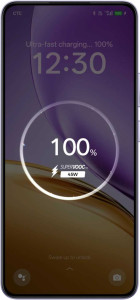
Realme 14T 5G
Realme C75 5G

Realme 14T 5G Realme C75 5G

Overview

When choosing between the Realme 14T 5G and the Realme C75 5G, buyers face a fascinating trade-off across several key areas. Both phones share the same chipset, battery capacity, and fast-charging speeds, making display quality and camera performance central battlegrounds. Beyond imaging, differences in audio setup, connectivity options, and physical durability ratings add further layers to this comparison worth examining closely.

Common Features

  • Neither product has a rugged build.
  • Neither product can be folded.
  • Both products have a 6.67″ screen size.
  • Both products have a 120Hz refresh rate.
  • Both products have a 180Hz touch sampling rate.
  • Neither product has branded damage-resistant glass.
  • HDR10 support is not available on either product.
  • HDR10+ support is not available on either product.
  • Always-On Display is not available on either product.
  • Dolby Vision support is not available on either product.
  • Both products use the MediaTek Dimensity 6300 chipset.
  • Both products use the Arm Mali-G57 MC2 GPU.
  • Both products have a CPU speed of 2 x 2.4 & 6 x 2 GHz.
  • Both products have a Geekbench 6 multi-core score of 2012.
  • Both products have a Geekbench 6 single-core score of 782.
  • Both products have a GPU clock speed of 950 MHz.
  • Both products have integrated LTE.
  • Both products have a RAM speed of 2133 MHz.
  • Neither product has built-in optical image stabilization.
  • Both products have a CMOS sensor.
  • Both products support continuous autofocus when recording movies.
  • Both products have phase-detection autofocus for photos.
  • Both products support slow-motion video recording.
  • Both products run Android 15.
  • Both products have clipboard warnings.
  • Both products have location privacy options.
  • Both products have camera and microphone privacy options.
  • Mail Privacy Protection is not available on either product.
  • Both products have theme customization.
  • Both products can block app tracking.
  • Cross-site tracking blocking is not available on either product.
  • Both products have a 6000 mAh battery.
  • Neither product supports wireless charging.
  • Both products support fast charging at 45W.
  • Both products come with a charger.
  • Neither product has a removable battery.
  • Both products have a battery level indicator.
  • Both products have a rechargeable battery.
  • Neither product supports aptX, LDAC, aptX HD, aptX Adaptive, or aptX Lossless audio codecs.
  • Both products support 5G.
  • Both products support Wi-Fi 4 (802.11n) and Wi-Fi 5 (802.11ac).
  • Both products have dual SIM card slots.
  • Both products have Bluetooth 5.3.
  • Both products have a USB Type-C port.
  • Both products have a download speed of 3300 MBits/s.
  • Both products have a fingerprint scanner.
  • Emergency SOS via satellite is not available on either product.
  • Both products have a video light.
  • Neither product has a sapphire glass display.
  • Neither product has a curved display.
  • Neither product has an e-paper display.

Main Differences

  • Water resistance is not present on Realme 14T 5G but is available on Realme C75 5G.
  • Weight is 196 g on Realme 14T 5G and 190 g on Realme C75 5G.
  • Thickness is 8 mm on Realme 14T 5G and 7.9 mm on Realme C75 5G.
  • Width is 75.7 mm on Realme 14T 5G and 76.2 mm on Realme C75 5G.
  • Height is 163.2 mm on Realme 14T 5G and 165.7 mm on Realme C75 5G.
  • Ingress Protection rating is IP68 on Realme 14T 5G and IP64 on Realme C75 5G.
  • Display type is OLED/AMOLED on Realme 14T 5G and LCD IPS on Realme C75 5G.
  • Pixel density is 386 ppi on Realme 14T 5G and 264 ppi on Realme C75 5G.
  • Resolution is 1080 x 2400 px on Realme 14T 5G and 720 x 1604 px on Realme C75 5G.
  • Contrast ratio is 6000000:1 on Realme 14T 5G and 1500:1 on Realme C75 5G.
  • Internal storage is 256GB on Realme 14T 5G and 128GB on Realme C75 5G.
  • RAM is 12GB on Realme 14T 5G and 8GB on Realme C75 5G.
  • Main camera resolution is 50 & 2 MP on Realme 14T 5G and 32 MP on Realme C75 5G.
  • Main camera wide aperture is f/2.4 & f/1.8 on Realme 14T 5G and f/1.8 on Realme C75 5G.
  • A dual-lens main camera is present on Realme 14T 5G but not on Realme C75 5G.
  • Front camera resolution is 16 MP on Realme 14T 5G and 8 MP on Realme C75 5G.
  • Main camera video recording is 1080p at 60 fps on Realme 14T 5G and 1080p at 30 fps on Realme C75 5G.
  • Front camera wide aperture is f/2.4 on Realme 14T 5G and f/2.0 on Realme C75 5G.
  • A 3.5 mm audio jack is not present on Realme 14T 5G but is available on Realme C75 5G.
  • Stereo speakers are present on Realme 14T 5G but not on Realme C75 5G.
  • An external memory slot is not present on Realme 14T 5G but is available on Realme C75 5G.
  • NFC is not present on Realme 14T 5G but is available on Realme C75 5G.
  • A gyroscope is present on Realme 14T 5G but not on Realme C75 5G.
Specs Comparison
Realme 14T 5G

Realme 14T 5G

Realme C75 5G

Realme C75 5G

Design:
water resistance None Water resistant
weight 196 g 190 g
thickness 8 mm 7.9 mm
width 75.7 mm 76.2 mm
height 163.2 mm 165.7 mm
volume 98.83392 cm³ 99.748086 cm³
Ingress Protection (IP) rating IP68 IP64
has a rugged build
can be folded

In terms of physical footprint, the two phones are remarkably close. The Realme C75 5G is marginally lighter at 190 g versus 196 g for the Realme 14T 5G, and a hair thinner at 7.9 mm compared to 8 mm. The C75 is slightly taller and wider, though the volume difference of under 1 cm³ means both devices will feel essentially identical in the hand. Neither supports a folding form factor or claims a rugged build, so day-to-day handling is comparable.

The more meaningful differentiator lies in water protection. Despite the 14T carrying a formal IP68 certification — which in standard grading implies deeper and longer submersion tolerance — its listed water resistance value is marked as None. The C75, by contrast, holds an IP64 rating and is explicitly described as water resistant. IP64 protects against splashes and water jets from any direction, making it a practical safeguard for rain, spills, and sweaty workouts.

Based strictly on the provided data, the Realme C75 5G holds the edge in this group. Its acknowledged water resistance, combined with a marginally lighter and thinner profile, gives it a slight but real-world-relevant advantage for users who prioritize durability and comfortable long-term carry.

Display:
Display type OLED/AMOLED LCD, IPS
screen size 6.67" 6.67"
pixel density 386 ppi 264 ppi
resolution 1080 x 2400 px 720 x 1604 px
refresh rate 120Hz 120Hz
touch sampling rate 180Hz 180Hz
has branded damage-resistant glass
supports HDR10
supports HDR10+
Always-On Display
supports Dolby Vision
contrast ratio 6000000:1 1500:1
Has a secondary screen
has a touch screen

Both phones share the same 6.67″ screen size and match on refresh rate (120Hz) and touch sampling rate (180Hz), so the scrolling and interaction experience feels equally fluid on paper. The divergence, however, runs deep at the panel technology level. The Realme 14T 5G uses an OLED/AMOLED display, while the C75 5G relies on an LCD IPS panel — a distinction that cascades across nearly every visual quality metric.

The contrast ratio tells the sharpest story: 6,000,000:1 on the 14T versus just 1,500:1 on the C75. OLED panels achieve this by switching pixels off entirely for true blacks, which makes dark scenes in videos and games look dramatically richer. The resolution gap compounds the difference — the 14T renders at 1080 x 2400 px (386 ppi), while the C75 tops out at 720 x 1604 px (264 ppi). At 264 ppi, individual pixels can become faintly visible at normal viewing distances, particularly in fine text or detailed images, whereas 386 ppi comfortably exceeds the threshold where sharpness is imperceptible to the naked eye.

The Realme 14T 5G holds a decisive edge in this category. The combination of OLED technology and Full HD+ resolution makes it the clearly superior display option for media consumption, outdoor legibility, and general visual fidelity. The C75's 120Hz refresh rate keeps it competitive for smooth interactions, but it cannot close the gap opened by panel type and pixel density.

Performance:
internal storage 256GB 128GB
RAM 12GB 8GB
Chipset (SoC) name MediaTek Dimensity 6300 MediaTek Dimensity 6300
GPU name Arm Mali-G57 MC2 Arm Mali-G57 MC2
CPU speed 2 x 2.4 & 6 x 2 GHz 2 x 2.4 & 6 x 2 GHz
Geekbench 6 result (multi) 2012 2012
Geekbench 6 result (single) 782 782
GPU clock speed 950 MHz 950 MHz
Has integrated LTE
RAM speed 2133 MHz 2133 MHz
semiconductor size 6 nm 6 nm
Supports 64-bit
DirectX version DirectX 12 DirectX 12
Has integrated graphics
Uses big.LITTLE technology
CPU threads 8 threads 8 threads
Uses HMP
maximum memory bandwidth 17.07 GB/s 17.07 GB/s
L2 cache 1 MB 1 MB
L1 cache 512 KB 512 KB
maximum memory amount 12GB 12GB
uses multithreading
DDR memory version 4 4
L3 cache 2 MB 2 MB

At the silicon level, these two phones are identical twins. Both run the MediaTek Dimensity 6300 chipset built on a 6 nm process, pair it with the same Arm Mali-G57 MC2 GPU, and post identical Geekbench 6 scores — 782 single-core and 2012 multi-core. Every CPU and GPU parameter, from clock speeds to cache sizes, is a carbon copy. For everyday tasks like browsing, social media, and streaming, both devices will feel indistinguishable.

Where the 14T 5G separates itself is in memory and storage headroom. It ships with 12 GB of RAM and 256 GB of internal storage, compared to 8 GB of RAM and 128 GB on the C75 5G. The extra RAM matters more than it might seem — with 12 GB, the system can keep significantly more apps alive in the background, reducing reload times and improving fluidity during heavy multitasking. The doubled storage is equally practical, giving users substantially more space before cloud offloading or microSD expansion becomes necessary.

Raw processing power is a dead heat, but the Realme 14T 5G earns the edge in this group through its superior memory configuration. Users who multitask frequently or consume large volumes of media locally will find the 14T's setup noticeably more accommodating over time.

Cameras:
megapixels (main camera) 50 & 2 MP 32 MP
wide aperture (main camera) 2.4 & 1.8f 1.8f
Has a dual-lens (or multi-lens) main camera
megapixels (front camera) 16MP 8MP
has built-in optical image stabilization
video recording (main camera) 1080 x 60 fps 1080 x 30 fps
Has a dual-tone LED flash
number of flash LEDs 1 1
has a BSI sensor
has a CMOS sensor
has continuous autofocus when recording movies
Has phase-detection autofocus for photos
supports slow-motion video recording
has a built-in HDR mode
has manual exposure
has a flash
optical zoom 0x 0x
has manual ISO
has a serial shot mode
has manual focus
has a front camera
Has laser autofocus
Shoots 360° panorama
has manual white balance
shoots raw
has touch autofocus
has manual shutter speed
can create panoramas in-camera
wide aperture (front camera) 2.4f 2f
Has timelapse function
Has a front-facing LED flash
has a dual-lens (or multi-lens) front camera
supports HDR10 recording
supports Dolby Vision recording
has a front-facing camera under the display
Has a RGB LED flash
has 3D photo/video recording capabilities

The rear camera setup is where the Realme 14T 5G pulls meaningfully ahead. It fields a dual-lens system anchored by a 50 MP primary shooter, while the C75 5G relies on a single 32 MP lens. Higher megapixel counts allow for more detail retention when cropping, and the 14T's secondary 2 MP sensor adds a depth-sensing layer for portrait shots. Both share an f/1.8 aperture on their primary lens, so low-light intake is equivalent at the hardware level on the main shooter.

The video gap is equally notable. The 14T records at 1080p @ 60 fps, delivering smoother motion in action scenes and more flexibility in post-processing, compared to the C75's 1080p @ 30 fps ceiling. For selfie users, the dynamic flips slightly — the C75's front camera carries a wider f/2.0 aperture versus the 14T's f/2.4, meaning it admits more light per frame, which can benefit low-light selfies. However, the 14T counters with a significantly higher 16 MP front sensor against the C75's 8 MP, offering more detail in good lighting conditions.

Feature parity is high across both devices — PDAF, HDR, timelapse, slow motion, and a full suite of manual controls are present on both. The Realme 14T 5G nonetheless takes the edge here, driven by its higher-resolution dual rear camera, doubled front camera resolution, and superior video frame rate.

Operating system:
Android version Android 15 Android 15
has clipboard warnings
has location privacy options
has camera/microphone privacy options
has Mail Privacy Protection
has theme customization
can block app tracking
blocks cross-site tracking
has on-device machine learning
has notification permissions
has media picker
Can play games while they download
has dark mode
has Wi-Fi password sharing
has battery health check
has an extra dim mode
has focus modes
has dynamic theming
can offload apps
Has customizable notifications
has Live Text
has full-page screenshots
supports split screen
gets direct OS updates
has PiP
Can be used as a PC
Has sharing intents
has a child lock
Supports widgets
Is free and open source
Has offline voice recognition
has voice commands
Tracks the current position of a mobile device
is a multi-user system
has Quick Start

Across every single data point in this category, the Realme 14T 5G and Realme C75 5G are a perfect match. Both launch on Android 15, arrive with the same privacy toolkit — including location controls, camera and microphone permissions management, and app tracking blocking — and share an identical feature set covering dark mode, dynamic theming, split-screen multitasking, Picture-in-Picture, and on-device machine learning.

Notably, neither device receives direct OS updates from Google, meaning updates are filtered through Realme's own software layer. This is consistent across both and represents a shared limitation rather than a differentiator. On the positive side, both support offline voice recognition, Live Text, full-page screenshots, and multi-user profiles — a well-rounded software experience for the segment.

This group is an unambiguous tie. The software experience is identical in every measurable dimension provided, and no advantage can be assigned to either device based strictly on the available data.

Battery:
battery power 6000 mAh 6000 mAh
has wireless charging
Supports fast charging
charging speed 45W 45W
comes with a charger
has a removable battery
has a battery level indicator
has a rechargeable battery

Battery is another category where the two phones converge entirely. Both carry a 6000 mAh cell — a generously sized capacity that comfortably supports all-day and into-the-next-day usage for most users — and both top up at 45W fast charging, which strikes a practical balance between speed and thermal safety at this price tier. A charger is included in the box for each.

Neither device supports wireless charging, and neither has a removable battery, which are shared limitations rather than points of differentiation. The consistency across every single metric here leaves no room to separate them on paper.

This group is a complete tie. Regardless of which device a buyer chooses, the battery endurance and replenishment experience will be functionally identical based on the provided specifications.

Audio:
has a socket for a 3.5 mm audio jack
has stereo speakers
has aptX
has LDAC
has aptX HD
has aptX Adaptive
has aptX Lossless

Audio is the one category in this comparison where the two phones make genuinely opposite bets. The Realme 14T 5G drops the headphone jack entirely but gains stereo speakers, while the Realme C75 5G takes the inverse approach — retaining a 3.5 mm audio jack but offering only a single speaker. Neither supports high-resolution Bluetooth codecs like aptX or LDAC, so wireless audio quality is equivalent on both.

The practical consequence depends entirely on how a user listens. Stereo speakers create a wider, more immersive soundstage for media consumption, speakerphone calls, and hands-free use — a meaningful upgrade for anyone who regularly watches videos or plays games without headphones. The headphone jack, on the other hand, enables direct wired listening without dongles or adapters, which matters to users with wired earphones or audiophile-grade headphones who prefer lossless, latency-free output.

There is no universal winner here — this is a deliberate design tradeoff with different beneficiaries. Users who prioritize loudspeaker quality will prefer the Realme 14T 5G, while those who rely on wired headphones will find the Realme C75 5G more accommodating.

Connectivity & Features:
release date April 2025 May 2025
has 5G support
Wi-Fi version Wi-Fi 4 (802.11n), Wi-Fi 5 (802.11ac) Wi-Fi 4 (802.11n), Wi-Fi 5 (802.11ac)
SIM cards 2 SIM 2 SIM
Bluetooth version 5.3 5.3
has an external memory slot
Has USB Type-C
has NFC
download speed 3300 MBits/s 3300 MBits/s
Has a fingerprint scanner
has emergency SOS via satellite
has crash detection
is DLNA-certified
has a gyroscope
supports ANT+
Has a heart rate monitor
has GPS
has a compass
supports Wi-Fi
Has an infrared sensor
has an accelerometer
has a cellular module
Has a barometer
has an HDMI output
Uses 3D facial recognition
Has an iris scanner
Stylus included
supports Galileo
Has motion tracking
Has optical tracking
Has a built-in projector

The connectivity foundation is shared across both devices — 5G, dual SIM, Wi-Fi 5, Bluetooth 5.3, USB Type-C, and identical peak download speeds of 3300 Mbits/s. GPS with Galileo support is also present on both, ensuring reliable positioning across multiple satellite networks. For most users, this common baseline covers everyday connectivity needs without compromise on either side.

The differentiators, however, cut in opposite directions. The Realme C75 5G adds NFC and a microSD card slot — two features the 14T 5G entirely omits. NFC is increasingly essential for contactless payments and quick device pairing, while expandable storage directly addresses the C75's smaller 128 GB base capacity, allowing users to extend it affordably. The 14T, in turn, includes a gyroscope that the C75 lacks — a sensor relied upon for augmented reality apps, immersive gaming, and precise motion-based navigation.

This group does not have a single clear winner — it hinges on use case. Users who value mobile payments and storage flexibility will find the Realme C75 5G better equipped, while those invested in motion-sensitive apps and gaming will benefit from the 14T's gyroscope. On balance, NFC and expandable storage tend to have broader everyday utility, giving the Realme C75 5G a slight practical edge in this category for the average user.

Miscellaneous:
has a video light
Has sapphire glass display
Has a curved display
Has an e-paper display

The miscellaneous specification set for these two devices is identical across every available data point. Both feature a video light, and neither carries a sapphire glass display, a curved screen, or an e-paper panel — all of which are niche features typically reserved for premium or specialist devices well above this segment.

This group is a tie. The provided data offers no differentiating characteristic between the Realme 14T 5G and the Realme C75 5G, and no advantage can be assigned to either device based strictly on what is available here.

Comparison Summary & Verdict

After a thorough look at the specs, both phones suit different types of users. The Realme 14T 5G stands out for media enthusiasts, delivering a superior OLED display with a 6,000,000:1 contrast ratio, a higher-resolution 50 MP dual camera, stereo speakers, and more RAM and storage. Its IP68 rating also offers stronger water protection. The Realme C75 5G, on the other hand, appeals to users who value versatility and connectivity, thanks to its 3.5 mm headphone jack, expandable storage, NFC support, and a wider front aperture. It is also slightly lighter and includes a headphone socket that the 14T 5G lacks. In short, choose the Realme 14T 5G for a premium multimedia experience, and opt for the Realme C75 5G if everyday practicality and flexible connectivity matter more to you.

Realme 14T 5G
Buy Realme 14T 5G if...

Buy the Realme 14T 5G if you prioritize a superior OLED display, better camera resolution, stereo speakers, more RAM and storage, and stronger IP68 water resistance.

Realme C75 5G
Buy Realme C75 5G if...

Buy the Realme C75 5G if you need a 3.5 mm headphone jack, expandable storage, NFC support, and a slightly lighter and more connectivity-friendly everyday smartphone.