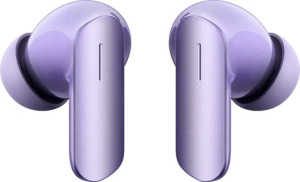
Realme Buds Air 7
Realme Buds T200

Realme Buds Air 7 Realme Buds T200

Overview

Welcome to this detailed spec comparison between the Realme Buds Air 7 and the Realme Buds T200. Both earbuds share a solid foundation — IP55 water resistance, ANC, a 12.4 mm driver, and Bluetooth 5.4 — yet they diverge in meaningful ways. From battery endurance to codec support and microphone count, each model targets a slightly different listener. Read on to find out which one better suits your needs.

Common Features

  • Both products use an in-ear fit design.
  • Both products have an IP55 ingress protection rating.
  • Both products are water resistant.
  • Neither product uses wires or cables.
  • Neither product is a neckband earbud.
  • Neither product includes wingtips.
  • Neither product has RGB lighting.
  • Both products feature stereo speakers.
  • Both products support active noise cancellation (ANC).
  • Both products have passive noise reduction.
  • Both products use a 12.4 mm driver unit.
  • The frequency range on both products spans from 20 Hz to 20000 Hz.
  • Dolby Atmos support is not available on either product.
  • A neodymium magnet is not present in either product.
  • Both products have a charge time of 1.5 hours.
  • Wireless charging is not available on either product.
  • Both products have a battery level indicator.
  • Both products use a rechargeable battery.
  • Both products use USB Type-C for charging.
  • Both products use Bluetooth version 5.4.
  • Bluetooth LE Audio is not supported on either product.
  • aptX Adaptive, aptX Low Latency, aptX HD, aptX, and aptX Lossless are not supported on either product.
  • Both products have an ambient sound mode.
  • Both products support fast charging.
  • Neither product can read notifications.
  • Both products have a mute function.
  • Both products can be used as a headset.
  • Both products have a control panel placed on the device.
  • Both products have voice prompts.
  • A travel bag is included with both products.
  • Both products have a noise-canceling microphone.

Main Differences

  • Spatial audio support is present on Realme Buds Air 7 but not available on Realme Buds T200.
  • Battery life is 13 hours on Realme Buds Air 7 and 8 hours on Realme Buds T200.
  • Battery life of the charging case is 39 hours on Realme Buds Air 7 and 42 hours on Realme Buds T200.
  • Fast pairing support is present on Realme Buds Air 7 but not available on Realme Buds T200.
  • LDAC support is present on Realme Buds T200 but not available on Realme Buds Air 7.
  • LDHC support is present on Realme Buds Air 7 but not available on Realme Buds T200.
  • The number of microphones is 6 on Realme Buds Air 7 and 4 on Realme Buds T200.
Specs Comparison
Realme Buds Air 7

Realme Buds Air 7

Realme Buds T200

Realme Buds T200

Design:
Fit In-ear In-ear
Ingress Protection (IP) rating IP55 IP55
water resistance Water resistant Water resistant
has no wires or cables
are neckband earbuds
wingtips included
has RGB lighting
has stereo speakers
has UV light
Has a display

In terms of design, the Realme Buds Air 7 and Realme Buds T200 are virtually identical on paper. Both adopt an in-ear fit, are fully wireless with no cables or neckband, and share the same IP55 ingress protection rating — meaning both can withstand dust and low-pressure water jets from any direction. This makes them equally suited for workouts or light outdoor use in rain.

Neither model includes wingtips, RGB lighting, a UV light, or a display, and both deliver stereo audio. With no differentiating design features across any of the tracked specs, there is no meaningful distinction to draw between the two in this category.

Verdict: A complete tie. Both earbuds are evenly matched across every design specification provided. If design and build protection are your primary criteria, neither product holds an advantage over the other — your decision should rest on specs from other categories.

Sound quality:
has active noise cancellation (ANC)
has passive noise reduction
driver unit size 12.4 mm 12.4 mm
lowest frequency 20 Hz 20 Hz
highest frequency 20000 Hz 20000 Hz
supports spatial audio
has Dolby Atmos
has Dirac Virtuo
has a neodymium magnet

Both earbuds share a strong sonic foundation: identical 12.4 mm drivers, a full 20 Hz–20,000 Hz frequency range, and the combination of active noise cancellation (ANC) with passive noise reduction. In practice, this means both are capable of blocking out meaningful ambient noise — the ANC handles low-frequency rumble like traffic or AC hum, while the in-ear fit physically attenuates higher-frequency noise. Neither uses a neodymium magnet, so that particular driver-quality differentiator is off the table for both.

Where the two diverge is spatial audio: the Buds Air 7 supports it, while the Buds T200 does not. Spatial audio creates a wider, more three-dimensional soundstage — particularly noticeable when watching films or playing games — making audio feel like it surrounds you rather than sitting directly in your ears. It is a meaningful experiential upgrade for multimedia users, even if it has little impact on standard music listening.

Edge: Realme Buds Air 7. With every core sound-quality spec matched, spatial audio support is the sole but significant differentiator here. For users who consume a lot of video content or want a more immersive listening experience, the Buds Air 7 holds a clear advantage. The Buds T200 is competitive for pure music listening, but trails in versatility.

Power:
Battery life 13 hours 8 hours
Battery life of charging case 39 hours 42 hours
charge time 1.5 hours 1.5 hours
has wireless charging
Has a solar power battery
has a battery level indicator
has a rechargeable battery

The most telling difference in this category comes down to how each product distributes its total battery capacity. The Buds Air 7 delivers 13 hours of earbud playback time, compared to just 8 hours for the Buds T200 — a 62% advantage per charge. For commuters, travelers, or anyone who regularly goes a full workday without reaching for the case, that gap is practically significant.

Flip the lens to total combined endurance, though, and the picture shifts slightly. The T200's case compensates with a 42-hour total system runtime versus the Air 7's 39 hours, meaning over multiple charge cycles the T200 marginally stretches its overall longevity. That said, the T200 needs to be returned to its case more frequently to achieve that total, which is less convenient in practice. Both share an identical 1.5-hour charge time and neither supports wireless charging.

Edge: Realme Buds Air 7. Unless you rarely take your earbuds out of the case and prioritize maximum cumulative hours above all else, the Air 7's substantially longer single-session battery life makes it the more user-friendly choice for real-world, continuous use.

Connectivity:
has fast pairing
Has USB Type-C
Bluetooth version 5.4 5.4
has LDAC
has LDHC
has Bluetooth LE Audio
has aptX Adaptive
has aptX Low Latency
has aptX HD
has aptX
has aptX Lossless
audio latency 45 ms 45 ms
has aptX Voice
has Auracast
maximum Bluetooth range 10 m 10 m
supports Bluetooth pairing using NFC
Can be used wirelessly
has AAC

Sharing Bluetooth 5.4, a 10 m range, 45 ms audio latency, AAC support, and USB-C, the two earbuds are evenly matched on the fundamentals. The more interesting story lies in their diverging codec choices. The Buds T200 supports LDAC — Sony's high-resolution codec capable of streaming up to 990 kbps — making it a stronger pick for audiophiles who own LDAC-compatible Android devices and want the highest possible wireless audio fidelity. The Buds Air 7 counters with LDHC, a competing hi-res wireless codec that also targets high bitrate transmission, though it enjoys narrower device support compared to the widely adopted LDAC.

The Air 7 holds one practical edge the T200 lacks entirely: fast pairing. This allows the earbuds to connect to a compatible device almost instantly upon opening the case, removing the friction of manual pairing — a small but genuinely convenient quality-of-life feature for daily users.

Edge: Depends on priority. Audio purists with LDAC-enabled devices will find the Buds T200 the stronger choice for sound transmission quality. Users who value seamless, quick connectivity in daily use will appreciate the Buds Air 7's fast pairing advantage. Neither product dominates outright — the right pick here hinges on which trade-off matters more to the individual user.

Features:
release date February 2025 May 2025
has ambient sound mode
Supports fast charging
can read notifications
has a mute function
can be used as a headset
control panel placed on a device
Has voice prompts
travel bag is included
Has an in-line control panel
Has a temperature sensor
Has a built-in camera remote control function

Across every tracked feature, the Buds Air 7 and Buds T200 are an exact match. Both support ambient sound mode — essential for staying aware of surroundings without removing the earbuds — alongside fast charging, on-device touch controls, voice prompts, and a mute function. Both can also serve as a headset for calls and ship with a travel bag included.

Verdict: A complete tie. There is not a single feature differentiator between these two products in this category. Buyers prioritizing features alone will need to look to other specification groups — such as sound quality, connectivity, or battery — to distinguish between them.

Microphone:
number of microphones 6 4
has a noise-canceling microphone

Both earbuds feature noise-canceling microphones, but the Buds Air 7 pulls ahead with 6 microphones versus the 4 microphones on the Buds T200. In call quality terms, more microphones generally enable more sophisticated beamforming — the ability to isolate your voice from multiple angles while more aggressively suppressing wind, crowd, and environmental noise. The practical benefit is cleaner call audio in challenging real-world conditions like busy streets or open offices.

Edge: Realme Buds Air 7. The additional two microphones give it a structural advantage for voice pickup and call clarity. For users who frequently take calls on the go or participate in video meetings, this difference is worth factoring in. The T200 remains capable with its noise-canceling mic array, but the Air 7 has the hardware edge in this category.

Comparison Summary & Verdict

After examining all the specs, both earbuds prove to be capable options within the same ecosystem, but they serve distinct priorities. The Realme Buds Air 7 stands out with its 13-hour battery life, spatial audio support, 6-microphone setup, fast pairing, and LDHC codec — making it the stronger pick for users who want longer listening sessions, immersive sound, and cleaner call quality. The Realme Buds T200, on the other hand, offers LDAC codec support for higher-quality wireless audio streaming and a slightly longer 42-hour charging case endurance, appealing to audiophiles who prioritize audio fidelity over raw battery life. Choose the Buds Air 7 for versatility and endurance; choose the Buds T200 if high-resolution wireless audio is your top concern.

Realme Buds Air 7
Buy Realme Buds Air 7 if...

Buy the Realme Buds Air 7 if you want longer battery life, spatial audio, fast pairing, and a superior 6-microphone setup for clearer calls.

Realme Buds T200
Buy Realme Buds T200 if...

Buy the Realme Buds T200 if LDAC high-resolution audio streaming is your priority and a slightly longer charging case battery matters to you.