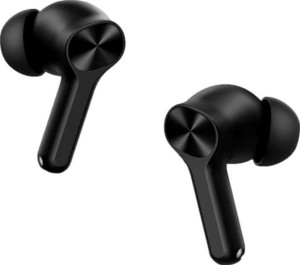
Realme Buds T200 Lite
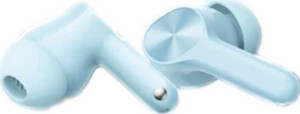
Realme Buds T200x

Realme Buds T200 Lite Realme Buds T200x

Overview

Welcome to our detailed spec comparison of the Realme Buds T200 Lite and the Realme Buds T200x — two truly wireless earbuds that share a strong common foundation yet diverge in some meaningful ways. Both models offer the same driver size, battery performance, and Bluetooth 5.4 connectivity, but key questions around noise cancellation and water resistance set them apart. Read on to discover which model best matches your listening needs and lifestyle.

Common Features

  • Both products have an in-ear fit.
  • Neither product has wires or cables.
  • Neither product is a neckband earbud design.
  • Neither product includes wingtips.
  • Neither product has RGB lighting.
  • Both products have stereo speakers.
  • Neither product has a UV light.
  • Neither product has a display.
  • Both products provide passive noise reduction.
  • Both products have a driver unit size of 12.4 mm.
  • Both products have a lowest frequency of 20 Hz and a highest frequency of 20000 Hz.
  • Spatial audio is not supported on either product.
  • Dolby Atmos is not available on either product.
  • Neither product has a neodymium magnet.
  • Both products offer 7 hours of battery life.
  • Both products provide 41 hours of battery life from the charging case.
  • Both products have a charge time of 1.5 hours.
  • Wireless charging is not available on either product.
  • Both products have a battery level indicator.
  • Both products have a rechargeable battery.
  • Fast pairing is not available on either product.
  • Both products have USB Type-C connectivity.
  • Both products use Bluetooth version 5.4.
  • LDAC is not supported on either product.
  • Bluetooth LE Audio is not supported on either product.
  • Both products support fast charging.
  • Neither product can read notifications.
  • Both products have a mute function.
  • Both products can be used as a headset.
  • Both products have a control panel placed on the device.
  • Both products have voice prompts.
  • A travel bag is included with both products.
  • Both products have 4 microphones.
  • Both products have a noise-canceling microphone.

Main Differences

  • The ingress protection rating is IPX4 on Realme Buds T200 Lite and IP55 on Realme Buds T200x.
  • Water resistance is sweat resistant on Realme Buds T200 Lite, while Realme Buds T200x is fully water resistant.
  • Active noise cancellation (ANC) is present on Realme Buds T200x but not available on Realme Buds T200 Lite.
  • Ambient sound mode is available on Realme Buds T200x but not available on Realme Buds T200 Lite.
Specs Comparison
Realme Buds T200 Lite

Realme Buds T200 Lite

Realme Buds T200x

Realme Buds T200x

Design:
Fit In-ear In-ear
Ingress Protection (IP) rating IPX4 IP55
water resistance Sweat resistant Water resistant
has no wires or cables
are neckband earbuds
wingtips included
has RGB lighting
has stereo speakers
has UV light
Has a display

Both the Realme Buds T200 Lite and the Realme Buds T200x share the same fundamental design DNA: true wireless, in-ear fit with stereo sound and no neckband or wingtips. For everyday use cases, this means an identical wearing style and a similarly streamlined, cable-free experience. Neither adds RGB lighting or a display, keeping both options straightforward and utilitarian in their design philosophy.

The most meaningful differentiator in this group is water and dust resistance. The T200 Lite carries an IPX4 rating, which covers sweat and light splash protection — adequate for workouts but limited in scope. The T200x steps up significantly with an IP55 rating, offering both dust resistance and protection against low-pressure water jets from any direction. In practical terms, IP55 means you can use the T200x more confidently in rain, dusty environments, or during intense exercise, while the T200 Lite is better kept away from those conditions.

On design, the T200x holds a clear edge solely due to its superior IP55 protection. For users who need durability beyond a gym setting — commuting in rain or working in dusty spaces — the T200x is the more resilient choice. If environmental exposure is not a concern, both buds are otherwise equivalent in their physical design.

Sound quality:
has active noise cancellation (ANC)
has passive noise reduction
driver unit size 12.4 mm 12.4 mm
lowest frequency 20 Hz 20 Hz
highest frequency 20000 Hz 20000 Hz
supports spatial audio
has Dolby Atmos
has Dirac Virtuo
has a neodymium magnet

At the hardware level, both earbuds are built around an identical 12.4 mm dynamic driver with the same 20 Hz – 20,000 Hz frequency range, meaning the raw acoustic foundation is theoretically the same. Neither supports spatial audio, Dolby Atmos, or Dirac Virtuo, and neither uses a neodymium magnet — so on pure driver specs, there is no distinguishing factor between them.

Where the T200x pulls decisively ahead is noise isolation. Both earbuds rely on passive noise reduction from their in-ear fit, but the T200x adds Active Noise Cancellation (ANC) — a feature entirely absent on the T200 Lite. ANC uses microphones to sample ambient sound and generate an opposing signal, actively suppressing low-to-mid frequency noise like commute rumble, HVAC hum, or office chatter. Passive isolation alone handles higher frequencies reasonably well, but without ANC, the T200 Lite cannot compete in genuinely noisy environments.

The T200x has a clear advantage in this group. Despite the two products sharing identical driver hardware and frequency coverage, ANC is a functionally significant upgrade that directly affects perceived audio quality by lowering the noise floor — allowing users to hear more detail at lower volumes. For anyone listening in transit or open spaces, that difference is tangible and consistent.

Power:
Battery life 7 hours 7 hours
Battery life of charging case 41 hours 41 hours
charge time 1.5 hours 1.5 hours
has wireless charging
Has a solar power battery
has a battery level indicator
has a rechargeable battery

Power is the one area where these two earbuds are in complete lockstep. Both deliver 7 hours of playback per charge and extend to a combined 41 hours with their respective charging cases — enough to cover most users through several days of regular use without reaching for a cable. The 1.5-hour full charge time is identical as well, and neither model offers wireless charging.

This is a straightforward tie. Every measurable power metric — earbud runtime, case capacity, and recharge speed — is exactly the same across both products. There is no scenario based on these specs alone where one would outlast or recharge faster than the other.

Connectivity:
has fast pairing
Has USB Type-C
Bluetooth version 5.4 5.4
has LDAC
has LDHC
has Bluetooth LE Audio
has aptX Adaptive
has aptX Low Latency
has aptX HD
has aptX
has aptX Lossless
has aptX Voice
has Auracast
maximum Bluetooth range 10 m 10 m
supports Bluetooth pairing using NFC
Can be used wirelessly
has AAC

Connectivity is another category where the two earbuds are indistinguishable on paper. Both run on Bluetooth 5.4 — a modern version that offers improved stability, lower latency, and better energy efficiency compared to older iterations — and both cap out at a 10 m wireless range. Charging is handled via USB-C on each, which is the current standard and a welcome inclusion at this price tier.

For audio codec support, both earbuds share the same profile: AAC is present, while higher-fidelity options like LDAC, aptX, or LE Audio are absent. AAC is a solid baseline — it provides better audio quality than the standard SBC codec and is well-optimized for Apple devices, though Android users seeking higher-quality wireless audio transmission may notice the ceiling. Neither device supports NFC pairing or fast pairing, so initial setup requires the standard manual Bluetooth process.

Connectivity is a complete tie. Every spec — Bluetooth version, range, codec support, and physical connection — is identical across both products. Neither holds any advantage in this group, and users can expect the same wireless experience regardless of which model they choose.

Features:
release date March 2025 May 2025
has ambient sound mode
Supports fast charging
can read notifications
Has a built-in translator
has a mute function
can be used as a headset
control panel placed on a device
Has voice prompts
travel bag is included
Has an in-line control panel
Has a temperature sensor
Has a built-in camera remote control function

Across most practical features, these two earbuds are well matched. Fast charging, on-device controls, voice prompts, a mute function, headset capability, and even an included travel bag are all present on both — a solid shared feature set for the price segment.

The single differentiator here is ambient sound mode, which is exclusive to the T200x. This feature uses the earbuds' microphones to pass through environmental audio, letting users stay aware of their surroundings — conversations, announcements, traffic — without removing the earbuds. For commuters, office workers, or anyone who regularly needs to switch between focused listening and situational awareness, this is a genuinely useful addition. The T200 Lite offers no equivalent, meaning users must physically remove the buds to hear their environment clearly.

The T200x takes the edge in this group on the strength of ambient sound mode alone. Everything else is evenly matched, but the ability to transparently hear the outside world is a meaningful quality-of-life feature that the T200 Lite simply cannot replicate.

Microphone:
number of microphones 4 4
has a noise-canceling microphone

Microphone hardware is identical across both earbuds. Each carries 4 microphones paired with noise-canceling mic technology — a configuration that enables beamforming and multi-point noise suppression, helping to isolate the speaker's voice and reduce wind or ambient noise during calls. For a budget-tier product, a quad-mic setup is a respectable inclusion.

This is a straightforward tie. With no differences in microphone count or noise-canceling capability, call quality and voice pickup performance should be equivalent between the T200 Lite and the T200x based on these specs alone. Neither holds any advantage in this group.

Comparison Summary & Verdict

After examining every specification, it is clear that the Realme Buds T200 Lite and Realme Buds T200x are closely matched siblings that share the same 12.4 mm drivers, 7-hour battery life, Bluetooth 5.4, fast charging, and a four-microphone setup with noise-canceling capability. Where they diverge matters for specific users: the Realme Buds T200x pulls ahead with Active Noise Cancellation, an ambient sound mode, and a stronger IP55 water resistance rating, making it the more feature-rich option for commuters and active users. The Realme Buds T200 Lite, with its IPX4 sweat resistance, remains a solid and capable choice for everyday use where those premium features are not a priority.

Realme Buds T200 Lite
Buy Realme Buds T200 Lite if...

Buy the Realme Buds T200 Lite if you want a capable everyday earbud and do not need Active Noise Cancellation or an ambient sound mode.

Realme Buds T200x
Buy Realme Buds T200x if...

Buy the Realme Buds T200x if you want Active Noise Cancellation, ambient sound mode, and stronger IP55 water resistance for active or commuting use.