Realme Buds T200 Lite
Realme Buds Wireless 5

Realme Buds T200 Lite Realme Buds Wireless 5

Overview

Welcome to our detailed specification comparison between the Realme Buds T200 Lite and the Realme Buds Wireless 5. These two earbuds from Realme take notably different approaches to design and features, making the choice between them far from straightforward. From their contrasting form factors to key differences in battery life and noise cancellation, this head-to-head breakdown covers everything you need to make an informed decision. Read on to see how they stack up across design, sound quality, connectivity, and more.

Common Features

  • Both products have an in-ear fit.
  • Neither product includes wingtips.
  • Neither product features RGB lighting.
  • Both products have stereo speakers.
  • Neither product has a UV light.
  • Neither product has a display.
  • Both products offer passive noise reduction.
  • Both products have a lowest frequency of 20 Hz.
  • Both products have a highest frequency of 20000 Hz.
  • Neither product supports Dolby Atmos.
  • Neither product supports Dirac Virtuo.
  • Neither product has a neodymium magnet.
  • Neither product supports wireless charging.
  • Neither product has a solar power battery.
  • Both products have a battery level indicator.
  • Both products have a rechargeable battery.
  • Neither product supports fast pairing.
  • Both products have USB Type-C.
  • Both products use Bluetooth version 5.4.
  • Neither product supports LDAC, LDHC, Bluetooth LE Audio, aptX Adaptive, or aptX Low Latency.
  • Neither product has in/on-ear detection.
  • Both products support fast charging.
  • Neither product can read notifications.
  • Both products have a mute function.
  • Both products can be used as a headset.
  • Both products have a control panel placed on the device.
  • Both products have voice prompts.
  • Neither product has a temperature sensor.
  • Both products have a noise-canceling microphone.

Main Differences

  • Ingress Protection rating is IPX4 on Realme Buds T200 Lite and IP55 on Realme Buds Wireless 5.
  • Water resistance is sweat resistant on Realme Buds T200 Lite and water resistant on Realme Buds Wireless 5.
  • The Realme Buds T200 Lite is fully wireless with no cables, while the Realme Buds Wireless 5 uses a neckband cable design.
  • The Realme Buds Wireless 5 is a neckband earbud model, whereas the Realme Buds T200 Lite is not.
  • Active noise cancellation (ANC) is present on Realme Buds Wireless 5 but not available on Realme Buds T200 Lite.
  • Driver unit size is 12.4 mm on Realme Buds T200 Lite and 13.6 mm on Realme Buds Wireless 5.
  • Spatial audio support is present on Realme Buds Wireless 5 but not available on Realme Buds T200 Lite.
  • Battery life is 7 hours on Realme Buds T200 Lite and 38 hours on Realme Buds Wireless 5.
  • AAC codec support is present on Realme Buds T200 Lite but not available on Realme Buds Wireless 5.
  • Ambient sound mode is present on Realme Buds Wireless 5 but not available on Realme Buds T200 Lite.
  • A travel bag is included with the Realme Buds T200 Lite but not with the Realme Buds Wireless 5.
  • An in-line control panel is present on Realme Buds Wireless 5 but not on Realme Buds T200 Lite.
Specs Comparison
Realme Buds T200 Lite

Realme Buds T200 Lite

Realme Buds Wireless 5

Realme Buds Wireless 5

Design:
Fit In-ear In-ear
Ingress Protection (IP) rating IPX4 IP55
water resistance Sweat resistant Water resistant
has no wires or cables
are neckband earbuds
wingtips included
has RGB lighting
has stereo speakers
has UV light
Has a display

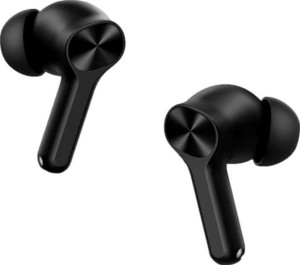
The most fundamental design difference between these two earbuds lies in their form factor. The Realme Buds T200 Lite are fully wireless (true wireless), meaning no physical connection between the two earbuds, while the Realme Buds Wireless 5 are neckband-style earbuds, with a cable running behind the neck connecting both sides. In practice, true wireless earbuds offer greater freedom of movement and a cleaner aesthetic, whereas neckband designs trade some of that freedom for benefits like a larger battery housing and less risk of losing individual earbuds.

On water and dust resistance, the Buds Wireless 5 holds a clear edge with an IP55 rating, which means it is protected against both low-pressure water jets and dust ingress. The Buds T200 Lite carries only an IPX4 rating, offering sweat resistance but no dust protection and less water resistance overall. For outdoor or gym use in varied conditions, this is a meaningful real-world difference — the Buds Wireless 5 can handle splashes and light rain more confidently.

Both products share an in-ear fit, stereo audio output, and neither includes wingtips, RGB lighting, a display, or UV light — so these features are a wash. The deciding factor in this group comes down to your lifestyle preference: if you prioritize cable-free convenience, the Buds T200 Lite wins on form factor; but if durability and weather resistance matter more, the Buds Wireless 5 has a clear advantage with its superior IP55 rating.

Sound quality:
has active noise cancellation (ANC)
has passive noise reduction
driver unit size 12.4 mm 13.6 mm
lowest frequency 20 Hz 20 Hz
highest frequency 20000 Hz 20000 Hz
supports spatial audio
has Dolby Atmos
has Dirac Virtuo
has a neodymium magnet

The frequency range is identical on both earbuds — 20 Hz to 20,000 Hz — covering the full range of human hearing, so neither product has a theoretical edge there. Where things diverge is driver size: the Realme Buds Wireless 5 uses a 13.6 mm driver compared to the 12.4 mm driver in the Buds T200 Lite. A larger driver generally has more physical surface area to move air, which can translate to fuller bass response and more dynamic sound, though driver size alone does not guarantee superior audio quality.

The more impactful differentiator is noise handling. Both earbuds offer passive noise reduction through their in-ear fit, but the Buds Wireless 5 goes further with Active Noise Cancellation (ANC) — a feature entirely absent on the Buds T200 Lite. ANC uses microphones to detect and counteract ambient sound in real time, making a tangible difference in noisy environments like commutes or open offices. On top of that, the Buds Wireless 5 also supports spatial audio, which creates a wider, more immersive soundstage — particularly noticeable when watching video content or listening to compatible music.

In this group, the Buds Wireless 5 holds a clear and decisive advantage. ANC alone is a significant functional upgrade over the Buds T200 Lite, and the addition of spatial audio further widens the gap for users who prioritize audio immersion. The Buds T200 Lite covers the basics competently, but it simply cannot match the Buds Wireless 5 on sound quality features.

Power:
Battery life 7 hours 38 hours
has wireless charging
Has a solar power battery
has a battery level indicator
has a rechargeable battery

Battery life is where the gap between these two products becomes almost staggering. The Realme Buds Wireless 5 delivers up to 38 hours of playback, compared to just 7 hours on the Buds T200 Lite. To put that in perspective, the Buds Wireless 5 can last through multiple full workdays without a charge, while the Buds T200 Lite would need to be recharged after a single extended listening session. This is one of the most dramatic battery differences you will find in a head-to-head comparison.

The neckband form factor of the Buds Wireless 5 helps explain this advantage — the cable connecting the two earbuds provides significantly more physical space to house a larger battery, a structural benefit that true wireless earbuds like the Buds T200 Lite simply cannot match. Neither product supports wireless charging, and both share a battery level indicator and a rechargeable battery, so those features are evenly matched.

For power, the Buds Wireless 5 wins decisively. If long battery life is a priority — for travel, all-day work use, or simply avoiding frequent charging — the Buds Wireless 5 is in a different league. The Buds T200 Lite's 7-hour figure is adequate for casual daily use, but anyone who forgets to charge regularly or needs extended reliability will find it limiting.

Connectivity:
has fast pairing
Has USB Type-C
Bluetooth version 5.4 5.4
has LDAC
has LDHC
has Bluetooth LE Audio
has aptX Adaptive
has aptX Low Latency
has aptX HD
has aptX
has aptX Lossless
has aptX Voice
has Auracast
maximum Bluetooth range 10 m 10 m
supports Bluetooth pairing using NFC
Can be used wirelessly
has AAC

Connectivity is remarkably close between these two products. Both run on Bluetooth 5.4, share a 10 m maximum wireless range, charge via USB-C, and lack advanced codecs like LDAC, aptX, or Bluetooth LE Audio. For most users, this means a comparable day-to-day wireless experience — stable pairing, similar range, and no exotic codec advantages on either side.

The only meaningful differentiator in this group is audio codec support: the Realme Buds T200 Lite supports AAC, while the Buds Wireless 5 does not. AAC is particularly relevant for iPhone and iPad users, where it is the preferred Bluetooth audio codec and can deliver noticeably cleaner audio transmission compared to the baseline SBC codec. On Android, the benefit of AAC is more device-dependent, but it still represents a higher-quality transmission option when supported.

Overall, this group is largely a tie in practical terms, but the Buds T200 Lite earns a narrow edge for Apple ecosystem users specifically, thanks to its AAC support. For Android users, the difference is minimal and unlikely to influence a purchasing decision on connectivity grounds alone.

Features:
release date March 2025 January 2025
has ambient sound mode
has in/on-ear detection
Supports fast charging
can read notifications
has a mute function
can be used as a headset
control panel placed on a device
Has voice prompts
travel bag is included
Has an in-line control panel
Has a temperature sensor
Has a built-in camera remote control function

Both earbuds share a solid common feature set — fast charging, a mute function, headset capability, on-device controls, and voice prompts are all present on each. For everyday use, this common ground means neither product feels stripped down in terms of basic usability.

The key differentiators pull in opposite directions. The Realme Buds Wireless 5 adds ambient sound mode and an in-line control panel, two features absent on the Buds T200 Lite. Ambient sound mode is a genuinely useful feature for situational awareness — it allows external sounds to pass through so you can hear conversations or traffic without removing the earbuds. The in-line control panel, consistent with its neckband design, provides a convenient physical interface for playback and call management without reaching for your phone. On the other side, the Buds T200 Lite includes a travel bag, which is a minor but practical accessory for storage and portability, something the Buds Wireless 5 omits.

On balance, the Buds Wireless 5 holds the advantage in this group. Ambient sound mode is a functionally meaningful feature that the Buds T200 Lite simply cannot replicate, and the in-line control panel adds day-to-day convenience. The included travel bag on the Buds T200 Lite is a welcome bonus but does not offset the gap in active features.

Microphone:
has a noise-canceling microphone

Both the Realme Buds T200 Lite and the Realme Buds Wireless 5 come equipped with a noise-canceling microphone, meaning call quality is a shared strength rather than a differentiator. A noise-canceling mic actively filters out background noise during calls — wind, crowd noise, office chatter — so the person on the other end hears your voice more clearly rather than your surroundings.

With only one data point available in this group and both products matching on it, there is no basis within the provided specs to distinguish one from the other here. This is a straightforward tie.

Comparison Summary & Verdict

After examining all the specs, it is clear that the Realme Buds T200 Lite and the Realme Buds Wireless 5 cater to distinctly different users. The Realme Buds T200 Lite stands out with its truly wireless, cable-free design and AAC codec support, making it a solid pick for those who value freedom of movement and compact portability. On the other hand, the Realme Buds Wireless 5 delivers a far more feature-rich experience, highlighted by its Active Noise Cancellation, impressive 38-hour battery life, spatial audio, ambient sound mode, and stronger IP55 water resistance. For users who spend long hours listening and need advanced audio features, the Wireless 5 is the clear frontrunner. For those seeking a lighter, wire-free everyday option, the T200 Lite holds its own.

Realme Buds T200 Lite
Buy Realme Buds T200 Lite if...

Buy the Realme Buds T200 Lite if you prefer a fully wireless, cable-free design and want AAC codec support in a compact everyday earbud.

Realme Buds Wireless 5
Buy Realme Buds Wireless 5 if...

Buy the Realme Buds Wireless 5 if you need Active Noise Cancellation, a dramatically longer 38-hour battery life, spatial audio, and stronger IP55 water resistance.