Realme Buds T200 Lite
Realme Buds Wireless 5 Lite

Realme Buds T200 Lite Realme Buds Wireless 5 Lite

Overview

Welcome to our in-depth spec comparison between the Realme Buds T200 Lite and the Realme Buds Wireless 5 Lite. While both earbuds share a surprising amount of common ground — including identical driver sizes and Bluetooth versions — they take notably different approaches to form factor and battery endurance. Read on to discover which of these two Realme offerings best fits your lifestyle and listening habits.

Common Features

  • Both products have an in-ear fit.
  • Neither product includes wingtips.
  • Neither product features RGB lighting.
  • Both products have stereo speakers.
  • Neither product has a UV light.
  • Neither product has a display.
  • Neither product has active noise cancellation (ANC).
  • Both products have passive noise reduction.
  • Both products use a 12.4 mm driver unit.
  • Both products share a frequency range of 20 Hz to 20000 Hz.
  • Neither product supports spatial audio.
  • Neither product has Dolby Atmos.
  • Neither product has Dirac Virtuo.
  • Neither product supports wireless charging.
  • Neither product has a solar power battery.
  • Both products have a battery level indicator.
  • Both products have a rechargeable battery.
  • Neither product supports fast pairing.
  • Both products have USB Type-C.
  • Both products use Bluetooth version 5.4.
  • Neither product supports LDAC.
  • Neither product supports LDHC.
  • Neither product supports Bluetooth LE Audio.
  • Neither product supports aptX Adaptive.
  • Neither product supports aptX Low Latency.
  • Neither product has an ambient sound mode.
  • Neither product has in/on-ear detection.
  • Both products support fast charging.
  • Neither product can read notifications.
  • Both products have a mute function.
  • Both products can be used as a headset.
  • Both products have a control panel placed on the device.
  • Both products have voice prompts.
  • Both products have a noise-canceling microphone.

Main Differences

  • The ingress protection rating is IPX4 on the Realme Buds T200 Lite and IP55 on the Realme Buds Wireless 5 Lite.
  • The Realme Buds T200 Lite is sweat resistant, while the Realme Buds Wireless 5 Lite is water resistant.
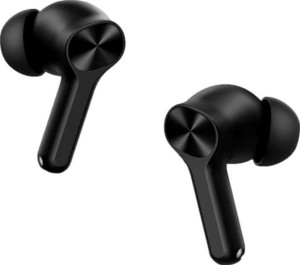
  • The Realme Buds T200 Lite is fully wireless, while the Realme Buds Wireless 5 Lite uses a cable or wire.
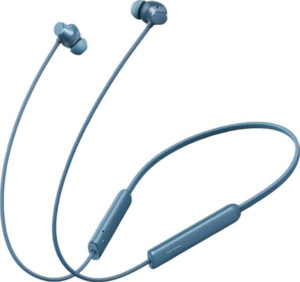
  • The Realme Buds Wireless 5 Lite are neckband earbuds, while the Realme Buds T200 Lite are not.
  • Battery life is 7 hours on the Realme Buds T200 Lite and 35 hours on the Realme Buds Wireless 5 Lite.
  • A find device feature is present on the Realme Buds T200 Lite but not available on the Realme Buds Wireless 5 Lite.
  • A travel bag is included with the Realme Buds T200 Lite but not with the Realme Buds Wireless 5 Lite.
  • An in-line control panel is present on the Realme Buds Wireless 5 Lite but not on the Realme Buds T200 Lite.
  • The number of microphones is 4 on the Realme Buds T200 Lite and 1 on the Realme Buds Wireless 5 Lite.
Specs Comparison
Realme Buds T200 Lite

Realme Buds T200 Lite

Realme Buds Wireless 5 Lite

Realme Buds Wireless 5 Lite

Design:
Fit In-ear In-ear
Ingress Protection (IP) rating IPX4 IP55
water resistance Sweat resistant Water resistant
has no wires or cables
are neckband earbuds
wingtips included
has RGB lighting
has stereo speakers
has UV light
Has a display

The most fundamental design difference between these two earbuds lies in their form factor. The Buds T200 Lite are fully wireless (true wireless), meaning no cables or wires at all, while the Buds Wireless 5 Lite are neckband-style earbuds, connected by a cable that rests around the neck. In practice, true wireless earbuds offer greater freedom of movement and a cleaner aesthetic, while neckband designs are less prone to being misplaced and keep the earbuds accessible when not in use. Both styles use an in-ear fit, and neither includes wingtips, RGB lighting, a display, or UV light — so those shared absences are not differentiators.

Where durability is concerned, the two products diverge meaningfully. The Buds T200 Lite carries an IPX4 rating, which means sweat resistance — protection against splashes from any direction, but not sustained water exposure. The Buds Wireless 5 Lite steps up to IP55, offering both dust resistance (the first ″5″) and protection against low-pressure water jets (the second ″5″). This makes the neckband model more robust in outdoor or wet conditions — a genuine real-world advantage for users who work out in rain or dusty environments.

In summary, the Buds Wireless 5 Lite has a clear edge in weather and dust protection thanks to its IP55 rating, while the Buds T200 Lite wins on form factor freedom as a true wireless design. The right choice here depends on the user′s priority: cable-free convenience or superior environmental durability.
Sound quality:
has active noise cancellation (ANC)
has passive noise reduction
driver unit size 12.4 mm 12.4 mm
lowest frequency 20 Hz 20 Hz
highest frequency 20000 Hz 20000 Hz
supports spatial audio
has Dolby Atmos
has Dirac Virtuo
has a neodymium magnet

On paper, these two earbuds are acoustically identical. Both use a 12.4 mm driver, cover the same 20 Hz – 20,000 Hz frequency range, rely solely on passive noise reduction, and neither supports spatial audio, Dolby Atmos, Dirac Virtuo, or features a neodymium magnet. There are simply no differentiating data points within this spec group.

That said, the shared specs are worth contextualizing. A 12.4 mm dynamic driver is a respectable size for in-ear earbuds, generally capable of producing fuller bass response compared to smaller drivers. The 20 Hz – 20 kHz range covers the full standard range of human hearing, which is a baseline expectation rather than a standout feature. Passive noise reduction — achieved through the physical seal of the in-ear fit — offers some ambient isolation, but without ANC, neither bud will meaningfully block out sustained background noise like commuter environments or open offices.

The verdict here is a complete tie. Every sound quality spec provided is identical across both products. A buyer prioritizing audio performance cannot use this spec group to differentiate between the two.

Power:
Battery life 7 hours 35 hours
has wireless charging
Has a solar power battery
has a battery level indicator
has a rechargeable battery

Battery life is where these two products diverge most dramatically. The Buds T200 Lite offers 7 hours of playback, which is a reasonable single-session figure for true wireless earbuds — enough for a workday commute or a gym session, but requiring a recharge every evening for heavy users. The Buds Wireless 5 Lite, by contrast, delivers a striking 35 hours of battery life — five times more. This is a direct consequence of the neckband form factor: the cable connecting the two earbuds houses a significantly larger battery than what can fit inside compact true wireless housings.

In practical terms, 35 hours means multi-day use without reaching for a cable — a meaningful advantage for travelers, outdoor workers, or anyone who finds frequent charging a friction point. At 7 hours, the T200 Lite will need daily charging under moderate use. Both models share a rechargeable battery and a battery level indicator, so users of either device can monitor charge status in real time, which is a useful baseline feature regardless of capacity.

The Buds Wireless 5 Lite has a decisive advantage in this category. The gap between 7 hours and 35 hours is not marginal — it fundamentally changes how often the device needs attention. For endurance-focused buyers, the neckband model is the clear choice based solely on these specs.

Connectivity:
has fast pairing
Has USB Type-C
Bluetooth version 5.4 5.4
has LDAC
has LDHC
has Bluetooth LE Audio
has aptX Adaptive
has aptX Low Latency
has aptX HD
has aptX
has aptX Lossless
has aptX Voice
has Auracast
maximum Bluetooth range 10 m 10 m
supports Bluetooth pairing using NFC
Can be used wirelessly
has AAC

Connectivity is another category where the two products are mirror images of each other. Both run on Bluetooth 5.4 — a modern version that brings improved efficiency and connection stability compared to older iterations — and both cap out at a 10 m wireless range. Charging is handled via USB Type-C on each, which is the current standard and a practical convenience. Neither device supports fast pairing, NFC pairing, or Bluetooth LE Audio.

On the codec side, both earbuds support AAC and nothing beyond it. AAC is a solid baseline codec well-suited for Apple device users and adequate for general streaming, but the absence of higher-fidelity options like LDAC or aptX means neither product is targeting audiophiles who prioritize wireless audio quality. For the mainstream listener, AAC will be perfectly sufficient.

This category is a complete tie. Every connectivity specification — Bluetooth version, range, charging port, and supported codecs — is identical between the two. Buyers cannot use this spec group as a tiebreaker.

Features:
release date March 2025 June 2025
has ambient sound mode
has in/on-ear detection
has find device feature
Supports fast charging
can read notifications
has a mute function
can be used as a headset
control panel placed on a device
Has voice prompts
travel bag is included
Has an in-line control panel
Has a temperature sensor
Has a built-in camera remote control function

Despite sharing a solid common feature set — fast charging, mute function, headset capability, on-device controls, and voice prompts — this category surfaces a few meaningful divergences. The Buds T200 Lite includes a find device feature, which is a genuinely useful addition for true wireless earbuds that are small and easy to misplace. The Buds Wireless 5 Lite lacks this, though its neckband form factor makes it inherently harder to lose. In its place, the neckband model offers an in-line control panel on the cable — a convenient physical shortcut for playback and call management that the T200 Lite does not have.

One additional perk exclusive to the T200 Lite is the inclusion of a travel bag. While seemingly minor, a carrying case adds real-world value for protecting the earbuds during transit — something the Wireless 5 Lite buyer would need to source separately.

This category is closely matched, with each product holding one or two situational advantages. The T200 Lite edges ahead slightly for users who value the find device feature and the bundled travel bag, while the Wireless 5 Lite appeals to those who prefer the tactile convenience of an in-line control panel. Neither product dominates outright — the preference comes down to use case.

Microphone:
number of microphones 4 1
has a noise-canceling microphone

Both earbuds feature noise-canceling microphones, but the microphone hardware beneath that shared label differs significantly. The Buds T200 Lite packs 4 microphones, while the Buds Wireless 5 Lite makes do with just 1. In call-quality terms, more microphones generally enable more sophisticated noise isolation techniques — multiple mics allow the device to better distinguish the user's voice from ambient sound by cross-referencing audio signals, a method known as beamforming.

For everyday calls in quiet environments, a single noise-canceling microphone can perform adequately. However, in noisier settings — a busy street, a café, or a windy outdoor space — a 4-microphone array has a structural advantage in filtering out background interference and delivering cleaner voice pickup to the other end of the call.

The Buds T200 Lite holds a clear edge in this category. Four microphones versus one is a substantial hardware gap, and for users who frequently take calls in challenging acoustic environments, this difference is practically significant.

Comparison Summary & Verdict

After examining every specification, it is clear that these two earbuds serve distinct audiences. The Realme Buds T200 Lite stands out as a fully wireless, truly cable-free option that adds practical extras like a find-device feature and an included travel bag, along with four microphones for cleaner calls — making it a strong pick for everyday untethered use. The Realme Buds Wireless 5 Lite, on the other hand, wins decisively on battery life at 35 hours, offers a more robust IP55 water resistance rating, and features an in-line control panel that neckband users tend to appreciate. Both share the same sound tuning, passive noise reduction, and fast charging support, so the core listening experience is closely matched. Your choice ultimately comes down to freedom of movement versus endurance and durability.

Realme Buds T200 Lite
Buy Realme Buds T200 Lite if...

Buy the Realme Buds T200 Lite if you want a fully wireless, cable-free experience with a find-device feature, four microphones for clearer calls, and a travel bag included in the box.

Realme Buds Wireless 5 Lite
Buy Realme Buds Wireless 5 Lite if...

Buy the Realme Buds Wireless 5 Lite if you need exceptional battery life of 35 hours, stronger IP55 water resistance, and prefer the secure fit and in-line controls of a neckband design.