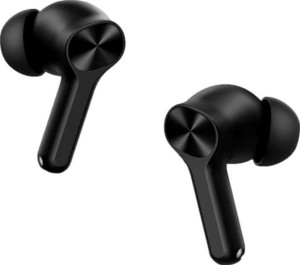
Realme Buds T200
Realme Buds T200 Lite

Realme Buds T200 Realme Buds T200 Lite

Overview

Welcome to our in-depth spec comparison between the Realme Buds T200 and the Realme Buds T200 Lite. Both earbuds share a familiar in-ear, wireless design with identical driver sizes and Bluetooth 5.4 connectivity, making this a close contest on paper. However, key battlegrounds such as noise cancellation, audio codec support, and water resistance ratings reveal meaningful distinctions between the two. Read on to discover which model best suits your needs.

Common Features

  • Both products have an in-ear fit.
  • Neither product has wires or cables.
  • Neither product is a neckband earbud style.
  • Neither product includes wingtips.
  • Neither product has RGB lighting.
  • Both products have stereo speakers.
  • Neither product has a UV light.
  • Neither product has a display.
  • Both products offer passive noise reduction.
  • Both products have a driver unit size of 12.4 mm.
  • Both products have a lowest frequency of 20 Hz and a highest frequency of 20000 Hz.
  • Spatial audio is not supported on either product.
  • Dolby Atmos is not available on either product.
  • Neither product has a neodymium magnet.
  • Both products have a charge time of 1.5 hours.
  • Neither product supports wireless charging.
  • Neither product has a solar power battery.
  • Both products have a battery level indicator.
  • Both products have a rechargeable battery.
  • Neither product supports fast pairing.
  • Both products have USB Type-C connectivity.
  • Both products use Bluetooth version 5.4.
  • LDHC is not supported on either product.
  • Bluetooth LE Audio is not supported on either product.
  • aptX Adaptive is not supported on either product.
  • aptX Low Latency is not supported on either product.
  • aptX HD is not supported on either product.
  • Both products support fast charging.
  • Neither product can read notifications.
  • Neither product has a built-in translator.
  • Both products have a mute function.
  • Both products can be used as a headset.
  • Both products have a control panel placed on the device.
  • Both products have voice prompts.
  • A travel bag is included with both products.
  • Both products have 4 microphones.
  • Both products have a noise-canceling microphone.

Main Differences

  • Ingress Protection rating is IP55 on Realme Buds T200 and IPX4 on Realme Buds T200 Lite.
  • Water resistance on Realme Buds T200 is rated as water resistant, while Realme Buds T200 Lite is only sweat resistant.
  • Active noise cancellation (ANC) is present on Realme Buds T200 but not available on Realme Buds T200 Lite.
  • Battery life is 8 hours on Realme Buds T200 and 7 hours on Realme Buds T200 Lite.
  • Battery life of the charging case is 42 hours on Realme Buds T200 and 41 hours on Realme Buds T200 Lite.
  • LDAC support is present on Realme Buds T200 but not available on Realme Buds T200 Lite.
  • Ambient sound mode is available on Realme Buds T200 but not available on Realme Buds T200 Lite.
Specs Comparison
Realme Buds T200

Realme Buds T200

Realme Buds T200 Lite

Realme Buds T200 Lite

Design:
Fit In-ear In-ear
Ingress Protection (IP) rating IP55 IPX4
water resistance Water resistant Sweat resistant
has no wires or cables
are neckband earbuds
wingtips included
has RGB lighting
has stereo speakers
has UV light
Has a display

Both the Realme Buds T200 and the Realme Buds T200 Lite share the same fundamental design DNA: fully wireless in-ear fit, no neckband, stereo playback, and no gimmicks like RGB lighting or a display. For most users, the day-to-day wearing experience will feel nearly identical.

The most meaningful differentiator in this group is water resistance. The T200 carries an IP55 rating, meaning it is tested against both dust ingress and water jets from any direction — making it genuinely suitable for outdoor runs in light rain or dusty environments. The T200 Lite steps down to IPX4, which covers only sweat and light splashes, with no dust protection at all. In practical terms, the T200 Lite is fine for gym workouts and casual use, but falls short if you regularly exercise outdoors or in harsher conditions.

The T200 has a clear edge in this group purely on the basis of its superior ingress protection. If durability and environmental resilience matter to you, the IP55 rating of the T200 is a tangible, real-world advantage over the IPX4 of the T200 Lite.

Sound quality:
has active noise cancellation (ANC)
has passive noise reduction
driver unit size 12.4 mm 12.4 mm
lowest frequency 20 Hz 20 Hz
highest frequency 20000 Hz 20000 Hz
supports spatial audio
has Dolby Atmos
has Dirac Virtuo
has a neodymium magnet

At the hardware level, these two earbuds are acoustically identical: both use a 12.4 mm dynamic driver and cover the full standard audible range of 20 Hz to 20,000 Hz. On paper, that means neither has a raw frequency-response advantage over the other, and the listening experience driven purely by driver hardware should be comparable.

Where they diverge significantly is noise isolation. Both offer passive noise reduction — the physical seal of an in-ear fit that naturally blocks ambient sound. However, the T200 goes a step further with Active Noise Cancellation (ANC), which uses microphones and processing to actively counter low-frequency noise like commuter hum, air conditioning, or engine rumble. The T200 Lite lacks ANC entirely, meaning in noisy environments you are relying solely on the physical fit to block out the world.

For sound quality in a quiet room, the two are evenly matched. But in real-world commuting or office scenarios, the T200 holds a clear and meaningful edge thanks to its ANC — a feature that directly affects how much of your music or audio you can actually hear without raising the volume to compensate.

Power:
Battery life 8 hours 7 hours
Battery life of charging case 42 hours 41 hours
charge time 1.5 hours 1.5 hours
has wireless charging
Has a solar power battery
has a battery level indicator
has a rechargeable battery

Stamina is close between these two, but not identical. The T200 delivers 8 hours of playback per charge versus 7 hours for the T200 Lite, and the charging cases extend total endurance to 42 hours and 41 hours respectively. In practice, that one-hour gap per earbud session is unlikely to be a dealbreaker for most users — both will comfortably last a full workday — but it is worth noting that the T200's ANC feature typically draws extra power, making its ability to still edge out the Lite in battery life a quietly impressive result.

Where the two are completely equal is charging speed and convenience: both refill in 1.5 hours, neither supports wireless charging, and both include a battery level indicator so you are never caught off guard. The absence of wireless charging is a minor limitation shared equally, keeping neither product at a disadvantage on that front.

Overall, the T200 holds a slim but real edge in battery endurance. The difference is modest enough that it won't sway most buyers on its own, but combined with the fact that the T200 achieves this while running ANC, it reflects slightly more efficient power management in the higher-tier model.

Connectivity:
has fast pairing
Has USB Type-C
Bluetooth version 5.4 5.4
has LDAC
has LDHC
has Bluetooth LE Audio
has aptX Adaptive
has aptX Low Latency
has aptX HD
has aptX
has aptX Lossless
has aptX Voice
has Auracast
maximum Bluetooth range 10 m 10 m
supports Bluetooth pairing using NFC
Can be used wirelessly
has AAC

On the fundamentals, these two are in lockstep: both run Bluetooth 5.4, max out at a 10 m wireless range, charge via USB-C, and support AAC for improved audio quality over standard SBC. Neither offers fast pairing, NFC, or any aptX variant, so the playing field is level on those fronts.

The one standout difference is codec support beyond AAC. The T200 adds LDAC, Sony's high-resolution wireless codec capable of transmitting up to three times more data than AAC. For listeners using an Android device that supports LDAC, this unlocks noticeably higher audio fidelity — particularly in the upper midrange and high-frequency detail. The T200 Lite omits LDAC entirely, capping out at AAC regardless of the source device's capabilities.

The T200 takes a clear lead in this group for Android users who care about audio transparency. For iPhone users or those streaming at standard quality, the gap narrows considerably since AAC is already well-optimized for Apple devices — but on Android, LDAC is a genuine, audible advantage that the T200 Lite simply cannot match.

Features:
release date May 2025 March 2025
has ambient sound mode
Supports fast charging
can read notifications
Has a built-in translator
has a mute function
can be used as a headset
control panel placed on a device
Has voice prompts
travel bag is included
Has an in-line control panel
Has a temperature sensor
Has a built-in camera remote control function

Across the practical day-to-day feature set, these two earbuds are largely aligned: both support fast charging, offer on-device touch controls, include voice prompts, can function as a headset for calls, have a mute function, and even come with a travel bag included. For the average user, this shared foundation covers the essentials well.

The single differentiator in this group is ambient sound mode, which the T200 offers and the T200 Lite does not. This feature uses the earbuds' external microphones to pipe in surrounding audio, letting you stay aware of your environment — announcements, traffic, or conversations — without removing the earbuds. It is a meaningful quality-of-life feature for commuters, travelers, or anyone who frequently needs situational awareness while listening.

The T200 edges ahead here on the strength of ambient sound mode alone. It is not a dramatic gap, but paired with ANC from the sound quality group, the T200 effectively offers a full noise-control suite — you can actively block the world out or actively let it in — while the T200 Lite offers neither of those options.

Microphone:
number of microphones 4 4
has a noise-canceling microphone

No ground to separate these two: both the T200 and the T200 Lite pack 4 microphones and include noise-canceling microphone technology. A quad-mic setup at this price tier is a solid offering, enabling beamforming and multi-point noise suppression that significantly improves voice clarity during calls — particularly in windy or noisy environments.

This is a clean tie. Neither model holds any advantage in the microphone department based on the available specs, and buyers prioritizing call quality or voice pickup can treat both options as equivalent on this front.

Comparison Summary & Verdict

After reviewing all available specifications, a clear picture emerges for each product. The Realme Buds T200 is the more feature-rich option, offering Active Noise Cancellation, LDAC high-quality audio codec support, an ambient sound mode, and a stronger IP55 water resistance rating alongside a slightly longer battery life of 8 hours. It is best suited for commuters, frequent travelers, or audiophiles who demand richer sound and better environmental control. The Realme Buds T200 Lite, on the other hand, strips back the extras while retaining core strengths like the same 12.4 mm driver, 4-microphone setup, and fast charging — making it an ideal choice for budget-conscious users who want reliable everyday earbuds without paying for premium features they may not use.

Realme Buds T200
Buy Realme Buds T200 if...

Buy the Realme Buds T200 if you want Active Noise Cancellation, LDAC audio support, and stronger IP55 water resistance for a more immersive and versatile listening experience.

Realme Buds T200 Lite
Buy Realme Buds T200 Lite if...

Buy the Realme Buds T200 Lite if you want a straightforward pair of wireless earbuds with solid core performance and do not need ANC or advanced audio codec support.